

How NBBL’s New Technology Stack Is Transforming the Future of Payments

Date:

Trending

- Advertisement -

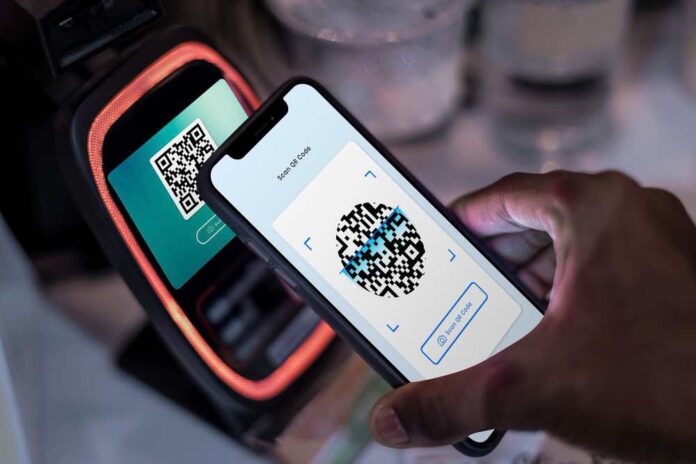
India’s digital payments ecosystem has reached a scale that very few countries in the world have achieved. Platforms like Unified Payments Interface have made instant payments through mobile phones a part of everyday life.

The numbers tell the story. UPI processed 20.39 billion transactions worth ₹26.84 lakh crore in February 2026 alone, making it one of the largest real-time payment systems globally.

Yet the real opportunity is still ahead. India currently has around 400 million digital payment users, while the ecosystem has the potential to reach nearly one billion users, as highlighted by T. Rabi Sankar.

The next wave of payment usage will come beyond simple P2P transfers or QR scans—from everyday economic activity like shopping, recurring payments, and easier access to finance for MSMEs through supply-chain lending.

This is where NPCI Bharat BillPay Limited (NBBL) has been playing a silent but powerful role.

- Advertisement -

Through Bharat Connect, NBBL is building the infrastructure that simplifies monthly bill payments across the country. The platform connects billers, banks, payment apps, and assisted service networks, enabling consumers to manage and pay their recurring bills from a single place.

Over the past few years, Bharat Connect has evolved far beyond a bill payment platform. It is now emerging as a broader payments infrastructure with three key pillars—Bill Payments, Banking Connect, and Bharat Connect for Business. Together, these verticals are expanding digital payments from simple transactions to a larger ecosystem supporting consumers, banks, and businesses.

Bill payments remain the foundation of this infrastructure. Every month, millions of households across India pay electricity bills, mobile bills, gas connections, insurance premiums, education fees, and loan repayments. In the past, these payments were fragmented across multiple platforms, forcing banks and fintech companies to integrate separately with each biller.

The scale is already significant. Today Bharat Connect supports more than 22,000 billers and processes around 249 million transactions every month, with transaction value exceeding ₹1.25 lakh crore. For many banks and fintech platforms, Bharat Connect has effectively become the backbone for managing recurring bill payments.

- Advertisement -

One of the strongest aspects of the platform is its ability to operate across both online and offline ecosystems. Urban consumers typically pay bills through mobile apps and internet banking platforms. However, a large section of India still relies on assisted digital infrastructure.

Through networks such as Common Service Centres and local agents, consumers in rural and semi-urban areas can walk into a nearby service centre and pay multiple bills in one place. They can pay electricity bills, recharge their mobile phones, or settle other utilities and receive instant payment confirmation.

This hybrid model is helping bring digital payments to rural communities where assisted services remain important.

Banking Connect (IBMB Interoperability) – The second pillar of NBBL’s technology stack is Banking Connect, which focuses on improving interoperability across internet and mobile banking platforms. Earlier, merchants accepting net banking payments had to integrate separately with multiple banks, creating complexity for both merchants and payment providers.

Banking Connect simplifies this by creating a common infrastructure layer where banks, payment aggregators, and merchants connect through a single integration. Merchants can accept net banking payments from multiple banks, while banks can expand digital payment services through their internet and mobile banking channels.

Bharat Connect for Business- The third pillar is Bharat Connect for Business, which focuses on digitising enterprise collections and supply-chain payments.

India’s MSME sector contributes nearly 30 percent of the country’s GDP, yet digital payment infrastructure for business collections is still evolving. Bharat Connect for Business aims to address this gap by bringing invoices, collections, and payments onto interoperable digital rails. Businesses can generate invoice-linked payment requests, receive digital collections and automate reconciliation, improving transparency across supply chains.

The opportunity becomes clearer when seen alongside the growth of India’s Trade Receivables Discounting System (TReDS) ecosystem. As of 2026, more than ₹7.5 lakh crore in cumulative financing has been processed through TReDS platforms, with over 88.5 lakh invoices discounted and default rates remaining below one percent.

Structured digital payment records created through platforms like Bharat Connect can further accelerate working capital financing and supply-chain lending for MSMEs.

India’s digital payments ecosystem has already reached a remarkable scale, but the growth journey is far from complete. With around 400 million active digital payment users today, the potential to reach one billion users remains significant.

Much of this next wave will come from rural India and recurring financial behaviour such as bill payments.

As consumers begin paying their monthly bills digitally—whether through banking apps or assisted service networks—they gradually become part of the broader digital financial ecosystem.

The bill payment ecosystem itself is expected to expand significantly, with Bharat Connect projected to support over one lakh billers in the next 24 months.

At the same time, Bharat Connect for Business could unlock a new layer of enterprise transactions. As MSMEs move their collections and invoices onto structured digital infrastructure, the platform has the potential to grow nearly 100 times over the next two years.

India has already built world-class infrastructure for instant payments.

The next chapter of the digital payments story will be driven by recurring payments, banking interoperability, and MSME financing.

And quietly but steadily, Bharat Connect is building the rails for that future.

THE SNAPSHOTS

Sign up to get quick snaps of everyday happening, directly in your inbox.

We don’t spam! Read our privacy policy for more info.

- Advertisement -
Rohit Mahajan
Rohit Mahajan
Rohit Mahajan, Founder & CEO of plutos ONE

More Latest Stories

More Articles

CasinoBonusesFinder UK: how filters, Telegram alerts and real bonus matching work in practice

Anyone who has spent serious time on casino bonus hunting knows the drill. You find something that looks promising, click through, and discover the...

The Detroit Region’s Role in Modern Global Supply Chains

As global commerce continues to expand its reach, the Detroit region has emerged as a pivotal player in modern supply chains. Strategically positioned along key waterways and boasting a robust industrial infrastructure, this region bridges domestic markets with international hubs. Through an exploration of...

The Importance of Keeping Up to Date With Auto Maintenance

Auto maintenance is one of the most important responsibilities that comes with owning a...

PatexOne: Could This Platform Be Smarter Than Your Impulses?

Australian investors are used to platforms that shout about leverage and “opportunity”. PatexOne takes...

India’s Air Crisis Needs a Deeptech Answer, Not a Consumer Gadget

Twenty years ago, an air conditioner in an Indian home was a luxury. Today...

India’s Cloud Cost Crisis: Why Startups Are Rethinking Their Tech Stack

Over the last ten years, startups in India have experienced an incredible boom driven...

Redrob AI Launches Professional AI Platform for India’s Workforce

In a bid to help students and professionals navigate an increasingly fragmented digital work...

Simple Habits That Keep Your Car Running Longer

Keeping your car running longer doesn’t require expert-level knowledge—it comes down to building smart...

The HiPCO Advantage: NoPo Nanotechnologies’ Gadhadar Reddy on Scaling SWCNT Manufacturing for Emerging Industries

Speaking with TechGraph, Gadhadar Reddy, Co-Founder and CEO of NoPo Nanotechnologies, discussed how manufacturing complexity, low yields, and purification challenges kept single-walled carbon nanotubes...

Why Resume-Based Hiring Is Failing India’s Workforce

India needs a shift from credential-first hiring to skill-first validation

Why BFSI Is Moving from AI Experiments to AI Systems

For the past few years, Artificial Intelligence in banking, financial services, and insurance has...

When AI-Generated Documentation Hurts More Than Helps

AI-generated documentation has quickly become a selling point for modern SaaS and developer platforms,...

From Intuition to Analysis: How AI Is Becoming Every CEO’s Second Brain

Most CEOs are making important decisions with partial information. The challenge is not just...

Rethinking Executive Search: Venator Search Partners’ Deepraditya Datta on Leadership Hiring in a Changing Talent Market

In an interview with TechGraph, Deepraditya Datta, Founder and Managing Director of Venator Search Partners, outlined how organisations are reassessing leadership hiring as long-term...

Beyond the MVP: Gacsym Ventures CTO Nandagopal P on Helping Startups Through Venture Studios

In a conversation with TechGraph, Nandagopal P, Chief Technology Officer at Gacsym Ventures, shared why many venture studios continue to view idea validation and MVP development as key milestones, and how the model can create lasting value by helping founders develop stronger decision-making skills,...

How Air Can Become Urban India’s New Water Source

India's cities are running dry. Chennai nearly ran out of groundwater in 2019. Bengaluru's...

The Human Algorithm: Why the Future of Digital Marketing Belongs to Empathetic Strategists

The modern marketing department is quieter than it used to be. The frantic tapping...

The world’s largest crypto market is building in the dark

India remains one of the few significant economies without a comprehensive crypto and stablecoin...

How Location Data Storage Technology is Making City Travel Smoother

India’s mobility ecosystem is undergoing a quiet but powerful transformation, driven not just by...

Can Intelligent Optimization Redefine How Businesses Solve Their Toughest Problems?

The modern enterprise is no longer just a business; it is a complex, hyper-connected...

Why Cyber Resilience Is Replacing Cybersecurity as a Boardroom Priority

Traditionally, cybersecurity was hard-wired to be a technology concern that was only taken care...

Serhii Tokarev Spoke About The Third Season Of The Generation H Accelerator

Serhii Tokarev spoke about the Generation H 3.0 HealthTech accelerator, which is opening applications...

The Business of Recycling: Profit, Waste, and Sustainability

The business of recycling stands at the intersection of environmental responsibility and economic opportunity....

Borade AI Founder Shiv Kumar Borade on Building an AI Growth Engine for Small Businesses

Speaking with TechGraph, Shiv Kumar Borade, Founder & CMD of Borade.AI, discussed how many...

When AI-Generated Documentation Hurts More Than Helps

AI-generated documentation has quickly become a selling point for modern SaaS and developer platforms,...

“Budget should focus on reducing taxes on capital gains,” Says Abhishek Gupta of Hex N Bit

Speaking in the upcoming Union Budget 2021, Abhishek Gupta, Founder, and CEO, Hex N...

“China is a Global thief” Rep. Tom Rice on Uyghur Forced Labor Prevention Act

Speaking at the House on Uyghur Forced Labor Prevention Act, Rep. Tom Rice (R-SC)...

Why Micro Learning at 3 Minutes Works Better Than Lectures at 3 Hours

In the fast-moving world of digital education, there is one myth that continues to...

More Than Just a Scratch: The Importance of Windshield Care

Maintaining your vehicle’s windshield often appears as a seemingly minor task that can easily...

From Intuition to Analysis: How AI Is Becoming Every CEO’s Second Brain

Most CEOs are making important decisions with partial information. The challenge is not just...

Alphabet Discloses $2.14 Billion in Public Equity Holdings as of June 30

Alphabet Inc. disclosed $2.14 billion in equity securities held across 39 positions as of...

The Role of Edtech in Addressing Equity Gaps in Higher Education

In the fast-paced world of EdTech today, the opportunity to bridge educational gaps and...

India to generate $100 bn from telephonic investments

India expects to attract $100 billion in investments in the telecom sector, a union...