


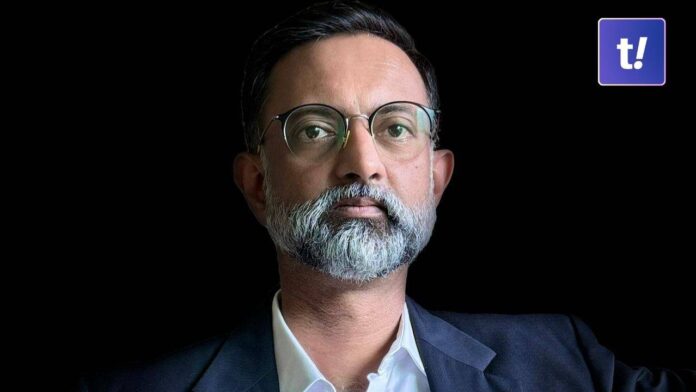

In an interview with TechGraph, Deepraditya Datta, Founder and Managing Director of Venator Search Partners, outlined how organisations are reassessing leadership hiring as long-term business outcomes become increasingly tied to executive appointments, and how companies risk significant setbacks when hiring decisions are driven by pedigree and past experience rather than a candidate’s ability to solve the challenges facing the business today.
Datta also highlighted how Venator Search Partners approaches executive search through sector-focused research and talent mapping, helping organisations identify and engage passive candidates whose capabilities align more closely with long-term business objectives.
Read the interview in detail:
TechGraph: At the senior leadership level, hiring decisions are tied to long-term business outcomes rather than immediate needs. How do you define the real mandate of executive search today when the cost of a wrong decision is so high?
Deepraditya Datta: Long-term business outcomes do dominate leadership hiring, but immediate needs cannot be brushed aside. Most senior mandates are triggered by a specific problem the organisation might be facing right now and has no one to solve. That urgency is real.
What makes this work unforgiving is the cost of getting a wrong hire. A poor leadership hire sets an organisation back by at least six months, often more; such critical hires make or break an organisation.
What we see most often is that hiring decisions get anchored to a “been there, done it” mindset rather than a “can do it” mindset. It is a choice, and there are merits and demerits in both approaches. Past pedigree feels safe, but at the leadership level, the ability to solve what is in front of you matters far more than what is on the resume.
TechGraph: A lot of search firms still operate as resume pipelines, whereas Venator emphasises a research-driven, retained model. What fundamentally changes in the search process when you begin with strategy rather than candidates?
Deepraditya Datta: Everything changes when you start with available candidates and are limiting the company’s choices to whoever happens to be on the market at that point in time. For critical hires, that is simply not good enough.
A research-led search flips the question. Instead of asking who is available, we ask who the best possible person for this role in the industry is. Globally, close to 70 percent of senior executives are passive candidates and are often not looking for change. If your process cannot reach them, you are very likely settling for less.
TechGraph: Senior hires often look strong on paper but fail within the first year. Where do most leadership hires break down, and how do you pressure-test a candidate beyond track record and references?
Deepraditya Datta: A resume and a one-hour interview are nowhere near enough to bet a business on. Our process is built to surface exactly those things. We use psychometric instruments like the Hogan Assessment to understand decision-making style.
We do a deep dive into proven performance in the recent past, evaluate cultural alignment seriously, and draw on both formal and informal market references through our network. The informal ones are usually the most revealing.
TechGraph: BFSI and industrial sectors are going through structural shifts driven by regulation, capital cycles, and technology-led disruption. How are these changes reshaping the way companies define leadership roles?
Deepraditya Datta: The shifts on both the technology and compliance fronts are unlike anything we have seen before, and overall, they are healthy for the industry. The lens through which you evaluate a candidate has changed completely.
It is no longer about growth but sustainable growth. Risk and compliance have become the bedrock of building a fundamentally strong business, particularly in banking and financial services, where the Reserve Bank of India has tightened governance norms over the last three to four years. The leaders we recommend must carry a compliance mindset themselves, because those values only get embedded in an organisation when they are driven top down.
The technology piece is even more disruptive. Many senior leaders in India built genuinely successful businesses the brick-and-mortar way. The critical question today is which of them have adapted to the new way of doing business. If a leader has not, they become the barrier to transformation, and the organisation falls behind very quickly. With rapid digitisation, there is no room for a leader who treats technology as somebody else’s problem.
TechGraph: Access to senior talent is relationship driven. How does Venator build credibility with candidates who are not actively looking but are critical to the role?
Deepraditya Datta: We have been in this business for over 18 years, and from day one we made the choice to focus on a select set of industry verticals rather than spreading thin. That focus has compounded into what is genuinely our biggest strength, which is a deep network across the sectors we serve.
We have a reasonable read on the pulse and career aspirations of most leaders in our chosen industries. When we approach someone who is not on the market, the conversation starts from a place of context, not cold outreach. They know who we are, they know we understand their world, and that is what opens the door.
TechGraph: There is increasing pressure from boards and promoters to move quickly on leadership hiring. How do you maintain depth and rigour while working within tighter timelines?
Deepraditya Datta: This pressure is true for every search we run. What rescues us is focus. We track and map talent across our verticals continuously, even when there is no active mandate. So, when a search comes in, we are not starting from scratch. We already know who fits, who is ready for a move, and who is not.
After that, it is sheer execution. Senior leaders are seriously occupied people, and just getting time on their calendar is half the battle. The relationships we have built over the years are what allow us to connect with them within compressed periods without compromising on the depth of the process.
TechGraph: As BFSI and industrial sectors prepare for the next phase of growth, how do you see leadership roles becoming more fluid or specialised, and how is Venator gearing up for that shift?
Deepraditya Datta: That depends on what drives the next phase of growth. In the immediate future, the defining directions are clear, namely digitisation, data analytics, and artificial intelligence. India’s artificial intelligence market alone is projected to reach close to 17 billion dollars by 2027, and banking and financial services is one of the largest adopters. The skill sets we used to look for have changed completely, and they will keep changing.
For candidates, the message is sharper. Staying relevant is no longer optional. Shedding old habits is uncomfortable, but if you do not, you become an ‘illiterate in the library’ when it comes to the modern workplace. That image stays with me, and I share it often, because the leaders who internalise it are the ones who will define the next decade.


