


spot_img

Why India’s Digital Dreams Require Sustainable Data Centres?

Date:

Trending

India’s new AI gold rush is measured not in ounces but in gigawatts. Hyperscale data‑center capacity stood at barely 1.4 GW last year; by 2030, analysts expect it to touch 9 GW, drawing roughly three per cent of the country’s total electricity supply, triple today’s share. This growth is lionised as proof of a vibrant digital economy, yet it also magnifies an uncomfortable truth: the energy‑and‑water appetite of AI infrastructure is colliding head‑on with the climate crisis India already faces.

- Advertisement -

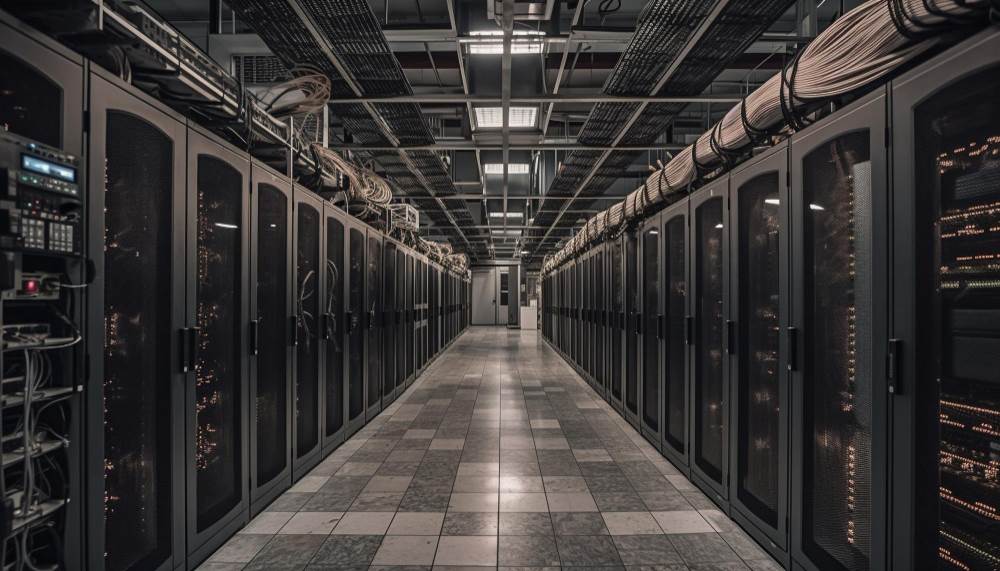
Today’s gleaming server halls are anything but virtual. Their physical footprint spans across Mumbai, Hyderabad, Delhi-NCR, and a widening constellation of Tier-II cities, fueled by annual investments that could top ₹1.8 trillion by the end of the decade. Compute-hungry AI models are propelling the shift; consultancies forecast that by 2030, as much as half of the installed IT load will be reserved for GPUs and other AI workloads.

That power draw brings a parallel environmental bill. The average data‑center complex can absorb as much electricity as an aluminium smelter or 100,000 homes, concentrating grid stress in just a handful of urban hubs. Because 70 per cent of Maharashtra’s and 80 per cent of Delhi’s generation still comes from fossil fuels, AI’s success risks chaining India’s growth to coal just as the country pledges net‑zero by 2070.

- Advertisement -

Water is the less visible, equally troubling half of the ledger. Cooling towers already consumed an estimated 150 billion litres nationwide in 2025; without intervention, that figure could exceed 350 billion litres by 2030, almost the annual drinking‑water need of Rajasthan. The national draft Data Center Policy “encourages” solar and wind procurement but remains silent on water disclosure or conservation targets, leaving both responsibilities to corporate discretion.

The policy gap

India’s 2020 draft policy and many state incentives focus on land, tax breaks, and single‑window clearances, yet omit mandatory environmental safeguards. Infrastructure status ensures easy credit, but not sustainable siting. Meanwhile, forward-looking developers such as Sify, CtrlS, AdaniConneX, Nxtra, and Yotta are unveiling green-powered campuses, proving that clean energy procurement is both technically and increasingly economically viable. Still, voluntary action cannot substitute for regulation when an industry’s demand curve is this steep.

- Advertisement -

A blueprint for institutional safeguards

Codify renewable thresholds. Every new facility above 10 MW should procure at least 75 per cent of its electricity from additional renewable capacity, backed by firm‑dispatch storage mirroring global best practice and aligning with India’s 500 GW RE target. The IEEFA notes that battery‑plus‑solar tariffs have already undercut gas‑fired power.

Mandate water‑use reporting and caps. Operators must disclose annual direct and indirect water consumption, publish watershed‑stress assessments, and adopt closed‑loop or air‑cooling where feasible.

Integrate data centers into environmental impact norms. Treat clusters as industrial projects requiring cumulative‑impact studies, community consultation, and periodic audits, not merely as “IT buildings.”

Create grid‑interactive incentives. Offer tariff rebates for facilities that can shed or shift load during peak hours, monetising idle UPS and battery resources as virtual power plants.

Price carbon and water at the source. A modest levy earmarked for local climate adaptation would reward efficiency and fund resilience infrastructure in host districts.

Establish a central “Green DC Registry.” Similar to SEBI’s ESG disclosures, this public dashboard would track energy mix, PUE, WUE, and emissions, giving hyperscalers a reputational stake in sustainable operations.

Requirement Sustainable Data Centres

India’s digital revolution hinges on data centres, which are expanding rapidly to meet soaring demand from cloud, AI, and fintech. However, these facilities are highly energy- and water-intensive, potentially consuming 6% of the country’s power by 2030. To prevent environmental strain, data centre operators and policymakers are adopting renewable energy, efficient cooling, and green building practices. Sustainable strategies not only reduce costs but also position India’s digital infrastructure for global leadership, striking a balance between growth and environmental responsibility.

Conclusion

Artificial‑intelligence breakthroughs promise extraordinary social and economic dividends, but they cannot be allowed to drown out the urgency of climate realities. India’s digital ambitions and its environmental obligations are not mutually exclusive; the technologies that crunch petabytes of data can also optimise demand, cut leaks, and integrate renewables at scale. What is missing is a sturdy institutional scaffold that ensures every new teraflop helps bend, rather than break, the emissions curve. Without it, the promise of the cloud may not be fully realized.

The choice before policymakers is stark yet simple: embed robust safeguards now, or let tomorrow’s data‑center skylines cast a much darker shadow on India’s climate horizon.
THE SNAPSHOTS

Sign up to get quick snaps of everyday happening, directly in your inbox.

We don’t spam! Read our privacy policy for more info.

- Advertisement -
Sudhir Kunder
Sudhir Kunder
Sudhir Kunder, CBO of DE-CIX India
Advertisement

More Latest Stories

More Articles

Why Global Manufacturing Leaders Are Rethinking the Role of Packaging Automation

In the global manufacturing landscape, packaging has quietly evolved from a backend operational activity into a strategic business driver. For companies with turnover above...

India’s AI Education Push: Redrob COO Kartikey Handa on Building Open AI Models for 300 Million Students

Speaking with TechGraph, Kartikey Handa, Chief Operating Officer and Head of India Operations at Redrob, discussed how India’s AI adoption has been constrained less by a lack of interest and more by affordability barriers created by global pricing models, and how the company is...

Dr Kamal Chhabra on KC GlobEd’s Approach to Global Finance and Accounting Education

Speaking with TechGraph, Dr Kamal Chhabra, Founder and CEO of KC GlobEd, discussed how...

Rethinking Medical Training: MedLern Co-founder Deepak Sharma on Digital Resuscitation Learning and Patient Safety

Speaking with TechGraph, Deepak Sharma, Co-founder and CEO of MedLern, discussed how traditional instructor-led...

India’s AIF Shift: Steptrade Capital’s Kresha Gupta on the Evolution of Alternative Investments in India

Speaking with TechGraph, Kresha Gupta, Director and Fund Manager at Steptrade Capital, discussed how...

Vimal Singh on ReadyAssist’s Role in Modernising Roadside Assistance in India

Speaking with TechGraph, Vimal Singh, Founder of ReadyAssist, discussed how traditional roadside assistance models...

The Cost of Blind Trust: How Inadequate Verification Is Fueling India’s Data Scam Epidemic

India’s digital economy is expanding faster than ever. From gig platforms and financial services...

The Rise of Emotionally Intelligent AI: What It Means for Customer Experience

A shift is transpiring across customer touchpoints as digital systems start to understand the...

Home Improvements That Benefit You Today and Boost Value Tomorrow

When it comes to home improvements, the best upgrades are those that provide immediate enjoyment and long-term returns. Whether you're looking to increase your...

How Autonomous Infrastructure Will Shape the Future of Enterprise Technology in 2026

Autonomous infrastructure is moving from imagination to inevitability. With its strengths in anticipation, analysis,...

NVIDIA EVP Debora Shoquist Offloads 80,000 Shares for About $14.77 Mn

NVIDIA Corp. (NASDAQ: NVDA) Executive Vice President of Operations, Debora Shoquist has sold 80,000...

Why Zero Code Exposure Is the Future of Trust in AI

AI coding assistants have quickly become indispensable for developers, promising faster deployment, cleaner code,...

AI Infrastructure Wars: Do Nvidia, Amazon, and Microsoft Still Have Room to Run?

Indian investors are at a pivotal moment. While our domestic markets have seen meteoric...

Inside Channel Economy: Almonds AI CEO Abhinav Jain on Fixing the Blind Spot in India’s Distribution Ecosystem

Speaking with TechGraph, Abhinav Jain, Co-Founder and CEO of Almonds AI, outlined how India’s MarTech ecosystem has focused heavily on consumer-facing intelligence while the...

Kuwait Raises Income Tax Penalty Against IndiGo Operator, Company Plans Legal Action

IndiGo Airline's parent company, InterGlobe Aviation Limited disclosed it received an income tax demand and penalty order of KWD 448,793 (INR 13.16 crore) from Kuwait’s Department of Inspection and Tax Claims for assessment years 2021–22 to 2024–25. In a stock exchange filing, the company said,...

Reimagining Live Sports Coverage: wTVision’s Divyajot Ahluwalia on How Robot Dog Champak Transformed IPL Broadcasting

Speaking with TechGraph, Divyajot Ahluwalia, Founder & Director of wTVision Solutions Pvt. Ltd., discussed...

Supreme Court Allows Texas to Use New Congressional Map for 2026 Midterms

The U.S. Supreme Court has allowed Texas to move ahead with its newly redrawn...

Understanding What Makes Sunscreen Truly Effective

Many people pick a sunscreen merely based on its SPF, thus they think that...

Why NoSQL Databases Are the Future for Tech Startups

In today’s digital-first economy, tech startups continue to dominate the startup landscape. A startup...

Delhi IGI Airport Revamped Terminal 2 with Advanced Baggage screening systems

Delhi’s Indira Gandhi International Airport (IGI) has reopened its reconstructed Terminal 2, inaugurated by...

The Future of Health Philanthropy: IGF India CEO Sundeep Talwar on Making Preventive Care Accessible for Underserved Communities

Speaking with TechGraph, Sundeep Talwar, CEO of IGF India, discussed the foundation’s decade-long journey...

The Rise of Cyber Cartels: How the Dark Web Fuels Digital Extortion?

In 2025, cybercrime has evolved beyond individual hackers or little ransomware criminal gangs into...

AI Research Startup Redrob Draws $10 Mn In Series A Funding Led By Korea Investment Partners

AI research startup Redrob has secured $10 million in its Series A round led...

Norovex Review: Inside the Trading Platform Gaining Momentum

The online trading industry has entered one of its most dynamic periods in years....

Why Zero Code Exposure Is the Future of Trust in AI

AI coding assistants have quickly become indispensable for developers, promising faster deployment, cleaner code,...

Beyond Instant Approvals: PayMe CEO Mahesh Shukla on Building Compliant Lending for India’s New Credit Economy

Speaking with TechGraph, Mahesh Shukla, Founder and CEO of PayMe, discussed how India’s digital...

Meta Declares Quarterly Cash Dividend Of $0.525 Per Share

Facebook parent company, Meta Platforms Inc. (NASDAQ:META) said its board of directors has declared...

The Evolving Classroom: Venkateshwar International School’s Pooja Sharma on Changing Role of Schools in Delhi’s CBSE Ecosystem

Speaking with TechGraph, Pooja Sharma, Vice Principal of Venkateshwar International School (VIS), discussed how...

Digital Generics: How AI is Redefining the Future of Affordable Medicine

It was with pride that global headlines described India as the world's pharmacy, supplying...

AI Infrastructure Wars: Do Nvidia, Amazon, and Microsoft Still Have Room to Run?

Indian investors are at a pivotal moment. While our domestic markets have seen meteoric...

AI Research Startup Redrob Draws $10 Mn In Series A Funding Led By Korea Investment Partners

AI research startup Redrob has secured $10 million in its Series A round led...

The Future Employability Equation: PrepInsta’s Manish Agarwal on How AI Is Reshaping Student Readiness for Hiring in India

Speaking with TechGraph, Manish Agarwal, Co-Founder of PrepInsta, discussed how the increasing adoption of...

Norovex Review: Inside the Trading Platform Gaining Momentum

The online trading industry has entered one of its most dynamic periods in years....