


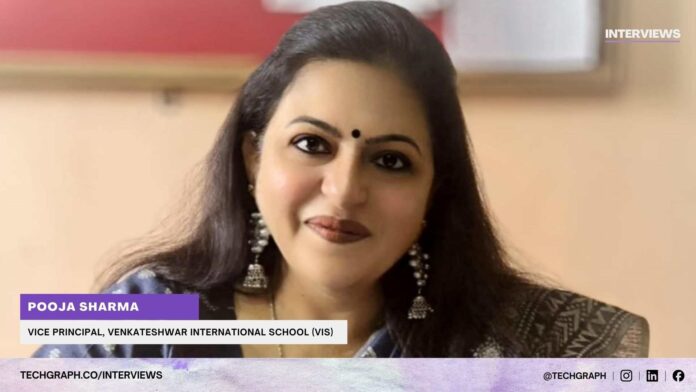

Speaking with TechGraph, Pooja Sharma, Vice Principal of Venkateshwar International School (VIS), discussed how the modern school ecosystem is steadily moving from a teacher-centric model to a shared learning environment where parents participate as informed partners rather than passive observers, and how the institution is shaping this transition by encouraging constructive parental engagement while ensuring that academic decisions remain anchored in pedagogical expertise and long-term student development.
She further explained how structured orientation programmes, open communication channels, and feedback-driven consultations help families feel genuinely included without diluting the professional autonomy of educators, creating an environment where collaboration strengthens student well-being and learning outcomes instead of competing with academic priorities.
Read the interview in detail:
TechGraph: Parents today are no longer passive stakeholders but active partners in shaping their child’s education. How has this shift influenced the way decisions are made at Venkateshwar International School, and how do you ensure that parental involvement remains constructive without overshadowing the professional role of educators?
Pooja Sharma: At VIS, Sector 10, Dwarka, we see parents as partners in the truest sense—voices that enrich our understanding of a child’s journey rather than dictate its direction. Over the years, this partnership has evolved from passive participation to meaningful collaboration through structured feedback systems, parent orientation programmes, and open communication channels.
While we deeply value parental insights, decisions are ultimately guided by pedagogical expertise and our core vision for future-ready education. We maintain this balance by keeping interactions transparent yet grounded in educational rationale—ensuring that involvement strengthens the learning ecosystem without compromising professional autonomy.
TechGraph: Differences between what parents expect and what schools can realistically deliver are inevitable. When such situations arise, how does Venkateshwar International School sustain a dialogue that allows families to feel heard while ensuring the institution stays true to its academic and ethical priorities?
Pooja Sharma: Differences in expectations are natural, especially in an era where education is rapidly changing. At VIS, our approach is anchored in dialogue and trust. We actively engage parents through formal consultations, surveys, and one-on-one meetings to ensure their voices are heard.
However, our decisions remain rooted in academic integrity, inclusivity, and ethical practice. When differences arise, we communicate the “why” behind every policy—helping families appreciate that every decision is made in the best interest of the learner’s long-term growth, not short-term convenience.
TechGraph: There is constant pressure on CBSE schools to produce visible academic results while also promising holistic development. What specific practices help Venkateshwar International School balance these two demands so that neither is compromised?
Pooja Sharma: For us, academic excellence and holistic growth are not parallel goals—they are complementary. Rigorous academic frameworks are integrated with performing arts, sports, skill-based learning, and social-emotional wellness initiatives.
VIS follows a learner-centric model where assessment is continuous, reflective, and skill-oriented. Programmes like student-led innovation fairs, global collaborations, and mental well-being sessions from CASEL and Aspire ensure that every child’s intellect, creativity, and character evolve in tandem. This equilibrium is what sustains our reputation as both an academically strong and emotionally nurturing institution.
TechGraph: The rise of educational technology has transformed the classroom experience, yet not every tool or platform delivers meaningful outcomes. What guiding principles does your school follow before adopting new technologies, and how do you evaluate whether they genuinely enhance student learning?
Pooja Sharma: Technology at VIS is never adopted for novelty—it must have purpose. Our guiding principle is simple: every digital tool must meaningfully enhance engagement, conceptual clarity, or efficiency.
Before integration, new platforms undergo pilot testing, teacher training, and pedagogical vetting to ensure they align with curriculum outcomes. Post-implementation, we assess impact through learning analytics and student-teacher feedback. This careful, evidence-based approach allows us to use technology as an enabler, not a distraction, in the learning process.
TechGraph: Delhi’s CBSE schools face multiple pressures, including fee regulation, safety concerns, and expectations of digital readiness. Which of these do you see as most likely to shape the next phase of schooling in the city, and how is your institution preparing to address them?
Pooja Sharma: Among the many challenges schools face—fee regulation, safety, and digital readiness—we believe safety and digital preparedness will most define the next phase of schooling.
At VIS, we have already invested significantly in secure digital infrastructure, surveillance systems, and child protection protocols. We view technology not just as a tool for instruction but as a medium for transparency, efficiency, and safety. Preparing for the future means staying agile—ready to balance regulatory expectations with our uncompromising commitment to student welfare.
TechGraph: With the National Education Policy introducing flexibility and reduced exam focus, while parents continue to demand global competitiveness, do you think CBSE schools risk being caught in a transitional space that is neither fully traditional nor fully progressive?
Pooja Sharma: The National Education Policy has opened a refreshing window of flexibility, creativity, and conceptual depth. Yet, we recognise that parental expectations for conventional success benchmarks persist.
At VIS, we are navigating this transition thoughtfully—by combining NEP’s experiential, interdisciplinary ethos with measurable academic rigour. We are consciously helping parents understand that flexibility and excellence can coexist, and that global readiness stems from adaptability, not rote mastery. It’s a space of balance, and we are confident our approach keeps us on the progressive edge of that spectrum.
TechGraph: Looking a decade ahead, what kind of CBSE schooling do you believe Delhi will be known for? Will it still be driven primarily by marks and competition, or do you see the parent–school partnership and new approaches to learning reshaping how student success is defined?
Pooja Sharma: A decade from now, I envision Delhi’s CBSE schools being known for redefining success—not by marks alone, but by the strength of character, creativity, and resilience in their learners.
Parental partnership will continue to evolve into shared vision-building, and technology will serve as a bridge rather than a barrier. At VIS, we see the future of schooling as deeply human, globally aware, and future-ready—a space where competition gives way to collaboration and every child finds their own measure of excellence.