



spot_img

Strengthening the First Line of Defense with People, Processes, and Technology

Date:

Trending

Globally and across industries, the risk landscape is growing more volatile and complex, with risks becoming increasingly interconnected and unpredictable. Increasing cyber-attacks, geopolitical tensions, AI governance, and regulatory shifts have made operational resilience a key priority.

- Advertisement -

A recent report titled The India Cyber Threat Report by the Data Security Council of India, which studied over 18 industries, has specifically raised serious concerns about the increasing vulnerability of the finance and healthcare sectors to cyberattacks. At this time, a robust and adaptable risk management framework is imperative for organizations in these sectors.

The three lines of defense (3LOD) model is a cornerstone of strong operational risk management strategies. This framework establishes clear roles and responsibilities for managing risk across an organization’s three distinct yet interlinked functions.

- Advertisement -

Among these, the first line of defense stands out as the mainstay of the 3LOD framework, representing the point where risks emerge and require immediate action. This article examines how organizations can strengthen this critical function by integrating people, processes, and technology.

Understanding First Line of Defense

The first line of defense, a.k.a frontline, is often called the “eyes and ears” of the business. At the forefront of an organization’s risk posture, these teams are the first to encounter risks and are uniquely positioned to identify and address them as they arise. Beyond detection, they hold important insights into the risks.

- Advertisement -

However, the effectiveness of the first line is contingent upon its ability to identify, assess, and mitigate risks efficiently. Organizations must ensure that their frontline teams are adequately empowered with the tools, training, and support they need to fulfil their critical role in safeguarding the enterprise.

The Human Factor in Risk Mitigation

Employees are critical in identifying, managing, and escalating real-time risks. Their ability to detect emerging threats early can significantly strengthen the organization’s overall risk posture. A nurse at a hospital, a teller at the bank, or a customer services executive at a telecom retail outlet are all examples of frontline workers who hold critical intelligence as they go about their daily operations.

Their job roles involve engaging with external stakeholders, customers, and partners. Being the first to hold these interactions, they hold the unique position of being valuable sources of risk-related information for the company.

For example, a single suspicious transaction report (STR) filed by a frontline bank executive can actively stop the flow of illegal money and the associated financial crime. Training and awareness programs are essential for them to leverage this potential fully. These initiatives empower employees to recognize risks, follow clear escalation protocols, and take decisive action when needed.

Beyond training, creating a risk-conscious culture is also key. While technology and processes support risk management, human intuition and judgment remain irreplaceable. Employees bring context and adaptability to complex scenarios, enabling real-time responses. By empowering them through training, awareness, and a supportive culture, organizations can transform their workforce into vigilant risk managers, fortifying their first line of defense.

Leveraging Technology to Strengthen the First Line of Defense

The first line of defense isn’t just about having the right people in the frontlines. It is also about equipping them with the right tools and technology.

Modern technology platforms can bridge gaps and break down silos while bringing a smooth data flow and better collaboration across the lines of defense. Risk leaders understand this, with 57% considering investing in new technology for their risk teams as among their top three priorities. With the right technology, the first line becomes more efficient, proactive, and empowered to manage risks effectively.

Among such robust tech tools are AI-powered observation management solutions that streamline the risk management process. For example, observation management software enables business users to easily capture and report anomalies and risks, providing a simple, intuitive interface to track potential threats. This capability is further enhanced through various functionalities such as widgets, chatbots, browser plugins, and web forms, making it easy for employees to flag risks and deviations in real time.

By automating the triaging and classification of observations, AI and machine learning (ML) help improve efficiency. With AI-powered intelligent triage, risks can be classified as incidents, issues, or loss events and automatically routed for review, approval or resolution (as the case be). This leads to a 60% reduction in the time to create and review issue impacts and a 40% reduction in cycle time to close issues.

AI-driven real-time issue tracking in the observation management software also ensures that risks are quickly identified and prioritized for remediation. The technology can intelligently correlate similar problems and findings and then recommend actionable plans based on their business criticality. This structured remediation process helps organizations address risks more effectively by identifying and mitigating high-priority issues before they escalate.

Another software highlight is its graphical dashboards and flexible reports that give organizations real-time visibility into critical observations and issues and help them respond faster to emerging risks. These visual tools allow teams to drill into detailed data, identifying key risks and tracking their resolution.
With such advanced visibility, businesses can ensure that risks are managed efficiently across the organization.

Continuous Employee Training And Enablement Programs

While investing in technology is important, ongoing employee enablement is a crucial step in ensuring the first line of defense remains effective.

This needs to be achieved through targeted training programs that equip employees with the skills to identify and address emerging risks. Scenario-based learning enhances this by immersing employees in realistic risk situations, helping them respond proactively in real-time. Regular assessments ensure employees stay updated on risk management best practices and can reinforce their knowledge to act confidently when facing potential threats.

By continuously developing frontline capabilities, organizations can strengthen their risk resilience and create a culture of vigilance and accountability.

THE SNAPSHOTS

Sign up to get quick snaps of everyday happening, directly in your inbox.

We don’t spam! Read our privacy policy for more info.

- Advertisement -
Shankar Bhaskaran
Shankar Bhaskaran
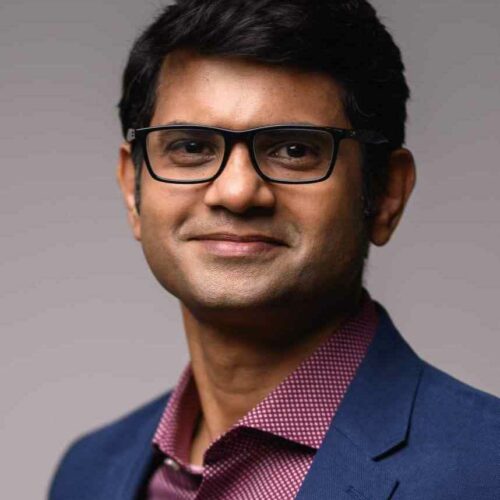
Shankar Bhaskaran, Managing Director Of MetricStream India.
Advertisement

More Latest Stories

More Articles

NVIDIA EVP Debora Shoquist Offloads 80,000 Shares for About $14.77 Mn

NVIDIA Corp. (NASDAQ: NVDA) Executive Vice President of Operations, Debora Shoquist has sold 80,000 shares of the company’s common stock in transactions dated December...

Ram Shriram Reports Transfers of Alphabet Shares Through Trust Annuity Payments

Alphabet Inc. (NASDAQ: GOOGL) Director K. Ram Shriram has reported movements in his Alphabet shareholdings following annuity payments made from two irrevocable trusts on December 9, 2025. According to the Form 4 filed with the U.S. Securities and Exchange Commission on December 11, 2025, 19,600...

AI Infrastructure Wars: Do Nvidia, Amazon, and Microsoft Still Have Room to Run?

Indian investors are at a pivotal moment. While our domestic markets have seen meteoric...

Inside Channel Economy: Almonds AI CEO Abhinav Jain on Fixing the Blind Spot in India’s Distribution Ecosystem

Speaking with TechGraph, Abhinav Jain, Co-Founder and CEO of Almonds AI, outlined how India’s...

Reimagining Live Sports Coverage: wTVision’s Divyajot Ahluwalia on How Robot Dog Champak Transformed IPL Broadcasting

Speaking with TechGraph, Divyajot Ahluwalia, Founder & Director of wTVision Solutions Pvt. Ltd., discussed...

Supreme Court Allows Texas to Use New Congressional Map for 2026 Midterms

The U.S. Supreme Court has allowed Texas to move ahead with its newly redrawn...

Meta Declares Quarterly Cash Dividend Of $0.525 Per Share

Facebook parent company, Meta Platforms Inc. (NASDAQ:META) said its board of directors has declared...

Lok Sabha: Government releases ₹68K crore under MGNREGS; wage payments routed via DBT

New Delhi, India: Union Agriculture Minister Shivraj Singh Chouhan said the government has released...

Kuwait Raises Income Tax Penalty Against IndiGo Operator, Company Plans Legal Action

IndiGo Airline's parent company, InterGlobe Aviation Limited disclosed it received an income tax demand and penalty order of KWD 448,793 (INR 13.16 crore) from...

The Evolving Classroom: Venkateshwar International School’s Pooja Sharma on Changing Role of Schools in Delhi’s CBSE Ecosystem

Speaking with TechGraph, Pooja Sharma, Vice Principal of Venkateshwar International School (VIS), discussed how...

Digital Generics: How AI is Redefining the Future of Affordable Medicine

It was with pride that global headlines described India as the world's pharmacy, supplying...

Why the Future of Education Needs AI and Emotional Intelligence

The future of education stands at a fascinating intersection where technology meets humanity. Artificial...

Why NoSQL Databases Are the Future for Tech Startups

In today’s digital-first economy, tech startups continue to dominate the startup landscape. A startup...

Delhi IGI Airport Revamped Terminal 2 with Advanced Baggage screening systems

Delhi’s Indira Gandhi International Airport (IGI) has reopened its reconstructed Terminal 2, inaugurated by Civil Aviation Minister K. Rammohan Naidu, bringing the terminal back...

The Future of Health Philanthropy: IGF India CEO Sundeep Talwar on Making Preventive Care Accessible for Underserved Communities

Speaking with TechGraph, Sundeep Talwar, CEO of IGF India, discussed the foundation’s decade-long journey has evolved from providing curative medical aid to building a preventive, community-focused healthcare model has reshaped its approach to saving lives, and and how initiatives such as early screening, health-awareness...

The Rise of the AI Agent Economy: How Voice AI Agents Are Becoming the New Frontline Workforce For Call Centers

The work inside a call center has always depended on two things: speed and...

The Road to Equality in Tech: Women In Cloud’s Chaitra Vedullapalli on Reshaping Opportunity for Women Entrepreneurs Globally

In an interview with TechGraph, Chaitra Vedullapalli, Co-Founder of Women In Cloud, discussed how...

The Future Employability Equation: PrepInsta’s Manish Agarwal on How AI Is Reshaping Student Readiness for Hiring in India

Speaking with TechGraph, Manish Agarwal, Co-Founder of PrepInsta, discussed how the increasing adoption of...

Norovex Review: Inside the Trading Platform Gaining Momentum

The online trading industry has entered one of its most dynamic periods in years....

Why Zero Code Exposure Is the Future of Trust in AI

AI coding assistants have quickly become indispensable for developers, promising faster deployment, cleaner code,...

Digit Life Insurance posts 31% rise in H1 FY26 revenue to ₹858 crore

India-based, Go Digit Life Insurance said its revenue for the first half of FY...

Starbucks Baristas Rally in New York as Strike Over Pay and Staffing Extends Nationwide

Starbucks baristas rallied in New York City as part of an open-ended strike that...

Demystifying Private Equity Market: WWIPL MD Krishna Patwari on Expanding Retail Access to India’s Unlisted Ecosystem

Speaking with TechGraph, Krishna Patwari, Founder and Managing Director of Wealth Wisdom India Pvt....

Why India’s First Jobs Need a System Reset

Until recently, entry-level hiring was built on a single assumption: potential would mature over...

Why the Future of Education Needs AI and Emotional Intelligence

The future of education stands at a fascinating intersection where technology meets humanity. Artificial...

How AI is Improving Risk Management Among Crypto Traders

Over the past few years, the role of Artificial Intelligence in almost every sector...

The AI Advantage: How Intelligent Learning Solutions Are Rewriting Workforce Productivity in 2025 and Beyond

In 2025, artificial intelligence is no longer a futuristic concept — it’s the invisible...

The Rise of Cyber Cartels: How the Dark Web Fuels Digital Extortion?

In 2025, cybercrime has evolved beyond individual hackers or little ransomware criminal gangs into...

AI Research Startup Redrob Draws $10 Mn In Series A Funding Led By Korea Investment Partners

AI research startup Redrob has secured $10 million in its Series A round led...

Why NoSQL Databases Are the Future for Tech Startups

In today’s digital-first economy, tech startups continue to dominate the startup landscape. A startup...

Demystifying Private Equity Market: WWIPL MD Krishna Patwari on Expanding Retail Access to India’s Unlisted Ecosystem

Speaking with TechGraph, Krishna Patwari, Founder and Managing Director of Wealth Wisdom India Pvt....

The Aesthetic of Longevity: Aesthetica’s Tanisha Bansal Gokharu on Redefining Luxury Home Interiors

Speaking with TechGraph, Tanisha Bansal Gokharu, Founder and Principal Designer at Aesthetica, discussed how...

Why India’s First Jobs Need a System Reset

Until recently, entry-level hiring was built on a single assumption: potential would mature over...