




Ahead of the Union Budget 2025, stakeholders from the health, healthcare, pharmacy, and medical communities are emphasizing the need for targeted investments. Public health experts highlight the importance of addressing both mental and physical health challenges, particularly in light of the rise of emerging infectious diseases like the HMPV virus.
Along with this, the healthcare industry advocates for stronger support for cancer prevention, early detection, and telemedicine technologies to bridge gaps between urban and rural areas.
Read the budget expectations from the industry experts in detail:
Dr. Jyoti Kapoor, Founder and Director, Manasthali Wellness
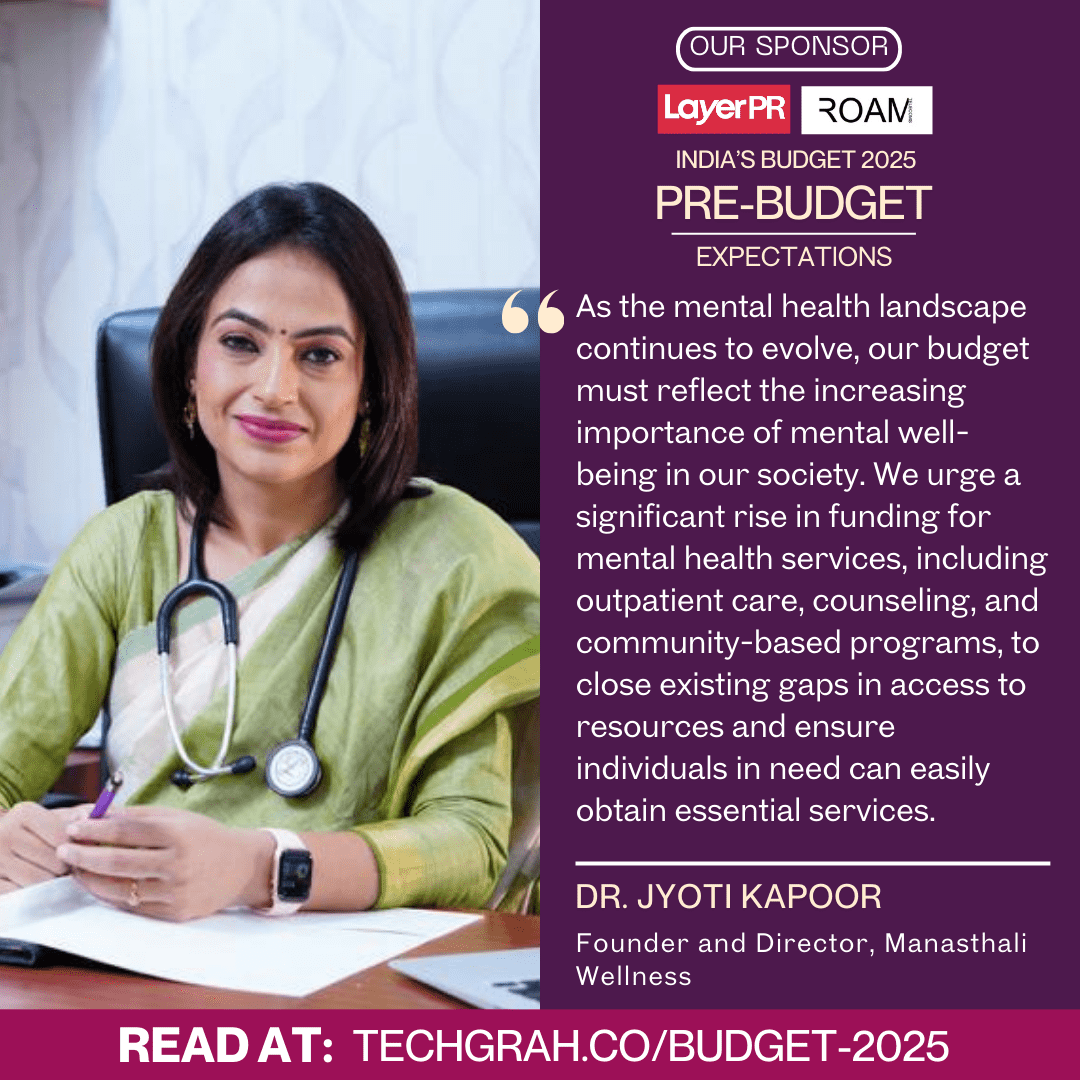
This year, we are expecting a comprehensive and adequately funded mental health budget for 2025–26. This budget will not only address current mental health challenges but also set the groundwork for a more resilient and mentally healthy society.
As the mental health landscape continues to evolve, our budget must reflect the increasing importance of mental well-being in our society. We urge a significant rise in funding for mental health services, including outpatient care, counseling, and community-based programs, to close existing gaps in access to resources and ensure individuals in need can easily obtain essential services.
The COVID-19 pandemic has underscored the effectiveness and accessibility of telehealth services. Allocating resources to expand and enhance telehealth infrastructure for mental health consultations will improve access, particularly for those in remote or underserved areas, thus helping reduce disparities in mental health care.
Additionally, the rise of the HMPV (Human Metapneumovirus) virus has highlighted the importance of addressing both physical and mental health challenges in parallel, as emerging infectious diseases can significantly impact mental well-being. Prevention plays a crucial role in mental health care, and we recommend allocating funds for the development and implementation of early intervention and prevention programs in schools, workplaces, and communities. These efforts will help reduce the overall burden of mental health issues and promote a healthier population.
Rakesh Menon, Founder & CEO, Previu Health
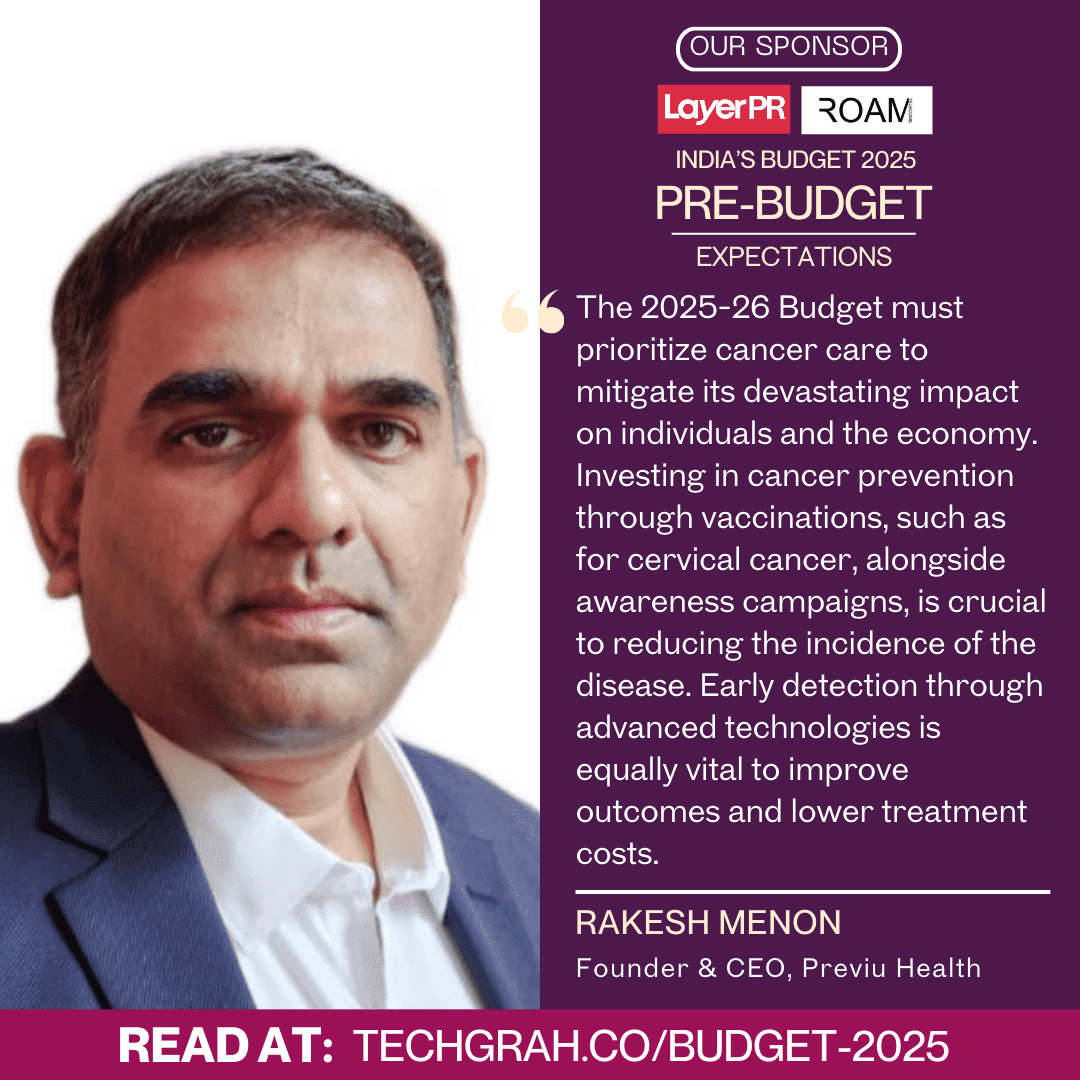
India’s 2025-26 Budget Must Prioritize Cancer Care. With 1 in 9 Indians at risk of cancer and 75-80% of cases detected at late stages, urgent action is needed to address this growing crisis. The 2025-26 Budget must prioritize cancer care to mitigate its devastating impact on individuals and the economy.
Investing in cancer prevention through vaccinations, such as for cervical cancer, alongside awareness campaigns, is crucial to reducing the incidence of the disease. Early detection through advanced technologies is equally vital to improve outcomes and lower treatment costs.
While initiatives like the Ayushman Card have improved healthcare affordability, the focus must go beyond affordability to include prevention and early detection. These measures will save lives, ease financial and logistical burdens on families, and reduce the strain on the healthcare system.
Arindam Sen, CEO & Director, Heartnet India

The Union Budget 2025 offers a chance to reshape India’s healthcare system to ensure timely, affordable, and equitable care for all. With the rising burden of cardiovascular diseases as the highest contributor to mortality rates, prioritizing early cardiac screenings and diagnosis is essential to enable timely interventions and treatments.
The National Health Mission increased the budget from INR 3.155 billion (US$37.70 million) in 2023-24 to INR 3.6 billion (US$43.01 million) in 2024-25. Investments in technologies like telemedicine and teleconsultation can bridge the healthcare divide between urban and rural areas.
Simplifying and strengthening the digital infrastructure for startups and MSMEs working in the healthtech sector can greatly help reduce the CVD burden to a huge extent. Increased collaboration between private players and solid cybersecurity measures are also crucial to protect patient data and promote an inclusive healthcare ecosystem.
Shereef Rehuman, MD, ICEXPO Consults Pvt. Ltd
The upcoming Union Budget 2025 is a pivotal opportunity to strengthen India’s healthcare ecosystem and global competitiveness. The pharma sector anticipates enhanced incentives for domestic API and biosimilar production to reduce import dependency. To truly elevate India’s healthcare ecosystem, three critical areas demand attention.
First, bolstering healthcare manufacturing and infrastructure is essential. With India poised to be a global leader in healthcare, strategic investments in domestic manufacturing will not only enhance self-reliance but also position the country as a hub for cutting-edge medical technologies and devices.
Second, streamlining regulatory frameworks is crucial. Simplified processes can fast-track the entry of innovative pharmaceuticals and health technologies into the market, ensuring patients benefit from advancements without unnecessary delays. A forward-looking regulatory environment can spark a wave of innovation, attracting global investments and fostering growth.
Lastly, healthcare must be affordable and accessible to every citizen. Policies that bridge gaps in care delivery and reduce costs for patients are imperative. Strengthening public-private partnerships and leveraging technology-driven solutions can make quality healthcare a reality for all. A visionary budget that addresses these priorities will not only transform healthcare but also contribute significantly to India’s socioeconomic progress.
Vishal Goel, Managing Director, RX Propellant

Budget 2025 offers a critical opportunity to position India as a global leader in life sciences, especially given geopolitical shifts and the need to compete with established players like China.
To achieve this, the budget must prioritize strategic investments and targeted support. This includes significantly increasing government funding for research and development through measures like extending tax benefits to CROs and R&D firms through modification of 115BAB, reintroducing weighted R&D deductions under 35(2AB), and implementing a 200% deduction on R&D expenditures, alongside streamlined tax appeal processes.
Furthermore, investing in shared, high-quality infrastructure within established research ecosystems, elevating NIPERs to IIT standards, and providing direct funding for promising drug candidates is crucial for fostering innovation. Increasing healthcare spending to align with global averages and rationalizing customs duties on essential therapies and equipment will further enhance access and affordability.
While the Promotion of Research and Innovation in the Pharmaceutical and Medical Technology Sector (PRIP) scheme which encourages established pharma companies to engage in collaborative research with the NIPERs and avail their research infrastructure is a good start, mere financial support and institutional collaboration through NIPERS may not be enough.
Other incentives such as creating an ecosystem for protecting and monetizing Intellectual Property rights (IPR), and partnerships with internationally recognized facilities for clinical trials, are also essential to attract large pharmaceuticals and medical technology companies.
These measures, coupled with regulatory streamlining and robust implementation of the National Pharmaceuticals Policy, 2023, are essential for strengthening India’s innovation ecosystem, solidifying its role as the ‘pharmacy of the world,’ and achieving the goal of a $130 billion pharma market by 2030.
Sushant Roy, Co-Founder, COO & CBO, Alyve Health

As the Union Budget 2025 approaches, it is essential to spotlight the transformative role of comprehensive health plans in promoting proactive healthcare. These plans are reshaping health behavior by encouraging regular check-ups, personalized assessments, and sustainable habit-building activities.
To accelerate this shift, we recommend the government focus on strengthening digital health infrastructure, standardizing annual health assessments, expanding access to underserved regions, and improving access to immediate expert consultation and health education.
By prioritizing these areas, the Union Budget 2025 has the potential to foster a proactive healthcare ecosystem, reduce long-term healthcare costs, and create a healthier, more productive workforce. This approach aligns with building a resilient healthcare framework that ensures better outcomes for all Indian citizens.
Dr. Sharmila Tulpule, Founder & Director, Orthobiologix Biotech Pvt. Ltd

We appreciate all the measures the government has undertaken to strengthen the healthcare sector and make quality care more accessible. To accelerate this progress, a few key areas deserve attention.
The newer medical procedures and other outpatient services under health insurance coverage would greatly benefit patients. Many patients avail of outpatient care, including consultations, diagnostics, and daycare procedures without needing hospitalization but may still be expensive to pay out of pocket. Insurance coverage for these services would ease financial pressures and promote early diagnosis and preventive care.
Also, please consider the reduction of GST and Customs Duty on medical devices and surgical inputs. This step could help lower treatment costs, making advanced procedures and life-saving interventions more affordable for patients.
What we also see is a growing need to focus on geriatric and palliative care. With an aging population and the increasing prevalence of chronic illnesses, establishing dedicated programs for holistic elderly care and long-term health management is essential.
Finally, encouraging emerging fields like regenerative medicine, robotics, and advanced diagnostics will drive innovation and position India as a leader in medical advancements. We hope to see the healthcare sector continue to grow better, wider, and deeper, ensuring better outcomes and accessibility for all.