


The New Tech Patron: Why Founders like Alexey Gubarev Are Turning Private Obsessions Into Museums

PUBLISHED:

See more TechGraph stories in your search results.
Google Add TechGraph on Google

When Microsoft co-founder Paul Allen wanted to house his fascination with rock music, he didn’t donate to an existing museum — he built one. The Experience Music Project, funded entirely by Allen and shaped around his own collection, opened in Seattle in 2000 and later became the Museum of Pop Culture. Seventeen years later, SAP co-founder Hasso Plattner did something similar in Germany: he financed the reconstruction of a bombed baroque palace in Potsdam to house his Impressionist paintings, opening the Museum Barberini in 2017.

Neither project was philanthropy in the traditional sense of writing a check to someone else’s institution. Both were personal collections turned into permanent public spaces, funded by fortunes made in technology. That pattern now has a name: the tech patron. Its newest example is taking shape somewhere unexpected — a former Soviet bus terminal in Bishkek, Kyrgyzstan.
- Advertisement -

A hosting company, then a car collection

Alexey Gubarev built his fortune the way Allen and Plattner built theirs: in technology infrastructure, sold at scale. In 2005, he founded Servers.com, a bare-metal hosting company that grew from 20 servers in Limassol, Cyprus, into data centers across North America, Western Europe and Asia.

He sold it to CloudOne Digital in 2023 for an estimated $200 million. He also co-founded Palta, a health-technology studio behind the app Flo, and TechIsland, a nonprofit that helped make Cyprus an attractive destination for skilled workers.

Gubarev bought his first car at 19, but serious collecting only began around 2014. He has said he originally pictured buying a couple of cars a year for one small warehouse, and that the hobby outgrew that plan far faster than expected.

The collection has since passed 200 vehicles, weighted toward what he calls the golden age of automotive design — the 1920s and ’30s — including more than sixty of the sweeping, aerodynamic “boat-tail” cars from that era.

From warehouse to museum

Gubarev is now converting a Soviet-era bus terminal in Bishkek into a permanent home for part of that collection, working with architecture firm IND to preserve the building’s modernist structure while adding exhibition space.
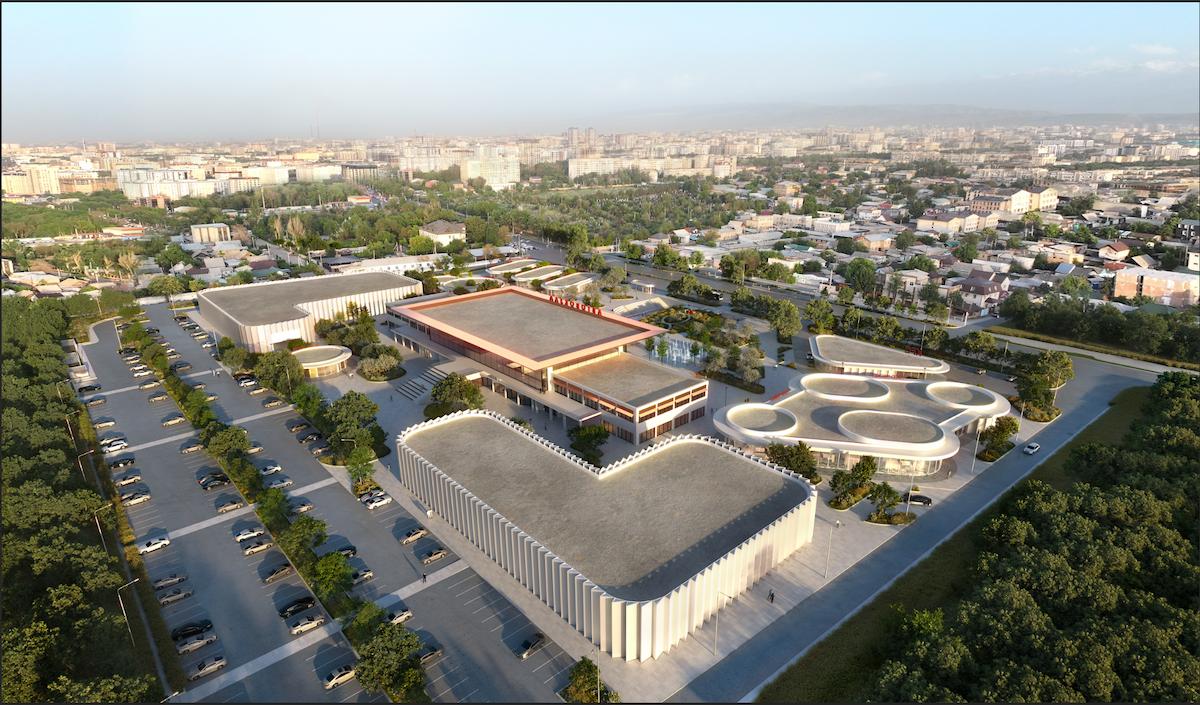
Rather than replacing the original architecture, IND is restoring the terminal’s multi-level circulation, in which separate pedestrian flows once moved at different heights, and reworking elements like the canopy and glazing for contemporary use, while adding new ramps for accessibility.

Around 80 of his cars will go on display, tracing automotive design across American, German, British, French and Soviet traditions.

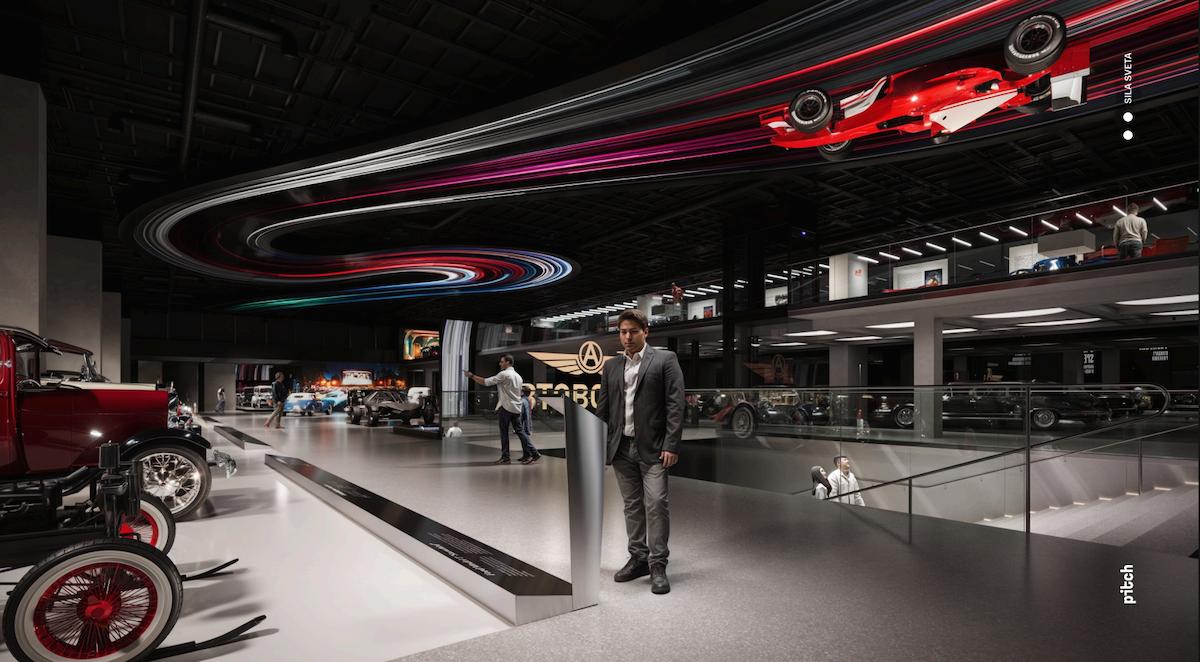
The layout, designed by creative studio SILA SVETA, is built around a single visitor route rather than a static exhibition hall: visitors enter beneath a suspended LED installation modeled on the Nürburgring racetrack, then move through a sequence of connected spaces, each treating the car from a different angle, engineering, cinema, design, and so on.

Beyond the exhibition halls, Gubarev has said he wants the museum to include open public areas and educational zones, positioning it as a year-round cultural destination rather than a single-collection showcase. The project is expected to open in 2027.

Gubarev has drawn a direct line between the two halves of his career. “You learn to be patient. You learn to wait for the right moment,” he said of collecting, in an interview with the Cyprus Journal of Wealth Management — framing both dealmaking and car-buying as the same exercise in judging rarity and timing.

That philosophy carries into the museum’s own design. Architect Amir Idiatulin of IND, the firm behind the reconstruction, has described the goal as treating architecture as a neutral background rather than a competing element, so that the cars themselves remain the focus of every room.

Why this keeps happening

The tech-patron museum is becoming a recognizable stage in a certain kind of founder’s career: build a company, sell it, then spend years and a share of the proceeds building a physical, permanent expression of something more personal than a cap table. Unlike a foundation grant or a museum wing named after a donor, these projects are built from scratch around one person’s specific taste — Allen’s guitars, Plattner’s Impressionists, Gubarev’s retro cars — and they keep running long after the company that funded them has moved on without its founder.

As more of the founders who built and sold companies over the past two decades reach the same point in their careers, Bishkek’s car museum looks less like an outlier and more like an early entry in a list that is still being written.

- Advertisement -

Stay ahead of the curve, every day.

A daily briefing covering news, interviews, and the trends driving the world forward. Curated for readers who want news, not noise.

We don’t spam! Read our privacy policy for more info.

- Advertisement -
Krishna Mali
Krishna Mali
Founder & Group Editor of TechGraph.

Top Gainers · Global

View all
NamePriceChange
ESTCElastic N.V. $101.56 +21.28%
DKNGDraftKings Inc. $26.57 +9.70%
AMZNAmazon.com, Inc. $265.41 +3.57%
6758Sony Group ¥3,480 +3.20%
SIESiemens €228.40 +3.10%

Latest Stories

Why Pre-Marital Health Screening Is Gaining Traction in India

In 2021, the National Policy for Rare Diseases was...

Create Cozy-Aesthetic Videos from Everyday Lifestyle Photos

There's a particular kind of content that never seems...

How Gen Z Is Using AI to Make Matchmaking More Personal

Gen Z AI matchmaking reflects a broader shift in how young Indians approach marriage, with technology learning to understand what people are looking for rather than forcing them to fit their expectations into traditional search filters.

The Connected Exchange: NCDEX CTO Balkrishna Shankwalker on the Future of the Commodity Market

As commodity markets become more complex, NCDEX is rethinking its technology infrastructure around anticipating risks, widening digital access and improving price discovery through more connected market systems.

The best CRM for a small business with a remote sales team is the one that answers at 11 p.m.

Every month, 18,100 people in the US search for...

Related Articles

Why Pre-Marital Health Screening Is Gaining Traction in India

In 2021, the National Policy for Rare Diseases was finalised and placed in the public domain. Its objective was specific: to reduce the incidence...

Create Cozy-Aesthetic Videos from Everyday Lifestyle Photos

There's a particular kind of content that never seems to go out of style — the soft, unhurried cozy aesthetic, all warm blankets, steam rising from a mug, soft window light falling across a quiet room. It's the visual equivalent of exhaling, and it...

How Gen Z Is Using AI to Make Matchmaking More Personal

Gen Z AI matchmaking reflects a broader shift in how young Indians approach marriage, with technology learning to understand what people are looking for rather than forcing them to fit their expectations into traditional search filters.

The Connected Exchange: NCDEX CTO Balkrishna Shankwalker on the Future of the Commodity Market

As commodity markets become more complex, NCDEX is rethinking its technology infrastructure around anticipating risks, widening digital access and improving price discovery through more connected market systems.

NumanCap Review 2026 | Markets, Margin and Mobile

Not long ago, trading meant calling a broker, paying a hefty commission, and waiting...

The Rise of Retail Spaces in India’s Emerging Cities

Organized retail in India remained more or less restricted to a select few metro...

The Death of India’s Unicorn Obsession

As funding becomes more selective and M&A and secondary buyouts gain ground, India’s startup ecosystem is beginning to rethink what success looks like beyond the billion-dollar unicorn valuation.

How vertical SaaS can modernise India’s laundry and garment-care industry

Ask anyone in an Indian city how they get their clothes cleaned, and you'll...

How to Set a WordPress Maintenance Budget Without Guessing

Build a practical WordPress care budget by separating recurring support, renewals, planned improvements and work that needs a separate decision.

From Alerts to Answers: How AI Is Rewriting Fraud Detection in Financial Services

Every bank, credit union, and payments company runs on a quiet paradox. The systems...

5 Best Gift Card Management Software Platforms for Growing Brands

Gift cards have quietly become one of the most valuable tools in a brand’s...

Who Needs to Comply With NIS2? A Sector-by-Sector Guide

Understand who NIS2 applies to, how Essential and Important Entities are classified, and what organisations need to do to strengthen cybersecurity compliance and operational resilience.

The best CRM for a small business with a remote sales team is the one that answers at 11 p.m.

Every month, 18,100 people in the US search for “best CRM for small businesses with remote sales teams” (Semrush, October 2026). The phrase is...

From Alerts to Answers: How AI Is Rewriting Fraud Detection in Financial Services

Every bank, credit union, and payments company runs on a quiet paradox. The systems...

5 Best Gift Card Management Software Platforms for Growing Brands

Gift cards have quietly become one of the most valuable tools in a brand’s...

NVIDIA Awards 172,507 Shares to EVP Nicholas Parker

NVIDIA Corp. () EVP for Worldwide Field Operations Nicholas P. Parker has received 172,507...

NVIDIA Awards 172,507 Shares to EVP Nicholas Parker

NVIDIA Corp. () EVP for Worldwide Field Operations Nicholas P. Parker has received 172,507...

Scalefusion Launches Veltar Vulnerability Management for Endpoint Security

Veltar Vulnerability Management connects vulnerability detection with Scalefusion UEM, allowing security and IT teams to assess endpoint risks and move towards remediation within the same workflow.

Where Driver Dollars Are Really Going

Owning a motor vehicle involves a wide variety of ongoing costs that go far...

How is the extensive use of AI causing cyber threats?

At times, when artificial intelligence is involved in routine procedures without even being noticed,...