


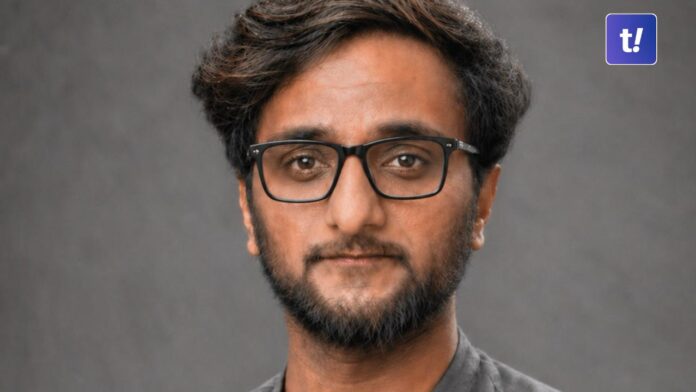

Speaking with TechGraph, Siddhant Agarwal, Founder of Luxid Tech, discussed how the AR and VR industry has remained constrained by over-engineered products focused on creating immersive environments, while overlooking simpler use cases such as everyday screen consumption, and how this gap between product design and actual user behaviour has limited mainstream adoption.
Agarwal also spoke about how Luxid Tech is addressing this gap by developing lightweight VueAR Glass that focuses on usability and comfort, using MicroOLED-based projection to reduce screen strain and enabling seamless integration with existing devices, while supporting features such as multi-screen setups and intuitive interaction controls that align with evolving screen habits.
Read the interview in detail:
TechGraph: AR glasses have been positioned as the next computing interface for years, yet mainstream adoption has remained limited. What did you see differently that led Luxid Tech to build a product around everyday screen consumption rather than niche use cases?
Siddhant Agarwal: The problem with the AR/VR industry is that builders always try to have a “perfect” product, which means high processing, too many cameras, etc., things that might not be needed by a very basic consumer who only needs a HUD (Heads Up Display). Also, the learning curve matters to a great extent in adapting to something faster.
TechGraph: Many wearable devices struggle not because of capability but because of comfort and long-term usability. How did Luxid Tech approach ergonomics and visual safety while designing something meant to be worn for extended periods?
Siddhant Agarwal: VueAR Glass only weighs 78g with a Nose-pad that works like a shoe (get adjusted to user’s nose size after base usage) Apart from the weight we have a Detachable Visor that lets users whether to have a theatre like Vue or transparent Vue so if a user needs it for extended periods removing the visors to be able to see every while you walk ik your office/home because very easy.
TechGraph: You are positioning Luxid Vue as a 180-inch portable screen that connects seamlessly with existing devices. In practical terms, how do you see users integrating this into their daily routines without it becoming another piece of occasional tech?
Siddhant Agarwal: Through building perfect utilities, all of us today have more than 9 hours of screentime, and there’s no chance it’s gonna go down. Our habits in context to screens have completely evolved with no age boundary, then why don’t we have screens that support those long screening habits through much better & safer screens for you?
TechGraph: There is a growing conversation around screen fatigue and the long-term impact on posture and vision. How is Luxid Tech validating the claim that such devices can reduce strain rather than add to it?
Siddhant Agarwal: Digital Friction & Screen overload is a definite growing problem, VueAR Glass is built using MicroOLED displays which firstly do not have the base white-LED panel which is usually the main culprit behind bluray emissions in any screen, secondly screen you see on VueAR Glass gets projected 3-5m away from you so you’re not actually looking at a screen but a projection of a screen making it safer and much much less eye straining.
TechGraph: Privacy has always been a sensitive area with wearable devices, especially those that sit close to the eyes and display personal content. How is Luxid Tech addressing concerns around discreet usage and data security?
Siddhant Agarwal: We do not collect or process any USER DATA, unlike other big corporates neither we plan to in the future, whatsoever happens on your device REMAINS on your device.
TechGraph: The category has seen attempts from large global players, many of which struggled to move beyond early adopters. Where do you think those products fell short, and how is Luxid Tech avoiding the same pitfalls?
Siddhant Agarwal: Problem is generation & localized gap, this industry has to be the industry of FANATICS, only these kind of builders can actually build something useful, a Billionaire sitting in his CA HQ deciding that people would wear a 800-900g headset and then will goto a cartoonish world to finally have their work meetings wouldn’t make sense to base consumers, biggest players in tech have tried to build $3.5k heavy processing & 12 camera hardware though it didn’t work it won’t ever work because $3.5k and this much processing amd cameras isn’t the need of every consumer.
TechGraph: For AR glasses to become a true alternative to laptops or large displays, they need to fit seamlessly into daily workflows. What do you believe still needs to fall into place before devices like Luxid Vue move from early adoption to mainstream use?
Siddhant Agarwal: Getting a HUD isn’t everything & most of our workflows are based upon the software/apps we use and how we them, We at Luxid are seamlessly integrating all the apps we’ll love in an frictionless environment by giving features like multi-screen setup, AI powered controls (upcoming), multi-interaction options (Cursor or Raycaster), accessories that empower you more, ability to have your all Google accounts, etc be working in a close multi-screen setup that you customized as per your utility.