


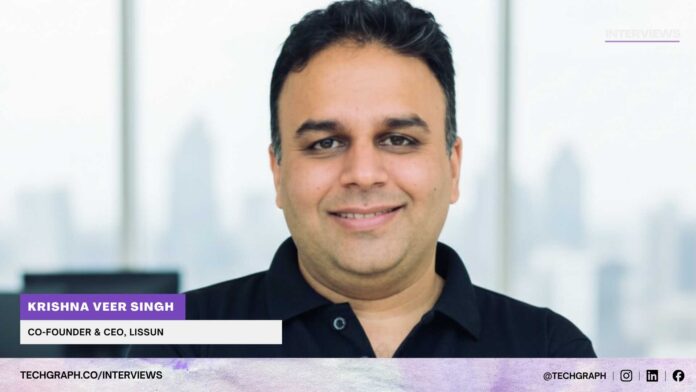

Speaking with TechGraph, Krishna Veer Singh, Co-Founder and CEO of LISSUN, discussed how mental health in India is shifting from isolated conversations to a mainstream concern across homes, schools, and workplaces, and how the company’s omnichannel model is helping convert awareness into action by bringing together the empathy of trained counsellors and the reach of technology for timely identification and structured support.
Singh also spoke about how AI-led tools, specialized programmes such as Sunshine, and partnerships with corporates, educational institutions, and healthcare providers are enabling LISSUN to deliver personalized and proactive care that remains relatable and accessible across diverse communities in the country.
Read the interview in detail:
TechGraph: Mental health has moved from being a peripheral subject to a priority across households and workplaces. Still, the challenge often lies in translating awareness into action. How is LISSUN addressing this gap between people acknowledging their mental health needs and actually seeking structured support?
Krishna Veer Singh: Mental health has become a mainstream conversation and a focal point across multiple strata of society,but it is still fairly stigmatized. At LISSUN, we are on a mission to destigmatize mental health and take it beyond ‘just conversation’ to actual action. We believe awareness is only the first step toward real change and that real challenge lies in helping people identify the path to resolution, and that is exactly what we have built our approach around.
Through our omnichannel approach, we combine the empathy of human counselling with the precision of technology, ensuring help is available where it matters most. Our on-ground psychologists and digital screening tools together identify those at risk early, enabling timely intervention and consistent follow-up. This approach has already supported over one lakh individuals across India and helped avert more than a thousand potential self-harm incidents.
We have seen that when mental health services are accessible, relatable, and embedded in trusted environments like schools and workplaces, people respond. Our mission is to make mental health support not an afterthought but an everyday reality, deeply woven into India’s emotional ecosystem.
TechGraph: While technology allows scale and access, mental health is an area where trust and nuance matter deeply. How do you ensure that digital interventions don’t become transactional, and what safeguards do you put in place to maintain the human connection at the heart of care?
Krishna Veer Singh: Technology has been a great enabler for scale and easy access, but mental health needs a safe environment where trust and compassion are pivotal. Our digital tools are designed to complement our panel of psychologists.
Every AI-driven intervention is created to provide empathy and comfort first, thereon, leading to a human touchpoint. Human interventions, depending on the preference of the individual, are routed either through an on-ground counsellor, or a virtual session with a licensed psychologist. This ensures that every individual feels heard, not just processed.
We have built multiple layers of emotional and clinical validation into our system so that technology enhances accuracy while counsellors retain the emotional depth that care demands. Our work across 40 cities and partnerships with 20 educational institutions demonstrates that scale can coexist with sensitivity.
Regular supervision, anonymised data protection, and personalised care plans further preserve trust. The result is an omnichannel model where technology amplifies reach, but the human connection remains at the very core of mental wellness.
TechGraph: Many health-tech startups struggle to create a sustainable business model while serving a sensitive need like emotional well-being. What has been the toughest strategic call you have had to make in balancing affordability, accessibility, and long-term profitability?
Krishna Veer Singh: We embarked upon this journey to solve a greater challenge facing humankind. As a business, revenue is important, but we cannot forget the reason why we started this brand: making mental health accessible and affordable,without compromising on the quality of therapy and therapists.
We live in a nation where mental health awareness is fairly nascent and growing, yet access, affordability, and meaningful support remain limited, making it critical to design solutions that truly work for everyone. At LISSUN, we addressed this by embedding the 6As—Awareness, Acceptance, Anonymity, Access, Affordability, and Assurance—into every aspect of our model. Significant investment in training, infrastructure, and digital systems ensures that technology enhances reach without replacing the empathy and nuance therapists bring to care.
Our omnichannel approach allows digital tools to manage screenings and follow-ups while professionals focus on personalized, high-impact interventions. Each decision has been about creating a system where accessibility, affordability, and clinical excellence coexist, enabling us to expand responsibly while maintaining trust and depth in the care we deliver.
TechGraph: Expansion in mental health services is not just about opening new markets but also about adapting to cultural and linguistic contexts. As you look at tier 2 and tier 3 cities, what specific barriers have you identified, and how are you tailoring your solutions to overcome them?
Krishna Veer Singh: In many tier 2 and tier 3 cities, mental health continues to be a sensitive subject, influenced by cultural norms and limited awareness, which often hinders people from seeking support. LISSUN has developed solutions that are contextually relevant and accessible, combining local centres with trained therapists and digital tools that provide guidance in regional languages to ensure care resonates with diverse communities.
Awareness initiatives and collaborations with schools, coaching institutes, and healthcare providers help reduce stigma and promote early intervention. Therapists receive structured training to understand cultural and linguistic nuances, while AI-driven tools enable the timely identification of needs and monitor outcomes effectively.
Integrating personalized care with scalable technology allows mental health support to become approachable, trusted, and impactful, bridging the gap between awareness and meaningful action across India’s smaller cities.
TechGraph: Corporates often invest in wellness programmes, yet the return on such initiatives is hard to measure. What evidence or insights have you gathered that show whether your interventions are genuinely improving employee wellbeing rather than just ticking compliance boxes?
Krishna Veer Singh: In corporate settings, the true impact of mental health interventions goes beyond compliance and hinges on measurable changes in engagement, productivity, and resilience.
We work closely with organisations to understand workforce challenges and embed support into daily routines, ensuring relevance and continuity. Metrics such as increased repeat usage of counselling services, improved employee engagement scores, reduced burnout indicators, and higher retention rates provide concrete evidence of meaningful outcomes.
AI-enabled monitoring and structured follow-ups help track individual progress while anonymized analytics highlight team-level trends, allowing leadership to see tangible improvements in wellbeing and morale. Regular feedback loops with employees and HR teams ensure that interventions evolve in response to real needs.
TechGraph: The sector is drawing interest from both investors and regulators, yet the frameworks to evaluate effectiveness remain underdeveloped. What kind of partnerships, policy support, or industry standards do you think are necessary to bring credibility and consistency to mental health services in India?
Krishna Veer Singh: Building credibility and consistency in mental health services requires collaboration across multiple fronts. At LISSUN, we have seen the value of strategic partnerships with educational institutions, healthcare providers, corporates, and technology platforms to ensure interventions are evidence-based, scalable, and contextually relevant.
Policy support that mandates standardized training, certification, and periodic audits for therapists and digital tools would help create uniform quality benchmarks. Industry-wide standards for data privacy, ethical AI use, and outcome measurement are essential to establish trust among users and regulators alike.
Public-private initiatives that incentivize research, monitoring, reporting of mental health outcomes, and insurance coverage for services could further strengthen accountability, accessibility, and transparency.
Integrating these measures with community awareness campaigns and accessible reporting mechanisms ensures that mental health care is not only available but reliable, measurable, and respected, bridging the gap between innovation and demonstrable impact across India.
TechGraph: Looking ahead, what is the broader ambition for LISSUN beyond growth metrics? Do you see the company evolving into a platform that integrates mental health into everyday life, or scaling in a more specialised direction with a sharper focus?
Krishna Veer Singh: At LISSUN, we are working to create an ecosystem where emotional well-being is seamlessly embedded into homes, schools, workplaces, and healthcare settings, making support accessible, proactive, and culturally relevant.
While we continue to scale specialized services like Sunshine for children with developmental challenges, our vision is holistic, combining technology, human expertise, and community engagement to normalize conversations around mental health.
AI tools, omnichannel centres, and structured programmes allow us to offer personalized care at scale, while partnerships across corporates, educational institutions, and healthcare providers extend our reach. Fundamentally, we aim to build a platform that not only addresses clinical needs but also empowers individuals to prioritize and manage their mental well-being as a natural part of daily life.