




As India’s Finance Minister Nirmala Sitharaman prepares to present the Union Budget 2025, expectations are running high from the MSME sector, which contributes nearly 30% of the GDP and 40% of exports. Leaders are calling for urgent measures to address chronic payment delays, a problem that continues to stifle growth despite existing policies. With over 2.18 lakh cases still unresolved on the Samadhaan portal, the call for a robust enforcement framework has grown louder.
Additionally, there’s a push for fiscal support to foster digital adoption and bridge the widening skill gap, ensuring MSMEs can thrive in an increasingly tech-driven economy.
Read the expectations from the industry experts in detail:
Gaurav Maulikhi, SVP, Business Transformation and Sales Strategy, Solv

We anticipate that the Union Budget 2025 will address some of the longstanding issues and unlock the true potential of India’s MSME sector, which accounts for nearly 30 of the nation’s GDP and 40% of its exports. A major issue currently is the persistent problem of delayed payments, highlighted by over 2.18 lakh applications filed on the Samadhaan portal since its inception in 2017.
Despite the introduction of incentivized payments, the issue persists, underscoring the need for a robust framework to address it effectively. Such a framework would ensure timely payments, eliminate working capital constraints, and significantly improve the operational efficiency of MSMEs.
Skill development is another key area that requires attention. Substantial budgetary allocations for programs in digital literacy, supply chain optimization, and financial management can boost MSMEs’ competitiveness in the global economy.
Furthermore, affordable and timely access to financing remains a priority, given the sector’s estimated credit gap of ₹20 to ₹25 trillion. Initiatives like the Emergency Credit Line Guarantee Scheme (ECLGS) and Partial Credit Guarantee Scheme (PCGS), along with simplified credit disbursal, can provide financial support to MSMEs, especially in tier 2 and tier 3 regions.
The expectations from the Union Budget 2025 are poised to lay a strong foundation for MSMEs’ sustainable growth, ensuring their global competitiveness, and reinforcing their role in India’s economic progress. Advancing digital transformation through targeted incentives and funding for technology adoption will enable productivity, automation, and sustainable growth. Furthermore, simplifying regulations and compliance will streamline operations and drive innovation.
Dr. Ramya Chatterjee, Chief of Solitaire Brand Business

India’s manufacturing sector requires substantial budgetary support in 2025 to further solidify the country’s leadership in the electronics segment. The proposed allocation of Rs 51 lakh crore by the PHD Chamber of Commerce and Industry demonstrates the government’s commitment to manufacturing excellence and growth potential.
The electronics manufacturing success story, exemplified by the industry’s remarkable growth, demonstrates what’s possible with the right policy support. However, achieving the ambitious goal of 25% manufacturing contribution to GDP by 2025 necessitates focused efforts in three pivotal areas: strengthening the component manufacturing ecosystem, advancing R&D capabilities, and boosting export competitiveness.
With a projected export growth of 5.9% in FY25, the electronics sector presents immense opportunities in specialized areas like IFPD manufacturing. To capitalize on these, the budget should prioritize skilled workforce development and technology upgrades.
As India positions itself as a viable alternative to China in global supply chains, the 2025 budget should emphasize not only higher allocations but also strategic, targeted measures to address immediate challenges and build sustainable, long-term manufacturing capabilities.
Mukul Goyal, Co-Founder, Stratefix Consulting

The upcoming budget offers a critical opportunity to empower MSMEs and startups, which are central to India’s economic growth. While the recently introduced credit guarantee scheme is a welcome step, there is an urgent need for a Working Capital Support Guarantee to address liquidity challenges, especially for MSMEs managing day-to-day operations. Export-oriented MSMEs, contributing nearly 49% of India’s exports, could particularly benefit from tailored credit access and interest subsidies. Simplified compliance structures and faster grievance redressal systems would further reduce operational burdens and improve efficiency.
To enable MSMEs to thrive in the digital economy, the government should launch a Digital Acceleration Fund, providing interest-free loans or grants for AI, IoT, and cloud adoption. Additionally, initiatives like the Skill 2.0 Initiative and Skill Credits could bridge the growing skill gap by encouraging MSMEs to invest in upskilling their workforce in emerging technologies. These measures would enhance employability and help MSMEs compete globally.
Fostering innovation is equally crucial. Offering R&D tax credits and establishing sector-specific innovation hubs, particularly in manufacturing and agri-tech, can promote entrepreneurship and sustainable growth. These hubs could provide resources, mentorship, and funding for startups, especially in Tier-2 and Tier-3 cities, boosting local economies.
Addressing GST compliance challenges is also essential. Easing norms, raising the mandatory e-invoicing threshold, and harmonizing input tax credits would help MSMEs manage cash flows better. Revising GST slabs for essential raw materials would further reduce input costs and improve margins.
By addressing these critical areas, the budget can create a robust ecosystem for MSMEs and startups, driving innovation, digital transformation, and sustainable growth. This comprehensive approach will enable these sectors to contribute significantly to India’s $5 trillion economy vision.
Anupam V Joshi, Founder & CEO, WAE Ltd
As India positions itself as a global manufacturing hub, the small and Medium Enterprises (SMEs) sector remains the cornerstone of its industrial and economic growth. However, systemic bottlenecks and operational inefficiencies continue to impede the sector’s potential. The existing GST payment structure disproportionately burdens SMEs, as it necessitates tax remittance prior to the realization of buyer payments.
This structure exacerbates liquidity pressures, creating a financial bottleneck for manufacturers. A proposed amendment to transfer GST liability to the buyer would alleviate these challenges, ensuring that SMEs retain adequate cash flow to sustain operations.
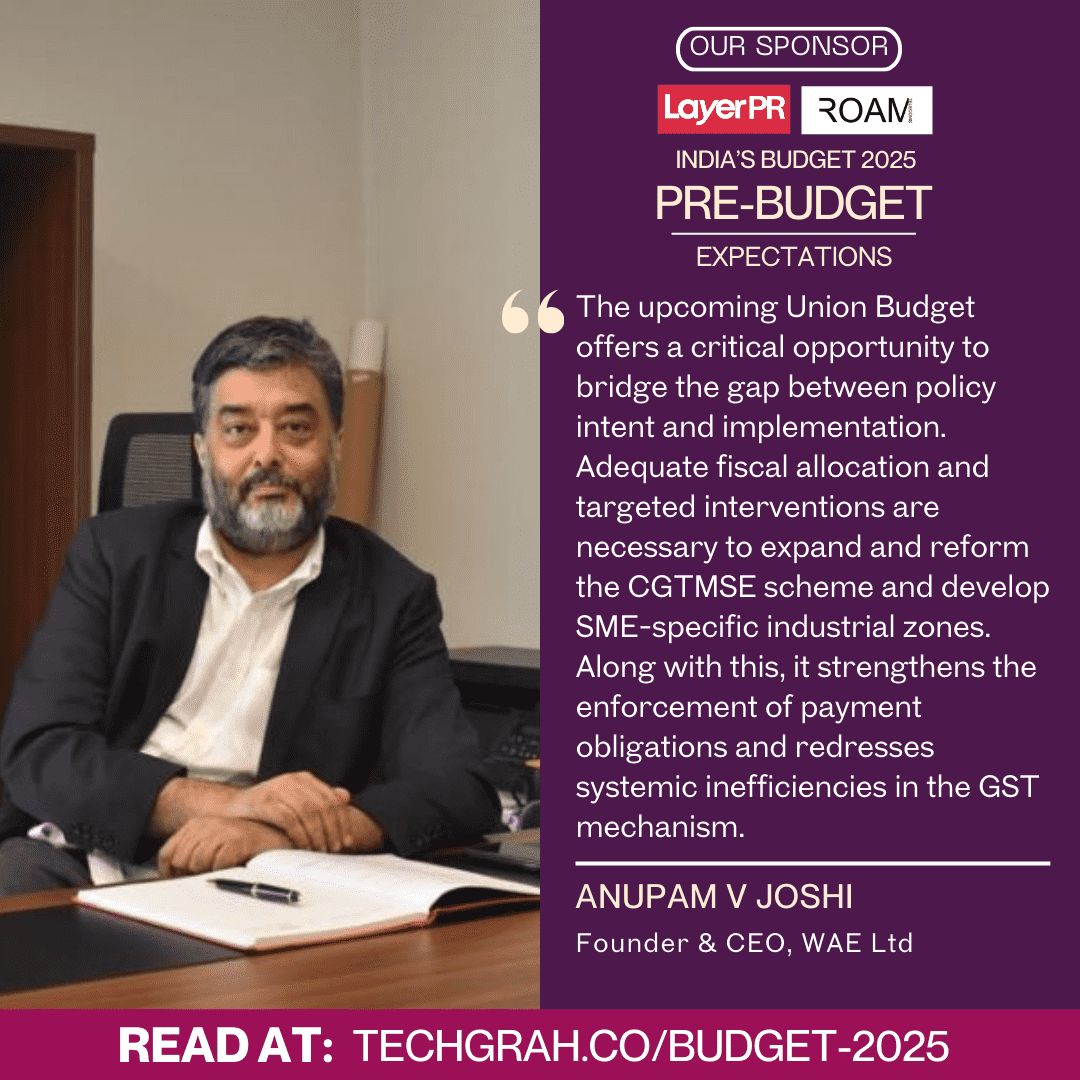
The upcoming Union Budget offers a critical opportunity to bridge the gap between policy intent and implementation. Adequate fiscal allocation and targeted interventions are necessary to expand and reform the CGTMSE scheme and develop SME-specific industrial zones. Along with this, it strengthens the enforcement of payment obligations and redresses systemic inefficiencies in the GST mechanism.
In addition to this, the statutory 45-day payment mandate under the MSMED Act remains largely ineffective, with government agencies and public sector enterprises among the primary defaulters. To address this, stakeholders call for the implementation of stringent enforcement mechanisms, such as penalties for non-compliance and real-time payment tracking systems. Such reforms are imperative to uphold fiscal discipline and ensure liquidity within the SME value chain.
Anjan Pathak, CTO & Co-founder, Vantage Circle

As we approach the Union Budget 2025, we hope to see measures that drive inclusive growth, particularly in regions like Northeast India, which hold immense potential for innovation and entrepreneurship. Strengthening digital infrastructure, expanding support for MSMEs, and enhancing access to emerging technologies like AI-driven automation and blockchain could significantly boost regional development and economic progress.
Additionally, we look forward to incentives that encourage R&D and digital skill development, enabling businesses to stay competitive in a rapidly evolving global market. Prioritizing cybersecurity and long-term financial support for technology adoption will be pivotal in ensuring sustainable growth and innovation across the nation.