

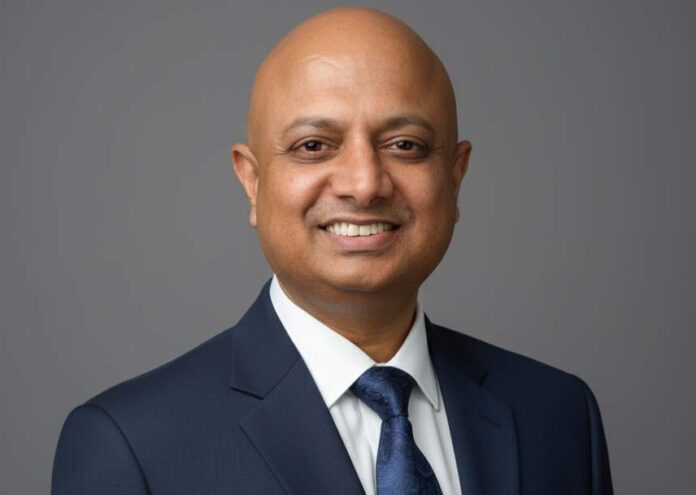
Roombr Founder Satisha Naraharimurthy On Scalable Digital Learning Beyond Metro Schools

Date:

Trending

- Advertisement -

Speaking with TechGraph, Satisha Naraharimurthy, Founder and CEO of Roombr, discussed how schools have spent years adding smart boards, LMS platforms, and different video teaching tools, but teachers continue to struggle with fragmented workflows that interrupt teaching rather than support it, and how Roombr is building a single classroom system that brings teaching, collaboration, assessment, recording, and device management into one single classroom environment.

Read the interview in detail:

- Advertisement -

TechGraph: Schools often invest heavily in standalone smart boards, LMS platforms, or video-conferencing tools, yet teachers still struggle with fragmented systems. What gap in digital classrooms did you see that convinced you there was room for a fully integrated solution rather than another incremental upgrade?

Satisha Naraharimurthy: For years, schools kept adding more devices and platforms—smart boards from one vendor, LMS from another, conferencing tools from a third. What we saw was not a technology problem, but a coordination problem. Teachers were juggling five systems that didn’t talk to each other. Classrooms became digitally cluttered instead of digitally empowered.

Roombr was born to fix that. We built a single, integrated AI-powered classroom platform that combines teaching, collaboration, content creation, assessment, analytics, and device management in one place. No switching tabs, no fragmented workflows—just one seamless ecosystem that works the way teachers actually teach.

TechGraph: In India, many schools still struggle with infrastructure constraints, budget limitations, and inconsistent connectivity. How, then, does Roombr ensure that its digital classroom experience remains seamless, even in tier-two and tier-three cities where technology adoption patterns differ significantly from those in metro schools?

Satisha Naraharimurthy: We designed Roombr for India’s real classrooms, not just its metro schools.

- Advertisement -

Three principles make it work everywhere:

Offline-first architecture – Teachers can record, teach, annotate, and manage classes with zero internet. The system syncs automatically whenever connectivity is available.

Edge AI – Most AI processing happens locally on the Roombr device, reducing bandwidth dependence and ensuring reliability even in low-network regions.

Cost-efficient deployment – Schools don’t need multiple devices or expensive infrastructure. One Roombr system replaces the smart board, LMS, recording software, assessment engines, and teacher tools.

- Advertisement -

Roombr is built to be metro-grade technology at small-town practicality.

TechGraph: You talk about empowering teachers through technology. In practice, many classroom tech platforms end up increasing the workload rather than reducing it. How did Roombr ensure that teachers spend more time teaching and less time managing the system?

Satisha Naraharimurthy: Our design philosophy is simple:

If it doesn’t save teachers time, it doesn’t ship.

Roombr automates the tasks teachers usually lose hours on:

“Create a quiz from this chapter” → auto-generated assessments.

“Translate this slide to Hindi” → instant multilingual support.

“Summarize this lecture” → auto chaptering and content packaging.

Attendance, timetables, class setup → fully automated.

What earlier took 30–40 minutes now takes 30 seconds. Teachers finally get to focus on teaching, not admin. That’s the real impact.

TechGraph: Recorded sessions that can be edited with AI, turned into structured chapters, and then linked to assessments. That is a big departure from the traditional classroom. What kind of mindset shift is needed from educators to truly unlock the power of this approach?

Satisha Naraharimurthy: This shift is not about replacing traditional teaching; it’s about capturing and amplifying it.

The mindset educators need is simple:

Your teaching is content. Your explanations, diagrams, and examples are intellectual assets.

For the first time, teachers can:

Record lessons naturally while teaching

Auto-convert them into chapters, notes, and assessments.

Build their own digital library with zero extra effort.

The shift is from “teach and forget” to “teach once, impact many times.”

Educators who adopt this mindset unlock massive productivity and student outcomes.

TechGraph: The pandemic made online learning mainstream, yet it also exposed deep inequities in access and teaching quality. Do you see Roombr’s hybrid classroom model becoming a standard in Indian schools, where physical and remote learning exist seamlessly rather than as separate tracks?

Satisha Naraharimurthy: Yes—hybrid is no longer an emergency response; it’s the future classroom.

Parents want flexibility, schools want continuity, and students learn best when physical and digital support each other. Roombr makes this possible by ensuring:

In-class teaching is immersive and collaborative.

Remote learners feel present.

Everything taught physically becomes digitally available instantly.

Hybrid learning is not about replacing schools—it’s about making them future-proof. India is ready, and Roombr is enabling that transition at scale.

TechGraph: Classroom data, recordings, and student performance analytics raise natural questions around privacy and ownership. What safeguards and policies has Roombr put in place to ensure transparency and security for schools, teachers, and parents?

Satisha Naraharimurthy: We take this responsibility extremely seriously. Our principles are clear:

  • Schools own their data—always.
  • No student data is ever used for training AI models.
  • All recordings and analytics stay encrypted end-to-end. Local edge storage ensures sensitive content doesn’t depend on the cloud.

We follow global standards (GDPR, FERPA-aligned frameworks) and provide complete transparency to schools, teachers, and parents. Trust is non-negotiable in education, and our architecture is built around that belief.

TechGraph: EdTech has become a crowded space, with many companies focusing on content, tutoring, and marketplace models. Roombr is taking a very different route by building infrastructure inside the classroom. What does this strategy mean for your long-term scale plans, and where do you see Roombr in the next five years?

Satisha Naraharimurthy: While most EdTech companies chase content or tutoring, we’re building the rails on which the future of classroom learning will run. Our strategy has three long-term implications:

  • Deep penetration – Once Roombr enters a classroom, it becomes the central teaching system for years.
  • High retention – Schools don’t churn because Roombr becomes mission-critical infrastructure.
  • Scalable AI ecosystem – Every new classroom strengthens our network of teacher workflows, assessments, and learning insights.

    In five years, we see Roombr powering over 25,000 schools, 1,00,000+ classrooms, and becoming the default operating system for Indian classrooms across metros and small towns.

    Roombr isn’t another edtech product—it’s a platform redefining how India teaches and learns.

    THE SNAPSHOTS

    Sign up to get quick snaps of everyday happening, directly in your inbox.

    We don’t spam! Read our privacy policy for more info.

    - Advertisement -
    Krishna Mali
    Krishna Mali
    Founder & Group Editor of TechGraph.

    More Latest Stories

    More Articles

    What PM Modi’s Appeal to Avoid Gold Buying Could Mean for India’s Jewellery Economy

    When Prime Minister Narendra Modi recently urged citizens to avoid purchasing gold for a year, the statement immediately unsettled large parts of India’s jewellery...

    As Crypto Markets Mature the OpenSea Insider Trading Case Still Shapes Governance Debates

    When federal prosecutors charged former OpenSea employee Nathaniel Chastain in June 2022, the case was widely described as the first major insider trading prosecution involving NFTs. The allegations emerged during the peak of the Ethereum NFT boom, when digital collectibles had rapidly evolved from...

    How SMS Verification Infrastructure Is Evolving in Modern Digital Platforms

    As digital platforms scale globally, identity verification has become a critical layer of modern...

    The Business of Recycling: Profit, Waste, and Sustainability

    The business of recycling stands at the intersection of environmental responsibility and economic opportunity....

    MochaTrade Raises Pre-Seed Funding From Y Combinator and Pioneer Fund

    MochaTrade, a global trading platform focused on offering perpetual futures linked to U.S. stocks,...

    Borade AI Founder Shiv Kumar Borade on Building an AI Growth Engine for Small Businesses

    Speaking with TechGraph, Shiv Kumar Borade, Founder & CMD of Borade.AI, discussed how many...

    How Agentic AI Is Personalising the End to End Salon Experience

    Walk into a salon today, and more often than not, the experience still depends...

    From Black Box to Trusted AI: Why Defence Needs Constitutional AI Models

    For decades, the defence and intelligence agencies have followed one non-negotiable rule: trust nothing...

    Serhii Tokarev Spoke About The Third Season Of The Generation H Accelerator

    Serhii Tokarev spoke about the Generation H 3.0 HealthTech accelerator, which is opening applications to international startups for the first time. Generation H is a...

    Apple Reports $111.18 Billion Revenue in Q2 FY26, Net Profit Rises to $29.6 Bn

    Apple Inc. (NASDAQ:APPL) has reported its financial results for the quarter ended March 28,...

    Hermès vs MetaBirkin: The NFT Case That Redefined Ownership on Ethereum

    The NFT boom of 2021 and early 2022 pushed digital assets into the mainstream,...

    8B, PayU Partner to Enable UPI Payments for Indian Users Across Central Asia

    Central Asian fintech infrastructure company 8B has partnered with PayU Payments to enable UPI...

    What India’s developers are building in crypto despite regulatory uncertainty

    India’s crypto story has largely been framed through the lens of investment and regulation....

    Gen Z Shops Differently: How E-commerce Backend Systems Are Adapting to ‘Always-On’ Buying

    Gen Z’s influence is not limited to new preferences for purchases. It has redefined the pattern of purchases. While previous trends in e-commerce purchases...

    Reframing AR for Consumers: Luxid Tech’s Siddhant Agarwal on Building Screen-First Smart Glasses for Everyday Use

    Speaking with TechGraph, Siddhant Agarwal, Founder of Luxid Tech, discussed how the AR and VR industry has remained constrained by over-engineered products focused on creating immersive environments, while overlooking simpler use cases such as everyday screen consumption, and how this gap between product design...

    How Tech-Driven Hiring Models Are Closing India’s Employability Gap

    The paradox of employment in India becomes increasingly pronounced every year, as many students...

    Bihar Police, Vehant Technologies Partners to Deploy Screening Systems Across 40 Courts

    In a bid to enhance safety and security across court premises for judges, lawyers,...

    Refurbished Electronics Platform Grest Secures FDI from Japan’s ICMG in Pre-Series A Round

    Grest, an India-based premium refurbished electronics platform, has secured foreign direct investment from ICMG...

    The IoT Platform Market Just Consolidated: Smart Integrators Are Looking Elsewhere

    Three platforms changed owners in 15 months. Your stack didn't change. Your risk profile did.

    How Home-Based Healthcare is Improving Medical Accessibility Across India

    The Indian health care industry has seen considerable transformation in recent times, primarily due...

    Meta Platforms, Broadcom Partners to Co-Develop Multi-Gen Silicon AI Chips

    Facebook parent Meta Platforms (NASDAQ: META) has expanded its partnership with Broadcom to co-develop...

    Trump Accuses Iran of Breaching Ceasefire, Warns Over Strait of Hormuz Transit

    The US President Donald Trump has accused Iran of failing to allow adequate oil...

    India’s Foreign Secretary Vikram Misri Holds Talks with FBI Chief Kash Patel

    India’s Foreign Secretary Vikram Misri met FBI Chief Kash Patel in Washington on Thursday...

    Cisco Director Pete Shimer Files Initial Ownership Disclosure with SEC

    Cisco Systems (NASDAQ: CSCO) board member Pete A. Shimer has filed an initial statement...

    8B, PayU Partner to Enable UPI Payments for Indian Users Across Central Asia

    Central Asian fintech infrastructure company 8B has partnered with PayU Payments to enable UPI...

    “Budget should focus on reducing taxes on capital gains,” Says Abhishek Gupta of Hex N Bit

    Speaking in the upcoming Union Budget 2021, Abhishek Gupta, Founder, and CEO, Hex N...

    “China is a Global thief” Rep. Tom Rice on Uyghur Forced Labor Prevention Act

    Speaking at the House on Uyghur Forced Labor Prevention Act, Rep. Tom Rice (R-SC)...

    India Is Building Cities Without Building the Systems That Make Them Work

    India is in the middle of the largest urban expansion in its history. By 2050,...

    Ethnic Wear Brand Alaya By Stage3 Raises Seed Funding Led by LC Nueva AIF

    Gurugram-based Alaya By Stage3, a modern Indian wear brand operated by Cosmo Brands, has...

    What India’s developers are building in crypto despite regulatory uncertainty

    India’s crypto story has largely been framed through the lens of investment and regulation....

    Alphabet Discloses $2.14 Billion in Public Equity Holdings as of June 30

    Alphabet Inc. disclosed $2.14 billion in equity securities held across 39 positions as of...

    Gaming for Good: Boosting the Indian Gaming Community through Technology

    The Indian gaming industry is transforming remarkably, driven by technological advancement and a growing...

    India to generate $100 bn from telephonic investments

    India expects to attract $100 billion in investments in the telecom sector, a union...