


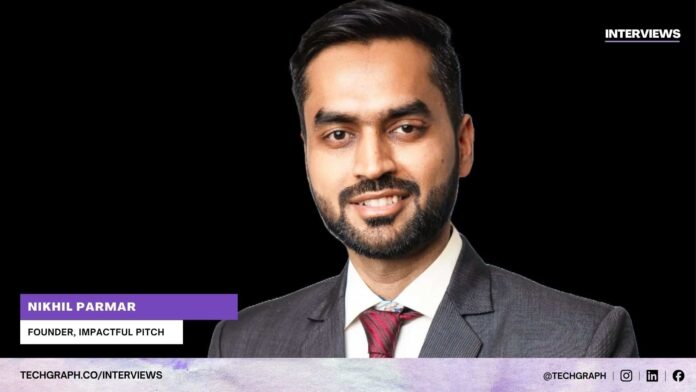

Speaking with TechGraph, Nikhil Parmar, Founder of Impactful Pitch, outlined how India’s startup funding landscape is entering a more disciplined phase as founders shift focus from quick rounds to building long-term capital partnerships, and how the company is supporting this transition by helping entrepreneurs craft investor-ready narratives and structured fundraising frameworks that align business vision with investor expectations.
Parmar further explained how Impactful Pitch translates this approach into practice through its structured fundraising model that combines strategic planning, investor mapping, and narrative design to ensure stronger alignment between capital and capability, enabling startups to raise funds with clarity, confidence, and a long-term growth focus.
Read the interview in detail:
TechGraph: The fundraising landscape for startups has changed drastically over the past decade with new investor classes, alternative funding routes, and shifting founder expectations. How do you see these changes shaping the way young companies approach capital today, and what gap did you set out to address with Impactful Pitch?
Nikhil Parmar: Over the past decade, the startup ecosystem has become far more diverse. A decade ago, founders typically looked at VCs or angels as their only capital sources. Today, the spectrum includes micro VCs, family offices, corporate venture arms, crowdfunding platforms, and revenue-based financing. This has democratised access but also made decision-making more complex for founders.
At Impactful Pitch, we recognized a gap early on. While capital sources were multiplying, founders were often unprepared to position themselves for the right kind of money. Many chased the wrong investors or approached the right ones with poorly crafted narratives. We set out to bridge this by helping startups tell their stories in ways that resonate with investor expectations, while guiding them to the right class of capital that aligns with their stage and vision.
TechGraph: Many founders struggle not just with raising money but with telling a story that convinces investors. What are the most common blind spots you see in their presentations, and how do you work with them to turn those weaknesses into strengths?
Nikhil Parmar: The most common blind spot is confusing features with value. Founders often talk endlessly about what their product does, but forget to articulate why it matters in the market and why now is the right time. Another is the lack of clarity on competition. Many say “we have no competition,” which is never true. Competition may not look like you, but it always exists in some form.
At Impactful Pitch, we work to reframe these weaknesses. We push founders to articulate the problem-solution narrative in simple human terms, backed with data. We challenge them to identify both direct and indirect competitors, and then highlight their defensibility. Most importantly, we help them shift focus from “here is our product” to “here is the business, market, and opportunity you are backing.”
TechGraph: Investor-founder relationships often break down because of mismatched expectations. What does your process look like in ensuring the startups you support connect with the right type of investor beyond just the size of the cheque?
Nikhil Parmar: A big part of our process is what we call “investor-founder fit.” Just as investors evaluate founders, founders must evaluate investors. We look at three factors:
- Stage alignment: Does the investor usually back companies at this maturity?
- Sector understanding: Are they comfortable with the founder’s industry dynamics?
- Engagement style: Are they hands-on mentors or silent capital providers?
At Impactful Pitch, we do not just hand over investor lists. We map founder requirements with investor theses. Then, we prepare founders to set expectations upfront: how much involvement they want, what kind of governance they are open to, and what strategic value they expect. This prevents friction later.
TechGraph: Given the turbulence in global markets and the tightening of capital, how then do you advise startups to balance ambition with realism when approaching fundraising today?
Nikhil Parmar: The era of “growth at all costs” is behind us. Today, ambition must walk hand-in-hand with discipline. We advise founders to anchor their fundraising around clear unit economics, retention metrics, and a path to profitability. Investors no longer reward vanity metrics; they reward sustainable growth.
At the same time, ambition is vital because investors want to see scale potential. The trick is to balance a bold vision with realistic milestones. For instance, instead of claiming you will disrupt a hundred-billion-dollar market, show how you will win a specific niche first and then expand. This mix of credibility and aspiration builds trust, even in tighter capital environments.
TechGraph: Impactful Pitch positions itself as more than a matchmaker between founders and investors. Can you walk us through how strategic planning and long-term thinking are built into your support model, and why that matters as much as securing the next round?
Nikhil Parmar: Fundraising is not just about the next cheque. It is about setting a company on a trajectory that makes every subsequent round easier. That is why we embed strategic planning into our support model.
When we work with founders, we go beyond just building the deck. We stress-test the business model, the go-to-market strategy, and the financial roadmap. We prepare them for investor questions, not only for this round but for future ones too. We also focus on grooming founders themselves: helping them articulate their vision, refine their leadership communication, and connect with relevant industry stakeholders.
This matters because capital alone does not guarantee survival. The right narrative, the right growth plan, and the right strategic discipline are what convert funding into long-term business success. That is the gap Impactful Pitch is determined to fill.