


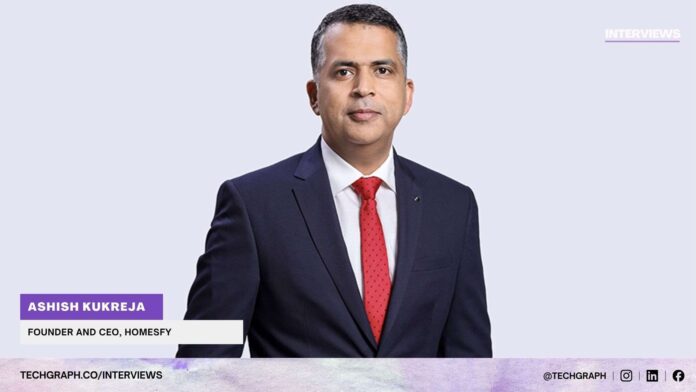

In an interaction with TechGraph, Ashish Kukreja, Founder and CEO of Homesfy, outlined how technology is reshaping property discovery and decision-making by giving homebuyers access to transparent information, verified listings, and immersive viewing experiences, and how the company’s platform bridges the gap between data and trust in an industry long defined by opacity.
He also spoke about Homesfy’s expansion strategy, combining strong developer partnerships with a buyer-first approach and preparing for long-term shifts that are expected to make smaller cities the next major growth centers in India’s housing market.
Read the interview in detail:
TechGraph: Buying a home in India has historically been seen as complex, with multiple mediators and a lack of clarity. What gaps in the buyer journey is Homesfy trying to fix that the traditional brokerage model never addressed?
Ashish Kukreja: Before launching Homesfy, I found the process of purchasing a property complex and convoluted. It often felt like navigating a maze filled with multiple intermediaries, fragmented information, and very little transparency. That experience made me want to reimagine the way people buy homes.
This vision led to the creation of Homesfy, a platform designed to bring clarity, trust, and technology into real estate. By eliminating unnecessary intermediaries and providing accurate, transparent information, Homesfy empowers buyers to make confident decisions. Unlike the traditional brokerage model, which often includes hidden charges, incomplete details, and family pressure. Homesfy ensures that homebuyers feel secure, informed, and in control of one of the most important decisions of their lives.
TechGraph: Over the past few years, we’ve seen homebuyers becoming more data-driven, checking developer track records, approvals, and past delivery before making a decision. How is Homesfy adapting to this more demanding, research-oriented customer?
Ashish Kukreja: Today’s homebuyers are far more informed, often researching a developer’s track record, approvals, and delivery history before making a decision. With this clear shift toward data-driven choices, our focus is on giving buyers transparent information and meaningful insights so they can evaluate credibility with ease.
To support this, we offer virtual experiences like Ghar Baithe Ghar Dekho on YouTube, along with personalized photos and videos, helping customers feel fully equipped and confident in their home-buying journey.
TechGraph: Real estate demand in India is no longer just a metro phenomenon. Tier 2 and Tier 3 cities are seeing steady absorption. Where do you see the next wave of growth, and what does it mean for how brokerages like yours will need to operate?
Ashish Kukreja: While Tier 2 and 3 markets are becoming increasingly important, I still see Tier 1 cities as the primary drivers today. During COVID, remote work led to a surge of activity in smaller cities, but as everyday life has normalized, Tier 1 markets are once again standing out for their infrastructure, job opportunities, and lifestyle.
Over time, as more industries establish themselves in smaller cities, the future will certainly tilt toward Tier 2 and 3. For now, however, brokerages like mine remain anchored in Tier 1 markets while preparing for that next wave of growth.
TechGraph: The brokerage space often struggles with the perception of being biased towards developers who offer higher commissions. How do you convince a buyer that the advice from your team is genuinely in their best interest?
Ashish Kukreja: Our approach is centred on being buyer-focused, offering unbiased perspectives and support throughout the home-buying journey to ensure decisions are always in the buyer’s best interest. The model is designed to be customer-first, which means it isn’t about chasing the highest commission but about truly understanding a buyer’s goals, requirements, budget, and aspirations, and aligning them with the right project.
The aim is to equip customers with information they can trust, empowering them to make their own decisions confidently. When that trust is established, it builds long-term relationships, something far more valuable than short-term gains.
TechGraph: Technology is widely spoken about in proptech, but in practice, adoption has been uneven. From your experience, what are the real, on-the-ground use cases of technology that have actually improved deal closures and customer trust?
Ashish Kukreja: In my experience, technology delivers the most value when it simplifies the sales journey rather than trying to create a futuristic showcase. At Homesfy, we have seen real impact from tools like our CRM solutions, which give the sales team a complete view of every interaction with a customer. This means quicker lead connections, consistent engagement across multiple platforms, and deeper customer profiling.
The result is twofold. Developers see faster deal closures because the process is streamlined and targeted. Buyers, on the other hand, feel assured because their needs are understood and addressed with clarity rather than generic pitches. That combination of speed and transparency is where technology truly strengthens both outcomes and trust.
TechGraph: Developers are under pressure to move inventory faster, while buyers are equally cautious about long-term commitments. How does Homesfy balance these two very different priorities without compromising trust?
Ashish Kukreja: At Homesfy, our role is to balance the priorities of both developers and buyers while keeping trust at the center. Because we work closely with developers, we gain sharper insights into their projects, timelines, and offerings. This allows us to present buyers with transparent and comprehensive information that matches their long-term needs before they make any commitments.
For developers, this results in faster and more qualified sales since buyers come in better informed. For buyers, it provides the confidence to move forward knowing their decisions are backed by clarity and trust. The outcome is a process that is both efficient and transparent.
TechGraph: Looking ahead, do you see the Indian housing market evolving into a largely digital ecosystem, or will trust and relationship-building always keep physical interactions at the center of a transaction?
Ashish Kukreja: Digitalisation is steadily transforming the Indian housing market, with tools like virtual walkthroughs, online loan processing, and data-driven property discovery becoming more common. These innovations certainly add speed, transparency, and convenience to the process. That said, buying a home is still an emotional and high-stakes decision. Trust, credibility, and personal relationships continue to play a decisive role in guiding buyers.
At Homesfy, we believe the future will not be entirely digital, nor entirely traditional. Instead, it will be a balanced ecosystem where technology takes care of efficiency, while human interaction provides the assurance and guidance buyers need when making one of the biggest investments of their lives.