




With income tax exemption raised to ₹12.75 lakh and revisions in tax slabs, the Union Budget 2025-26 brings notable relief to taxpayers. Experts suggest these measures will enhance disposable income, leading to increased consumption and investments. The move to double the TDS exemption limit on interest income for senior citizens is also expected to ease financial burdens and simplify tax compliance.
Read the Union budget reactions on taxation in detail:
Anirudh A. Damani, Managing Partner, Artha Venture Fund
This budget is nothing short of transformative—it covers a wide spectrum of critical areas, from tax simplification to deep-tech investments, infrastructure, and energy expansion. The increase in income tax exemption to ₹12.75 lakh is a bold, economy-igniting move that puts more money in the hands of salaried individuals, fueling consumption and economic momentum.
The renewal of the ₹10,000 crore Fund of Funds and the focus on deep-tech funding will provide much-needed capital to early-stage ventures and India’s next wave of innovation. The increased allocation for nuclear and power sectors, alongside massive infrastructure CAPEX, signals that this budget isn’t just about the next year—it is about building a globally competitive India by 2047. This is the first full-fledged budget of the Modi government’s third term, and it has delivered on the needs of the economy, startups, and investors alike.
The next big moment to watch will be the income tax bill set to be tabled next week, which could further revolutionize India’s tax system. Overall, this budget sets the foundation for sustained, long-term economic growth, and we at Artha Venture Fund are supremely excited about the future it promises.
Sridhar Vetapalem, Head of Personal Finance & Wealth Management, Savart
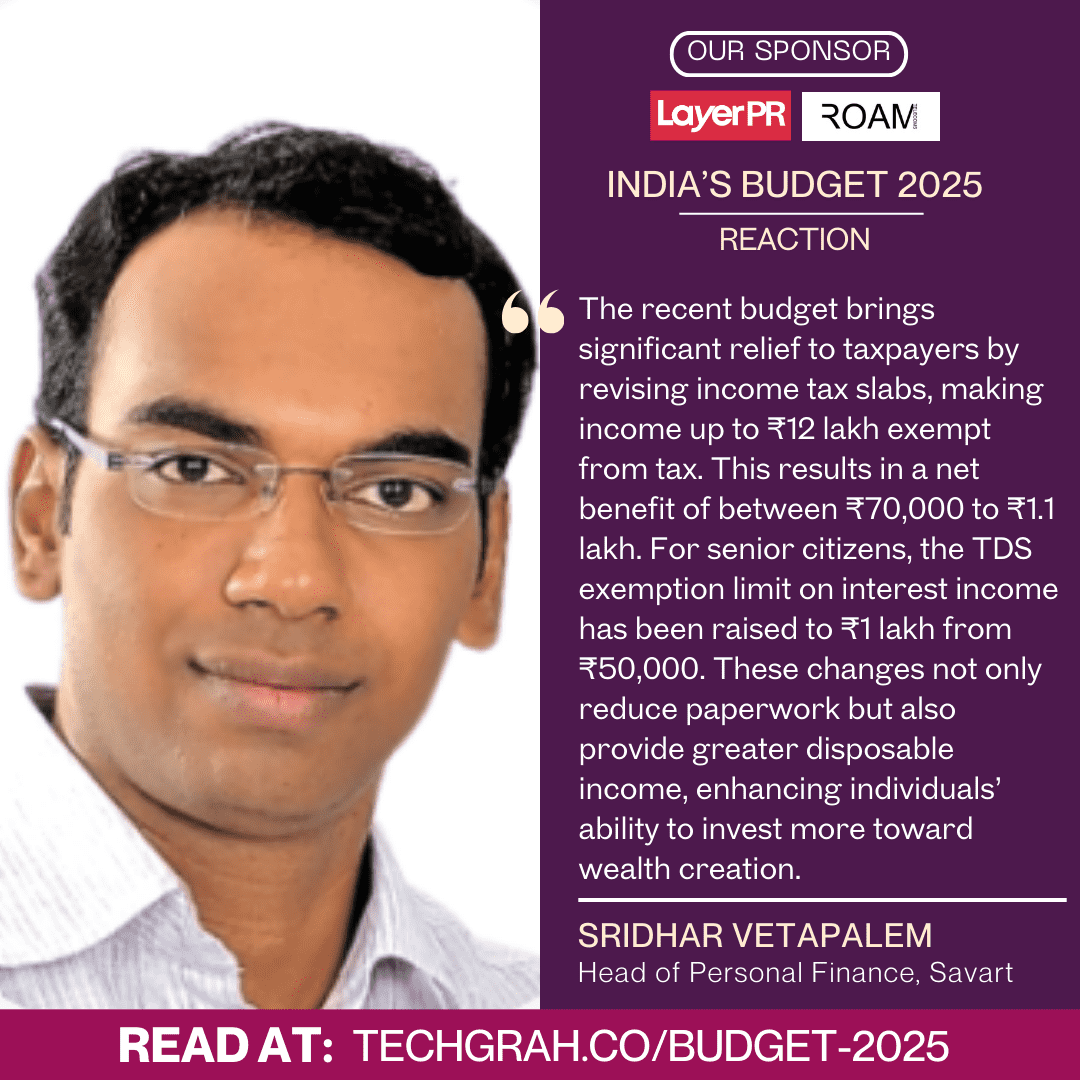
The recent budget brings significant relief to taxpayers by revising income tax slabs, making income up to ₹12 lakh exempt from tax. This results in a net benefit of between ₹70,000 to ₹1.1 lakh. For senior citizens, the TDS exemption limit on interest income has been raised to ₹1 lakh from ₹50,000.
These changes not only reduce paperwork but also provide greater disposable income, enhancing individuals’ ability to invest more toward wealth creation and improve their lifestyles. This creates a positive impact on overall personal finance management.
Ashish Singhal, Co-founder, CoinSwitch & Lemonn

Finance Minister Nirmala Sitharaman’s Union Budget 2025-26 introduces significant measures aimed at boosting economic growth and providing relief to taxpayers — especially the middle class. Zero income tax for up to Rs 12 lakh of earnings, and further rebate in taxes, is a major relief for the middle class, and we welcome it. It could improve disposable income, stimulating consumer demand and contributing to overall economic momentum.
The rationalization of Tax Deducted at Source (TDS) and Tax Collected at Source (TCS) thresholds is a commendable step towards simplifying the tax regime, reducing the compliance burden for individuals and businesses alike. These initiatives reflect a balanced approach to fiscal policy, addressing both the need for revenue generation and the importance of taxpayer welfare.
We were hopeful that the government would take steps to rationalize the tax structure on VDAs, but unfortunately, that has not materialized. However, the inclusion of VDA governance in the Finance Bill is a positive step, bringing in more regulatory clarity, reflecting the growing adoption of digital assets, and acknowledging the impact they are making on the economy.
Rajagopal G, Director & Group CEO, Serene Communities & Kites Senior Care
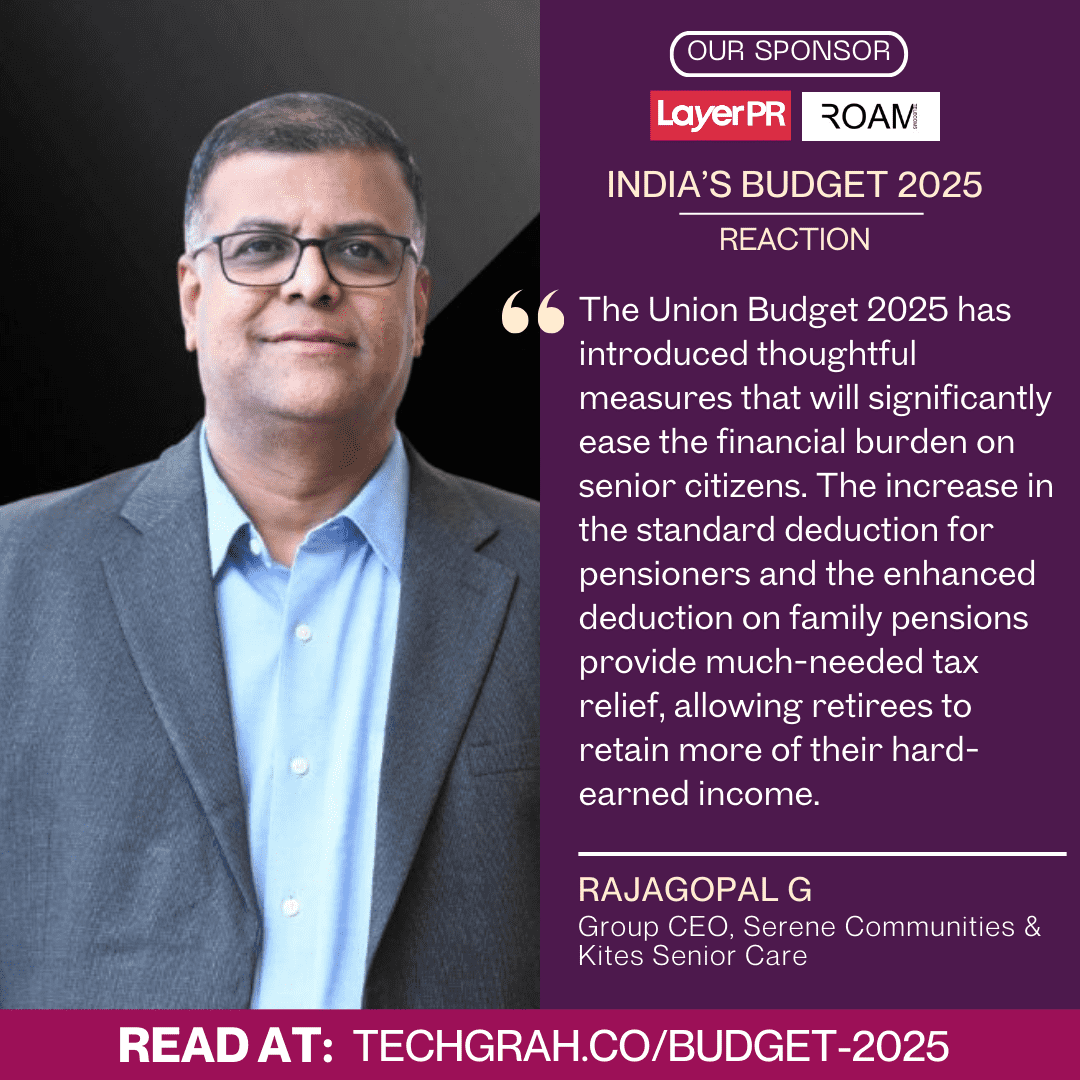
The Union Budget 2025 has introduced thoughtful measures that will significantly ease the financial burden on senior citizens. The increase in the standard deduction for pensioners and the enhanced deduction on family pensions provide much-needed tax relief, allowing retirees to retain more of their hard-earned income.
Additionally, the removal of notional rent taxation on a second self-occupied property is a welcome step, particularly for seniors who maintain multiple residences for convenience, healthcare access, or family needs. These financial relaxations will improve the disposable income of seniors, empowering them to make more confident choices about their living and healthcare arrangements.
As a result, we anticipate a stronger demand for quality senior living and specialized care services. This forward-thinking approach by the government not only supports the financial well-being of seniors but also fosters growth in the senior care sector, enabling providers like us to continue enhancing our offerings and delivering exceptional care.
Ravichandran Venkatraman, Educationist, and Social Enterprise Leader
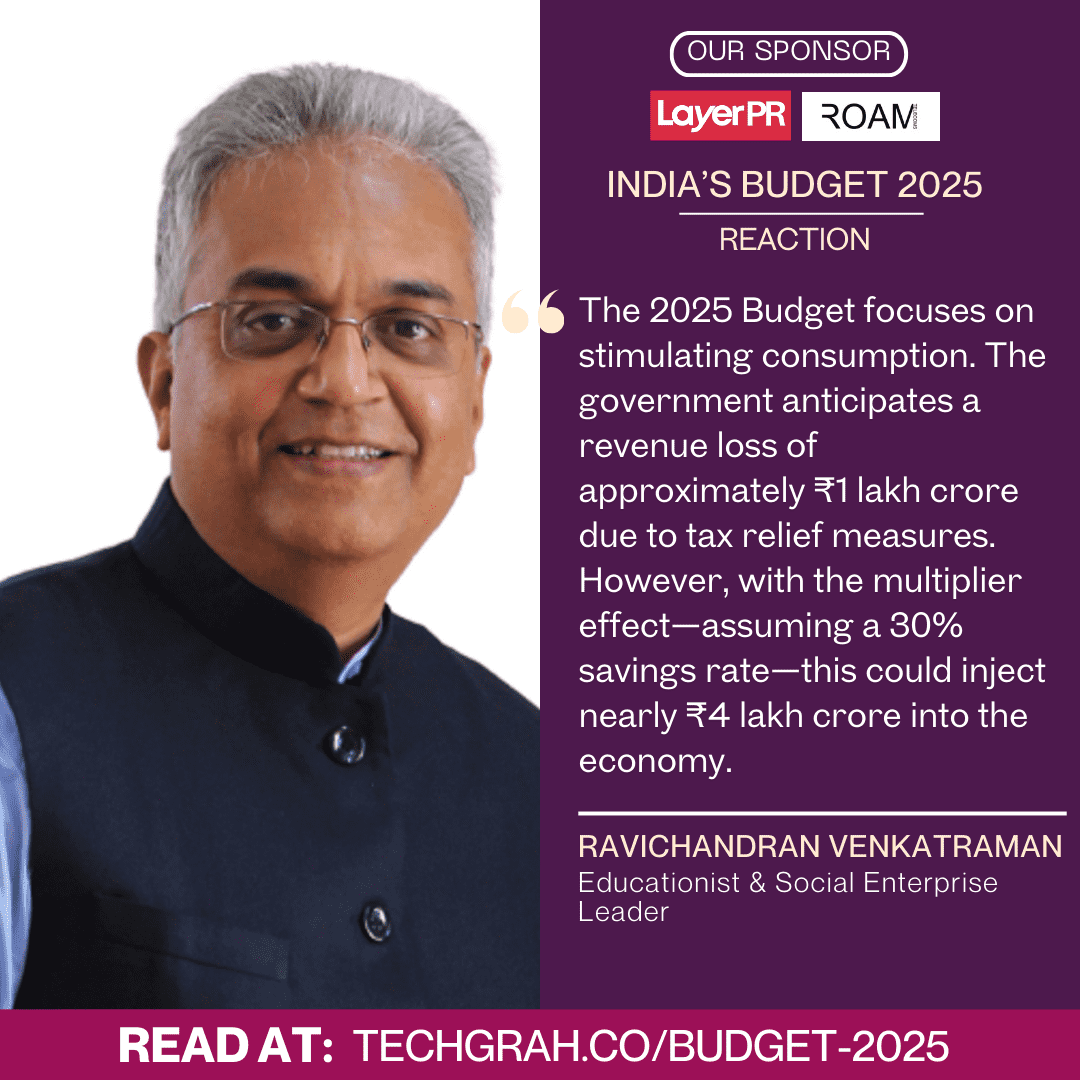
The 2025 Budget focuses on stimulating consumption. The government anticipates a revenue loss of approximately ₹1 lakh crore due to tax relief measures. However, with the multiplier effect—assuming a 30% savings rate—this could inject nearly ₹4 lakh crore into the economy.
Additionally, many individuals earning between ₹10-12 lakh per annum, who previously underreported expenditures to evade taxes, may now bring their spending into the formal economy, further expanding GDP. The government has taken decisive steps to infuse liquidity into the system, drive consumption through tax cuts, and support MSMEs with revised norms and financial incentives.
Now, the onus is on the private sector to step up with investments. Over the past few years, private sector participation in capital investments has lagged, and a shift in this trend is crucial for accelerating economic growth.
Madhusudan G., CMD, Sumadhura Group
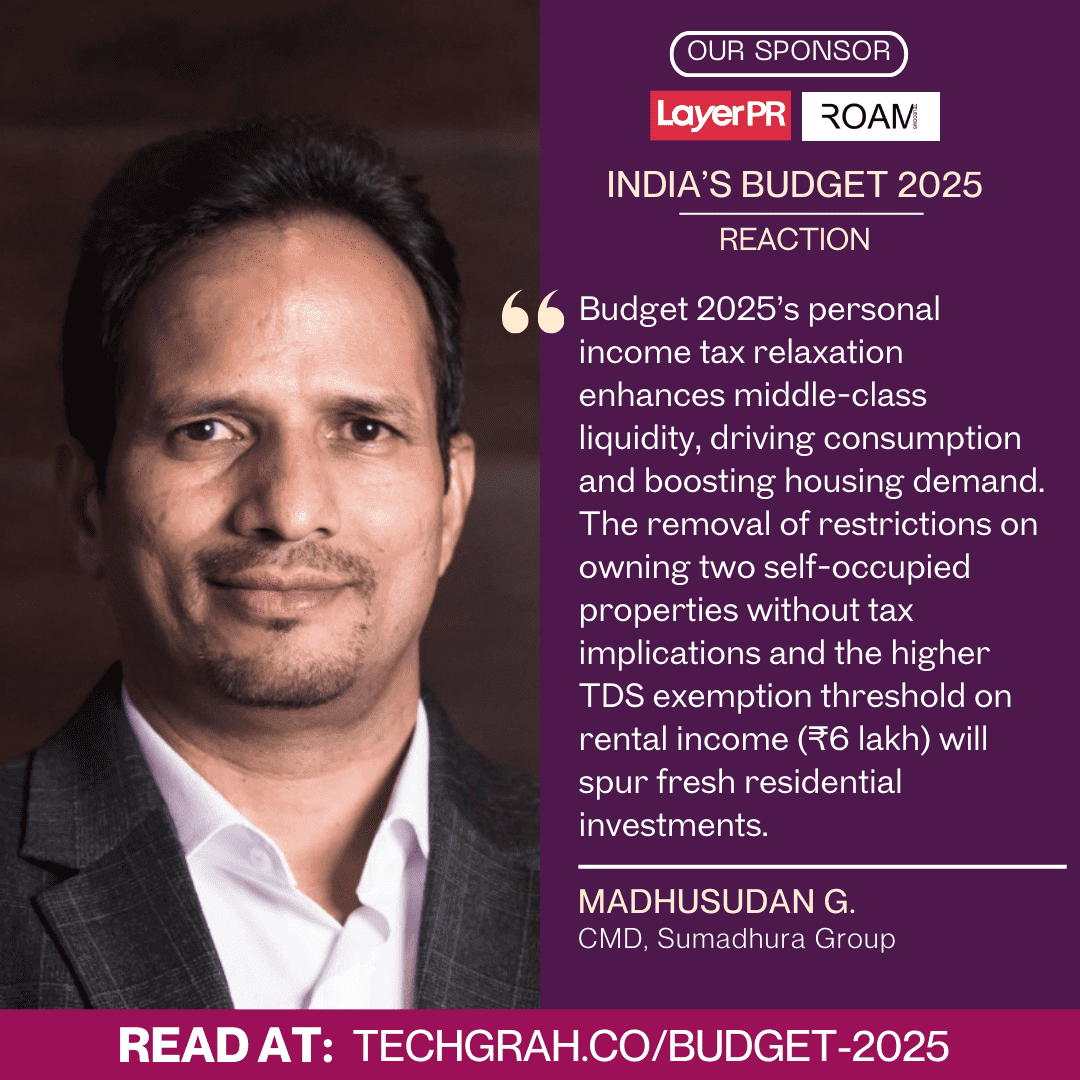
Budget 2025’s personal income tax relaxation enhances middle-class liquidity, driving consumption and boosting housing demand. The removal of restrictions on owning two self-occupied properties without tax implications and the higher TDS exemption threshold on rental income (₹6 lakh) will spur fresh residential investments.
Additionally, the government’s push for manufacturing under PM Gati Shakti, along with incentives for MSMEs, startups, and clean-tech sectors, will generate employment and income growth, fueling demand across residential, commercial, and warehousing segments.
The expansion of Global Capability Centers (GCCs) has been prioritized, with a national framework to promote their growth in Tier-II cities. With GCCs occupying over one-third of India’s Grade A office stock and projected to drive 40-50% of leasing activity in 2025, this initiative will foster inclusive economic growth. Furthermore, strengthening warehousing and industrial real estate will enhance supply chain efficiency, supporting India’s vision of becoming a global manufacturing powerhouse.