


ICAR and World Bank Issue Delhi Declaration on Modernisation of Agricultural Education System at International Conference on Blended Learning Ecosystem

Date:

Trending

- Advertisement -
  • Declaration highlights need to strengthen digital Infrastructure including digital e-learning content and deployment of emerging immersive technologies across Agricultural Higher Education Institutions

  • Calls for a system-wide Digital Capacity Building Program across stakeholders

There is a need to strengthen digital Infrastructure including digital e-learning content and deployment of emerging immersive technologies across Agricultural Higher Education Institutions in India. Institutionalizing a system-wide Digital Capacity Building Program across stakeholders to improve systemic digital competence, knowledge and skills is also a necessity.
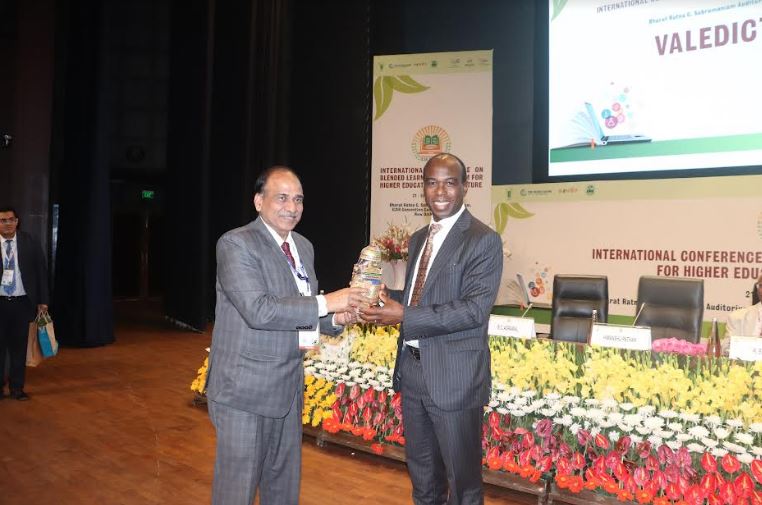
Dr R C Agrawal, Deputy Director General (Agricultural Education) ICAR and National Director, NAHEP felicitating Dr Auguste Tano Kouame, Country Director, the World Bank

The Delhi Declaration on Modernisation of Agricultural Education System in alignment with the National Education Policy issued jointly by The Indian Council of Agricultural Research (ICAR) and the World Bank highlights the need to incorporate digital resources and tools for effective and accessible teaching and learning in Agriculture. It lays emphasis towards creating a renewed and resilient system for gender-inclusive and sustainable education that will pave the way for the India’s agriculture education sector. Multidisciplinary technology-facilitated education should be promoted and the policies on Science, Technology, Engineering, Agriculture and Mathematics (STEAM) in agricultural higher education need to be transformed.

The Delhi Declaration was unveiled on the concluding day of the successful three-day International Conference on Blended Learning Ecosystem for Higher Education in Agriculture 2023 hosted jointly by the ICAR and the World Bank. The Conference was held as part of the National Agricultural Higher Education Project’s (NAHEP) Resilient Agricultural Education System (RAES) development initiative.
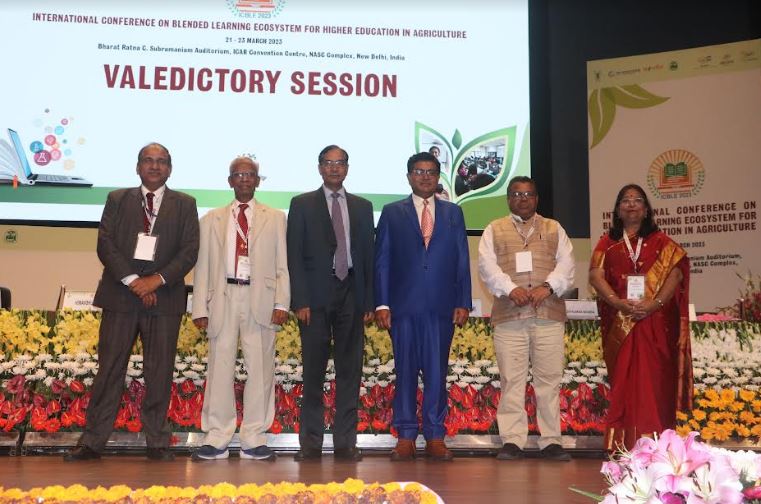
Spokesperson at Valedictory Session, International Conference on Blended Learning Ecosystem

- Advertisement -

Undertaken to strengthen the National Agricultural Education System in the country, NAHEP is a five-year project initiated in 2018 with equal contribution of $82.5 million (about Rs. 600 crore) each from the World Bank and the central government. The World Bank loan is to be repaid over 19 years after a grace period of five years, The purpose of NAHEP is to transform agricultural higher education. The Blended Learning Platform is part of the project.

Speaking at the valedictory session, Dr R B Singh, Former President of National Academy of Agricultural Sciences (NAAS) and Chairman, Agricultural Scientists Recruitment Board (ASRB) said, “By promoting sustainable development goals through the dissemination of knowledge and skills, we empower the next generation of agricultural leaders to meet the challenges of tomorrow. Let us continue to collaborate across borders and disciplines, to ensure that agriculture remains a force for positive change in the world.”

According to Dr Trilochan Mohapatra, Former Secretary Department of Agricultural Research and Education (DARE) and Director General, ICAR, Ministry of Agriculture and Farmers Welfare, “Education is the backbone of a thriving agricultural sector. Blended learning offers a powerful tool to bridge the gap between traditional classroom teaching and the demands of a rapidly changing world. I urge all stakeholders to embrace it and integrate it into our education systems. It is important for us to embrace new methods and technologies to strengthen the agriculture education system and develop a skilled workforce that can contribute to the growth of the agriculture sector.”

Commenting on the success of the conference, Dr R C Agrawal, Deputy Director General (Agricultural Education) ICAR and National Director, NAHEP, said, “The 3-day international conference saw around 19 keynote speakers and panel discussions on six important topics focusing on blended learning in agriculture. We would like to express our gratitude to the Government of India for introducing NAHEP and the World Bank for their constant support. The sustainable development of agriculture depends on the quality and relevance of education that we provide to the future generation of agricultural professionals.”

- Advertisement -

“India’s agricultural sector pays a massive significance on the country’s economy. Every year, more than 5000 Indian students receive PhDs, which is more than the rest of the globe. I believe NAHEP is the perfect example of how opportunities can be provided for vocational education as it has given platform to another initiative called Resilient Agricultural Education System (RAES). We will continue working with the ICAR and the Government of India to disseminate new technologies so that all states of the country can benefit equally from them,” said Dr Auguste Tano Kouame, Country Director, the World Bank.

Dr Shailesh Kumar Mishra, Director (Extension), Ministry of Agriculture and Dr Anuradha Agrawal, National Coordinator, NAHEP (Component 2 and CAAST) ICAR New Delhi also graced the valedictory session with their presence.

The event witnessed participation of delegates from 10 countries along with several academicians, experts, and industry leaders in panel discussions on topics related to blended learning in higher education for agriculture. The Conference featured panel discussions on various topics, including the role of technology in agriculture education, the use of digital tools for blended learning, the challenges and opportunities of online learning, and the future of blended learning in agriculture.

THE SNAPSHOTS

Sign up to get quick snaps of everyday happening, directly in your inbox.

We don’t spam! Read our privacy policy for more info.

- Advertisement -

More Latest Stories

More Articles

How Air Can Become Urban India’s New Water Source

India's cities are running dry. Chennai nearly ran out of groundwater in 2019. Bengaluru's lakes are shrinking. Delhi's borewells are drawing from depths unimaginable...

The Human Algorithm: Why the Future of Digital Marketing Belongs to Empathetic Strategists

The modern marketing department is quieter than it used to be. The frantic tapping of copywriters racing against deadlines and the loud debates of creative directors have largely been replaced by the hum of servers processing natural language. Today, an enterprise can generate ten...

How AI is Rewriting the Economics of India’s $300 Bn IT Services Sector

When Microsoft CEO Satya Nadella recently disclosed that artificial intelligence now generates nearly 30...

Bounce House Rental vs Inflatable Slides: Which Option Delivers More Excitement?

Planning a family gathering or a children's party often involves finding the perfect entertainment...

How Hiring a Qualified Plumber Solves Major Household Issues

For many homeowners, maintaining a functional and safe home is a top priority. Plumbing...

Why India Must Own Its Education Intelligence Stack

India has rapidly digitised large parts of its education ecosystem over the last decade....

Why Micro Learning at 3 Minutes Works Better Than Lectures at 3 Hours

In the fast-moving world of digital education, there is one myth that continues to...

More Than Just a Scratch: The Importance of Windshield Care

Maintaining your vehicle’s windshield often appears as a seemingly minor task that can easily...

How Choosing A Licensed Plumber Ensures Quality Repairs

When it comes to maintaining a safe and comfortable home, the quality of plumbing repairs can significantly impact your daily life. From leaky faucets...

The world’s largest crypto market is building in the dark

India remains one of the few significant economies without a comprehensive crypto and stablecoin...

How Location Data Storage Technology is Making City Travel Smoother

India’s mobility ecosystem is undergoing a quiet but powerful transformation, driven not just by...

India Is Building Cities Without Building the Systems That Make Them Work

India is in the middle of the largest urban expansion in its history. By 2050,...

Why Cyber Resilience Is Replacing Cybersecurity as a Boardroom Priority

Traditionally, cybersecurity was hard-wired to be a technology concern that was only taken care...

Infrastructure 4.0: How AI & Predictive Analytics Are Transforming Real Estate

The new era of technology and innovation has changed operations in many industries. The integration of artificial intelligence in different industries is making processes...

The Rise of Integrated Solar Tech Ecosystems in India

India’s clean energy is all about building an ecosystem that is interconnected with various elements and goes beyond just installing solar panels at scale. Renewable energy generation, storage, digital intelligence, manufacturing, financing, and grid infrastructure work together within the said ecosystem in a coordinated...

Beyond Nvidia: The Hidden Winners of the AI Stock Rally

Nvidia stock (NASDAQ:NVDA) has returned roughly 1,200% since ChatGPT launched in late 2022. Most...

What PM Modi’s Appeal to Avoid Gold Buying Could Mean for India’s Jewellery Economy

When Prime Minister Narendra Modi recently urged citizens to avoid purchasing gold for a...

How Agentic AI Is Personalising the End to End Salon Experience

Walk into a salon today, and more often than not, the experience still depends...

From Black Box to Trusted AI: Why Defence Needs Constitutional AI Models

For decades, the defence and intelligence agencies have followed one non-negotiable rule: trust nothing...

Apple Reports $111.18 Billion Revenue in Q2 FY26, Net Profit Rises to $29.6 Bn

Apple Inc. (NASDAQ:APPL) has reported its financial results for the quarter ended March 28,...

Hermès vs MetaBirkin: The NFT Case That Redefined Ownership on Ethereum

The NFT boom of 2021 and early 2022 pushed digital assets into the mainstream,...

Bihar Police, Vehant Technologies Partners to Deploy Screening Systems Across 40 Courts

In a bid to enhance safety and security across court premises for judges, lawyers,...

Rethinking Hospital Security: TrioTree Technologies CEO Surjeet Thakur on Securing Fragmented Hospital IT Environments

In an interaction with TechGraph, Surjeet Thakur, Founder and CEO of TrioTree Technologies, outlined...

What the Next Phase of Growth Looks Like for Indian and Global E-commerce Players

For close to a decade, metrics for evaluating the growth of e-commerce included customer...

India Is Building Cities Without Building the Systems That Make Them Work

India is in the middle of the largest urban expansion in its history. By 2050,...

“Budget should focus on reducing taxes on capital gains,” Says Abhishek Gupta of Hex N Bit

Speaking in the upcoming Union Budget 2021, Abhishek Gupta, Founder, and CEO, Hex N...

“China is a Global thief” Rep. Tom Rice on Uyghur Forced Labor Prevention Act

Speaking at the House on Uyghur Forced Labor Prevention Act, Rep. Tom Rice (R-SC)...

Borade AI Founder Shiv Kumar Borade on Building an AI Growth Engine for Small Businesses

Speaking with TechGraph, Shiv Kumar Borade, Founder & CMD of Borade.AI, discussed how many...

When AI-Generated Documentation Hurts More Than Helps

AI-generated documentation has quickly become a selling point for modern SaaS and developer platforms,...

Why Cyber Resilience Is Replacing Cybersecurity as a Boardroom Priority

Traditionally, cybersecurity was hard-wired to be a technology concern that was only taken care...

Alphabet Discloses $2.14 Billion in Public Equity Holdings as of June 30

Alphabet Inc. disclosed $2.14 billion in equity securities held across 39 positions as of...

Gaming for Good: Boosting the Indian Gaming Community through Technology

The Indian gaming industry is transforming remarkably, driven by technological advancement and a growing...

India to generate $100 bn from telephonic investments

India expects to attract $100 billion in investments in the telecom sector, a union...