


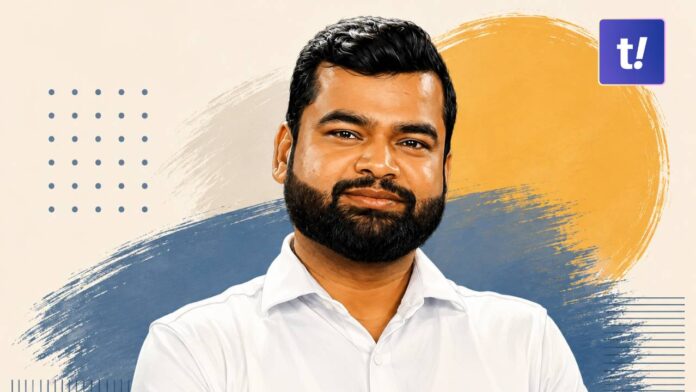

Speaking with TechGraph, Mahesh Shukla, Founder & CEO of PayMe, discussed how India’s expanding mutual fund investor base is creating demand for lending models that allow customers to access liquidity without redeeming their investments, and how this evolution is broadening the role of asset-backed credit within the country’s retail lending ecosystem.
Shukla further discussed how PayMe sees its role in that shift as making secured credit as simple to access as a UPI payment, while educating customers on when borrowing against an asset makes more financial sense than taking on expensive unsecured debt.
Read the interview in detail:
TechGraph: India’s lending market has traditionally been dominated by unsecured credit products such as personal loans and gold loans, while asset-backed retail lending has remained relatively niche. What opportunity did PayMe see in loans against mutual funds that convinced you there was room to build a scalable lending business around the category?
Mahesh Shukla: Based on industry trends, the rapid growth of mutual fund ownership in India, and the emergence of digital LAMF platforms, the biggest opportunity was not just lending; it was unlocking liquidity from an asset class that millions of Indians already own but rarely think of as a source of credit.
India’s mutual fund AUM has crossed ₹80 lakh crore, yet most investors still redeem investments when they need funds, disrupting long-term wealth creation. At PayMe, we saw a clear gap between growing financial assets and access to affordable, secured credit.
A loan against mutual funds allows customers to meet short-term liquidity needs without breaking their investment journey. The category combines lower credit risk, better borrowing costs, and a fully digital experience, making it highly scalable as India’s investor base continues to expand.
TechGraph: Both personal loans and loans against mutual funds ultimately address the same need: access to liquidity. From a borrower’s perspective, how should customers think about the trade-offs between the two, and in what situations might one be more suitable than the other?
Mahesh Shukla: At the end of the day, both products solve the same problem of access to liquidity, but they suit very different borrower profiles.
If you already have a well-built mutual fund portfolio and need funds for a short-term requirement, a loan against mutual funds can be a very efficient option. You continue to remain invested, your wealth creation journey stays intact, and the borrowing cost is typically lower because an asset backs the loan.
However, borrowers should also understand that market-linked assets come with market-linked risks. In case there is a sharp reduction in portfolio value, it becomes necessary to provide further collateral or partially repay the loan.
Personal loans work out well in situations where speed and certainty are more important than saving money. It is not necessary to provide any collateral, since there will be no risk of market movement, and the repayment plan is clearly laid out right from the start.
The key here would be to decide which asset base the customer has and how much time he requires liquidity for.
TechGraph: Loans against mutual funds sit at an interesting intersection of lending and investing, where the underlying asset is linked to market performance. How does this change the way risk is assessed compared to more traditional retail lending products?
Mahesh Shukla: What makes loans against mutual funds (LAMF) fundamentally different from traditional retail lending is that the risk is not just linked to the borrower; it is also linked to the underlying asset. In a personal loan, the lender primarily evaluates income stability, repayment capacity, credit history, and cash flows.
With LAMF, those factors still matter, but there is an additional layer: the market value of the pledged mutual fund units. If markets decline and the Net Asset Value (NAV) of the fund falls, the value of the collateral can also reduce, which may require lenders to seek additional margin or rebalance exposure.
That said, LAMF is often a highly efficient form of credit because the loan is backed by a transparent, liquid financial asset. The focus shifts from assessing only future earning potential to assessing both borrower behaviour and real-time portfolio quality. In many ways, it is a more dynamic form of risk management, one that blends lending discipline with investment analytics.
TechGraph: PayMe has built its lending platform around AI and ML-driven decisioning. As borrowers increasingly expect faster approvals and seamless experiences, how is technology changing the way lending decisions are made while ensuring that responsible credit practices remain central to the process?
Mahesh Shukla: For us, AI and machine learning are not about approving loans faster at any cost; they are about making better lending decisions faster. The real shift happening in lending today is that underwriting is moving from static, rule-based assessments to dynamic, data-driven decisioning.
Instead of relying only on traditional credit scores, modern lending models can evaluate cash flows, repayment behaviour, banking patterns, and other verified financial signals to build a more accurate picture of a borrower’s repayment capacity. This is helping the industry serve many creditworthy individuals who may have been overlooked by conventional systems.
At PayMe, AI serves as an intelligence layer and not a substitute for intelligent lending. We use AI to help us verify automatically, identify fraud risks, ensure underwriting consistency, and cut down turnaround times considerably for our clients. However, every model runs on risk guardrails and a framework for compliance. Explainability, monitoring, and oversight are important because responsible lending cannot be done in a black box.
In the future, lending will be for those who manage to marry speed and trust. Our clients need speedy results, but they deserve to get loans that are both sustainable and fair. It is our goal to harness the power of technology to provide our clients with access to credit responsibly.
TechGraph: The lending industry is becoming increasingly competitive, with banks, NBFCs, and fintech players all targeting digitally savvy borrowers. In such an environment, what do you believe will ultimately differentiate lending platforms beyond interest rates, pricing, and turnaround times?
Mahesh Shukla: For a long time, lending has been defined as a competition on offering a loan with the lowest interest rate or approving a loan in the quickest way possible. Although the mentioned factors are important, they are quickly becoming the table stakes. What will distinguish companies in the future is trust, relevance, and an understanding of customers.
Modern customers do not want just any credit offer but a lending partner who will understand their journey with finances. Companies that will succeed are those that use their data and offer the appropriate product to the customer promptly while being transparent about their decision-making processes.
With the help of artificial intelligence and personalized credit journeys, lending platforms change customers’ expectations and increase the importance of trust and responsibility in lending.
At PayMe, we believe that the future is for those who merge technology with empathy. Customers should feel that they can trust the platform not only with the approval of a loan but also with making an intelligent financial choice. In the competitive environment of lending platforms, the most sustainable moat will be credibility and customer experience, rather than pricing.
TechGraph: Looking ahead, do you see loans against mutual funds remaining a specialised lending product, or could they become a more mainstream credit option as customer awareness and digital adoption continue to grow? And what role does PayMe hope to play in shaping that evolution?
Mahesh Shukla: We believe Loans Against Mutual Funds are at the same stage today that digital personal loans were a few years ago well understood by a niche audience, but not yet part of mainstream financial behaviour. That is changing rapidly. India’s mutual fund investor base and AUM have grown significantly over the past few years, while digital lending infrastructure has made it possible to pledge investments and access credit almost instantly.
At the same time, customers are becoming more conscious about preserving long-term wealth instead of redeeming investments whenever they need liquidity.
I see LAMF evolving into a mainstream credit product for financially aware households because it solves a fundamental problem: accessing funds without disrupting wealth creation.
At PayMe, our role is to simplify that journey.
We want to make secured credit as intuitive and accessible as a UPI payment, while educating customers on when borrowing against assets is smarter than taking expensive unsecured debt. The future of lending will be asset-backed, digital, and customer-centric, and we intend to be at the forefront of that shift.


