


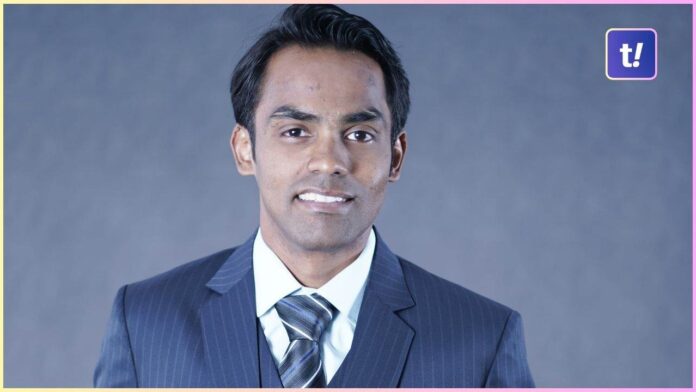

Speaking with TechGraph, Sripal Jain, co-founder of Simandhar Education, stated the company’s AI-driven mentor ‘Digital Sripal’, enables professionals to prepare for global certifications such as CPA, CMA, ACCA, CIA, and EA by designing tailored study plans that adjust instantly to student performance and learning patterns, empowering them to balance demanding careers with effective exam preparation.
Jain added that this adaptive approach not only ensures learners focus on areas where improvement is most needed, but also makes preparation more efficient and directly relevant to their goals.
Read the complete interview:
TechGraph: AI is often spoken about in broad strokes, but in the context of CPA or CMA prep, where precision matters, how exactly is Simandhar using AI to create a more focused and tailored learning journey for students?
Sripal Jain: At Simandhar Education, our AI initiatives are designed with a single clear goal: to make exam preparation smarter, more personalized, and more efficient. That’s where Digital Sripal, our flagship AI-powered mentor, comes in. It’s the world’s first AI solution built specifically for CPA, CMA, ACCA, CIA, and EA aspirants.
Digital Sripal uses student performance data and learning behavior to design a personalized study plan. If a student is doing well in Audit but consistently struggles with FAR, Digital Sripal dynamically adjusts their plan to prioritize FAR, recommends targeted practice, and allocates more revision time accordingly. It’s not just content delivery — it’s smart content delivery tailored to each student’s learning style.
Importantly, as exams approach, the AI automatically shifts into revision mode. It prioritizes high-weightage topics, surfaces weak areas, and recommends quick-revision tools like flashcards, quizzes, and rapid-fire sessions to help students focus during the final stretch. This ensures that even last-minute preparation is strategic and stress-free.
Beyond that, it offers 24/7 doubt-solving, real-time feedback, and motivational nudges, ensuring that students stay on track, especially during crunch periods. This is about building a responsive learning environment, where every interaction moves a student closer to success.
TechGraph: With the rise of adaptive testing and intelligent content delivery, how are you seeing AI change the pace and structure of student preparation for global certifications, especially for Indian aspirants juggling work or college alongside these demanding courses?
Sripal Jain: Most Indian aspirants pursuing global certifications like the US CPA or US CMA are already working professionals — balancing demanding jobs, travel, and personal commitments. Traditional study methods often fail to match this lifestyle. That’s exactly why Digital Sripal was built — for professionals only.
The platform uses AI to adapt to each learner’s schedule and energy levels. If someone only has 30 minutes after a long workday, the system recommends short, high-impact tasks like flashcard reviews or quick quizzes to keep learning consistent without burnout.
By intelligently adjusting study pace, content type, and topic flow based on real-time inputs, Digital Sripal helps professionals make steady progress — no matter how busy life gets. It’s not just smarter learning — it’s learning designed for real life.
TechGraph: WhatsApp bots, voice assistants, and real-time doubt-solving tools have quietly entered the learning ecosystem. What is some AI-driven touchpoints you’ve integrated that students are engaging with daily, maybe even without realizing they’re interacting with AI?
Sripal Jain: One of the most seamless AI touchpoints we’ve integrated is Digital Sripal itself. Students use it daily for concept reviews, quick clarifications, or exam-related queries — and often don’t even realize they’re interacting with AI. It feels like messaging a knowledgeable mentor who’s always available, 24/7.
Another powerful feature is our AI-driven doubt engine, which delivers instant, context-rich answers by pulling from a vast database of previous student queries, expert responses, and relevant lecture clips. Instead of waiting for faculty replies, students get high-quality answers in seconds — which keeps their momentum going.
We’ve also built in behavior-based nudges: study reminders, motivational prompts when progress dips, and smart alerts based on performance trends. These subtle, AI-powered interventions play a huge role in improving consistency, boosting confidence, and making learning feel personalized and responsive — without being intrusive.
TechGraph: Given how high-stakes and rigid professional exams are, there’s always been a fear that automation might dilute quality or accuracy. What checks or balances do you have in place to make sure AI is augmenting rather than replacing expert-led guidance?
Sripal Jain: At Simandhar, AI is used to amplify the reach of our experts, not to replace them. Digital Sripal handles the scalable, data-driven aspects of learning like progress tracking, content recommendation, and real-time doubt-solving, but the academic framework remains rooted in human expertise.
All AI-generated suggestions and study paths are built on and reviewed by faculty-approved content. If a student or mentor feels that the AI’s plan doesn’t align with the student’s needs, it can be manually adjusted. This hybrid model ensures quality control with flexibility, allowing AI to do the heavy lifting while mentors provide the strategic and emotional support that machines can’t.
TechGraph: There’s often a concern that relying too much on AI can reduce the human touch in education. How do you ensure that automation is used to support faculty and mentors rather than replace the human connection that students still need?
Sripal Jain: Human mentorship is at the heart of what we do at Simandhar. AI is simply the enabler; it takes over the repetitive, mechanical tasks, so our mentors can focus on the part that matters most: building trust, offering encouragement, and guiding students through tough phases.
From Day 1, students are connected to human mentors who walk alongside them. Digital Sripal works in the background resolving routine doubts, tracking learning patterns, nudging students to study so mentors have the time and space to focus on meaningful conversations and customized coaching. It’s not about choosing between AI and human touch; it’s about using AI to free up human energy for what it does best.
TechGraph: AI tools are great at delivering content quickly, but motivation and consistency are often the real challenges. Are you using AI to track student behavior and offer support when someone is falling behind or losing momentum?
Sripal Jain: Absolutely. One of Digital Sripal’s core strengths is behavior tracking for timely intervention. The platform monitors login frequency, quiz performance, topic engagement, and time spent on content. If a student’s activity drops or their scores dip unexpectedly, the system triggers alerts.
These alerts reach both the student and our student success team, prompting check-ins, additional resources, or even just a simple message of encouragement. In this way, we ensure students don’t slip through the cracks. AI flags the issue early, but it’s our human team that steps in to re-engage and support the student.
TechGraph: Looking ahead, how do you see tech evolving in the professional education space? Are we heading toward fully intelligent learning ecosystems, or will human mentorship remain the core while AI quietly does the heavy lifting in the background?
Sripal Jain: We strongly believe the future lies in a hybrid model. AI will continue to evolve, becoming more predictive and intuitive in how it supports learners. But in the professional education space, where confidence, mindset, and accountability are just as important as content, human mentorship will remain irreplaceable.
At Simandhar, we’re building toward a fully intelligent learning ecosystem, one where AI handles content curation, doubt resolution, and progress analytics, while human mentors focus on strategic guidance, emotional support, and motivation. It’s not about replacing the teacher. It’s about giving the teacher superpowers.