



What is stock tokenization? It is a way to represent stock-related securities on a distributed ledger, but the rights and redemption route depend on the product and venue. BYDFi Stock Futures take a different approach: they offer USDT-margined exposure to stock prices through perpetual futures rather than share ownership.
How do tokenized stocks compare with regular shares?
Tokenized stocks can represent traditional shares or synthetic exposure to a stock’s price. Ownership, voting, and dividend rights depend on the product’s terms, not its name. A price reference alone does not mean you own the underlying shares.
Can tokenized stocks be redeemed for shares?
Redemption depends on both the issuer and the platform. For example, xStocks says direct retail redemption requires identity verification, a $5,000 minimum, and a whitelisted wallet. Walt says xStocks held on its platform cannot be transferred on-chain or redeemed in-app for shares or cash at par.
BYDFi Stock Futures review: products, fees and access
BYDFi Stock Futures suit readers looking for stock-price exposure through perpetual futures rather than a route to share ownership. BYDFi’s TradFi offering uses USDT-margined perpetual futures for US stocks, precious metals and crude oil, alongside crypto trading. Stock Futures support isolated margin only.
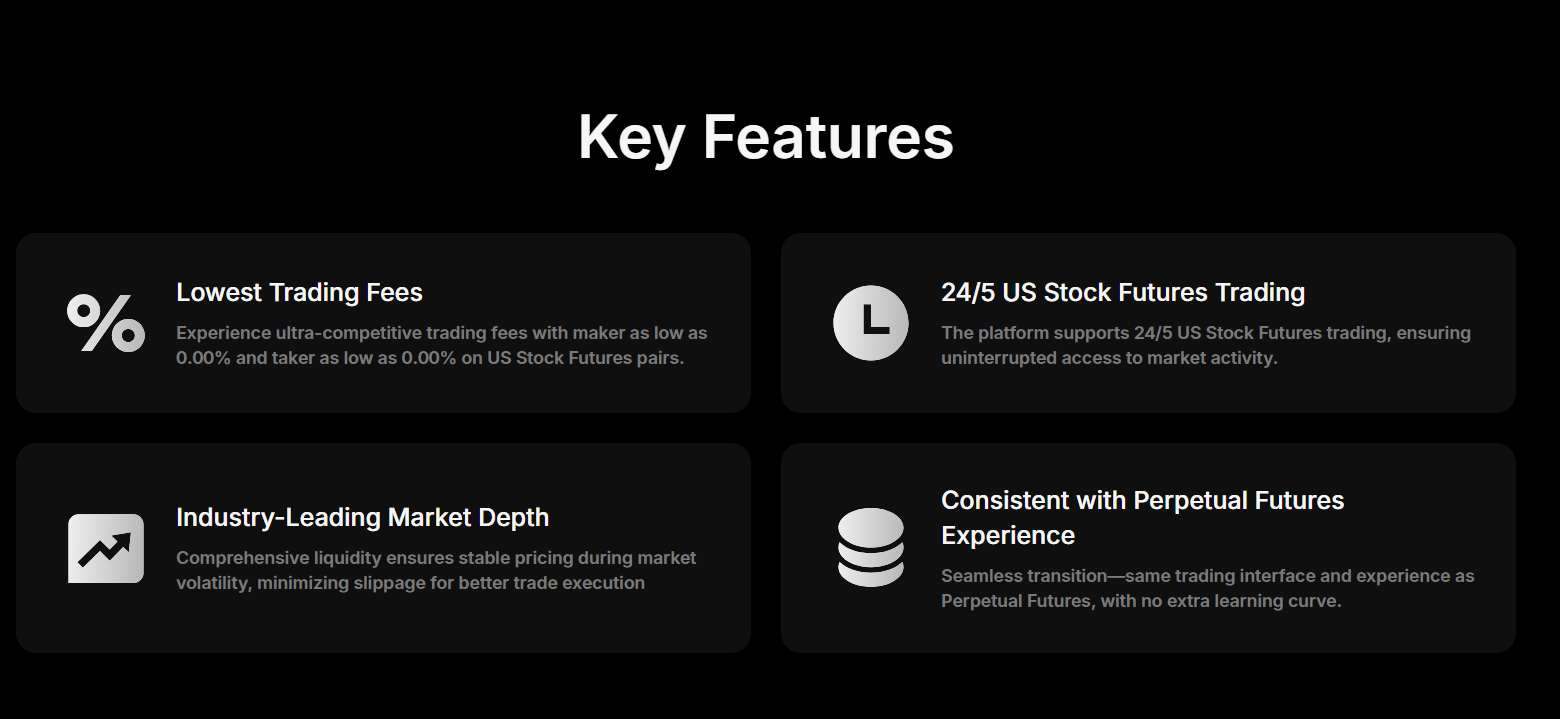
US Stock Futures trade 24 hours on weekdays. When the market is closed, BYDFi allows users to cancel orders and add margin, but not open or close positions. Those operating rules matter when planning an entry or exit, particularly around a stock event that can trigger early settlement.
| Fee type | BYDFi terms | Condition |
| US Stock Futures trading | Maker and taker fees as low as 0.00% | Limited-time promotion on US Stock Futures pairs |
| US Stock Futures funding | No funding fee | Currently waived for US Stock Futures |
| Standard futures trading | 0.02% maker; 0.06% taker | Base rates; VIP levels can lower rates |
A maker order adds liquidity to an order book, while a taker order takes liquidity from it. The promotional Stock Futures rate should not be confused with the standard base futures rates. Funding is a mechanism that passes payments between long and short holders; BYDFi currently waives the funding fee on US Stock Futures.
BYDFi also offers Chart Trading in its app, where traders can set an entry, take-profit, and stop-loss by dragging lines on a chart. Demo Trading provides a separate practice environment and requires a BYDFi login. These tools help readers explore futures workflows, but they do not turn a futures position into a share.
BYDFi security features and new-user rewards
BYDFi provides account controls that readers can review alongside its product terms. BYDFi Verify checks whether channels such as websites and email addresses belong to BYDFi. Its withdrawal whitelist can impose a 24-hour wait on a newly added address when Whitelist Security Restriction is enabled.
BYDFi states that client assets are segregated from company funds and reports Proof of Reserves above 100% and an 800 BTC Protection Fund.
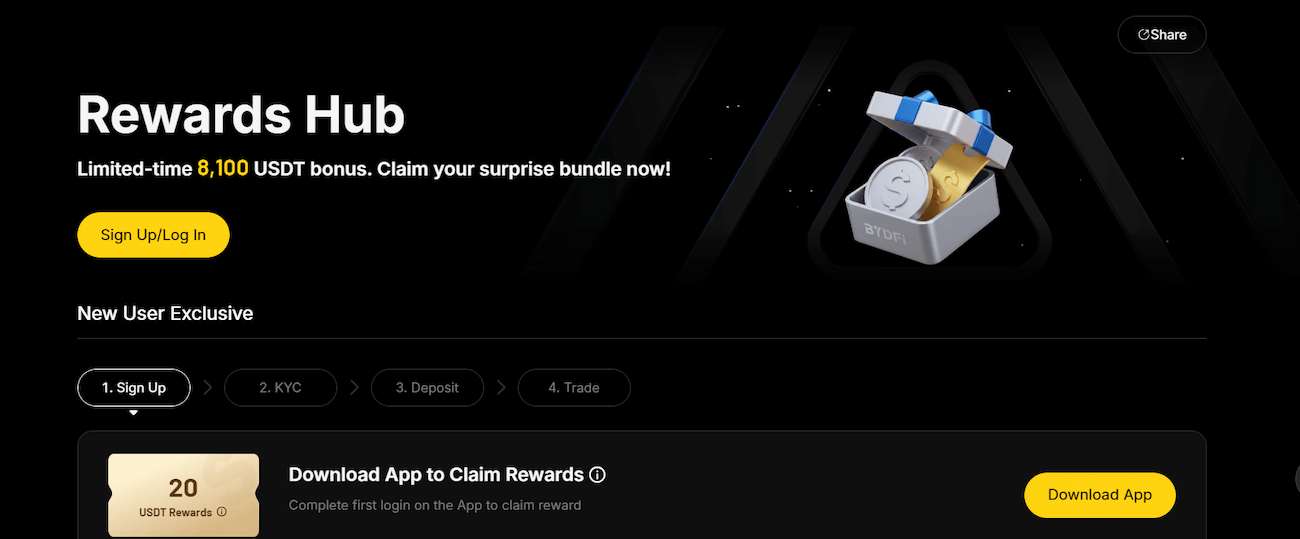
Rewards Hub offers up to 8,100 USDT to new users who complete the listed tasks; KYC, eligibility, and deadlines apply.
Who should consider BYDFi Stock Futures?
BYDFi Stock Futures are worth examining for readers who want USDT-margined stock-price exposure in a futures interface and accept the product’s isolated-margin and market-hours structure. Compare those objectives with the contract details on BYDFi stock futures before choosing a product.
Frequently asked questions
How does stock tokenization work?
Investor.gov describes tokenized securities as financial instruments represented by crypto assets recorded on a distributed ledger. BYDFi Stock Futures are instead perpetual futures providing price exposure, so their product terms and rights should be assessed separately.
How should readers assess tokenized-stock protections and limitations?
Tokenized stocks should be assessed by their legal structure, holder rights, redemption route, and treatment of corporate actions. BYDFi Stock Futures have their own rules, including early settlement of open positions after specified stock adjustments.


