


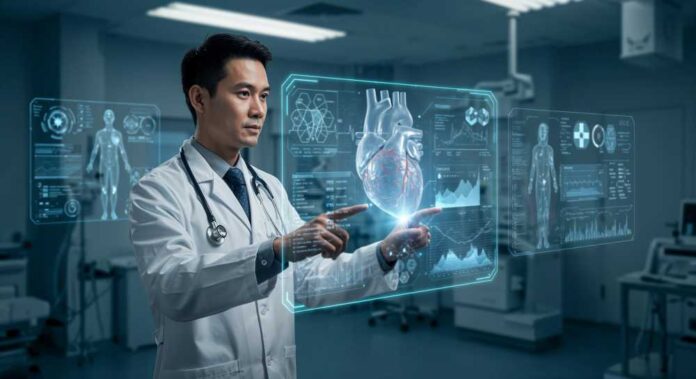

India’s medical services segment is entering a transformative phase, driven by the rapid expansion of digital integration such as AI-powered healthcare tools, telemedicine, and robotics. As we adapt to evolving demographics of the growing elderly population and increasing burden of non-communicable diseases, modern tech-driven skilling models are emerging as a driving force in navigating workforce deficit challenges. Moreover, it is creating millions of employment opportunities by training medical professionals with advanced digital skills.
Other than strengthening service delivery, technology-enabled training is helping hospitals and healthcare institutions onboard professionals faster, improve operational readiness, and support continuous learning across departments. On top of that, with increasing pressure on hospitals to manage higher patient volumes seamlessly, the need for digitally skilled medical professionals is becoming more important than ever.
Bridging Digital Gaps In Healthcare
A WHO-SEARO study from 2025 claims that more than 47 percent of the medical workforce in India needs to be prepared with foundational digital knowledge to make use of evolving tools and technologies, including AI diagnostics and EHRs. Additionally, a NITI Aayog report highlights that India requires over 1 million trained allied health professionals (AHP), including online health administrators, health data analysts, and telehealth technicians.
These numbers reflect a pressing need, especially at a time when hospitals are already dealing with manpower shortages, high attrition rates, and nurse migration overseas. In many healthcare institutions, newly graduated professionals also require additional practical exposure before adapting to fast-moving clinical environments and digital workflows. As hospitals continue to adopt AI tools, smart diagnostics, automation systems, and digital patient management platforms, there is a growing need for continuous workforce training.
Rising Demand For Continuous Healthcare Skilling
While the current growth in healthcare is opening up a lot of doors, it’s also putting a massive amount of pressure on hospitals to manage a larger patient load with limited staff. This is why healthcare leaders should focus more on AI training by upskilling their employees to handle HMIS, HIMS, EHR systems, AI-powered tools, and digital patient management platforms.
At the same time, it’s no longer enough to just have your medical degree; front-line workers should stay current with advanced technology to ensure smooth operations and effective patient care. This has created a huge need for digital training models, as it supports specialised areas, such as nursing training modules, practising emergency response, or staying on top of the latest compliance rules. Since healthcare professionals often work under intense workplace pressure and long shifts, flexible digital learning solutions are helping them continue training without affecting patient responsibilities.
More importantly, technology is now becoming an enabler for scalable workforce development, helping healthcare institutions strengthen workforce readiness while building capabilities at a much faster pace.
AI and Its Economic Impact
In today’s tech-savvy world, it is important to recognise that AI will play a vital role in healthcare, delivering faster early-onset detection, patient-centric treatments and care, improved outcomes, and limited manual labour. However, the larger opportunity lies not in workforce replacement but in preparing healthcare professionals to work effectively alongside evolving technologies.
As hospitals continue integrating AI tools, smart diagnostics, automation systems, and digital patient management platforms, there is a growing need for continuous workforce training.
Doctors, nurses, technicians, and administrative teams must regularly adapt to new systems to ensure efficient implementation and safe patient care. Rather than replacing healthcare professionals, technology is increasingly becoming an enabler that helps healthcare institutions scale training, strengthen workforce preparedness, and improve capability building at a much faster pace. This shift will not only cut down hospital operational costs but also minimise financial stress on patients suffering long-term diseases like cancer, diabetes, and heart-related issues.
Takeaway
Technology-led skilling in India is an opportunity for delivering better results in the healthcare sector, making it future-ready for any challenge and capable of meeting global standards to treat modern patients. These fundamental changes will not only enhance India’s medical domain but also empower millions of healthcare professionals by upskilling them.