


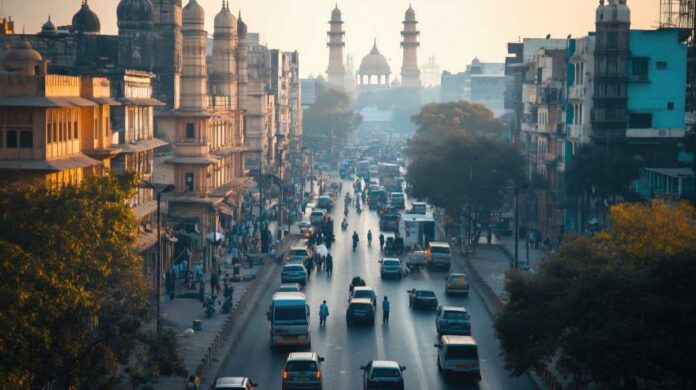

India’s urban growth story is entering a decisive phase. By 2036, nearly 600 million Indians are expected to live in urban centres, which are projected to contribute close to 70% of the country’s GDP. As cities expand and urban economies become more complex, the challenge is no longer limited to creating additional housing or commercial space. The larger objective is to build urban environments that function more efficiently, reduce travel burdens, and improve quality of life.
This shift is prompting a rethink of how cities are planned and developed. Increasingly, mixed-use developments are emerging as a response to the realities of urban living, bringing together different aspects of everyday life within a more connected environment. Their growing relevance reflects not just a real estate trend, but a broader evolution in how people want cities to function.
Infrastructure Is Creating New Growth Centres
One of the most significant forces behind this transformation is connectivity. Across the Mumbai Metropolitan Region (MMR), projects such as Metro Line 4, the Goregaon-Mulund Link Road (GMLR), the Thane-Borivali Twin Tube Tunnel, and upcoming multimodal transport initiatives are reshaping accessibility across the region. The Thane-Borivali Twin Tube Tunnel alone is expected to reduce travel time between the two locations from nearly 60–90 minutes to approximately 15–20 minutes, significantly improving east-west connectivity.
The impact extends beyond mobility. As connectivity improves, it influences where people choose to live, where businesses establish operations, and how new urban districts evolve. Rather than concentrating growth within a handful of established centres, infrastructure is enabling the emergence of multiple growth nodes across metropolitan regions.
This shift is particularly visible across Thane and the broader Mulund-Thane Corridor. The emergence of Teen Hath Naka as a major multimodal interchange, the continued evolution of Wagle Estate as a key commercial hub, and the strengthening of social infrastructure illustrate how connectivity is reshaping urban growth patterns. What was once viewed primarily as a residential catchment is steadily evolving into a more self-sustaining urban destination.
In 2026, the corridor is witnessing unprecedented infrastructure-led momentum. Metro Line 5, spanning 34.2 km across Thane, Bhiwandi, Kalyan and Ulhasnagar, is nearing operational readiness, while the proposed new suburban railway station between Thane and Mulund is expected to ease pressure on one of the region’s busiest commuter stretches.
Simultaneously, MMRDA has earmarked significant investments to position Thane as a regional mobility hub, supported by new road corridors, interchange upgrades, and multimodal connectivity projects. Wagle Estate is also emerging as a mature commercial district, attracting Grade-A office development and reinforcing the corridor’s transition from a bedroom market to a live-work ecosystem.
The growing appeal of such infrastructure-led locations is reflected in broader market activity across MMR. According to Knight Frank India, Mumbai recorded 13,864 property registrations in April 2026, making it the strongest April performance in more than 14 years. The sustained demand underscores the increasing preference for well-connected urban centres supported by improving infrastructure and social amenities.
Why Mixed-Use Development Is Becoming Essential
India’s urbanisation journey is creating new pressures on land utilisation and city planning. As urban populations rise and land availability becomes increasingly constrained, cities need development models that support multiple aspects of daily life within the same geography.
The objective is not simply higher density. It is more efficient. As cities evolve, residents increasingly expect access to employment hubs, healthcare, education, recreation, and everyday conveniences without spending excessive time travelling between them. This is no longer simply a lifestyle preference; it is becoming an urban necessity.
Several urban districts across MMR demonstrate how this transition unfolds over time. Business centres have expanded beyond their original commercial purpose, while residential neighbourhoods have attracted workplaces, entertainment, social infrastructure, and services. The result is the creation of more balanced urban environments that remain active throughout the day rather than functioning as single-purpose districts.
Investor behaviour increasingly supports this transition. According to CBRE’s India Market Monitor 2025–26 report released in January 2026, land and development sites attracted over 46% of total real estate investments, reflecting growing confidence in large-scale, mixed-use and infrastructure-linked development opportunities.
Consumer Expectations Are Driving Demand
Consumer preferences are evolving alongside cities. Today’s homebuyers evaluate locations through a much wider lens than previous generations. Proximity to reputed schools, healthcare networks, employment centres, organised retail, open spaces, and leisure destinations increasingly influences purchase decisions.
This trend is particularly evident among younger professionals and dual-income households, for whom time efficiency has become a major consideration. In many cases, buyers are prioritising neighbourhood quality and accessibility over sheer proximity to a traditional business district.
The shift is also reflected in broader housing demand. According to Liases Foras, housing sales across India’s top 75 cities reached nearly ₹9.33 lakh crore in FY26, with demand increasingly concentrated in well-connected micro-markets supported by strong infrastructure and social amenities. The implication is clear: people are no longer evaluating projects in isolation. They are evaluating the wider urban environment in which those projects exist.
Capital Is Following Long-Term Urban Trends
Investment patterns are reinforcing this transition. According to CBRE, capital inflows into India’s real estate sector reached an all-time high of USD 14.3 billion in 2025, recording nearly 25% year-on-year growth. Notably, land and development-led investments attracted the largest share of capital, underscoring investor confidence in long-term urban expansion and integrated development opportunities.
This reflects a broader shift in how value is being assessed. Increasingly, investors recognise that sustainable growth depends on more than individual assets. Locations that combine residential demand, employment generation, social infrastructure, and commercial activity are better positioned to support long-term economic resilience. As metropolitan regions continue expanding, capital is likely to remain focused on locations where infrastructure investment and urban development reinforce one another.
The Decade Ahead
The next decade of urban India is unlikely to be defined by isolated residential towers, office districts, or retail destinations. Instead, it will be shaped by places that bring together mobility, employment, housing, social infrastructure, public spaces, and community life in a more cohesive manner.
The direction of change is already visible across infrastructure-led growth corridors within MMR and other major metropolitan regions. As urbanisation accelerates, the most successful developments will be those that recognise a simple reality: people do not experience cities in separate segments. They experience them through the convenience, accessibility, and opportunities available in their everyday lives. Mixed-use development, therefore, represents more than a design approach. It is increasingly becoming one of the defining frameworks through which urban India will grow, compete, and create value over the next decade.