


spot_img

Reimagining Live Sports Coverage: wTVision’s Divyajot Ahluwalia on How Robot Dog Champak Transformed IPL Broadcasting

Date:

Trending

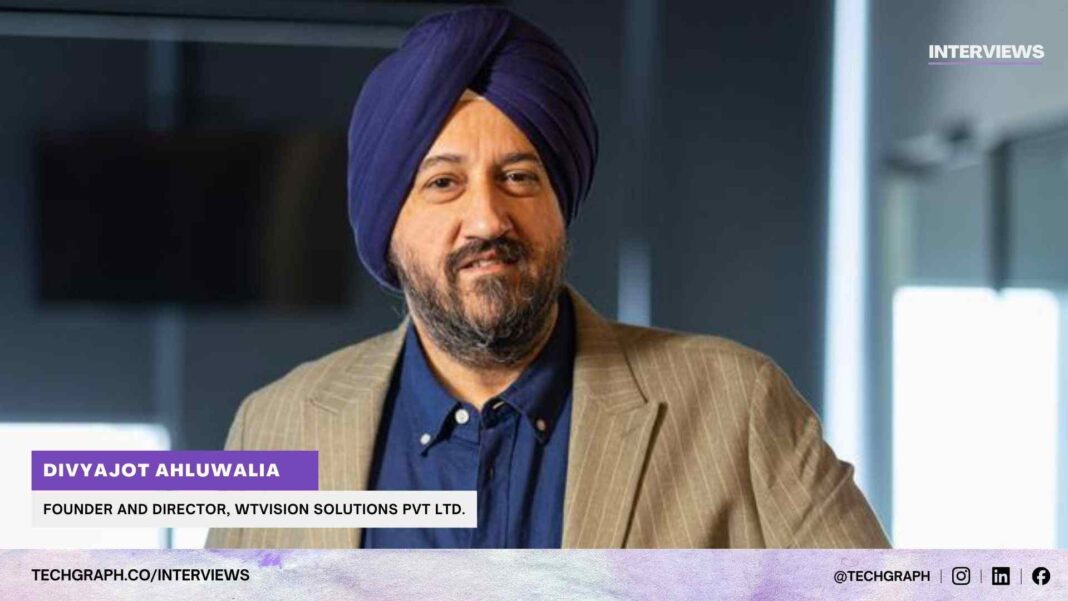
Speaking with TechGraph, Divyajot Ahluwalia, Founder & Director of wTVision Solutions Pvt. Ltd., discussed how the growing demand for immersive, ground-level sports coverage created an opportunity for bold experimentation in live broadcasting, and how the debut of Champak, the robotic dog introduced during the Indian Premier League (IPL 2025), transformed the viewing experience by navigating the stadium with ease and bringing fans closer to the action in ways traditional cameras could not.

- Advertisement -

He further explained how the robot’s stabilised camera system, adaptive mobility, and crowd-friendly design showed the potential for robotics to move beyond purely technical functions and become part of the broadcast narrative, capturing unique visual angles and emotional interactions, prompting strong interest from production houses looking to integrate similar robotic elements into future live sports and entertainment events.

Read the interview in detail:

- Advertisement -

TechGraph: The debut of the Champak robot during the IPL caught global attention because it brought the camera to the ground in a way fans had never experienced before. What was the idea that convinced your team at wTVision that this was worth attempting in such a high-profile tournament?

Divyajot Ahluwalia: The advancement in the sports industry has always surprised people, and yet somehow they have always adapted to the new transformations taking place in the broadcast of sports. While we did see mascots playing an important role in major tournaments, we thought of bringing this robotic dog to life.

Considering that the IPL is an iconic tournament, we wanted to provide viewers with an enhanced experience of watching the IPL and create something to remember this event by.

- Advertisement -

TechGraph: Cricket stadiums are challenging environments for any robot, with uneven outfields, crowded sidelines, and the pressure of quick match turnarounds. What were the biggest hurdles in making sure Champak could perform reliably under those conditions?

Divyajot Ahluwalia: The biggest challenge with Champak was simply making sure it could perform the way we thought it would. It needed to be stable and agile enough for uneven outfields, reliable enough to navigate crowded sidelines without a hitch, and fast enough to keep up with the action.

We needed something truly advanced, a design that instantly adapted to varying grass, sudden blockages, and the constant, unpredictable flow of people. We also made sure the robot stayed durable, and it could operate for long hours under different conditions, which was another challenging obstacle for us, but relentless testing helped us create this iconic robot.

TechGraph: Viewers noticed that Champak became more than just a moving camera. It shook hands, greeted players, and even interacted with the crowd. Was it always part of the plan to turn the robot into a character in the broadcast rather than keeping it purely technical?

Divyajot Ahluwalia: Yes, even though it was not a necessity to create a robot that had movements and actions like a real-life dog. However, the idea stemmed from curiosity and a drive to create a robot that people can connect to. Sports are an immersive universe, and they captivate human attention, so entertaining elements take this experience to the next level. As long as we continue to make such innovations, the future of sports broadcasting will be creative with advanced technology.

TechGraph: One reason the robot impressed fans was how smooth the footage looked even when it was moving quickly across the ground. What kind of design and stabilisation work went into delivering that level of consistency?

Divyajot Ahluwalia: Champak’s smooth footage comes from smart engineering and precise stabilisation. We integrated a compact gimbal and pan-tilt system that absorbs shocks from fast movement, paired with a well-balanced quadruped design to minimise vibration.

The video link is so quick that our remote operators can frame every shot without making sudden, jarring movements. With the expert control of our trained crew, the footage stays consistent and broadcast-ready, even as Champak flies across rough stadium turf.

TechGraph: The IPL is a global showcase, but India also has a packed calendar of sports and entertainment events. How does wTVision view the scope for robotic broadcast solutions in India compared to other markets?

Divyajot Ahluwalia: Given its packed calendar of sports and entertainment events, India offers immense potential for next-generation camera technology in broadcasting. Champak’s success at the IPL proved that the market is enthusiastic for innovation that genuinely elevates the fan experience.

While established markets prioritize automation and slower, deep-rooted system changes, India seeks agility, immediate visibility, and maximum cost efficiency. This means wTVision’s focus is on creating tough, adaptable camera solutions and actively collaborating with local partners to match the lightning-fast pace and immense scale of Indian live productions.

TechGraph: After Champak made headlines during the IPL, what kind of feedback or requests did you receive from Indian broadcasters and production houses? Were they more interested in its technical possibilities or in the way it connected with audiences?

Divyajot Ahluwalia: Indian broadcasters and production houses greeted Champak’s debut at the IPL with huge enthusiasm. Its reliable speed and steady camera work captivated them, along with the unique, low-angle shots it captured. The true revelation was Champak’s undeniable charisma and the powerful, immediate affinity it created with the viewers.

This led broadcasters to recognize that the camera was more than simple hardware; it was a dynamic presence that could actively shape the narrative, transcending its designation as a mere tool. This impactful mix of new technology and charm has already generated significant interest in using similar solutions for future live events.

TechGraph: Looking ahead, do you think robotic elements like Champak will eventually become a regular part of Indian live productions, or will they remain as special features tied mainly to mega-events such as the IPL?

Divyajot Ahluwalia: We anticipate that innovative devices such as Champak will continue to see keen interest. The success demonstrated at large-scale events like the IPL already underscores their considerable value in both creating compelling visual content and improving operational efficiency.

As development costs decrease and the expertise of our operators expands, we fully expect this technology to be adopted more widely across various leagues, concerts, and televised shows. The early visibility gained from mega-events is important, but the long-term objective is seamless, everyday integration within the broader Indian broadcast sector.

THE SNAPSHOTS

Sign up to get quick snaps of everyday happening, directly in your inbox.

We don’t spam! Read our privacy policy for more info.

- Advertisement -
Krishna Mali
Krishna Mali
Founder & Group Editor of TechGraph.
Advertisement

More Latest Stories

More Articles

Supreme Court Allows Texas to Use New Congressional Map for 2026 Midterms

The U.S. Supreme Court has allowed Texas to move ahead with its newly redrawn congressional districts for the 2026 midterm elections, a decision that...

Beyond Instant Approvals: PayMe CEO Mahesh Shukla on Building Compliant Lending for India’s New Credit Economy

Speaking with TechGraph, Mahesh Shukla, Founder and CEO of PayMe, discussed how India’s digital lending landscape is evolving from instant disbursal models to frameworks that balance speed with regulatory discipline, and how PayMe is shaping this transition by embedding automation, risk intelligence, and customer...

Meta Declares Quarterly Cash Dividend Of $0.525 Per Share

Facebook parent company, Meta Platforms Inc. (NASDAQ:META) said its board of directors has declared...

Lok Sabha: Government releases ₹68K crore under MGNREGS; wage payments routed via DBT

New Delhi, India: Union Agriculture Minister Shivraj Singh Chouhan said the government has released...

Digital Generics: How AI is Redefining the Future of Affordable Medicine

It was with pride that global headlines described India as the world's pharmacy, supplying...

Understanding What Makes Sunscreen Truly Effective

Many people pick a sunscreen merely based on its SPF, thus they think that...

Delhi IGI Airport Revamped Terminal 2 with Advanced Baggage screening systems

Delhi’s Indira Gandhi International Airport (IGI) has reopened its reconstructed Terminal 2, inaugurated by...

The Future of Health Philanthropy: IGF India CEO Sundeep Talwar on Making Preventive Care Accessible for Underserved Communities

Speaking with TechGraph, Sundeep Talwar, CEO of IGF India, discussed the foundation’s decade-long journey...

The Evolving Classroom: Venkateshwar International School’s Pooja Sharma on Changing Role of Schools in Delhi’s CBSE Ecosystem

Speaking with TechGraph, Pooja Sharma, Vice Principal of Venkateshwar International School (VIS), discussed how the modern school ecosystem is steadily moving from a teacher-centric...

The Rise of the AI Agent Economy: How Voice AI Agents Are Becoming the New Frontline Workforce For Call Centers

The work inside a call center has always depended on two things: speed and...

The Road to Equality in Tech: Women In Cloud’s Chaitra Vedullapalli on Reshaping Opportunity for Women Entrepreneurs Globally

In an interview with TechGraph, Chaitra Vedullapalli, Co-Founder of Women In Cloud, discussed how...

How Fleet Maintenance Scheduling Supports Business Vehicle Performance

Managing a fleet of vehicles can be challenging for any business. From delivery vans...

The AI Advantage: How Intelligent Learning Solutions Are Rewriting Workforce Productivity in 2025 and Beyond

In 2025, artificial intelligence is no longer a futuristic concept — it’s the invisible...

Reimagining Creative Operations: ButtonShift’s Deepankar Das on Bringing Telemetry & Visual Intelligence to Modern Workflows

Speaking with TechGraph, Deepankar Das, Co-Founder and CEO of ButtonShift, discussed how traditional task management tools are unable to capture the non-linear and visually...

The Rise of Cyber Cartels: How the Dark Web Fuels Digital Extortion?

In 2025, cybercrime has evolved beyond individual hackers or little ransomware criminal gangs into something greater, more organised, and just as dangerous: Cyber cartels. Recent reports suggest that the dark web alone, which is only about 0.01% of the internet, has millions of users...

AI Research Startup Redrob Draws $10 Mn In Series A Funding Led By Korea Investment Partners

AI research startup Redrob has secured $10 million in its Series A round led...

The Future Employability Equation: PrepInsta’s Manish Agarwal on How AI Is Reshaping Student Readiness for Hiring in India

Speaking with TechGraph, Manish Agarwal, Co-Founder of PrepInsta, discussed how the increasing adoption of...

AI as a Growth Multiplier: How Smart Companies Accelerate Without Breaking

In today’s business environment, smart growth is just as important as any other form...

Beyond Price Points: Unix India’s Imran Kagalwala on Redefining Consumer Expectations in the Mobile Accessories Market

Speaking with TechGraph, Imran Kagalwala, Co-founder of Unix India, discussed how a crowded accessories...

Trump Says He Will Sue BBC Over Edited Broadcast of Jan 6 Speech

US President Donald Trump has said he plans to take legal action against the...

Starbucks Baristas Rally in New York as Strike Over Pay and Staffing Extends Nationwide

Starbucks baristas rallied in New York City as part of an open-ended strike that...

How E-Commerce Growth is Redefining India’s Warehouse Infrastructure

India’s e-commerce sector has rewritten the rules of retail. What began as an urban...

From Paper Bonds to Digital Yields: The Evolution of Fixed-Income Investing in the Fintech Era

When India dematerialized equities and bonds in 1996, it transformed investing from paper to...

Trade Gaia Emerges as a Key Player in Global Altcoin Trading

While Bitcoin continues to dominate headlines, the real growth in 2025 is coming from...

How Fleet Maintenance Scheduling Supports Business Vehicle Performance

Managing a fleet of vehicles can be challenging for any business. From delivery vans...

Norovex Review: Inside the Trading Platform Gaining Momentum

The online trading industry has entered one of its most dynamic periods in years....

Why Zero Code Exposure Is the Future of Trust in AI

AI coding assistants have quickly become indispensable for developers, promising faster deployment, cleaner code,...

Debt Recovery Reinvented: Collectedge’s Ranjan Agarwal on Reshaping India’s Collections Ecosystem for Lenders

Speaking with TechGraph, Ranjan Agarwal, CEO and Co-Founder of Collectedge, discussed how India’s debt...

Tech Skilling for All: How AI Will Reshape Campus Recruitment in India

Skilling either tech or non-tech skills is no longer a competitive advantage for any...

The AI Advantage: How Intelligent Learning Solutions Are Rewriting Workforce Productivity in 2025 and Beyond

In 2025, artificial intelligence is no longer a futuristic concept — it’s the invisible...

From Paper Bonds to Digital Yields: The Evolution of Fixed-Income Investing in the Fintech Era

When India dematerialized equities and bonds in 1996, it transformed investing from paper to...

Empowering Creators: Studiobackdrops’ Archisman Misra on Making Professional Production Accessible Across India

Speaking with TechGraph, Archisman Misra, CEO and Founder of Studiobackdrops, discussed how India’s fast-growing...

Trade Gaia Emerges as a Key Player in Global Altcoin Trading

While Bitcoin continues to dominate headlines, the real growth in 2025 is coming from...