


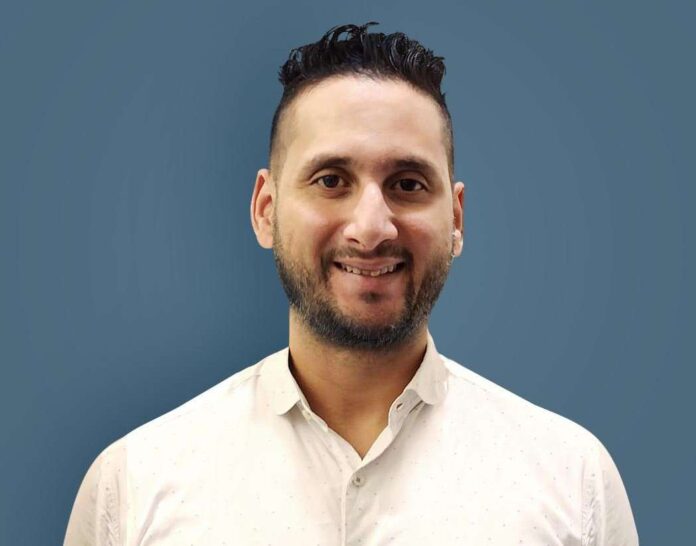

Speaking to TechGraph, Siddharth Ugrankar, CEO of Qila.io highlighted the potential of the company’s permissioned blockchain workflows and customizable SaaS platform, and how these solutions enable businesses to tokenize high-end retail, track supply chains, and ensure compliance with ESG standards and ethical sourcing.
Read the complete interview:
TechGraph: What inspired Qila.io to venture into Blockchain as a Service, and what specific problem are you addressing for businesses?
Siddharth Ugrankar: Qila.io came into being with the idea of simplifying blockchain adoption for the enterprise since it believed that current methods were too complex, costly, and resource-intensive. Companies were struggling with setting up the right infrastructure, finding skilled experts to manage it, and aligning blockchain technology with their business goals.
These shortcomings Qila.io takes care of these by offering the low-code/no-code BaaS platforms called ARK and ARK+ that allow seamless blockchain adoption into the workflow.
This approach enables businesses to experiment, innovate, and scale blockchain applications like tokenization, identity management, and supply chain transparency, all of which are not bound by complicated technicalities.
TechGraph: What industries are currently showing the highest demand for blockchain solutions, and what are the driving factors behind this trend?
Siddharth Ugrankar: Finance, supply chain, healthcare, retail, and real estate are some of the major industries driving demand for blockchain solutions.
In finance, it provides efficiency in cross-border payments and fraud prevention; in healthcare, it gives tamper-proof patient records; supply chain sectors increasingly use blockchain for end-to-end traceability of products for meeting ESG mandates and ethical sourcing requirements; and in retail, it’s applied to loyalty programs and anti-counterfeiting measures.
These trends are driven by growing regulatory compliance needs, consumer demand for transparency, and the scalability blockchain offers in reducing costs and increasing operational efficiency.
TechGraph: In the current digital era, where do you identify the largest disconnect between traditional business operations and blockchain technology, and how does Qila.io bridge this gap?
Siddharth Ugrankar: The most critical issue is that many perceive blockchain technology as complex. Traditionally, normal businesses are burdened either by the high cost to leverage blockchain or their apparent lack of technical expertise for implementation and concerns about integration blockchain technologies into existing systems.
Qila.io closes these gaps and makes it all accessible and very cost-effective through pre-configured workflows, subscription-based models, and low-code/no-code APIs. Our solutions, such as ARK+, provide firms with scalable, compliant blockchain networks that can be rolled out without disrupting existing structures. This simplification reduces the need for businesses to focus on outcomes rather than technology.
TechGraph: What customization options does Qila.io offer to businesses with specific requirements in their blockchain implementation?
Siddharth Ugrankar: Qila.io offers web3 infrastructure customization with a SaaS platform and is set up to achieve unique business needs. Thus, with permissioned blockchain network workflows provided with customization, ARK+ might be used for specific industrialized uses, such as tokenizing high-end retail through luxury tokens and tracking supply chains across various commodities.
All Qila.io APIs support seamless integrations with existing systems in large enterprise environments, enhancing flexibility and scalability.
Furthermore, our PrivaSea Wallet makes it simple for businesses to manage tokenized assets, be it for a loyalty program, asset authentication, or credentialing. These customizable features make our solution adaptable to different sectors and operational goals.
TechGraph: In an era where data breaches are prevalent, how does Qila.io reassure its clients of the security within its blockchain solutions?
Siddharth Ugrankar: Qila.io’s blockchain solutions are based on the premise of enterprise-grade security. We deploy advanced encryption standards for secure data in transit as well as at rest, thus making unauthorized access impossible.
Our private cloud structure is aligned with the worldwide regulatory standards, and this encompasses GDPR, ensuring adherence and the sovereignty of the data. We keep watching and conducting regular security audits to ensure that our approach continues to maintain the highest possible levels of data security, therefore giving clients confidence in their operations regarding blockchain.
TechGraph: We’ve observed a surge in blockchain interest across various industries. Which sector do you anticipate will benefit most from blockchain in the coming year, and for what reasons?
Siddharth Ugrankar: In the future, the adoption of blockchain by the supply chain will positively impact most industries as it offers a permanent transaction record with traceability and accountability, and it ensures increased compliance with ESG, ethical sourcing, and global trade transparency.
It offers a technological solution to some of the greatest problems including fraud, inefficiency, and issues of mistrust among parties. As global supply chains continue to become more interdependent, blockchain’s ability to ensure the real-time data sharing of transactions will help drive efficiency and meet regulatory requirements.
TechGraph: With the rise of competitors in the BaaS space, what distinguishes Qila.io, and how do you maintain your competitive edge?
Siddharth Ugrankar: Qila.io stands out in the BaaS space, being able to provide both Web3 private cloud infrastructure and a flexible SaaS platform. This double ability enables us to service any industry interested in using Web3 solutions but with a core focus on simplicity, speed, and scalability. Our platforms, ARK and ARK+, allow companies to integrate blockchain solutions in a fraction of the time of traditional services and go live within days.
We have an end-to-end ecosystem from blockchain infrastructure to token management through PrivaSea, which makes sure everything will be seamless for users. We have a commitment to private cloud security, compliance, and customized solutions as well. Our ability to continuously innovate while keeping a focus on real-world applications will sustain our competitive advantage and assure measurable value to clients.
TechGraph: Are there any emerging technologies or trends in blockchain that Qila.io is currently exploring or plans to integrate into its services?
Siddharth Ugrankar: Qila.io is actively working on a number of emerging blockchain technologies and trends. It is working on cross-chain interoperability solutions that will ensure seamless communication across different blockchain networks, a major challenge in the Web3 ecosystem.
We are also focusing on scalability solutions such as Rollups, along with multiple blockchain frameworks such as Besu, Indi, etc. One other area of interest lies in the Decentralized Finance (DeFi) application space, where we would like to help businesses adopt transparent and secure financial systems. The emphasis on privacy, security, and regulatory compliance helps such innovations be robust and future-ready.