


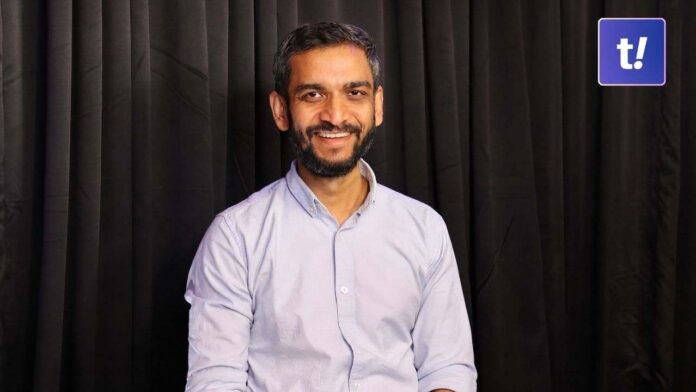

Speaking with TechGraph, Naveen Tiwari, Co-Founder of Scrabble, discussed how leadership hiring is shifting from a credentials-led approach to one focused on demonstrated capabilities, and how organisations are increasingly seeking executives who can create measurable impact from the outset.
Tiwari also highlighted how Scrabble uses AI as an augmentation tool within the search process while relying on recruiter expertise, industry networks, and relationship-driven insights to help companies make more informed hiring decisions aligned with broader business and organisational objectives.
Read the interview in detail:
TechGraph: Over the past few years, senior hiring has clearly moved from filling roles to identifying leaders who can step in and create impact almost immediately. What shifts in client expectations have stood out to you, and how has that changed the way you approach search mandates at Scrabble?
Naveen Tiwari: As you rightly mentioned, the playbook for senior leadership hiring is undergoing a serious overhaul. And we are recalibrating the landscape with each new leadership hire. Of late, the demand has grown for transformational leadership, stewards who can lead organisations’ digital transformation, encapsulating digital-first and AI-led paradigms.
There has been a significant shift from focusing solely on pedagogy & credentials to demonstrated capabilities. We not only look for candidates who appear great on paper but also can demonstrate their results-oriented leadership style.
TechGraph: Many organisations begin a search with a broad idea of the role, yet the definition of success often keeps evolving during the process. How do you work with clients to bring early clarity so that the mandate remains consistent as the search progresses?
Naveen Tiwari: While the mandates shared by clients become our top priority, we don’t limit our enquiry or exploration to just that. Along with the mandate, our Research & Development hub establishes success metrics for the role and for what the mandate truly demands.
We combine it with industry-leading insights and the expertise of senior recruiters who have executed critical mandates in the past to arrive at what the role truly demands. Another critical aspect is working closely with the clients, communicating the blind spots, prompting them to think in ways that might have slipped their notice otherwise.
As recruitment partners, it is about establishing that relationship of trust and leaving room for growth as our explorations evolve.
TechGraph: At the CXO and senior level, a wrong hire rarely fails on capability alone and often shows up later through misalignment in thinking, pace, or culture. What early signals do you look for to identify these risks, and how do you build them into your evaluation process?
Naveen Tiwari: True, at the senior level, the capability is questioned, but there can be misalignment in terms of decision-making or the pace of execution. One of the early signs we look for is how outcome-driven a candidate has been and what kind of environment enabled those outcomes. Take, for instance, did they build from scratch, do they operate better in structured environments, etc., and aligning the same.
We study the candidate’s profile, pivotal movements across their career, and figure out their natural style of working and leading others. Cultural alignment, thus, becomes less about an ideal fit and whether or not the candidate and the client are aligned on operating rhythm, working style, and nature of the organisation.
TechGraph: As companies rethink leadership structures, there is a growing demand for leaders who can operate across technology, product, and business. How has this reshaped the kind of profiles you are seeing, and what makes evaluating such cross-functional talent more complex than it appears?
Naveen Tiwari: There is certainly a growing demand for cross-functional talent, leaders who can juggle between different processes, verticals, and paradigms with ease and efficacy. We look for talent that demonstrates quick thinking, technical know-how, and commercially viable decision-making.
These domains are multi-dimensional and require a well-rounded and process-oriented approach. The real challenge is in identifying people who have real, in-depth expertise Vs. people with surface-level exposure. We naturally go for candidates who have driven meaningful business decisions through their cross-functional exposure.
TechGraph:With roles becoming more fluid, assessment itself is getting harder to standardise. How do you balance structured evaluation methods with experience and judgement when closing senior mandates?
Naveen Tiwari: While standardisation is important for the sake of consistency, at a senior level, too much standardisation may leave little room for nuance. We follow a layered approach for this. At the baseline, we set a clear baseline of structured frameworks around key competencies like stakeholder influence, strategic thinking, and execution prowess.
Beyond that, an expert eye and critical judgment play an important role in noticing signs that otherwise go unnoticed. Our key pattern recognition, built over years of flawless strategic and leadership hiring, helps us avoid bias or rigidity and render justice to the business mandate.
TechGraph: At the same time, senior candidates today are far more deliberate in their decisions and often evaluate organisations on direction, stability, and real influence rather than just role or title. What behavioural shifts have you observed, and how is that changing the way mandates are positioned and closed?
Naveen Tiwari: Senior candidates today are a lot more intentional and not easily swayed by perks or package. They are more likely to evaluate the organisation and the role. They ask for clarity of vision, check the credibility of the founding team or top management, and the kind of resources the company has to execute over the next 3-5 years.
We are increasingly seeing candidates do a deeper diligence and have more in-depth conversations regarding the growth trajectory of the organisation and value alignment. Closing a mandate thus becomes less about negotiation and more about being aligned on what value they would be co-creating.
TechGraph: As more companies begin integrating AI into sourcing and evaluation, where have you seen it genuinely add depth to the hiring process, and where does it still fall short when applied to senior leadership roles?
Naveen Tiwari: AI certainly brings better efficiency and speed in talent discovery. It has made a lot more talent accessible, which might not have been considered before. Its pattern recognition and ability to extract from large datasets are certainly beneficial and save valuable time.
Where it falls short is in the nuanced understanding of the context, especially in senior leadership hiring. Assessing intent, value-based alignment, resilience, and ability to work with ambiguity are some of the crucial aspects that AI cannot help with and requires in-depth human intervention.
TechGraph: There is also a concern that AI-led filtering can favour familiarity over potential, especially when it leans heavily on past data. How do you ensure that high-potential but non-linear profiles are not screened out too early in the process?
Naveen Tiwari: That is a valid concern, as AI systems work on historical data, which can perpetuate existing biases in hiring decisions. To this end, we only see AI as an augmentation tool and do not rely on it for decision-making. We utilise it to widen the top of the funnel, to include profiles that may otherwise get missed.
Furthermore, AI-led analysis cannot replace human intervention. We direct our recruiters to go and hang out where the corporate crowd goes and keep nurturing their relationships. These relations always come in handy for us to include more non-linear profiles, and often, with a better success rate.
TechGraph: Looking ahead, as both companies and candidates become more aware of how hiring is evolving, how do you see firms like Scrabble shaping leadership pipelines in a way that goes beyond execution and into long-term advisory?
Naveen Tiwari: A role of organisations like Scrabble is to always move from transactional execution to that of becoming strategic partners for our clients. Companies today are operating in a different domain. Resources are finite, funding is not always guaranteed, and thus, there is a higher pressure to be profitable from the very beginning. And one of the key ways of achieving that is through a continuous, insight-led approach to talent acquisition.
For Scrabble, this means staying ahead of the curve in the leadership market, while advising clients on the shifting landscape and how roles are evolving over time. Helping organisations shift from simply hiring to planning out succession and the future of the organisation is the role we actually play.


