




As Union Finance Minister Nirmala Sitharaman prepares to present the Union Budget on July 23, 2024, industry leaders and analysts from various sectors have expressed high hopes for a budget that could shape India’s economic trajectory.
Read the budget expectations in detail:
Sameer Gandotra, Founder & CEO, Frendy
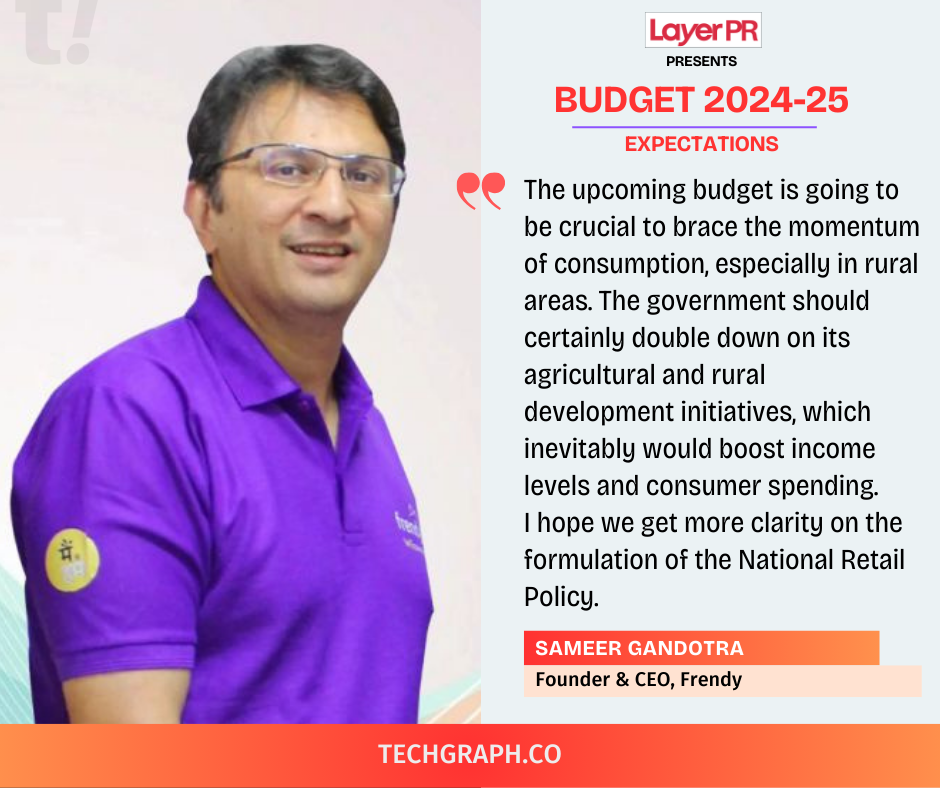
The upcoming budget is going to be crucial to brace the momentum of consumption, especially in rural areas. The government should certainly double down on its agricultural and rural development initiatives, which inevitably would boost income levels and consumer spending.
I hope we get more clarity on the formulation of the National Retail Policy, which in my opinion would be a game-changer! Affordable and low-interest credit, stability of tax rates (GST) for staples, and a push for digitization, are what the Indian retail space needs to continue the consumption wave.
Yug Bhatia, CEO & Founder, controlZ

I believe that a robust policy framework that defines standards, certifications, warranties, and taxes is crucial for the growth of the refurbished smartphone industry in India.
From this Budget 2024, we predict a reduction in the GST rate to make refurbished devices more affordable and accessible to a wider audience. We are also expecting that the government will boost credit access and financing options, along with collateral-free and low-interest loans to the refurbished smartphone players.
We propose that the government provide tax benefits and subsidies to the refurbished smartphone players who invest in R&D, and AI to promote innovation and technology adoption in this sector. Lastly, we advocate for a focus on the circular economy and its environmental benefits, viewing it not just as a business opportunity but as a collective responsibility to make this sector more organized
Agam Chaudhary, Founder & CEO, Two99
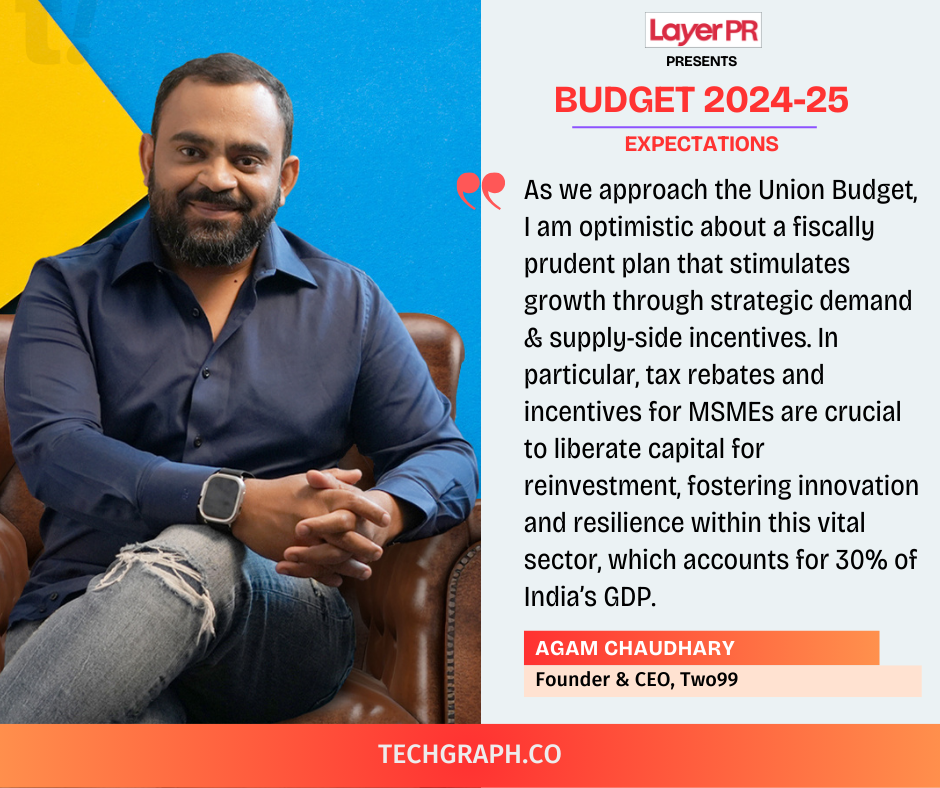
As we approach the Union Budget 2024-25, I am optimistic about a fiscally prudent plan that stimulates growth through strategic demand and supply-side incentives. In particular, tax rebates and incentives for MSMEs are crucial to liberate capital for reinvestment, fostering innovation and resilience within this vital sector, which accounts for 30% of India’s GDP and employs over 110 million people.
Investments in digital infrastructure are paramount, including the establishment of large-scale GPU clusters, which will position India as a leader in the AI revolution. With the global AI market projected to grow at a CAGR of 42.2% from 2020 to 2027, enhancing our AI capabilities is essential for staying competitive.
Additionally, a focus on skill development tailored to the Internet economy is essential. By leveraging our demographic dividend, we can ensure that our workforce is equipped to thrive in an era dominated by digital advancements, where digital literacy and advanced tech skills are becoming increasingly critical.
Sudeep Kulkarni, Founder, of Game Theory

The upcoming budget for 2024-25 appears very promising, especially in its support for young innovators and the sports industry. A significant milestone in this regard was establishing a Rs. 1 lakh crore fund with a 50-year interest-free loan, which will catalyze innovative tech-savvy ideas. This initiative represents a major step towards developing the sports framework, ensuring long-term support for the industry.
Aligned with the ‘First Develop India’ ethos, the government is committed to forming shared treaties with foreign partners, with a clear focus on India’s growth. By implementing a development policy that prioritizes social and geographical inclusion, we are laying the foundation for a more equitable and prosperous future for all citizens.
The growth of the sports industry, boosted by these initiatives, is expected to generate numerous new employment and training opportunities. This development will benefit sports enthusiasts, players, coaches, physiotherapists, and other support staff who play a crucial role in the sports ecosystem.
I anticipate that the government will ensure proper allocation of the budget to transform India into a globally leading sports hub. With the right focus and resources, we can create a sturdy sports infrastructure that supports and nurtures talent at all levels, ultimately contributing to a dynamic sports culture in the country.”
CA Aditya Sesh, Founder & Managing Director, Basiz Fund Service Private Limited

The Union Budget 2024-25 is highly anticipated by India’s agrarian community. Despite numerous existing schemes, their efficiencies need improvement. Over-dependence on limited produce is a concern. Diversifying crops based on demand gaps can double farm income. Enhancing collateral activities like product blending on the farm can boost income with minimal investment.
Expanding the Pradhan Mantri Kisan Man Dhan Yojana (PM-KMY) for farmers with less than two acres, currently providing ₹3,000 monthly, is expected. Extending Atal Pension Yojana benefits (₹5,000 p.m) to subsistence farmers could increase the maximum pension to farmers.
There is a push to make MSP a reference price, ensuring a baseline for agricultural sales and reducing market risks. The government is expected to introduce dynamic MSP, reflecting rising input costs. Education and promoting storage in regulated warehouses are necessary to combat price fluctuations.
The Pradhan Mantri Fasal Bima Yojana (PMFBY) is crucial for protecting against crop losses. Coverage needs expansion and additional budgetary allocation may be necessary. Fertiliser subsidies are 0.50% of GDP. Promoting Nano fertilizers and maintaining traditional fertilizer imports ($10 Bn) and domestic production should have additional budget allocation. Enhanced agri credit for farm productivity and seed opex is also needed. Interest subvention and loan repayment guarantees should also increase.
Improving value and marketing can help a higher variety of products get exported. Allocating budget funds for high-quality value-added products is also necessary as a safeguard against export bans or cuts.
Shantanu Rooj, Founder & CEO, TeamLease Edtech

We eagerly anticipate the Union Budget to prioritize substantial investment in the education sector, particularly in digital infrastructure. We hope for increased funding for technology integration in schools, colleges, and Universities, enhanced internet connectivity in rural areas, and robust support for online learning platforms.
Additionally, tax incentives for EdTech startups and initiatives to upskill educators in digital tools would greatly benefit our mission to make quality education accessible to all. To improve student employability, we suggest policy steps such as embedding industry-relevant skills and vocational training into the curriculum, promoting public-private partnerships to bridge the skills gap, and offering incentives for internships and apprenticeships. These measures will not only enhance the quality of education but also ensure that students are well-equipped to meet the demands of the modern workforce, driving India’s growth as a global leader in education and employment.
Manikanth Challa, Founder & CEO, Workruit

As the Union Budget 2024 approaches, the recruitment and startup ecosystem eagerly anticipates further advancements in technology and innovation. In recent years, the integration of AI and machine learning has revolutionized the hiring process, making it more efficient, inclusive, and accessible. Our expectations from this budget are centered on continued support for digital infrastructure and technology-driven solutions that can streamline recruitment and foster entrepreneurial growth.
Reflecting on last year’s budget, which laid a solid foundation for digital transformation by allocating funds for AI research and promoting startup ecosystems, we hope this year’s budget will build upon those initiatives. Specifically, we are looking for increased investment in AI research and development, enhancing talent acquisition, and matching candidates with the right opportunities more accurately.
However, it is evident that many colleges and educational institutions are still lacking in technology, infrastructure, and resources. For instance, several institutions struggle with outdated computer labs, limited access to high-speed internet, and insufficient training programs for both students and faculty. These gaps hinder the ability of institutions to adequately prepare students for a tech-driven job market. Last year’s budget did not allocate sufficient funds to address these critical areas, leaving a significant portion of our educational infrastructure under-equipped for the future.
We believe that the upcoming budget should prioritize substantial investments in educational technology and infrastructure. This includes upgrading computer labs, ensuring widespread access to high-speed internet, and providing robust training programs for digital skills. By doing so, we can better prepare our future workforce to meet the demands of a rapidly evolving job market.
Rajarshi Bhattacharyya, Co-Founder, Chairman & Managing Director, ProcessIT Global
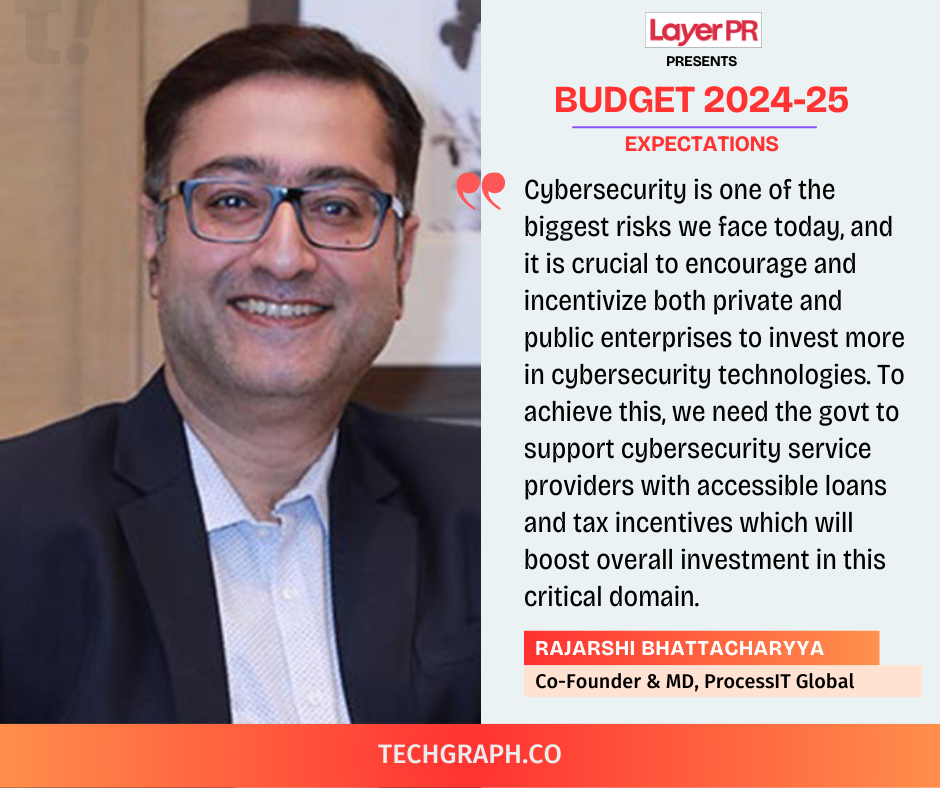
Cybersecurity is one of the biggest risks we face today, and it is crucial to encourage and incentivize both private and public enterprises to invest more in cybersecurity technologies. To achieve this, we need the government to support cybersecurity service providers with accessible loans and tax incentives which will boost overall investment in this critical domain.
Additionally, startups and SMEs require assistance in implementing cybersecurity measures and solutions. Government agencies should prioritize investing in digital infrastructure development, focusing on high-speed internet and 5G networks to ensure a secure and resilient digital future. These measures should be a key focus in the upcoming union budget.”
Vinod Sood, MD, Hughes Systique Corporation

The upcoming Budget 2024 holds immense promise for companies specializing in full-cycle engineering for products and R&D services, encompassing programming, testing, verification, technical support, design, and technology consultancy. The industry anticipates increased funding for R&D projects through larger grants and tax breaks, which could spur significant technical innovation. A reduction in the corporation tax rate would also be highly beneficial, fostering a more favorable environment for investment and expansion, particularly for startups and IT enterprises.
Industry leaders are enthusiastic about advancements in digital infrastructure, such as the introduction of 5G and enhanced internet connectivity. These improvements are expected to boost productivity and enable companies to offer cutting-edge solutions to their clients. Policies supporting collaboration between businesses and academia could further accelerate the development of new products and technologies.
In summary, the Budget for 2024 can significantly impact the product design and R&D sectors by providing financial incentives, enhancing infrastructure, and encouraging innovation. These measures will not only benefit tech businesses but also drive the overall growth of the Indian IT sector. Notably, the government has reiterated its commitment to launching the Rs 10,000 crore IndiaAI Mission within the next two to three months, laying a solid foundation for future technological advancements. The government’s active efforts to establish this mission underscore its dedication to positioning India as a global leader in AI and technology.
Anuj Kumbhat, Founder & CEO, WRMS

As a leader in climate risk management and sustainability solutions, WRMS eagerly anticipates the upcoming budget, hoping for robust governmental support to enhance climate resilience, climate change adaptation, and disaster preparedness initiatives across various sectors.
We believe that increased investment, alongside strong policy support, regulations, and incentives, in advanced technologies such as IoT, AI, and data analytics, can revolutionize climate risk assessment and mitigation strategies in agriculture, infrastructure, urban planning, disaster management, and insurance. These cutting-edge technologies can provide real-time data, predictive analytics, and automated responses, making our approaches more precise and effective.
By focusing on these critical areas, we can significantly improve our capacity to predict, prepare for, and respond to climate-related risks and disasters, ensuring the safety and well-being of our society. Furthermore, we hope the budget will prioritize funding for educational programs and public awareness campaigns to build a knowledgeable and proactive community ready to tackle environmental challenges head-on.
In addition, we advocate for collaboration between the government, private sector, and research institutions to foster innovation and develop scalable solutions that can be implemented across different regions and industries. By leveraging collective expertise and resources, we can create a resilient and sustainable future. Investing in climate resilience not only protects our environment but also drives economic growth, creating new job opportunities and fostering sustainable development. We are optimistic that the upcoming budget will reflect these priorities and pave the way for a more resilient and sustainable nation.
Rohit Bajaj, Co-founder, Balwaan Krishi
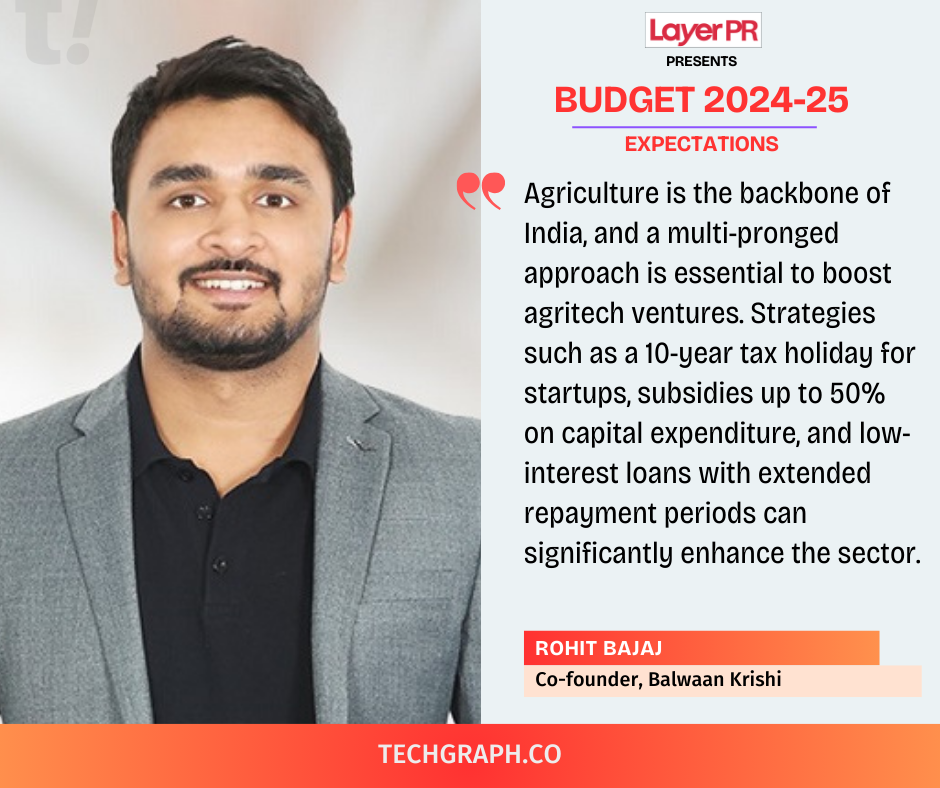
Agriculture is the backbone of India, and a multi-pronged approach is essential to boost agritech ventures. Strategies such as a 10-year tax holiday for startups, subsidies up to 50% on capital expenditure, and low-interest loans with extended repayment periods can significantly enhance the sector. Establishing a dedicated R&D fund with an initial corpus of ₹1,000-2,000 crore will support agritech research, grants, and seed funding. Companies like Balwaan Krishi, which have positively impacted over 500,000 farmers by increasing crop yields by 20%, reducing labor costs by 30%, and minimizing post-harvest losses by 15%, exemplify the potential of agritech.
Additionally, a Production Linked Incentive (PLI) scheme for agritech and increased allocation for the Agriculture Infrastructure Fund (AIF) can be transformative. Investing in rural broadband connectivity and digital marketplaces will streamline the supply chain and ensure fair prices for farmers. Simplifying the regulatory framework with a single-window clearance system, unified standards, and a dedicated regulatory body will encourage innovation.
Creating a unified national platform for agritech products and promoting Indian solutions globally, coupled with skill development programs for farmers, will maximize the adoption and benefits of agritech tools. By adopting these strategies, the government can foster a clear and predictable regulatory environment that encourages innovation while ensuring safety, sustainability, and economic growth in the agritech sector.
Abhishek Gupta, Co-Founder, WeVOIS Lab

The over $ 12 billion waste management sector in India is poised for significant improvements with the right budgetary allocations and government actions. Currently, the industry faces several challenges, including underfunded infrastructure, limited private participation, technological gaps, weak enforcement of waste management laws, an unskilled workforce, and low public awareness.
Addressing these issues through targeted government actions could lead to substantial positive impacts.
Firstly, the sector suffers from underfunded infrastructure, lacking adequate waste processing and recycling facilities. To address this, the government needs to allocate more of its budget towards building modern waste treatment plants and recycling units. This increased funding would lead to more efficient waste processing, reduced pollution, and enhanced resource recovery.
India has become the world’s 3rd best economy, and our waste management infrastructure needs to reflect this status. Fortunately, we began efforts ten years ago, but there is still much to be done. In the second decade of the Swachh Bharat Mission, we must start making data-driven decisions. Understanding the behavior of residents and using data to inform our actions will be crucial.
Secondly, there is limited private participation in waste management projects due to low private investment. The government can incentivize the private sector by offering tax breaks, subsidies, and streamlined regulations to attract private companies. These incentives are expected to spur innovation and growth, leading to increased investment, technological advancements, and job creation. We need to encourage more new-age companies and technologies to enter and sustain in this sector.
Thirdly, there are significant technological gaps in the sector, with limited use of advanced waste treatment technologies. Investing in research and development (R&D) for innovative solutions, particularly in resource recovery and the circular economy, is crucial. Such investments would result in the development and adoption of eco-friendly waste management technologies, promoting sustainable solutions.
Additionally, weak enforcement of waste management laws is a major issue. Strengthening the regulatory framework with stricter laws and a focus on extended producer responsibility (EPR) is necessary. This would lead to increased compliance by producers and consumers and reduce illegal dumping.
A major challenge is that most of our waste is municipal solid waste, but our municipal corporations are still not ready. Implementing comprehensive training programs in modern waste management practices is essential. This skill development would enhance efficiency and effectiveness and capacity-building programs at the city level are needed to achieve the required progress.
We must also consider the workload of the concerned government departments, deploying additional teams to tackle these challenges. With the right policies and adequate funds, significant improvements can be made. The government’s commitment to these initiatives, coupled with data-driven decisions and public cooperation, can lead to a cleaner, more sustainable India.