


As the Indian government gears up for Budget 2024, the automobile and electric vehicles (EV) sector is buzzing with anticipation, expecting substantial support and policy initiatives to boost its growth.
Here’s a breakdown of their perspectives:
Subburathinam P, Chief Strategy Officer – Staffing, TeamLease Services
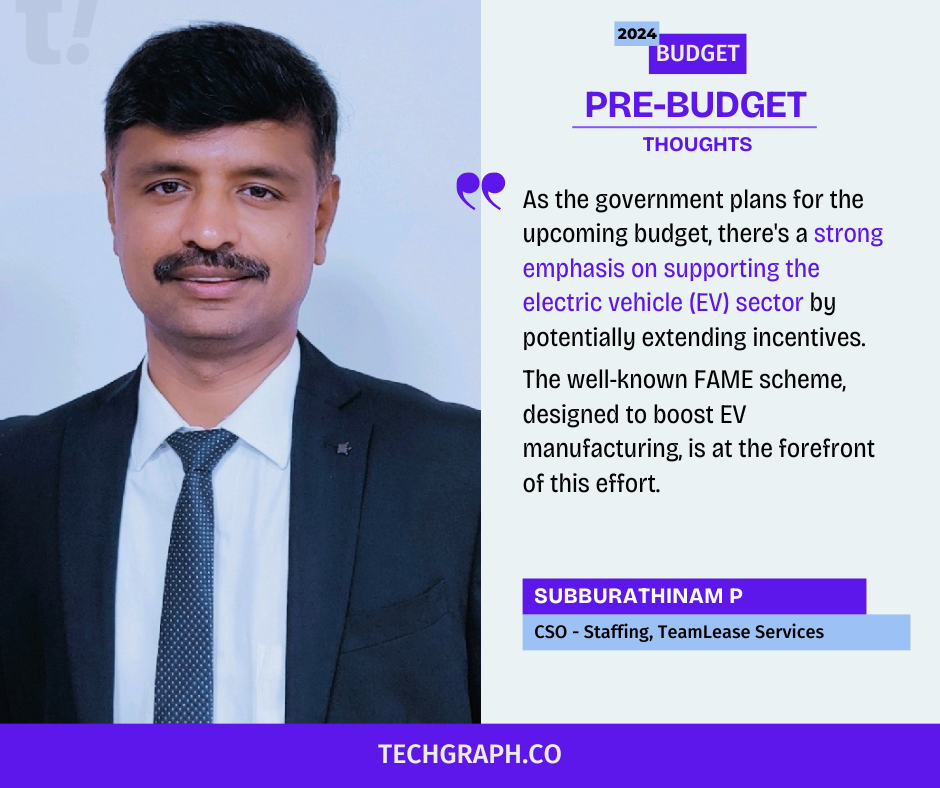
As the government plans for the upcoming budget, there’s a strong emphasis on supporting the electric vehicle (EV) sector by potentially extending incentives. The well-known FAME scheme, designed to boost EV manufacturing, is at the forefront of this effort.

Looking ahead, there’s hope for a reevaluation of the current 18% tax on lithium-ion batteries, making EVs more affordable. The industry has already seen a significant 50% growth in EV sales, jumping from 4% to 6.4% in EV contribution in total automobile sales last year.
With expected tax benefits, there’s optimism that this growth could double. The Production Linked Incentive (PLI) scheme, proven to be beneficial, is expected to continue or expand. Additionally, the allocation of ₹800 crore under FAME II for fast-charging stations aligns with the government’s goal of encouraging widespread EV adoption.
Akihiro Ueda, CEO of Terra Charge
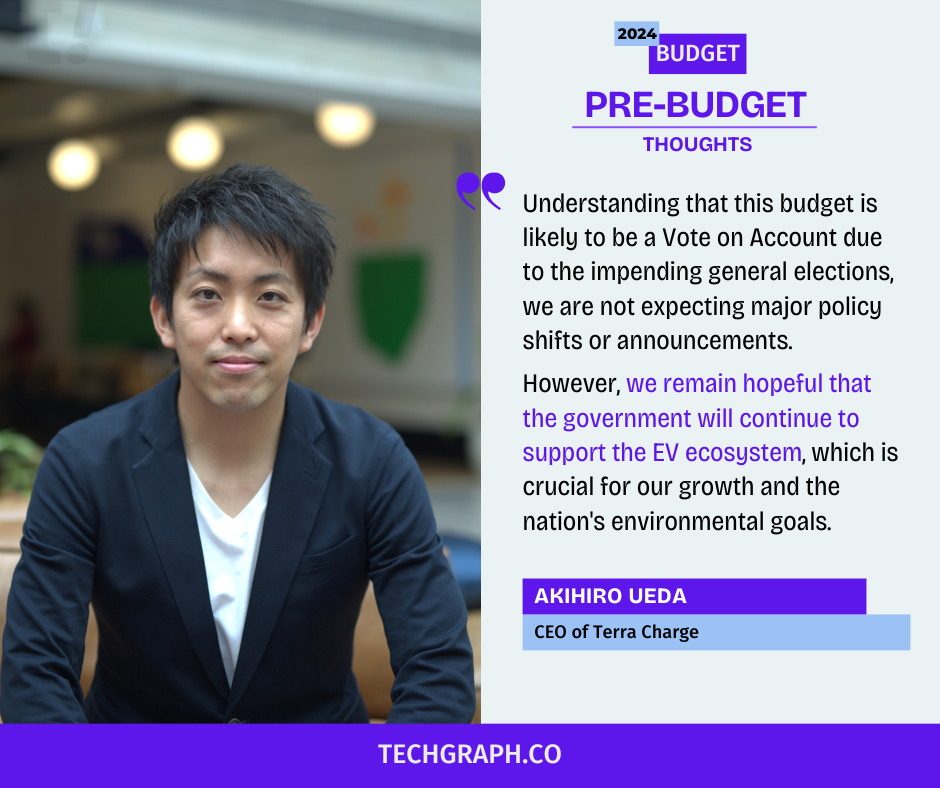
As we anticipate the upcoming budget, our expectations are cautiously optimistic. Understanding that this budget is likely to be a Vote on Account due to the impending general elections, we are not expecting major policy shifts or announcements.
However, we remain hopeful that the government will continue to support the EV ecosystem, which is crucial for our growth and the nation’s environmental goals. Our focus at Terra Motors is on enhancing the EV infrastructure and making EVs more accessible to the Indian populace.
We believe that continued government support through favorable policies, subsidies, and infrastructure development is essential for the growth of the EV sector. The government’s past initiatives, like the production-linked incentives (PLI) scheme, have given a significant boost to the industry, and we hope to see a continuation of such supportive measures.
Moreover, we anticipate that the budget will maintain its trajectory toward fiscal consolidation while balancing growth orientation. As a key player in the EV industry, we look forward to initiatives that boost manufacturing and infrastructure development, which are vital for the EV sector’s expansion. While we understand the constraints of a Vote on Account in an election year, we remain hopeful for continued support and progressive policies that will help propel the EV ecosystem in India.”
Atul Gupta, Co-founder & Director, e-Sprinto
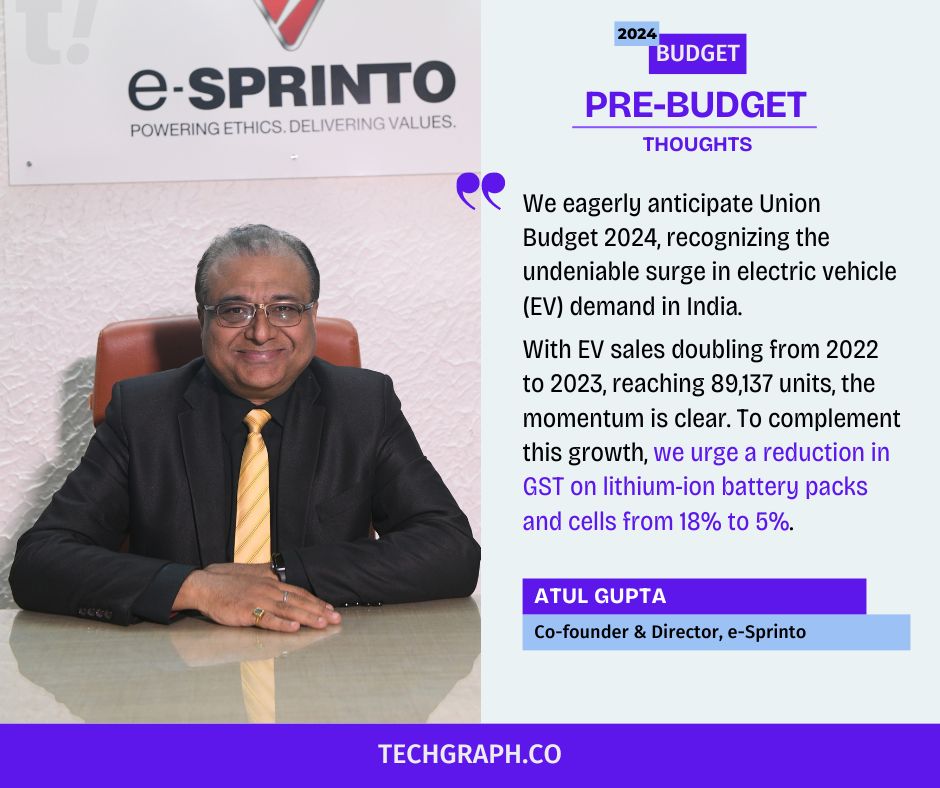
We at e-Sprinto eagerly anticipate Union Budget 2024, recognizing the undeniable surge in electric vehicle (EV) demand in India. With EV sales doubling from 2022 to 2023, reaching 89,137 units, the momentum is clear. To complement this growth, we urge a reduction in GST on lithium-ion battery packs and cells from 18% to 5%. Such a move will incentivize OEMs, fostering innovation and affordability in the sector.
Additionally, the continuation of the FAME II Subsidy beyond its March 2024 expiration is crucial to sustain customer acceptance and support OEMs. Moreover, compulsory adoption of global ISO norms for battery swapping should be mandated by integrating voluntary IS standards into the Central Motor Vehicle Rules.
This step will ensure quality assurance and uniformity in the EV industry, elevating standards for all stakeholders involved in the electric vehicle ecosystem. A forward-looking budget will not only propel the EV revolution but also solidify India’s position as a leader in sustainable mobility.
Dr. Veer Singh, CEO of Lord’s Automotive Pvt. Ltd
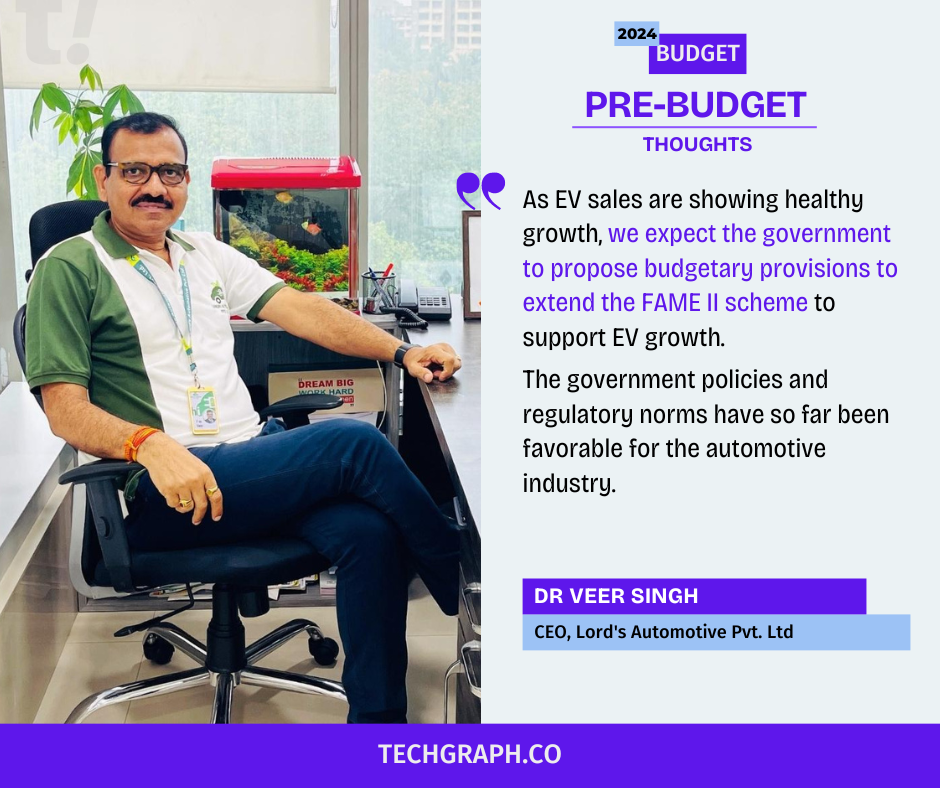
As EV sales in the country are showing healthy growth, we expect the government to propose budgetary provisions to extend the FAME II (Faster Adoption and Manufacturing Electric Vehicles) scheme to support EV growth. The government policies and regulatory norms have so far been favorable for the automotive industry. In the interim budget, the government is expected to continue with the existing policy and regulatory framework.
Sumit Aneja, Founder, Speedways Electric
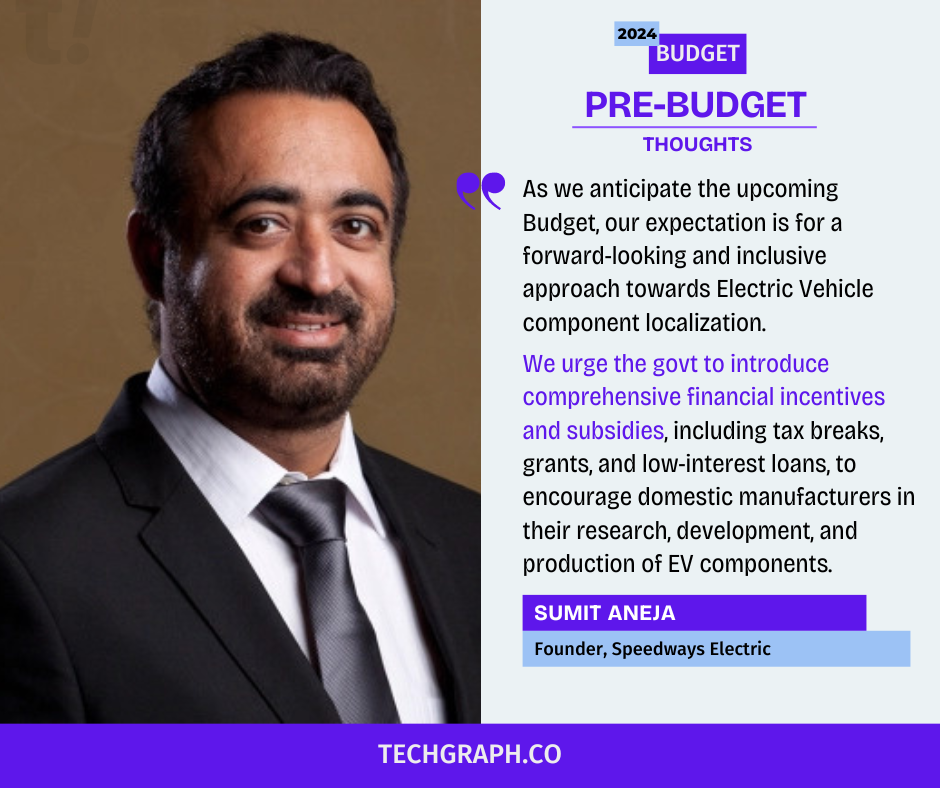
As we anticipate the upcoming Union Budget, our expectation is for a forward-looking and inclusive approach towards Electric Vehicle (EV) component localization.
We urge the government to introduce comprehensive financial incentives and subsidies, including tax breaks, grants, and low-interest loans, to encourage domestic manufacturers in their research, development, and production of EV components.
A clear and supportive regulatory framework that prioritizes local sourcing in EV manufacturing is crucial for stimulating localization efforts and establishing a competitive domestic supply chain.
We look forward to investments in workforce development programs and educational initiatives focused on EV technology, addressing the skills gap, and ensuring a skilled workforce for component production. The allocation of funds for building charging infrastructure and implementing policies that promote EV adoption will drive demand for locally produced components, creating a conducive environment for domestic manufacturing.
Furthermore, we hope for proactive engagement in international collaborations to access global best practices and technological advancements, facilitating knowledge transfer and enhancing our competitiveness in the global EV market. A strategic and collaborative effort between the government, industries, and educational institutions is essential to achieve 100% EV component localization and foster sustainable growth in the automotive sector.”
Chakravarthi C., Managing Director, Quantum Energy
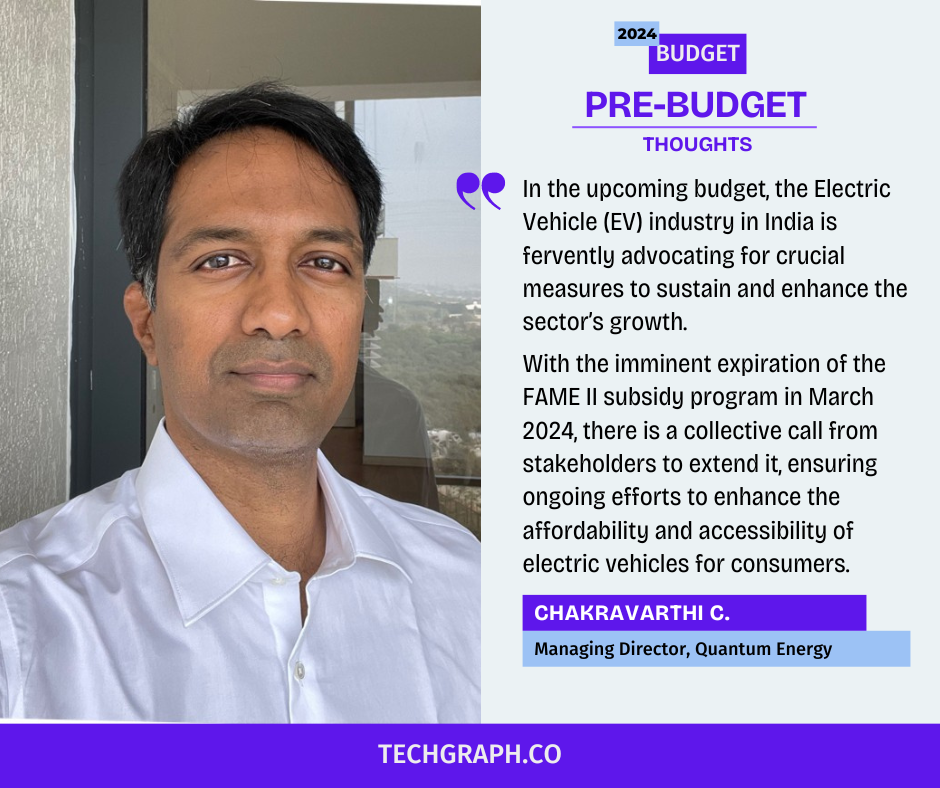
In anticipation of the upcoming budget, the Electric Vehicle (EV) industry in India is fervently advocating for crucial measures to sustain and enhance the sector’s growth. With the imminent expiration of the FAME II subsidy program in March 2024, there is a collective call from stakeholders to extend it, ensuring ongoing efforts to enhance the affordability and accessibility of electric vehicles for consumers.
Extending the program would not only solidify support for the EV industry but also align with the government’s ambitious target of achieving 30% electric vehicles on Indian roads by 2030. Complementing this extension, the industry is hopeful for a significant reduction in the GST on lithium-ion battery packs and cells from 18% to 5%. Such a revision would substantially alleviate manufacturing costs, enabling manufacturers to offer EVs at more competitive prices, and further encouraging consumer adoption.
Additionally, stakeholders are seeking a standardized policy for the battery-swapping market. The current fragmentation and varied battery types across different players have led to compatibility challenges and safety concerns, including incidents of fires at swapping stations due to inferior batteries. A standardized policy specifying the type of battery pack, cell, dimensions, and connectors is expected to enhance safety and streamline charging infrastructure, fostering a more reliable and secure environment for EV users