


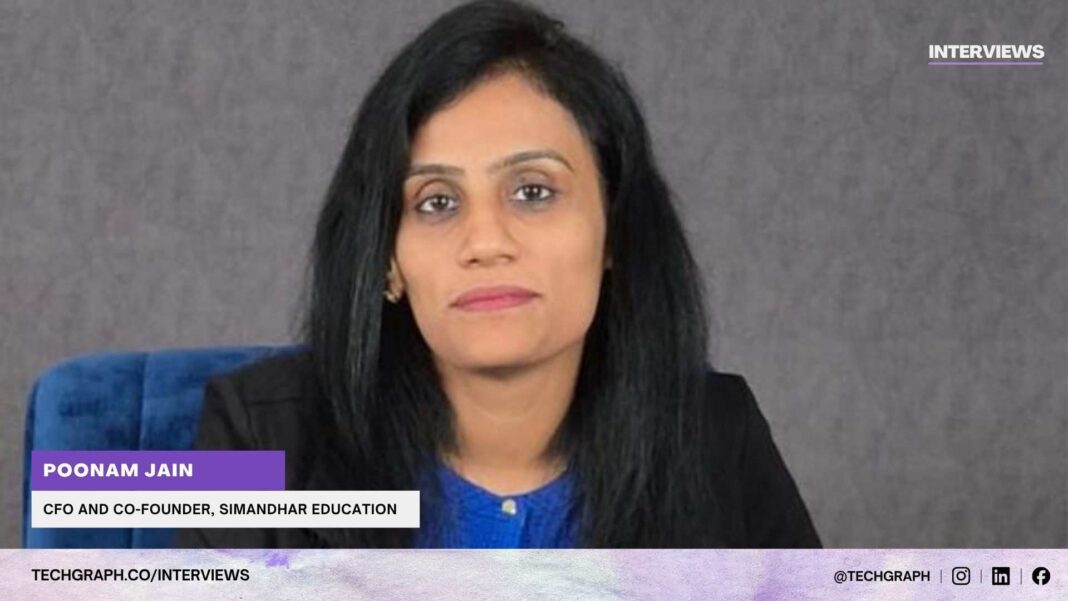
Speaking with TechGraph, Poonam Jain, CFO and Co-founder of Simandhar Education, discussed how evolving global certification standards and technology-driven changes in finance are reshaping professional expectations, and how the institution’s focused expertise in CPA and CMA training ensures students stay aligned with changing exam structures while developing the conceptual grounding needed to remain adaptable throughout their careers.
She also spoke about how Simandhar supports aspirants, especially women, by combining rigorous academic preparation with mentorship and real workplace exposure that strengthens leadership confidence and enables long-term career mobility in global finance roles.

Read the full interview in detail:
TechGraph: Certification bodies across the world keep revising their exam structures and competency frameworks to remain aligned with global standards. How does this constant evolution influence the way you design your training, and what does it take to ensure that students are fully prepared for the shifting demands of these examinations?
Poonam Jain: As someone who has managed financial strategy and operations, I know how critical adaptability is to long-term success. The same applies to exam preparation. Evolving exam structures reflect the dynamic nature of our profession, and we believe our responsibility is to prepare students to thrive in that environment. The way to do this is by designing training that is modular, responsive, and continuously updated to reflect new blueprints.
We conduct regular audits of our material, refresh assessments to match current exam patterns, and train our faculty to deliver up-to-date guidance. But beyond these operational levers, we emphasize deeper learning. When students master principles and cultivate problem-solving skills, they remain confident even when exams or the profession itself shift direction. That mindset of agility is something we work hard to instill.
TechGraph: The accounting and finance profession is being rapidly transformed by technology, automation, and now artificial intelligence. In that context, how is Simandhar Education making sure that your students not only clear exams but also develop the adaptability and skills needed to stay relevant in a profession that is no longer defined by traditional roles?
Poonam Jain: At Simandhar, we approach education as a bridge between today’s requirements and tomorrow’s opportunities. From a CFO’s perspective, I can say with certainty that financial leaders today are expected to go beyond compliance, and they are expected to bring insights, adaptability, and an understanding of technology into every decision. That is why our programs integrate analytics, AI-driven case studies, and adaptive learning platforms to strengthen technical and technological readiness.
But technical preparation alone is not enough. We also focus heavily on leadership, corporate grooming, and communication training so that students can interpret data, present insights, and make confident decisions. My personal commitment is to ensure that our students, especially women aspiring to build careers in finance, see themselves as leaders in a profession that is being reshaped by technology. Clearing exams is important, but creating professionals who can thrive in tomorrow’s workplaces is our true goal.
TechGraph: With both universities and EdTech platforms moving into the certification space, competition for aspirants has intensified. How is Simandhar Education positioning itself to stand apart, not only in the way you deliver learning but also in the credibility you hold with industry and employers?
Poonam Jain: Our positioning is very deliberate: we are not trying to be everything for everyone, but to be the best at what we do. Simandhar is deeply specialized in global finance and accounting certifications, which gives us the ability to deliver depth rather than surface-level solutions.
We have partnered with Becker, the global leader in CPA and CMA content, ensuring our students study from the best resources available. Our faculty includes CPAs, CMAs, and CAs who bring the authority of lived expertise. Just as importantly, we see student success as an end-to-end journey. From eligibility guidance and evaluation support to placements and mentorship, we take responsibility for every stage.
As a CFO, I know credibility is built not on promises but on outcomes, and Simandhar’s alumni success and industry recognition speak for themselves. For me personally, creating a platform where both men and women can aspire to global opportunities with confidence is one of our proudest differentiators.
TechGraph: Clearing a rigorous international exam certainly opens doors, yet employers often look beyond test scores to assess practical readiness. How does Simandhar Education bridge the gap between academic preparation and the ability to perform in high-pressure workplace settings where judgment and application matter as much as technical knowledge?
Poonam Jain: Employers don’t just want candidates who know the answers; they want professionals who can perform under pressure, make sound decisions, and communicate with clarity.
At Simandhar, we prepare students for that reality by simulating workplace intensity in the classroom. Case studies, timed simulations, and group projects help students practice judgment in uncertain situations. Grooming and presentation sessions build their ability to articulate financial insights to diverse stakeholders, a skill that I can say from experience is critical in leadership roles.
We also bring industry experts into our classrooms, so students hear first-hand about real challenges and expectations. Finally, through placements and internships, they gain exposure to the demands of corporate life before they formally enter it. For me, bridging this gap between exam scores and workplace performance is one of the most strategic investments we make in our students.
TechGraph: Many students pursue global certifications with the aim of international mobility and higher earning potential. How do you see these credentials shaping the employability of Indian professionals in overseas markets, and what kinds of opportunities are emerging now that were harder to access just a few years ago?
Poonam Jain: Global certifications have transformed the career landscape for Indian professionals. Credentials like US CPA and CMA are universally recognized, and they signal competence and credibility instantly in overseas markets. What excites me as a finance leader is how these opportunities have diversified.
Today, our students are not limited to traditional audit or accounting; they are entering FP&A, consulting, risk management, and even fintech-driven finance roles. The rise of global in-house centers and remote work has also broken barriers, allowing Indian talent to contribute directly to international operations from home.
These credentials don’t just enable higher earnings, but they also create pathways to leadership, mobility, and impact. For women professionals, especially, global certifications can be life-changing, giving them the confidence and platform to compete equally on a global stage.
TechGraph: Education is becoming increasingly global, yet recognition and acceptance of qualifications still vary widely across geographies and sectors. How do you guide students through these differences, and in what ways do you reassure them that the paths they choose with Simandhar will remain future-ready and competitive?
Poonam Jain: Our role as educators goes beyond teaching content; it is about guiding careers. At Simandhar, we are transparent with students about where each credential carries the most weight and how it connects with their aspirations.
We provide region-wise counselling, highlight recognition patterns, and help students plan long-term by combining certifications with emerging areas like ESG reporting, sustainability, and analytics. By continuously refreshing our curriculum and sharing alumni success stories across geographies, we show students that the paths they take with us translate into real, global opportunities.
For me personally, it is important that students, and especially young women, should see education as a tool of empowerment. My reassurance to every learner is that with Simandhar, they are not only preparing for today’s exams but investing in a future that will keep them competitive, confident, and globally relevant.