


spot_img

Debt Recovery Reinvented: Collectedge’s Ranjan Agarwal on Reshaping India’s Collections Ecosystem for Lenders

Date:

Trending

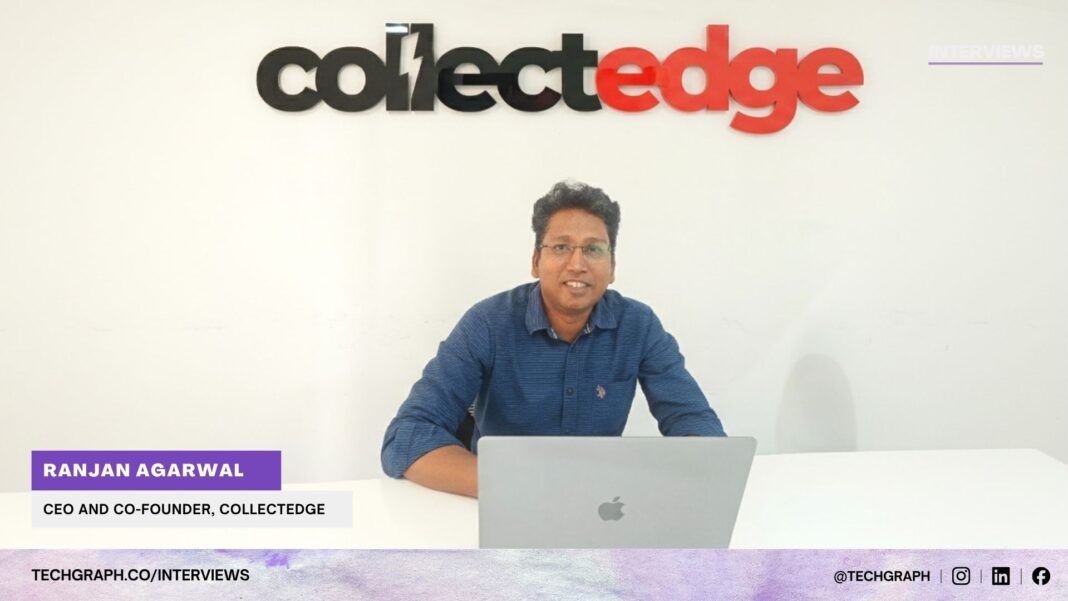
Speaking with TechGraph, Ranjan Agarwal, CEO and Co-Founder of Collectedge, discussed how India’s debt recovery landscape has remained fragmented and manual even as digital lending has scaled rapidly, and how the company’s managed marketplace model is transforming the ecosystem by bringing lenders and verified recovery partners onto a unified, compliance-led platform that delivers Collections-as-a-Service at a national scale.

- Advertisement -

Agarwal further explained how Collectedge is using AI, behavioural insights, and data-driven segmentation to match the right intervention to the right account, enabling engagement models that range from automated reminders to on-ground visits and turning recovery into a forward-looking risk-management function rather than a reactive collections exercise.

Read the full interview in detail:

- Advertisement -

TechGraph: Debt recovery in India has long been viewed through a conventional lens dominated by manual processes and fragmented agencies. What prompted Collectedge to reimagine this ecosystem through a managed marketplace model, and how is it changing the behavior of industry stakeholders?

Ranjan Agarwal: Collections have historically been viewed as an operational afterthought rather than a system problem. Lending has gone digital, but collections remained fragmented, dependent on small, unregulated vendors, with limited oversight.

Collectedge was built as a managed marketplace because the problem required both technology solutions and trusted execution. The collections industry is a $100-billion challenge that can’t be solved piecemeal. Our platform connects lenders to verified, trained partners backed by a robust compliance and performance monitoring layer—essentially offering Collections-as-a-Service.

- Advertisement -

TechGraph: The Reserve Bank of India has been tightening compliance around debt collection practices, with a sharper focus on transparency and borrower protection. How do you see this regulatory shift reshaping the industry, and what role does technology play in ensuring ethical and compliant recovery practices?

Ranjan Agarwal: The RBI’s tightened guidelines have made ethical recovery non-negotiable. Lenders now expect compliance, auditability, and borrower protection in each touchpoint. Technology ensures these standards are met consistently.

Our platform tracks every call and field visit, flags deviations in real time, and automatically enforces lender-specific guidelines. This mitigates human error and regulatory risk while helping lenders maintain trust with borrowers while still achieving recovery targets.

TechGraph: The financial sector today faces the challenge of balancing recovery efficiency with borrower sensitivity. How does your platform uphold ethical standards while still delivering measurable recovery outcomes for lenders?

Ranjan Agarwal: Efficiency and respect for the borrower go hand in hand. In the past, high recovery often came at the cost of borrower dissatisfaction or compliance breaches.

At Collectedge, every agent interaction is guided by training, recorded, and auditable. We combine context-aware human interaction with technology to ensure ethical interventions. The result: measurable recovery outcomes without compromising borrower experience or regulatory compliance.

TechGraph: India’s credit landscape is expanding rapidly, yet delinquencies are increasing across both retail and SME segments. Given this, what role do you see Collectedge playing in strengthening early-stage recovery and preventing accounts from slipping into default?

Ranjan Agarwal: Preventive engagement is key. Using borrower behavior data, we identify early signs of stress and intervene with tailored communication, anything from an automated nudge to an on-ground visit.

This proactive approach helps lenders reduce NPAs, stabilizes cash flows, and improves recoveries for lenders. By turning reactive collections into preventive management, Collectedge enables better portfolio health across retail and SME segments.

TechGraph: Many lenders remain cautious about outsourcing recovery operations to digital platforms due to concerns around data privacy and regulatory compliance. How has Collectedge worked to overcome these trust barriers, particularly when engaging with banks and NBFCs?

Ranjan Agarwal: We operate with trust in mind and transparency throughout the process. Lenders have real-time visibility into every interaction. Data access is strictly controlled, and security protocols follow global standards. By combining technology with on-ground accountability, lenders can outsource collections confidently, knowing every interaction is compliant, auditable, and aligned with internal policies.

TechGraph: Traditional collection agencies often struggle with issues of scale, standardization, and oversight. How does your managed marketplace model ensure operational consistency across geographies and various categories of debt?

Ranjan Agarwal: Consistency is achieved through a tech-enabled field network. Verified agents follow standardized workflows, receive complete account history, and submit real-time feedback via the platform.

Whether managing a high-volume SME portfolio in Uttar Pradesh or a personal loan recovery in Bangalore, processes remain consistent, compliant, and measurable. The model allows for scaling without sacrificing adherence to quality or compliance.

TechGraph: As India moves toward a more data-driven credit environment, how do you see technologies such as AI, predictive analytics, and behavioral scoring transforming the way lenders approach debt resolution?

Ranjan Agarwal: AI and analytics allow lenders to prioritize accounts and tailor interventions. All of our models classify borrowers based on repayment intent and repayment behavior. Predictive insights inform whether a digital reminder, call, or field visit is appropriate. Voice-to-text and multilingual feedback help monitor quality and compliance. These tools ensure collections are efficient, contextual, and fully traceable, without relying on generic automation.

TechGraph: Looking ahead, what regulatory or structural changes do you believe are essential to make debt recovery in India more transparent, technology-led, and borrower-inclusive? And how is Collectedge positioning itself to lead that transformation?

Ranjan Agarwal: Industry-wide agent certification, standardized accountability frameworks, and digital audit trails are critical to ensuring transparency and borrower participation.

Collectedge is building a tech-first, auditable, and compliant collections backbone. With this infrastructure, lenders can recover ethically at scale, while borrowers experience respectful, transparent interactions. Our goal is to enable India’s credit ecosystem to grow responsibly, backed by data, compliance, and structured execution.

THE SNAPSHOTS

Sign up to get quick snaps of everyday happening, directly in your inbox.

We don’t spam! Read our privacy policy for more info.

- Advertisement -

Support our independent journalism PayPal (Outside India) For PayU (For Indian Readers).

Krishna Mali
Krishna Mali
Founder & Group Editor of TechGraph.

More Latest Stories

More Articles

Meta Declares Quarterly Cash Dividend Of $0.525 Per Share

Facebook parent company, Meta Platforms Inc. (NASDAQ:META) said its board of directors has declared a quarterly cash dividend of $0.525 per share on its...

Lok Sabha: Government releases ₹68K crore under MGNREGS; wage payments routed via DBT

New Delhi, India: Union Agriculture Minister Shivraj Singh Chouhan said the government has released 68,393.67 crore rupees to states and Union Territories under the Mahatma Gandhi National Rural Employment Guarantee Scheme (MGNREGS) in the current financial year 2025-26. In a written reply in the Lok...

The Evolving Classroom: Venkateshwar International School’s Pooja Sharma on Changing Role of Schools in Delhi’s CBSE Ecosystem

Speaking with TechGraph, Pooja Sharma, Vice Principal of Venkateshwar International School (VIS), discussed how...

Digital Generics: How AI is Redefining the Future of Affordable Medicine

It was with pride that global headlines described India as the world's pharmacy, supplying...

Why NoSQL Databases Are the Future for Tech Startups

In today’s digital-first economy, tech startups continue to dominate the startup landscape. A startup...

Delhi IGI Airport Revamped Terminal 2 with Advanced Baggage screening systems

Delhi’s Indira Gandhi International Airport (IGI) has reopened its reconstructed Terminal 2, inaugurated by...

The Rise of the AI Agent Economy: How Voice AI Agents Are Becoming the New Frontline Workforce For Call Centers

The work inside a call center has always depended on two things: speed and...

The Road to Equality in Tech: Women In Cloud’s Chaitra Vedullapalli on Reshaping Opportunity for Women Entrepreneurs Globally

In an interview with TechGraph, Chaitra Vedullapalli, Co-Founder of Women In Cloud, discussed how...

Understanding What Makes Sunscreen Truly Effective

Many people pick a sunscreen merely based on its SPF, thus they think that a higher number means better protection. However, SPF is only...

How AI is Improving Risk Management Among Crypto Traders

Over the past few years, the role of Artificial Intelligence in almost every sector...

The AI Advantage: How Intelligent Learning Solutions Are Rewriting Workforce Productivity in 2025 and Beyond

In 2025, artificial intelligence is no longer a futuristic concept — it’s the invisible...

The Future of FinOps: How AI is Making Cloud Cost Management Predictive and Proactive

You know how every cloud bill feels like a mystery novel: plot twists, unexpected...

The Rise of Cyber Cartels: How the Dark Web Fuels Digital Extortion?

In 2025, cybercrime has evolved beyond individual hackers or little ransomware criminal gangs into...

AI Research Startup Redrob Draws $10 Mn In Series A Funding Led By Korea Investment Partners

AI research startup Redrob has secured $10 million in its Series A round led by Korea Investment Partners with KB Investment, Kiwoom Investment, Korea...

The Future Employability Equation: PrepInsta’s Manish Agarwal on How AI Is Reshaping Student Readiness for Hiring in India

Speaking with TechGraph, Manish Agarwal, Co-Founder of PrepInsta, discussed how the increasing adoption of AI-led assessments and automated hiring platforms is shifting campus recruitment away from reliance on pedigree and location toward a more merit-driven model that values consistency, analytical reasoning, and practical application...

Norovex Review: Inside the Trading Platform Gaining Momentum

The online trading industry has entered one of its most dynamic periods in years....

Why Zero Code Exposure Is the Future of Trust in AI

AI coding assistants have quickly become indispensable for developers, promising faster deployment, cleaner code,...

Starbucks Baristas Rally in New York as Strike Over Pay and Staffing Extends Nationwide

Starbucks baristas rallied in New York City as part of an open-ended strike that...

Demystifying Private Equity Market: WWIPL MD Krishna Patwari on Expanding Retail Access to India’s Unlisted Ecosystem

Speaking with TechGraph, Krishna Patwari, Founder and Managing Director of Wealth Wisdom India Pvt....

The Aesthetic of Longevity: Aesthetica’s Tanisha Bansal Gokharu on Redefining Luxury Home Interiors

Speaking with TechGraph, Tanisha Bansal Gokharu, Founder and Principal Designer at Aesthetica, discussed how...

Why India’s First Jobs Need a System Reset

Until recently, entry-level hiring was built on a single assumption: potential would mature over...

Trade Gaia Emerges as a Key Player in Global Altcoin Trading

While Bitcoin continues to dominate headlines, the real growth in 2025 is coming from...

How Fleet Maintenance Scheduling Supports Business Vehicle Performance

Managing a fleet of vehicles can be challenging for any business. From delivery vans...

Bajaj Financial Securities Acquires Stake in Lemnisk from Early Investors

Bajaj Financial Securities has acquired stakes in Bengaluru-based customer data platform Lemnisk through a...

The Future of FinOps: How AI is Making Cloud Cost Management Predictive and Proactive

You know how every cloud bill feels like a mystery novel: plot twists, unexpected...

Digit Life Insurance posts 31% rise in H1 FY26 revenue to ₹858 crore

India-based, Go Digit Life Insurance said its revenue for the first half of FY...

Tech Skilling for All: How AI Will Reshape Campus Recruitment in India

Skilling either tech or non-tech skills is no longer a competitive advantage for any...

Beyond Price Points: Unix India’s Imran Kagalwala on Redefining Consumer Expectations in the Mobile Accessories Market

Speaking with TechGraph, Imran Kagalwala, Co-founder of Unix India, discussed how a crowded accessories...

Trump Says He Will Sue BBC Over Edited Broadcast of Jan 6 Speech

US President Donald Trump has said he plans to take legal action against the...

The Rise of Cyber Cartels: How the Dark Web Fuels Digital Extortion?

In 2025, cybercrime has evolved beyond individual hackers or little ransomware criminal gangs into...

How Fleet Maintenance Scheduling Supports Business Vehicle Performance

Managing a fleet of vehicles can be challenging for any business. From delivery vans...

The Conversation Shift: Doceree CRO Thomas Shea on Making Healthcare Marketing More Relevant for Physicians

Speaking with TechGraph, Thomas Shea, Chief Revenue Officer (CRO) at Doceree, discussed how artificial...

Bajaj Financial Securities Acquires Stake in Lemnisk from Early Investors

Bajaj Financial Securities has acquired stakes in Bengaluru-based customer data platform Lemnisk through a...