


Amidst Rising GST Collections, Analytics Will Emerge as Critical Tool for MSME Lending in 2023, says Jocata

PUBLISHED:

See more TechGraph stories in your search results.
Google Add TechGraph on Google
  • To power MSME credit decisioning, Jocata launched a composite score that uses deep behavioural and predictive analytics

  • Offers potential for banks to launch contextual solutions like embedded lending, GST bridge loans, sachet loans, BNPL, cash-flow based loans

    - Advertisement -
  • Enables quick credit to MSMEs by cutting down assessment time to under 2 minutes and loan disbursal time to under 6 hours

The Government of India collected Rs. 1.52 trillion as goods and services tax (GST) in October, reporting a 16.6 per cent year-on-year increase, driven by festive spending, better compliance, and higher tax rates. This collection is expected to increase further and exceed FY23 budget estimates by Rs. 1.3-1.4 trillion. Amidst this, Jocata launched its proprietary AI/ML based risk and business intelligence score, SME DNA, which will fast-track priority sector lending for banks and empower MSMEs to review and improve their business performance and get access to timely credit.
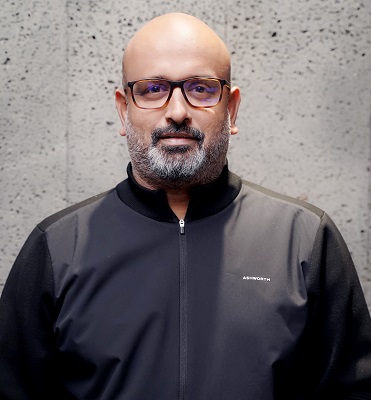
Prashant Muddu, CEO & MD, Jocata

“The GST framework is a treasure trove of business transactions data and is now beginning to drive financial institutions’ lending decisions, especially to MSMEs,” said Prashant Muddu, CEO & MD, Jocata, a B2B digital lending and compliance fintech.

SME DNA comes at a time when there is a growing demand for GST-based analytics. A strong regulatory push, growing GST filing compliance and the recent announcement of GSTN as a Financial Information Provider (FIP) under the Account Aggregator framework is expected to ease access to large volumes of consent-based GST data and grow the analytics outcomes.

With the government emphasizing on extending credit term to small enterprises, the SME DNA score will aid underwriters with enhanced Go-No-Go decision within 2 minutes, thereby accelerating lending journey for MSMEs. With predictive insights, the SME DNA score will also spur credit innovation for banks in the form of contextual and targeted lending solutions and products aimed at the MSME segment, including embedded lending, GST bridge loans, sachet loans, BNPL, and cash-flow based loans, among others.

During its initial stage, the SME DNA score aided one of the top five private banks in India to build a business model in the small ticket segment of unsecured business loans in the range of Rs. 2 lakh to 20 lakh, and also secured overdraft of up to Rs. 2 crores digitally from the ground up, Muddu said.

“The outlook for GST-based analytics is very promising and it can significantly reduce the current problems that bankers face in credit decisioning for the priority sector that stem from a heavy reliance on expert judgement leading to longer decisioning times,” he added.

- Advertisement -

GSTN filings are considered a goldmine of authentic, reliable, digitally available, dynamic data. By leveraging cutting edge data science techniques on GSTN filings, SME DNA can empower underwriters with more transparent insights throughout the business cycle of credit seekers and reduce the Time-to-Credit (disbursal) for MSME borrowers from 2-5 days to less than 6 hours.

Jocata’s Data Sciences team has analyzed MSMEs filing data from GSTN since its advent to develop the score that represents the risk of the MSME business. The score assesses the entity for its propensity to pay tax, checks the health of and (over) dependence on the MSMEs buyers and suppliers, among other risk factors. It also helps banks’ underwriters and business teams in improving credit decisioning and monitoring, besides identifying early warning signals at entity and portfolio level, which is especially important at a time when banks and financial institutions are facing pressures to reduce Non-Performing Assets (NPAs). This is key to easing the trust deficit financial institutions face in lending to MSMEs and giving transparency and information throughout the business cycle.

Jocata has been working with some of the largest financial institutions to power their digital transformation journeys across a suite of fintech solutions including digital onboarding, risk scoring and assessment, credit underwriting, fraud prevention, API infrastructure and management, early warning systems among others. Some of the key banking partners include ICICI Bank, Axis Bank, Bank of Baroda, IndusInd Bank, Kotak Mahindra Bank, RBL Bank, Federal Bank, Standard Chartered, DBS Bank, Tata Capital, Airtel Payments Bank and American Express.

Stay ahead of the curve, every day.

A daily briefing covering news, interviews, and the trends driving the world forward. Curated for readers who want news, not noise.

We don’t spam! Read our privacy policy for more info.

- Advertisement -

Latest Stories

The Privacy Imperative: Judge India’s Abhishek Agarwal on Modernising Enterprise Infrastructure

The Judge Group’s Abhishek Agarwal discusses why data privacy is becoming a strategic business priority and how it is shaping enterprise technology and digital transformation strategies.

Beyond the Profile Picture: FRND CPO Harshvardhan Chhangani on Building Social Discovery for Bharat

FRND Co-founder and CPO Harshvardhan Chhangani discusses why voice-first interactions and AI-powered identity are redefining social discovery for users beyond India’s metro markets.

A Beginner’s Guide to Annual Auto Maintenance

Annual auto maintenance helps keep your vehicle reliable, safe,...

Grading in the AI Era: AssessPrep’s Karan Gupta on Building Teacher-Led Assessment Models for Schools

As AI reshapes education, AssessPrep Co-Founder Karan Gupta discusses why teachers must remain at the centre of grading decisions and how this can support assessment without replacing educator judgement.

The Governance Gap in the Age of Autonomous AI

As AI systems evolve from assistants into autonomous decision-makers, governance is becoming as critical as the technology itself. The article explores why accountability, transparency and human oversight will shape the next phase of enterprise AI adoption.

Beyond the Transaction: Scalefusion’s Sriram Kakarala on Rethinking Enterprise Payment Security

Scalefusion’s Sriram Kakarala explains why businesses need to rethink payment security as digital payments expand beyond traditional banking applications into connected enterprise environments.

Beyond diamonds: How consumer behaviour is changing India’s jewellery market

A jewellery purchase in India used to come with...

Related Articles

The Privacy Imperative: Judge India’s Abhishek Agarwal on Modernising Enterprise Infrastructure

The Judge Group’s Abhishek Agarwal discusses why data privacy is becoming a strategic business priority and how it is shaping enterprise technology and digital transformation strategies.

Beyond the Profile Picture: FRND CPO Harshvardhan Chhangani on Building Social Discovery for Bharat

FRND Co-founder and CPO Harshvardhan Chhangani discusses why voice-first interactions and AI-powered identity are redefining social discovery for users beyond India’s metro markets.

A Beginner’s Guide to Annual Auto Maintenance

Annual auto maintenance helps keep your vehicle reliable, safe, and ready for everyday driving....

Grading in the AI Era: AssessPrep’s Karan Gupta on Building Teacher-Led Assessment Models for Schools

As AI reshapes education, AssessPrep Co-Founder Karan Gupta discusses why teachers must remain at the centre of grading decisions and how this can support assessment without replacing educator judgement.

Beyond Tourism: What Is Driving the Real Estate Boom in Goa?

Goa’s real estate market is drawing attention for more than its tourism economy. As infrastructure improves and buyer preferences evolve, the state is witnessing changes that extend beyond seasonal demand.

Beyond Tourism: What Is Driving the Real Estate Boom in Goa?

Goa’s real estate market is drawing attention for more than its tourism economy. As infrastructure improves and buyer preferences evolve, the state is witnessing changes that extend beyond seasonal demand.

Sol Volume Bot: Choosing a ChartUp Solana Volume Package

Choosing a ChartUp package should begin with the engineering question, not the largest available...

TECNO to launch CAMON 50 Ultra Smartphone in India

Smartphone maker TECNO has announced the launch of the CAMON 50 Ultra under its...

Why does Enterprise need an AI exit strategy before adapting?

From being experimental to being a necessity for any business, Artificial Intelligence has changed...

How Technology-Led Skilling Is Strengthening India’s Healthcare Services Economy

India’s medical services segment is entering a transformative phase, driven by the rapid expansion...

The Governance Gap in the Age of Autonomous AI

As AI systems evolve from assistants into autonomous decision-makers, governance is becoming as critical as the technology itself. The article explores why accountability, transparency and human oversight will shape the next phase of enterprise AI adoption.

TECNO to launch CAMON 50 Ultra Smartphone in India

Smartphone maker TECNO has announced the launch of the CAMON 50 Ultra under its...

Why does Enterprise need an AI exit strategy before adapting?

From being experimental to being a necessity for any business, Artificial Intelligence has changed...

Nexchain Publishes New Roadmap as $0.06 Token Stage Continues

Nexchain has unveiled its updated development roadmap, providing the community with a clearer view...

Nexchain Publishes New Roadmap as $0.06 Token Stage Continues

Nexchain has unveiled its updated development roadmap, providing the community with a clearer view...