




As the Union Budget 2025 draws near, expectations are building in the sustainable and waste management sector for policies that encourage the growth of clean energy, water conservation, and waste management startups. Industry leaders are advocating for government-backed funding to help green tech startups expand, along with tax incentives and policy support that can fuel innovation in sustainability.
Read the Union budget 2025 expectations in detail:
Navkaran Singh Bagga, CEO & Founder, AKVO
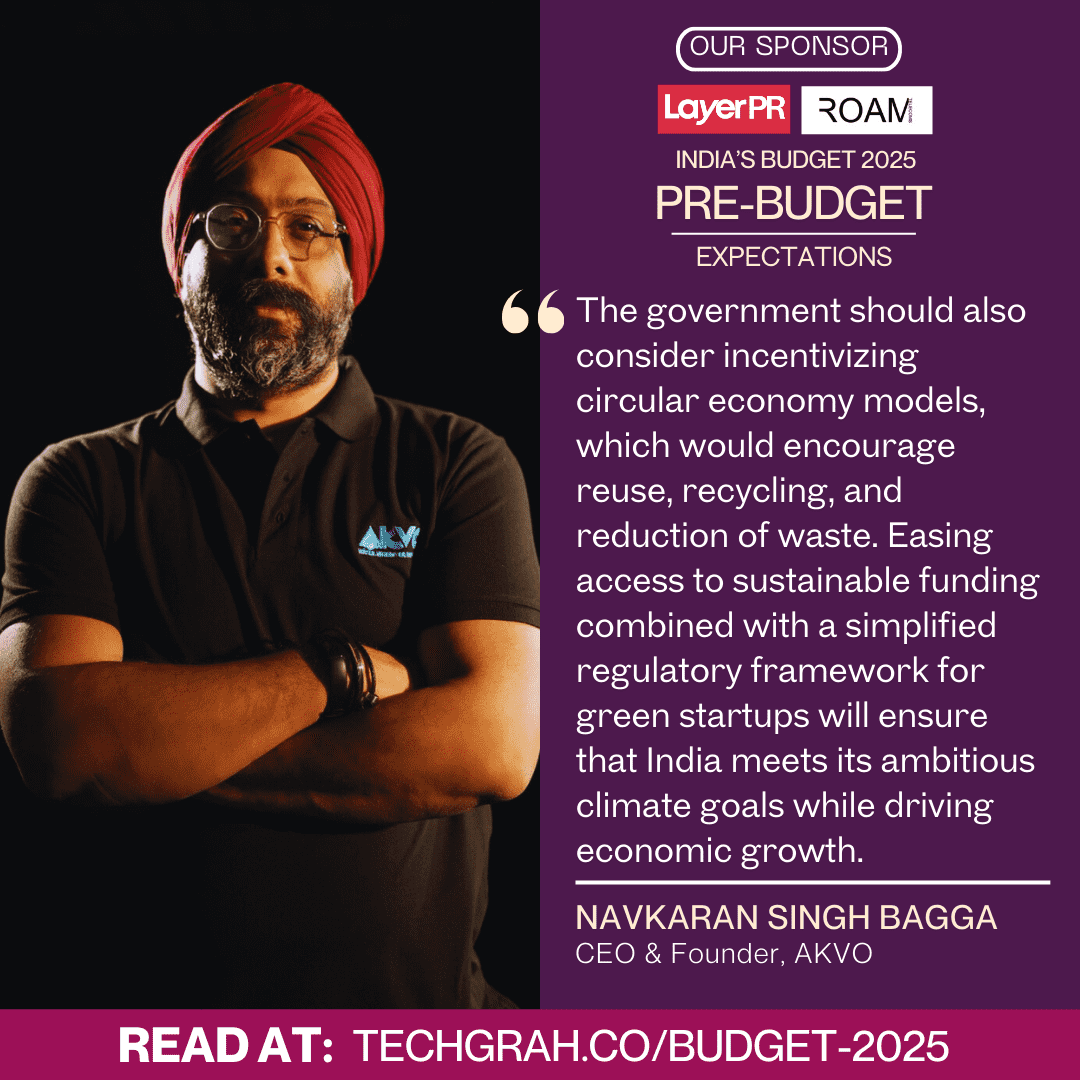
Looking toward the 2025 Union Budget, India is now at an interesting juncture in terms of sustainability for the startup ecosystem. In light of increasing calls for climate change, there exists a strong case for policies promoting business leaders with innovative green technology and sustainable practice-based businesses.
The budget to be announced must ensure that incentives for clean energy, waste management, water conservation, and other sustainable solutions are promoted among startups. Tax benefits to companies investing in renewable energy infrastructure, carbon-neutral technologies, and research on environmental impact will stimulate innovation and promote a shift toward a greener economy. Also, government-backed funds for green tech startups will allow early-stage ventures to scale and deliver impactful, sustainable solutions.
The government should also consider incentivizing circular economy models, which would encourage reuse, recycling, and reduction of waste. Easing access to sustainable funding combined with a simplified regulatory framework for green startups will ensure that India meets its ambitious climate goals while driving economic growth.
With a combination of the right mix of financial incentives, policy support, and infrastructural development, the 2025 Budget will make India stand as a world leader in sustainability and will create a clean, green future for all.
Vivek Mehra, Co-Founder & CTO, Onlygood Ai
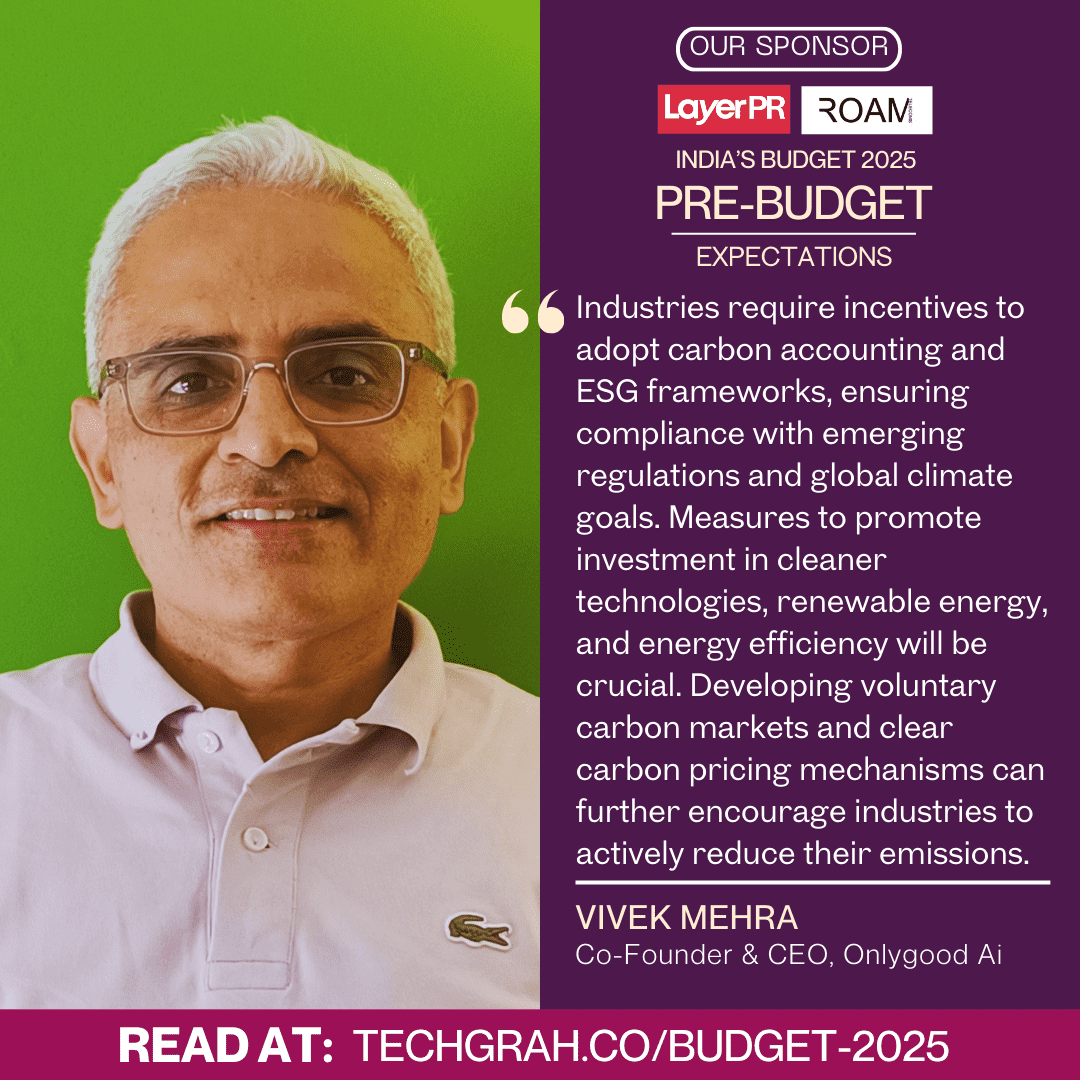
As the Indian Union Budget approaches, Onlygood is optimistic about policies that empower industries to integrate sustainability into their operations. With India’s commitments to reducing emissions intensity and creating significant carbon sinks, this budget could drive transformative changes across sectors.
Industries require incentives to adopt carbon accounting and ESG frameworks, ensuring compliance with emerging regulations and global climate goals. Measures to promote investment in cleaner technologies, renewable energy, and energy efficiency will be crucial. Developing voluntary carbon markets and clear carbon pricing mechanisms can further encourage industries to actively reduce their emissions.
Nature-based solutions and afforestation programs, essential for enhancing carbon sinks, call for industrial alignment with sustainable land-use practices. Additionally, support for circular economy models and waste management innovations can advance industrial sustainability.
At Onlygood, we are committed to empowering industries with tools to measure, manage, and reduce their carbon footprints. This budget offers an opportunity to accelerate India’s industrial shift towards a greener, more sustainable future while ensuring economic growth and global competitiveness. We look forward to policies that drive innovation, enabling industries to align with India’s climate leadership goals.
Rajesh Gupta, Founder & Director, Recyclekaro
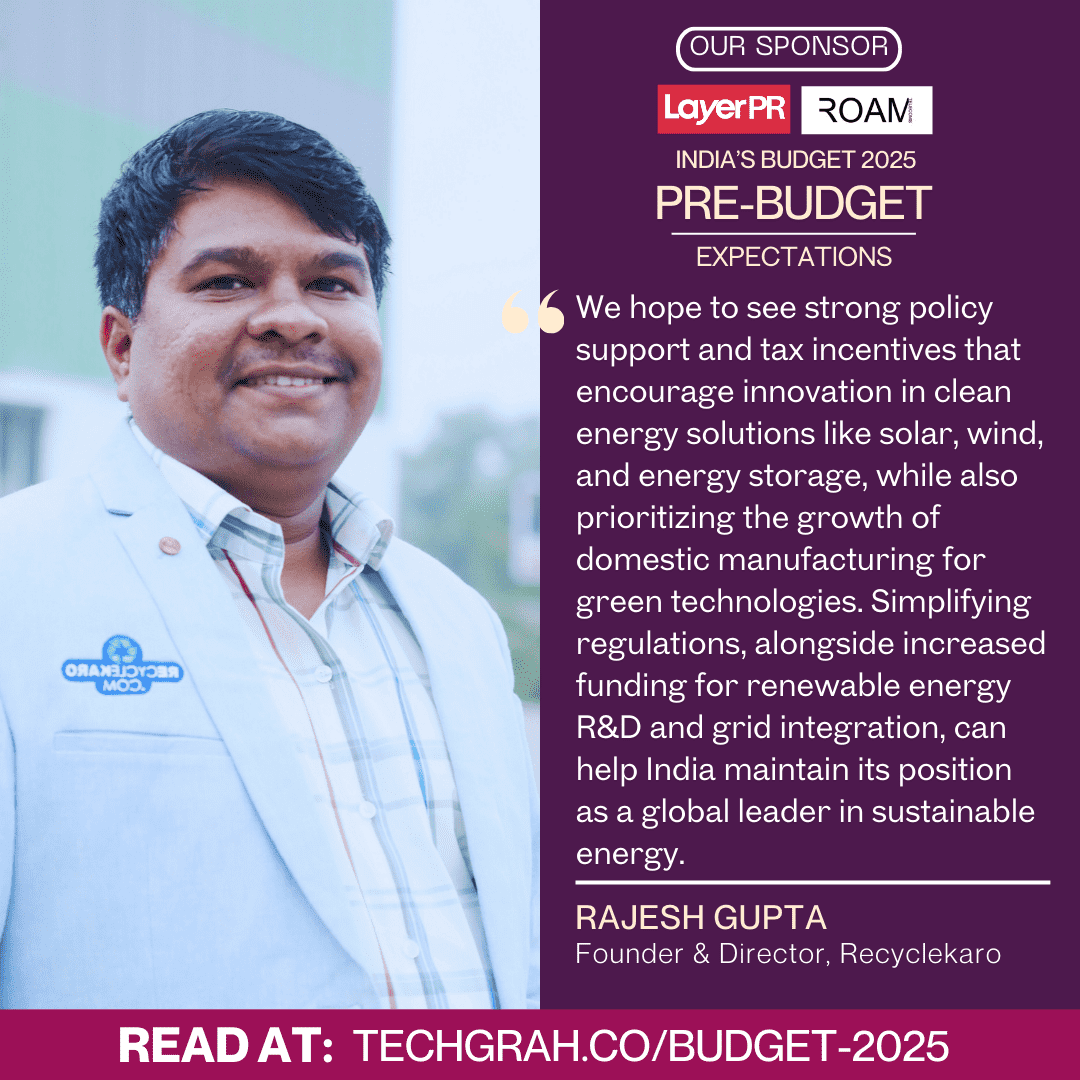
As India moves towards a more sustainable future, the Union Budget 2025 is a key moment to boost the country’s renewable energy and electric mobility sectors. We hope to see strong policy support and tax incentives that encourage innovation in clean energy solutions like solar, wind, and energy storage, while also prioritizing the growth of domestic manufacturing for green technologies. Simplifying regulations, alongside increased funding for renewable energy R&D and grid integration, can help India maintain its position as a global leader in sustainable energy.
Additionally, as the EV market rapidly grows, the budget must address critical needs in the EV battery and recycling sectors. Policies that promote the development of advanced battery manufacturing, establish robust recycling networks, and support circular economy initiatives are crucial for a self-sufficient and sustainable electric vehicle ecosystem. Strengthening research and encouraging collaboration between public and private sectors in the battery supply chain will not only reduce our reliance on imports but also pave the way for India to become a global leader in clean innovation.
Prashant Singh, Co-Founder & CEO, Blue Planet Environmental Solutions
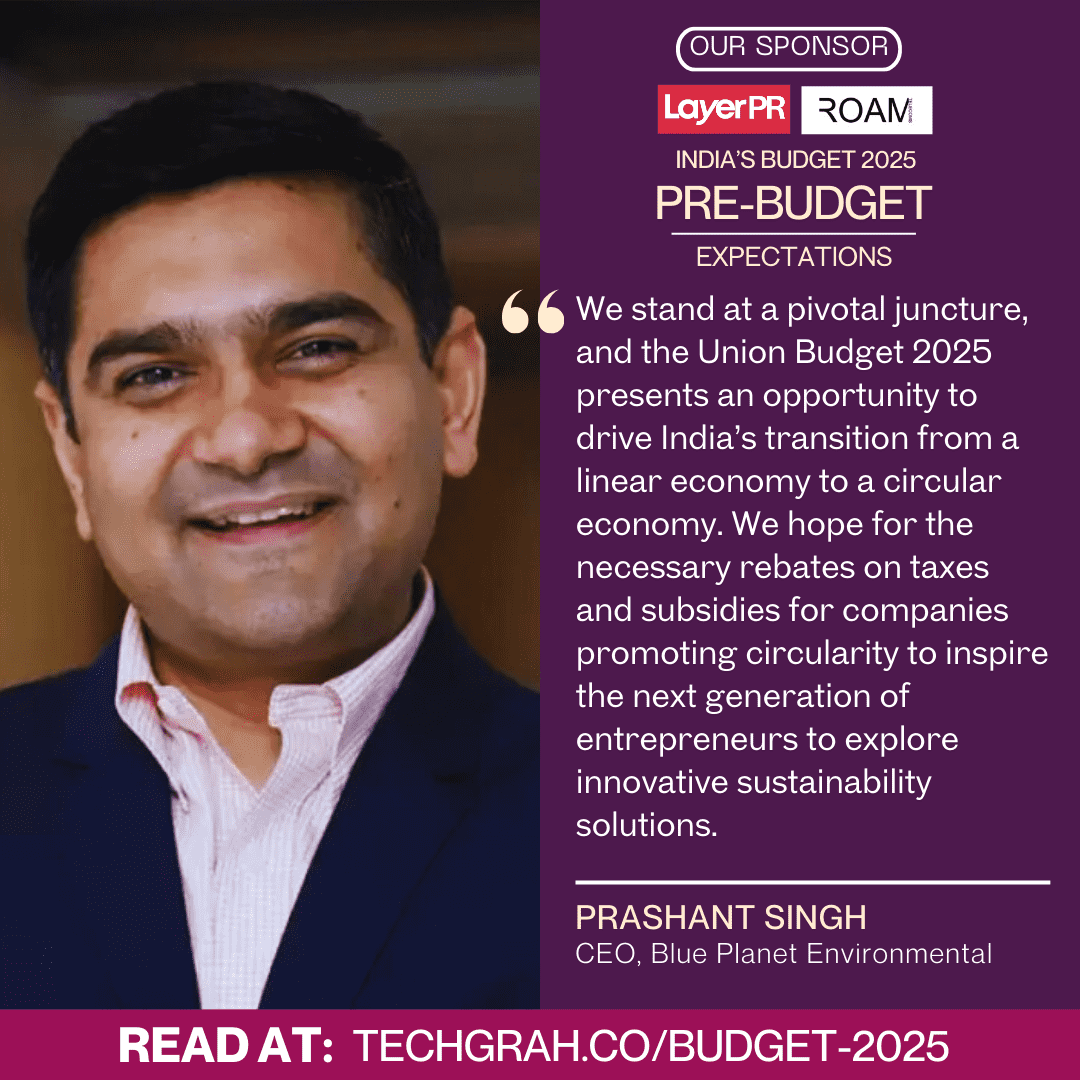
India produces 62 million tonnes of waste annually, of which only 12 million are treated, highlighting the grave reality of the situation. Even with pioneering initiatives like Swachh Bharat Mission (SBM) LiFE (Lifestyle for Environment), there remains a significant gap between our ambitious goals and their on-ground implementation. However, numerous companies and startups have stepped up to champion the cause of proper waste disposal, striving to create a closed-loop system that maximizes resource utilization.
At this point, we stand at a pivotal juncture, and the Union Budget 2025 presents an opportunity to drive India’s transition from a linear economy to a circular economy. We hope for the necessary rebates on taxes and subsidies for companies promoting circularity to inspire the next generation of entrepreneurs to explore innovative sustainability solutions. Incentives for companies converting non-recyclable waste materials into usable energy, reducing GST on recycling equipment, and policies encouraging public-private partnerships in waste management would help address waste challenges, create economic opportunities, and support the nation’s net-zero goals.
Additionally, expanding the scope of policies related to extended producer responsibility would be a valuable step forward in encouraging manufacturers to take greater accountability for the entire lifecycle of their products. For India to make its mark on the world map as an environmental leader, it needs to embed circularity and sustainability at the core of all its business practices and policies.
Abhinav Govil, DGM – Marketing, CEID Consultants and Engineering

As India works towards its goal of achieving net zero emissions by 2047, we expect Budget 2025 to bring initiatives that will accelerate the green energy transition. The oil and gas sector has already taken significant strides in green hydrogen and compressed biogas (CBG) investments and sustained government support will play a pivotal role in building on this progress, driving further advancements.
We hope the upcoming budget prioritizes enhanced investments in renewable energy and introduces a mandate for a minimum 20% substitution of fossil fuel imports with CBG. Also, establishing a structured framework for biomass aggregation, along with an MSP-like mechanism for agricultural residues, will not only create a steady supply chain but also offer significant benefits to the farming community. Additionally, subsidies and policies encouraging municipal solid waste segregation are essential to attract private investments in dedicated segregation units while fostering a circular economy and reducing waste.
At CEID Consultants, we believe that these measures can transform the bioenergy sector into a cornerstone of India’s sustainable future. A forward-looking budget that empowers the green energy ecosystem will be instrumental in achieving our climate goals and driving long-term economic and environmental benefits.