


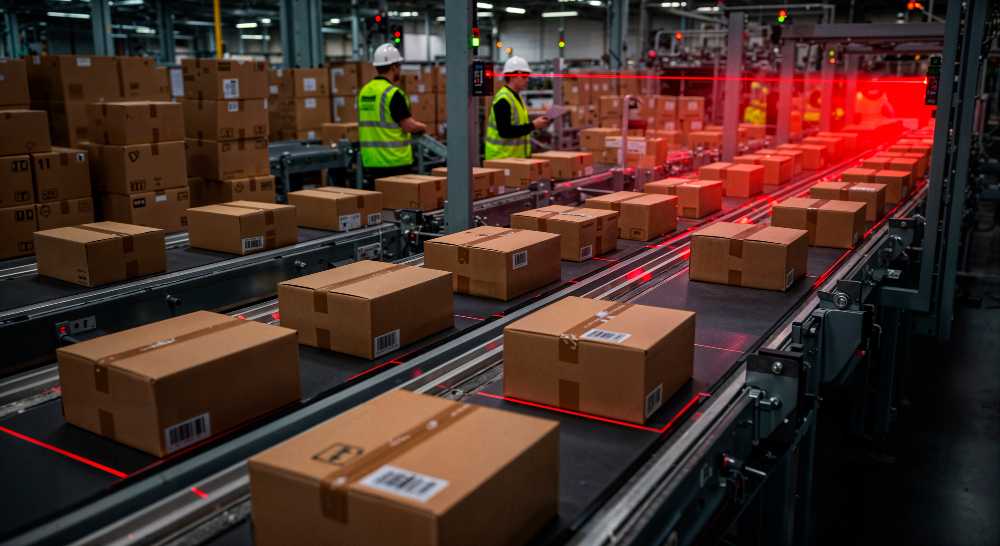
In the global manufacturing landscape, packaging has quietly evolved from a backend operational activity into a strategic business driver. For companies with turnover above ₹500 crore, packaging automation is no longer a discretionary investment or a simple route to cutting labor costs; it has become central to how enterprises scale, stay competitive, and future-proof their supply chains.
Due to increasing demand for consumer products, a greater focus on well-designed and produced packaging that can withstand the rigors of the global supply chain, and, finally, the constant increase in supply chain demand, business leaders are now viewing the automation of packaging as a key business strategy and a way of helping to transform equipment on the production floor.

Automation technologies within industries like FMCG, pharmaceuticals, food and beverages, industrial goods, and personal care have developed a lot. From what was once a loose assembly of semi-automatic machines, today it is an integrated ecosystem of robotics, vision systems, sensors, data analytics, and AI-driven decision-making.
This evolution has decidedly changed the way in which manufacturing leaders think of the role of packaging in business growth. Today, automation is faster, more predictable, and closer to the demands placed by modern global supply chains.
Demand for Speed, Reliability, and Scaling
For larger enterprises, this shift is increasingly driven by the need for speed, consistency, and reliability. One of the greatest sustained challenges for high-volume manufacturers is how to keep pace with demand while ensuring consistently high product quality. Packaging is usually where delays, inconsistencies, and manual errors become most visible.
By automating primary, secondary, and tertiary packaging, higher throughputs, faster cycle times, and a much easier multi-shift operation become possible. For those businesses dealing with export commitments, seasonal surges, or multimarket distribution, these gains go right to market performance.
Labour Instability and the Demand for Stability
Large companies are rethinking automation also because labor markets are becoming increasingly volatile. Manufacturing hubs across India and emerging markets face worker shortages or attrition, or problems of workforce mobility. Since high manpower is involved in packaging operations, such fluctuations hit output, efficiency, and quality.
Automation converts this variability into a stable, predictable, and measurable system. Instead of scaling manpower endlessly, enterprises create predictable cost structures wherein capital expenditure and periodic maintenance replace variable operational expenses. Senior leadership teams increasingly prefer predictability, as long-term planning can be done without chronic pressure to manage workforce cycles.
Precision, Conformity, International norms
Automation has increasingly moved into the strategic domain, driven in large part by quality and compliance requirements. As Indian and global manufacturers with operations in new geographies are expanding capacity, packaging accuracy, labeling precision, traceability, and food or pharmaceutical safety are becoming far more stringent. Automated packaging lines provide repeatable results with near-zero deviations to assure consistent sealing and precise dosing with correct serialization.
This is how building consumer and regulatory trust protects companies from much costlier recalls, customer complaints, and supply-chain disruptions. Packaging automation thus acts like a compliance engine for global brands, helping them maintain uniform standards across multiple plants and markets.
Data Intelligence Becomes Competitive Advantage
What really differentiates today’s automation systems is that they can generate data. Every new packaging line comes fitted with IoT sensors, machine vision cameras, and analytics modules, throwing unprecedented real-time visibility into performance.
Food processing enterprises can track machine uptime, reject rates, wastage, and maintenance patterns, and productivity across plants with an accuracy never seen before. Predictive maintenance also gets thrown in, which cuts downtime even before it happens, and therefore, allows leaders to make more informed decisions around capacity expansion, SKU planning, and line balancing.
For companies operating at a ₹500 crore scale or above, such data-driven insights are not optional; they are essential tools for operational excellence.
Sustainability and Efficiency of Packaging Material
Another key driver that reshapes the priorities of leadership is sustainability. The boards and CXOs are increasingly being held accountable for various environmental commitments: reduction in plastic use, optimization of packaging material, and adoption of recyclable formats. Automated systems support these goals through precision in the material consumed, right-sized packaging, and efficient pallet patterns that reduce logistics emissions.
They are better equipped to handle new-age materials like mono-layer plastics or bio-degradable films, which call for consistent machine control that manual processes cannot provide. For large enterprises, sustainable automation is more than a compliance requirement; it’s a brand differentiator in world markets.
Shifting from Machines to Capabilities
This perspective has grown beyond buying machines; it is centered on creating enduring capabilities. Today, enterprises assess automation on scalability, flexibility, its readiness towards digital, and the long-term service infrastructure of the vendor. They want equipment to adapt to future SKU diversification, seamlessly integrate with MES or ERP systems, and support continuous improvement initiatives.
Overcoming Challenges to Implementation
Implementing automation remains a challenging task, even for leading enterprises. Such reasons dilute the ROI of resistance to change, poor operator training, or poor integration between line components, and they may opt out of rigid systems.
The leaders who will succeed are those who approach automation as a phased transformation: from a high-impact pilot toward building internal expertise, standardizing digital monitoring, and aligning every packaging decision with broader objectives of sustainability and growth.
Automation: The Engine of Growth
Essentially, packaging automation forces global manufacturers to think differently because it brings much more with it than efficiency. Stronger supply chain resilience, improved customer experience, better regulatory readiness, and long-term sustainability all come with automation.
For enterprises operating at scale, automation has emerged as a strategic investment that enables faster growth, sharper competitiveness, and a future-ready manufacturing ecosystem.