

Shaping the Retail Landscape: Staying Ahead with Data and Technology

Date:

Trending

- Advertisement -

The retail industry in India contributes considerably to the country’s economic growth, comprising 10% of the GDP and generating employment for 8% of the population. This industry is an amalgamation of organized and unorganized sectors and is characterized by a blend of traditional mom-and-pop stores and modern retailing concepts.

The Indian retail sector is growing at a three-year compounded annual rate of 46.64 % and is expected to become the world’s third-largest consumer market by 2030. This rapid growth is driven by increased disposable income, improved logistics, a rise in product offerings, technological advancements, and the proliferation of mobile and internet users.

Technological advancements have catapulted the retail industry’s significant transformation, enabling better solutions to meet the fast-changing demands of modern consumers. As the industry faces more competition in the wake of the increasing popularity of e-commerce, it has become paramount for retailers to navigate the challenges to remain ahead of the curve.

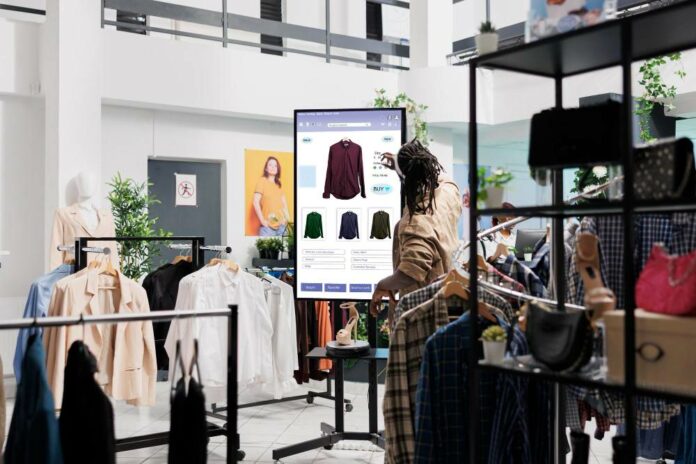
Businesses of different sizes- from small retail stores to large format outlets to carts & kiosks – must leverage the latest retail technology. With access to huge customer data, retailers are using technologies like eStore, CRM, artificial intelligence (AI), and machine learning (ML) to offer tailored shopping experiences to their customers.

How to remain ahead of the curve as a retailer

The success of a retail business depends on its ability to swiftly adapt to changing consumer preferences and market dynamics. With the rise of e-commerce and the increasing demand for personalized customer experiences, traditional brick-and-mortar stores face immense pressure to reinvent themselves. Let’s discuss some key factors that can help retail businesses to strive in this competitive market.

- Advertisement -

Data is The New Oil

We live in an era where data is as precious as oil. Retailers have a goldmine of information about customers’ behavior, purchasing patterns, and preferences. However, collecting data is not enough; extracting insights from this wealth of information is paramount to ensure a better customer experience. With advanced analytics, AI, and ML algorithms, retailers can unearth hidden trends, predict demand, optimize inventory management, and tailor offerings to meet the unique needs of their target audience.

Amazon is the best example of a retail brand that has mastered the art of data-driven decision-making. The e-retail giant has built a reputation for delivering highly personalized recommendations and seamless shopping experiences by analyzing vast repositories of customer data. From browsing history and purchase patterns to product reviews and social media interactions, Amazon leverages every data point to refine its algorithms and provide customers with a tailored experience.

Embracing Omnichannel Strategies

In today’s digital world, customers expect a seamless and consistent experience across all touchpoints, whether they are shopping online, in-store, or via mobile devices. Retailers must embrace omnichannel strategies by integrating physical and digital channels and offering customers a unified brand experience.

For example, leading global retailers like Walmart and Target have made significant investments in their omnichannel capabilities, allowing customers to shop online, pick up their orders in-store, or have them delivered to their doorsteps.

- Advertisement -

Augmenting the In-Store Experience

While e-commerce continues to grow, physical stores remain an integral part of the retail landscape. Retailers must focus on offering customers the best-in-class in-store experience by leveraging cutting-edge technologies to connect with them. Augmented reality (AR) and virtual reality (VR) revolutionize how customers interact with products and brands.

Cosmetics brands use AR to enable customers to virtually “try on” makeup products before investing, enhancing the shopping experience. Artificial intelligence (AI) and machine learning are also pivotal in optimizing store operations and enhancing customer service. Retailers can use these technologies to analyze customer behavior and deploy intelligent chatbots or virtual assistants to provide personalized recommendations to customers.

Embracing Sustainable Practices

Sustainability has become a critical part of today’s business landscape. No longer just a buzzword, it has become a necessity in the current, socially conscious world. With rising awareness, consumers are increasingly prioritizing environmental sustainability and ethical business practices.

As a result, they prefer retailers that actively embrace sustainable practices from the operations to the supply chain level. By harnessing data and technology, retailers can improve their supply chain processes, reduce waste, and minimize their environmental footprint.

For instance, predictive analytics can help retailers forecast demand more accurately, leading to more efficient inventory management and less overproduction. Sustainability is a good ‘purpose’ to have in your business.

Bottomline

The future of the retail industry will be determined by trends that will prioritize customer expectations and omnichannel experience. Utilizing data and technology will help retailers improve their services to innovate and grow. Retailers that embrace these powerful tools and seamlessly integrate them into their operations will be well-positioned to deliver exceptional customer experiences, drive profitability, and stay ahead of the competition.

THE SNAPSHOTS

Sign up to get quick snaps of everyday happening, directly in your inbox.

We don’t spam! Read our privacy policy for more info.

- Advertisement -
Varun Tangri
Varun Tangri
Varun Tangri, CEO & Founder, QueueBuster POS

More Latest Stories

More Articles

From IP to Global Leadership: Aum Ventures’ Chetan Mehta on India’s Next Deeptech Breakout Companies

Speaking with TechGraph, Chetan Mehta, Founding Partner at Aum Ventures, outlined why deeptech remains one of the most underpriced opportunities in India’s startup ecosystem...

How Machine Learning Is Redefining Short-Term Borrowing for Tech-Savvy Consumers

Short-term lending has long relied on limited snapshots of a borrower’s history. That approach often left gaps, especially for people with thin credit files or recent financial shifts. Machine learning changes the equation by pulling in wider signals such as payment patterns from utility...

Why Players Buy LoL Boost and How the Process Works

If you’re researching why players buy lol boost, you’re usually trying to understand two...

CasinoBonusesFinder UK: how filters, Telegram alerts and real bonus matching work in practice

Anyone who has spent serious time on casino bonus hunting knows the drill. You...

The Importance of Keeping Up to Date With Auto Maintenance

Auto maintenance is one of the most important responsibilities that comes with owning a...

PatexOne: Could This Platform Be Smarter Than Your Impulses?

Australian investors are used to platforms that shout about leverage and “opportunity”. PatexOne takes...

India’s Air Crisis Needs a Deeptech Answer, Not a Consumer Gadget

Twenty years ago, an air conditioner in an Indian home was a luxury. Today...

India’s Cloud Cost Crisis: Why Startups Are Rethinking Their Tech Stack

Over the last ten years, startups in India have experienced an incredible boom driven...

The Detroit Region’s Role in Modern Global Supply Chains

As global commerce continues to expand its reach, the Detroit region has emerged as a pivotal player in modern supply chains. Strategically positioned along...

Top No-KYC Crypto Casino Sites in 2026

Most online casinos demand a lot of personal information from you before you can...

Redrob AI Launches Professional AI Platform for India’s Workforce

In a bid to help students and professionals navigate an increasingly fragmented digital work...

The Business of Recycling: Profit, Waste, and Sustainability

The business of recycling stands at the intersection of environmental responsibility and economic opportunity....

Why Resume-Based Hiring Is Failing India’s Workforce

India needs a shift from credential-first hiring to skill-first validation

Why BFSI Is Moving from AI Experiments to AI Systems

For the past few years, Artificial Intelligence in banking, financial services, and insurance has been all about trying new things. Organizations started projects to...

Capabilities Over Credentials: Scrabble’s Naveen Tiwari on the Changing Nature of Leadership Hiring

Speaking with TechGraph, Naveen Tiwari, Co-Founder of Scrabble, discussed how leadership hiring is shifting from a credentials-led approach to one focused on demonstrated capabilities, and how organisations are increasingly seeking executives who can create measurable impact from the outset. Tiwari also highlighted how Scrabble uses...

From Intuition to Analysis: How AI Is Becoming Every CEO’s Second Brain

Most CEOs are making important decisions with partial information. The challenge is not just...

Rethinking Executive Search: Venator Search Partners’ Deepraditya Datta on Leadership Hiring in a Changing Talent Market

In an interview with TechGraph, Deepraditya Datta, Founder and Managing Director of Venator Search...

AI and Fake Content: Can Technology Win the Battle Against Misinformation?

Artificial Intelligence has transformed how content is created, manipulated, and distributed at scale. News,...

Why Micro Learning at 3 Minutes Works Better Than Lectures at 3 Hours

In the fast-moving world of digital education, there is one myth that continues to...

More Than Just a Scratch: The Importance of Windshield Care

Maintaining your vehicle’s windshield often appears as a seemingly minor task that can easily...

The world’s largest crypto market is building in the dark

India remains one of the few significant economies without a comprehensive crypto and stablecoin...

Beyond Nvidia: The Hidden Winners of the AI Stock Rally

Nvidia stock (NASDAQ:NVDA) has returned roughly 1,200% since ChatGPT launched in late 2022. Most...

What PM Modi’s Appeal to Avoid Gold Buying Could Mean for India’s Jewellery Economy

When Prime Minister Narendra Modi recently urged citizens to avoid purchasing gold for a...

Serhii Tokarev Spoke About The Third Season Of The Generation H Accelerator

Serhii Tokarev spoke about the Generation H 3.0 HealthTech accelerator, which is opening applications...

The Business of Recycling: Profit, Waste, and Sustainability

The business of recycling stands at the intersection of environmental responsibility and economic opportunity....

“Budget should focus on reducing taxes on capital gains,” Says Abhishek Gupta of Hex N Bit

Speaking in the upcoming Union Budget 2021, Abhishek Gupta, Founder, and CEO, Hex N...

“China is a Global thief” Rep. Tom Rice on Uyghur Forced Labor Prevention Act

Speaking at the House on Uyghur Forced Labor Prevention Act, Rep. Tom Rice (R-SC)...

How AI is Rewriting the Economics of India’s $300 Bn IT Services Sector

When Microsoft CEO Satya Nadella recently disclosed that artificial intelligence now generates nearly 30...

Why India Must Own Its Education Intelligence Stack

India has rapidly digitised large parts of its education ecosystem over the last decade....

Why Resume-Based Hiring Is Failing India’s Workforce

India needs a shift from credential-first hiring to skill-first validation

Alphabet Discloses $2.14 Billion in Public Equity Holdings as of June 30

Alphabet Inc. disclosed $2.14 billion in equity securities held across 39 positions as of...

The Role of Edtech in Addressing Equity Gaps in Higher Education

In the fast-paced world of EdTech today, the opportunity to bridge educational gaps and...

India to generate $100 bn from telephonic investments

India expects to attract $100 billion in investments in the telecom sector, a union...