


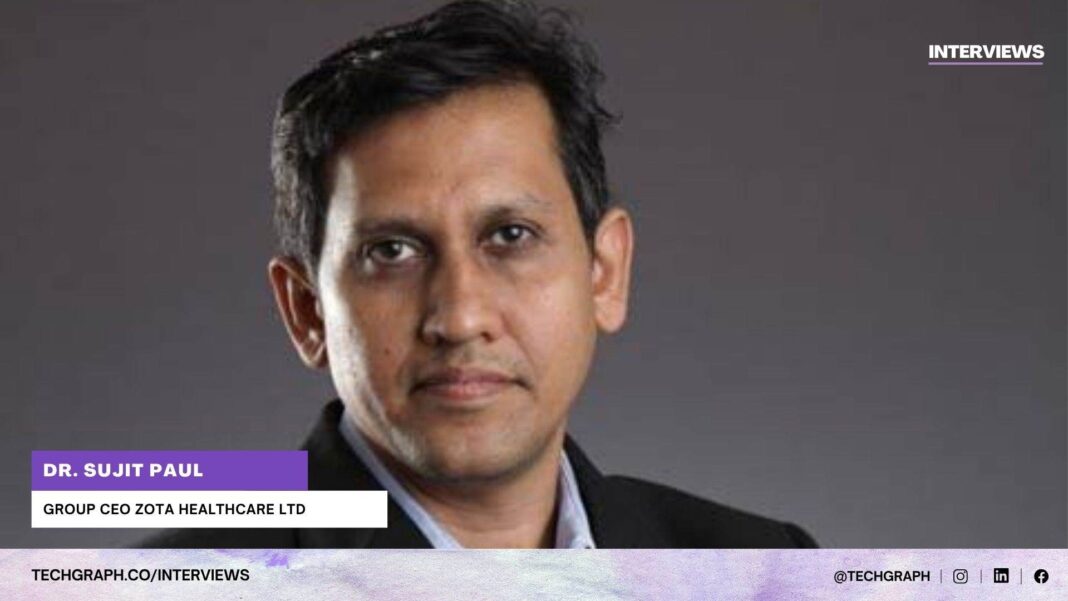
Speaking with TechGraph, Dr. Sujit Paul, Group Chief Executive Officer of Zota Healthcare Ltd., discussed how India’s healthcare ecosystem is entering a new phase of affordability and accessibility driven by high-quality generic medicines, and how Davaindia’s retail model is bridging treatment gaps by offering pharma-grade generics at transparent prices through an expanding nationwide network.
He also highlighted the company’s focus on chronic therapies, pharmacist-led education, and transparent price comparisons that are reshaping perceptions around generics and helping patients achieve comparable therapeutic outcomes at significantly lower costs while advancing healthcare equity across both urban and rural India.

Read the interview in detail:
TechGraph: Davaindia has built its identity around making quality generic medicines widely accessible at affordable prices. Given the growing global conversation on healthcare equity, how do you see the role of generics evolving in bridging treatment gaps across different sections of society?
Dr Sujit Paul: Generics are at the heart of healthcare equity; they reduce the cost barrier for critical medicines and facilitate increased access across income groups. Davaindia’s model illustrates this: making quality generics available across a large retail network.
The company lowers out-of-pocket expenses for chronic and acute therapies, rendering treatment within reach for many who otherwise forego or defer medicines. This is how generics scale impact from individual savings to systemic access.
TechGraph: The Indian pharmaceutical sector is often described as both highly competitive and deeply fragmented. How then has Davaindia managed to carve out a distinctive position in the minds of consumers who have traditionally placed trust in branded medicines?
Dr Sujit Paul: Trust is fostered by regular quality, transparent prices and broad availability. Davaindia combines pharma-grade manufacturing quality with visible price comparisons against branded equivalents at the point of sale. Its retail presence, company-owned and franchise stores, also assists with a uniform customer experience and pharmacist advice that reinforces generic confidence.
TechGraph: Trust is central in healthcare, yet consumer perception around generics has historically been mixed. What specific strategies have you found most effective in reshaping attitudes and building long-term confidence in the quality of generic alternatives?
Dr Sujit Paul: Education and convenience. On-shelf price transparency, pharmacist interaction, community outreach and digital touchpoints (app/online ordering) make generics less of a mystery. Consistent results, patients enjoying identical therapeutic benefit for much reduced costs, fuel word-of-mouth. Davaindia’s focus on chronic therapies (repeat prescriptions) also makes generics more of the norm.
TechGraph: India is seeing rapid changes in regulation, digital infrastructure, and distribution networks. How are these shifts influencing the way Davaindia approaches its expansion and the delivery of medicines to smaller towns and semi-urban areas?
Dr Sujit Paul: Stricter regulatory transparency and digital logistics enable us to scale quickly into Tier II/III and semi-urban segments. Davaindia is taking a hybrid company-owned and franchise approach to balance control with local entrepreneurialism, and real-time inventory and predictive stocking, minimise stockouts in smaller stores.
TechGraph: Technology is now deeply intertwined with how patients access care and medicines. In what ways is Davaindia leveraging digital tools not just for operational efficiency but also for improving patient awareness and healthcare outcomes?
Dr Sujit Paul: In addition to operational effectiveness, digital technologies drive patient education (apps, SMS reminders), telepharmacy connections, and adherence tracking. Predictive inventory and AI-driven supply chains guarantee drugs are in supply when required, improving adherence and outcomes directly, particularly for chronic diseases.
TechGraph: With global discussions around supply chain resilience and affordability of essential drugs gaining momentum, what role do you see Indian companies like Zota Healthcare playing in shaping more stable and accessible healthcare systems beyond India?
Dr Sujit Paul: Indian generics manufacturers and retail platforms can be allies to international health systems by providing quality, affordable medicines at scale and assisting in establishing last-mile distribution models in low-resource environments. Export capacity, along with a strong domestic network, makes Indian companies natural partners in enhancing global drug affordability.