


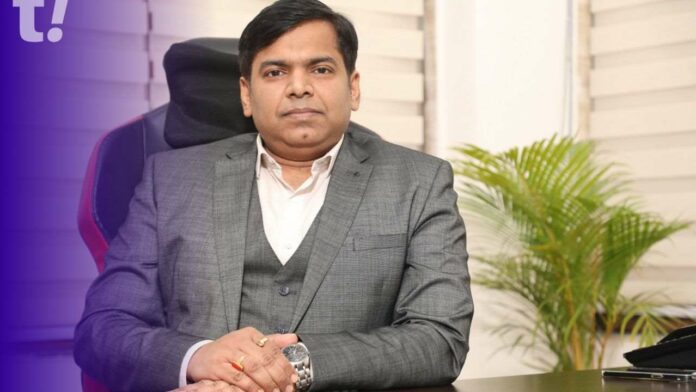

During the interview with TechGraph, AMO Mobility‘s Founder and Managing Director, Sushant Kumar, highlights significant strides in India’s electric mobility sector and how it aims to make electric vehicles accessible to a broader consumer base via its diverse range of affordable e-scooters and three-wheelers and through strategic financing partnerships.
Read the complete interview:
TechGraph: Can you provide an overview of Amo Mobility’s journey in the e-mobility sector and its current positioning in the Indian market?
Sushant Kumar: AMO Mobility has made notable progress in India’s electric mobility sector by developing a diverse portfolio of high-quality and affordable electric scooters.
Since our inception in 2018, we have sold more than 10,000 e-scooters and have developed a well-knit dealer network of over 100 outlets. Our Jaunty+ model, which is a high-speed scooter, has been well-received by daily commuters.
Similarly, our Juanty 3W e-bikes continue to enjoy increasing popularity among differently abled and aged customers. We have been investing continuously in our after-sales services and have developed a network of service centers to achieve zero downtime beyond 48 hours. We are well-positioned to pursue growth by tapping into the surging popularity of e-scooters and e-three-wheelers in the country.
TechGraph: E-scooters and e-three-wheeler autos have gained significant attention in India’s urban transportation. What are the primary factors driving the adoption of these vehicles, and are there any specific regions or demographics that seem to be more receptive to this shift?
Sushant Kumar: We believe the affordability of e-scooters and e-three-wheelers autos, especially their lower upfront cost has made them quite popular in the budget-conscious consumer segment. The fact they are cheaper than most traditional vehicles makes them economically more viable. Moreover, e-scooters and e-three-wheeler scooters are also helping to generate employment opportunities like delivery agents and public transport drivers.
Besides that, today e-vehicles are widely perceived as a greener alternative to traditional modes of transportation, making them a sustainable option for many. As a result, these vehicles are also being widely used for Mile Delivery to reduce carbon footprints in the urban transportation sector.
However, we feel, that metropolitan cities and tier-II and tier-III cities are more receptive to the shift to e-scooters and e-three-wheelers. The adoption rate is especially notable among the young and environmentally conscious demographics.
TechGraph: India’s infrastructure, especially charging networks, has been a concern for electric vehicle adoption. How does Amo Mobility work to enhance the charging infrastructure for its e-scooters and e-three-wheeler autos?
Sushant Kumar: One of the best things about e-scooters is that they do not need to rely on charging infrastructure. This is because household charging is enough for e-scooters’ energy needs. In other words, individuals can use a regular charger that typically comes with the electric two-wheeler to charge their vehicle using standard charging points from the comfort of their home.
On the other hand, individuals residing in high-rise buildings could find swappable batteries to be a practical charging solution. Plus, swappable batteries are considered a cost-effective option for fleets and commercial EV owners.
Meanwhile, we are working diligently to improve our after-sales and e-mobility services so that we can educate and support EV owners with their doubts and requirements.
TechGraph: Can you highlight the unique features and technology that differentiate Amo Mobility’s e-scooters and e-three-wheeler autos from those offered by competitors in the Indian market?
Sushant Kumar: For our Amo Mobility’s e-scooters and three-wheeler e-bikes, we use smart batteries, which makes them more efficient and long-lasting. This removes the need for frequent battery replacements and saves customers a lot of hassles. Additionally, our efficient assembly line strives to manufacture e-vehicles quickly and without compromising the quality.
Our e-scooters and Juanty 3W e-bikes are efficient and low-maintenance thanks to the latest technology, state-of-the-art innovation, and eco-friendly materials we utilize.
We also offer free service and warranty and have widespread dealers and an attentive customer service network, with an 85% Net Promoter Score. Collectively, our products, use of eco-friendly technology and materials, and efficient customer service make us stand out in the market.
TechGraph: Affordability is often cited as a key factor influencing consumer decisions. How does Amo Mobility address the price sensitivity of the Indian market while maintaining high-quality electric vehicles?
Sushant Kumar: AMO Mobility’s vision aligns perfectly with the Government of India’s strategy of converting e-mobility into mass mobility.
As an organization, we strive to ensure this by keeping our AMO Electric Bike range in the affordable segment. We have also partnered with several leading banks and NBFCs to make simple and customized financing options accessible to those customers who want to buy electric scooters on loan.
We hope that by keeping our product portfolio affordable and providing accessible financial assistance, we can help our customers adopt and maintain high-quality electric vehicles with fewer hassles.
TechGraph: Sustainability and environmental impact are crucial aspects of electric mobility. What steps has Amo Mobility taken to ensure the eco-friendliness of its products and the reduction of carbon emissions?
Sushant Kumar: We are committed to ensuring the eco-friendliness of our products and lower carbon emissions at each step. To ensure this, we use smart batteries for more efficiency and long-lasting performance so riders can travel longer distances without the need to change them frequently.
We also use eco-friendly materials and ensure there’s minimum wastage to ensure sustainability and contribute towards a greener earth initiative. Our team works hard to make sure that we maintain quality standards and customer satisfaction at all levels.
TechGraph: The rural-urban divide often presents varied challenges for electric vehicle adoption. How does Amo Mobility tailor its approach to cater to both urban and rural markets in India?
Sushant Kumar: We understand that the demographic needs in rural and urban areas tend to vary significantly. This is why we aim to cater our solutions in ways that would tackle the root of the problems.
Our diverse product line encompassing Jaunty Plus, Jaunty Pro, Feisty EV, Brisk, and Inspirer is designed to help meet the personalized needs of both rural and urban customers in terms of performance and price.
Consumers can pick the most suitable electric vehicle based on their personal or commercial needs. We also have two new registered scooter categories that will be released shortly.
TechGraph: Looking ahead, what are Amo Mobility’s plans and aspirations for the e-scooter and e-three-wheeler auto segment in India? Are there any innovative technologies or initiatives that the company is working on?
Sushant Kumar: AMO Mobility aims to make a successful shift from conventional to electric mobility. Our team plans to diversify further into other categories of transportation in the future.
Meanwhile, we are focusing on enhancing our productivity, and to implement that in practice, we are committed to bringing the best of the latest technology and innovation into the manufacturing process.
We are confident that this will ensure all our new and existing products are efficient, reliable, and eco-friendly, thus contributing to a greener earth initiative.