


Fire Safety Experts Discuss Ways of ‘Building a Fire Safe India’

Date:

Trending

- Advertisement -

The Accidental Deaths and Suicides in India (ADSI) reports maintained by National Crime Records Bureau shows that fire accidents in India have, on an average, killed 35 people a day in the five years between 2016 and 2020. Even though accidental fires have reduced by 44 percent between 2016 and 2020, the death tolls continue to be high in addition to the financial burden and environmental impacts of such accidents. Further, media reports indicate that more than 120 Indians have died in hospital fires since August 2020.
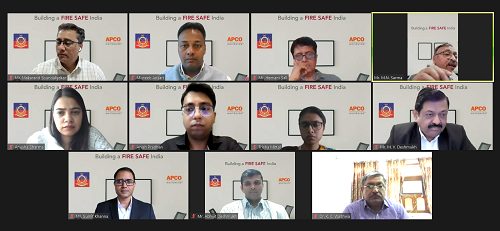
Sectoral experts virtually speaking at the roundtable, ‘Building a fire safe India’ held recently


In this context, several experts from various fields came together to discuss possible solutions. The expert consultation is a part of a series of round table tilted, ‘Road to Fire Prevention & Life Safety in India: Understanding existing gaps in policy and the way forward‘ conducted by Fire Safe India Foundation (FSIF), a non-profit organization working towards raising awareness about fire safety in India and APCO Worldwide, a global public affairs and strategic communications consultancy.


The consultation session was addressed by leading voices across sectors including Mr. M.V. Deshmukh Chairman, FSIF and Former Director & Fire Advisor, Govt. of Maharashtra, Mr. M.N. Sarma Secretary General, General Insurance Council, Dr. K.C. Wadhwa Additional Director, DRDO, Mr. Hemant Sali, Technical Consultant and Former Executive Engineer, Public Works, Department, Government of Maharashtra, Mr. Sumit Khanna Chief Underwriter, FM Global, Mr. Abhijit Deshmukh Legal Expert, Mr. Makarand Soundalgekar, Consultant, Facilitator/Trainer Project Management, Business Excellence, Behavioral programs. The speakers discussed about existing policy gaps, legislative, academic reforms and solutions that will ensure a fire safe India.


At this juncture, fire is a state subject in India. We need legislative reforms to ensure this subject gets a central legislation. The current bills are recommendatory and not mandatory for implementation. Hence, a constitutional amendment is needed,” said, Mr. Mr. M.V. Deshmukh Chairman, FSIF and Former Director & Fire Advisor, Govt. of Maharashtra speaking about the status of fire safety in India.

- Advertisement -


He added, “Moreover, from a readiness perspective, we need to check the existing public safety infrastructure and analyze the requirements of fire stations and equipment in case of fire. In case a fire accident occurs, there is a need for fire forensics in the country to determine the actual cause of fire. We also need certifications and standards to analyze the fire load a building can sustain. Every building must be always equipped with fire-retardant materials to ensure the safety of lives and minimize fiscal losses. Additionally, qualified vendors must be deployed for execution of the design, construction, and execution.”


Sharing his perspective on infrastructural remedies, Mr. Hemant Sali, Technical Consultant and Former Executive Engineer, Public Works, Department, Government of Maharashtra, said, “Short circuits and electrical faults happen because of the defects in design, construction and verification of electrical installation, leading to thermal effects detrimental to wiring installation, making short circuit a leading cause of fire accidents in the country. We need to build a strong foundation starting at the infrastructural level. As of today, there is a lack of procedural check-ups, initial and periodical verification and testing as per specified norms. Electrical audits comprising verification and testing, give factsheet of adherence to safety standards. We need strict enforcement of regulatory provisions to implements safety standards. Additionally, we need to sensitize the builders and building occupants about importance of quality, which is possible by appointing experienced design consultants, contractors and use of standardized products while planning the construction.”


Mr. M.N. Sarma Secretary General, General Insurance Council, discussed the role of insurance sector in case of fire accidents. He said, “The role of insurance comes into play after the fire has taken place. Our goal is to minimize financial affect after the accident. However, to ensure such accidents are prevented, there needs to be a system in place to prescribe compulsory upgradation of fire safety infrastructure on a regular basis. We also need to implement a mechanism of data collection on causes of fire accidents and fire statistics to preempt the potential loopholes and prevent such cases. Besides certification, regular electrical audits should be made mandatory. Currently, the cases of fire accidents also show lack of accountability and responsibility. We need to align every stakeholder to implement fire safety standards in private and public establishments.”


According to reports, electrical faults are cited as the leading cause of fires and have been identified as the main reason behind recent fires. Past incidents show that most fire accidents take place due to three major reasons: electrical short circuit and gas cylinder/stove bursts, human negligence, and ill-formed habits. Hence, fire safety in India requires robust policy interventions and focused efforts towards prevention rather than post-accident mitigation. Given the recent incidents of fire in India, the subject is crucial for urban planning and development in states as well as nationally.

- Advertisement -


About FSIF
FSIF is a non-profit making organization which aims to working towards working to make India free from fire hazards. The organization aims to establish a fire-safety culture that is based on individual care, knowledge of techniques and available technologies for prevention and control of fire incidents.

THE SNAPSHOTS

Sign up to get quick snaps of everyday happening, directly in your inbox.

We don’t spam! Read our privacy policy for more info.

- Advertisement -

More Latest Stories

More Articles

The Reliability Equation: Trev Mobility CEO Naveen Gupta on Building Trust in Premium Electric Ride-Hailing

During an interview with TechGraph, Naveen Gupta, Founder & CEO of Trev Mobility, highlighted why customer expectations in premium mobility are increasingly shifting beyond...

Nexchain Publishes New Roadmap as $0.06 Token Stage Continues

Nexchain has unveiled its updated development roadmap, providing the community with a clearer view of the project’s progress and upcoming milestones. The announcement comes as the current token stage continues at $0.06, with the team highlighting its transition from completed testnet phases toward mainnet...

Why Startups Are Turning to Virtual CFOs for Smarter Growth

​For a long time, finance leadership in startups followed a predictable path. Founders managed...

Nexchain Rebuild Story Puts AI Layer 1 Development Back on the Crypto Presale Radar

Nexchain AI has brought its rebuild story back into focus as its AI Layer...

How Machine Learning Is Redefining Short-Term Borrowing for Tech-Savvy Consumers

Short-term lending has long relied on limited snapshots of a borrower’s history. That approach...

Why Players Buy LoL Boost and How the Process Works

If you’re researching why players buy lol boost, you’re usually trying to understand two...

The Detroit Region’s Role in Modern Global Supply Chains

As global commerce continues to expand its reach, the Detroit region has emerged as...

The Importance of Keeping Up to Date With Auto Maintenance

Auto maintenance is one of the most important responsibilities that comes with owning a...

From IP to Global Leadership: Aum Ventures’ Chetan Mehta on India’s Next Deeptech Breakout Companies

Speaking with TechGraph, Chetan Mehta, Founding Partner at Aum Ventures, outlined why deeptech remains one of the most underpriced opportunities in India’s startup ecosystem...

PatexOne: Could This Platform Be Smarter Than Your Impulses?

Australian investors are used to platforms that shout about leverage and “opportunity”. PatexOne takes...

The HiPCO Advantage: NoPo Nanotechnologies’ Gadhadar Reddy on Scaling SWCNT Manufacturing for Emerging Industries

Speaking with TechGraph, Gadhadar Reddy, Co-Founder and CEO of NoPo Nanotechnologies, discussed how manufacturing...

Beyond Nvidia: The Hidden Winners of the AI Stock Rally

Nvidia stock (NASDAQ:NVDA) has returned roughly 1,200% since ChatGPT launched in late 2022. Most...

India’s Cloud Cost Crisis: Why Startups Are Rethinking Their Tech Stack

Over the last ten years, startups in India have experienced an incredible boom driven...

Top No-KYC Crypto Casino Sites in 2026

Most online casinos demand a lot of personal information from you before you can place a bet. However, thanks to the rise of no-KYC...

Redrob AI Launches Professional AI Platform for India’s Workforce

In a bid to help students and professionals navigate an increasingly fragmented digital work environment, Redrob AI has launched a professional AI platform in India aimed at helping users manage career-related and professional tasks from a single platform. Available across web and mobile, the platform...

Simple Habits That Keep Your Car Running Longer

Keeping your car running longer doesn’t require expert-level knowledge—it comes down to building smart...

Why Resume-Based Hiring Is Failing India’s Workforce

India needs a shift from credential-first hiring to skill-first validation

How Air Can Become Urban India’s New Water Source

India's cities are running dry. Chennai nearly ran out of groundwater in 2019. Bengaluru's...

The Human Algorithm: Why the Future of Digital Marketing Belongs to Empathetic Strategists

The modern marketing department is quieter than it used to be. The frantic tapping...

How AI is Rewriting the Economics of India’s $300 Bn IT Services Sector

When Microsoft CEO Satya Nadella recently disclosed that artificial intelligence now generates nearly 30...

Why India Must Own Its Education Intelligence Stack

India has rapidly digitised large parts of its education ecosystem over the last decade....

Can Intelligent Optimization Redefine How Businesses Solve Their Toughest Problems?

The modern enterprise is no longer just a business; it is a complex, hyper-connected...

Why Cyber Resilience Is Replacing Cybersecurity as a Boardroom Priority

Traditionally, cybersecurity was hard-wired to be a technology concern that was only taken care...

The Rise of Integrated Solar Tech Ecosystems in India

India’s clean energy is all about building an ecosystem that is interconnected with various...

Beyond Nvidia: The Hidden Winners of the AI Stock Rally

Nvidia stock (NASDAQ:NVDA) has returned roughly 1,200% since ChatGPT launched in late 2022. Most...

“Budget should focus on reducing taxes on capital gains,” Says Abhishek Gupta of Hex N Bit

Speaking in the upcoming Union Budget 2021, Abhishek Gupta, Founder, and CEO, Hex N...

“China is a Global thief” Rep. Tom Rice on Uyghur Forced Labor Prevention Act

Speaking at the House on Uyghur Forced Labor Prevention Act, Rep. Tom Rice (R-SC)...

Rethinking Executive Search: Venator Search Partners’ Deepraditya Datta on Leadership Hiring in a Changing Talent Market

In an interview with TechGraph, Deepraditya Datta, Founder and Managing Director of Venator Search...

Beyond the MVP: Gacsym Ventures CTO Nandagopal P on Helping Startups Through Venture Studios

In a conversation with TechGraph, Nandagopal P, Chief Technology Officer at Gacsym Ventures, shared...

India’s Cloud Cost Crisis: Why Startups Are Rethinking Their Tech Stack

Over the last ten years, startups in India have experienced an incredible boom driven...

The Role of Edtech in Addressing Equity Gaps in Higher Education

In the fast-paced world of EdTech today, the opportunity to bridge educational gaps and...

Alphabet Discloses $2.14 Billion in Public Equity Holdings as of June 30

Alphabet Inc. disclosed $2.14 billion in equity securities held across 39 positions as of...

India to generate $100 bn from telephonic investments

India expects to attract $100 billion in investments in the telecom sector, a union...