

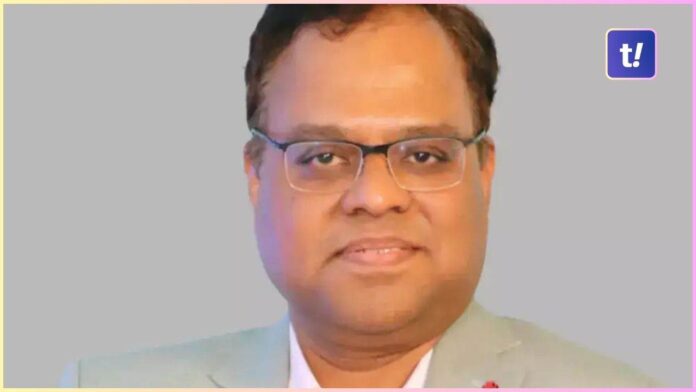
Decimal Point Analytics CEO Shailesh Dhuri On Improving India’s Healthcare Ecosystem With AI

Date:

Trending

- Advertisement -

In a conversation with TechGraph, Shailesh Dhuri, Co-founder and CEO of Decimal Point Analytics, spoke about the company’s focus on backend healthcare transformation through data-driven intelligence, where AI models are being applied to optimize medical stock planning, hospital operations, and emergency response workflows.

Dhuri also explained how Decimal Point is addressing patient data fragmentation using semantic layers and NLP-driven structuring, while enabling frontline workers through AI-generated nudges delivered in local languages to improve care delivery in underserved regions.

- Advertisement -

Read the complete interview:

- Advertisement -

TechGraph: In the context of healthcare, where stakes are incredibly high, how is AI and machine learning changing the way data is not just analyzed but trusted by clinicians and decision-makers?

Shailesh Dhuri: In healthcare, trust is everything. When a doctor is making life-or-death decisions, they cannot just rely on some black-box algorithm. What we should aim for is to make AI models that can explain their reasoning. Like when an AI system predicts 30-day readmission risk, it doesn’t just say “high risk”, it shows which factors are contributing. Maybe the patient’s haemoglobin is dropping, maybe they missed the last two follow-ups, maybe their age and comorbidities are creating risk. This transparency is what builds confidence. Also, we should always validate our models with local data; what works in the best hospital in Mumbai may not work the same way in a rural PHC.

TechGraph: There’s often a gap between raw health data and actionable insight. How is Decimal Point Analytics using AI and machine learning to bridge that gap in a way that goes beyond dashboards and reporting tools?

Shailesh Dhuri: You know, having dashboards is like having a speedometer in a car, it tells you speed but not where to go. What AI does differently is what I call “nudge systems.” For example, in maternal mortality prediction work, one doesn’t just show risk scores. The system automatically sends SMS to ASHA workers saying, “Please visit Sunita tai tomorrow, her BP reading needs checking.” As this is actionable. We can also use natural language generation to convert complex analytics into simple Marathi or Hindi messages that frontline workers can understand and act upon.

- Advertisement -

TechGraph: We often hear about AI improving diagnostics or treatment personalization, but how exactly is AI and machine learning reshaping back-end healthcare operations in ways that directly impact patient outcomes?

Shailesh Dhuri: Backend operations are where real impact happens, but nobody sees it. Take drug inventory management, using AI to predict demand patterns means essential medicines don’t go out of stock, potentially reducing stockouts by 60% just by analyzing prescription patterns and seasonal trends. Another example is bed allocation optimization. The ML model considers patient acuity, expected discharge times, cleaning schedules, everything. This reduces wait time in the emergency department, which directly saves lives.

TechGraph: One challenge in healthcare data is its fragmentation across silos and formats. What’s your take on how AI can work through that complexity without compromising on accuracy or compliance?

Shailesh Dhuri: This fragmentation is the biggest headache! Patient data is scattered everywhere – paper files, different EMR systems, lab reports in PDF, X-rays in DICOM format. What we can do is create what we call a “semantic layer”, think of it like a universal translator. We can use NLP to extract information from unstructured sources, standardize using FHIR protocols, but always keeping PHI compliance intact. The key is to never compromise on data quality, garbage in, garbage out, as they say.

TechGraph: We hear a lot about predictive analytics, but in healthcare, there’s also a big need for explainability. Can AI make data analytics more transparent and, if so, how are you seeing that play out in real-world use cases?

Shailesh Dhuri: In healthcare, explainability is not a luxury; it’s a necessity. We can use techniques like SHAP values and attention mechanisms to show exactly why a model made certain predictions. But more important is presenting this in a clinician-friendly way. Instead of showing feature importance graphs, we can create clinical narratives, “Patient risk increased because of a combination of rising creatinine (kidney function) and irregular medication adherence pattern detected in pharmacy refill data.” This can connect with how doctors think.

TechGraph: From your experience working across industries, what’s unique about applying AI in healthcare compared to, say, financial services, and what lessons transfer well between the two?

Shailesh Dhuri: Having worked in both sectors, the main difference is in finance; if the model makes a mistake, you lose money. In healthcare, you might lose your life. So validation requirements are much stricter. Also, healthcare has more heterogeneous data – you cannot standardize the human body like you standardize financial transactions. But what transfers well is anomaly detection approaches. Fraud detection techniques we used in banking, we now apply for identifying unusual clinical patterns or potential medical errors.

TechGraph: Given the sensitivity and volume of healthcare data, what does transparency in AI-driven analytics truly look like in this space, and how does Decimal Point Analytics balance explainability with performance?

Shailesh Dhuri: This is always a tough balance. More explainable models, like decision trees, are easier to understand but may not capture complex patterns. Deep learning models are powerful but opaque. Our approach is ensemble; we use complex models for initial screening, then simpler models for final decision support. Also, we create “explanation interfaces” that provide different stakeholders with different levels of detail. CMO needs high-level insights, doctors need clinical reasoning, and data scientists need technical metrics. Same model, different views.

What I learned in my journey is that in healthcare AI, perfect is the enemy of good. Better to have an 85% accurate model that doctors trust and use than a 95% accurate model that sits unused because nobody understands it. Technology should enable our healthcare workers, not replace their judgment. That’s the philosophy we follow at Decimal Point Analytics.

THE SNAPSHOTS

Sign up to get quick snaps of everyday happening, directly in your inbox.

We don’t spam! Read our privacy policy for more info.

- Advertisement -
Krishna Mali
Krishna Mali
Founder & Group Editor of TechGraph.

More Latest Stories

More Articles

The IoT Platform Market Just Consolidated: Smart Integrators Are Looking Elsewhere

Three platforms changed owners in 15 months. Your stack didn't change. Your risk profile did.

How Home-Based Healthcare is Improving Medical Accessibility Across India

The Indian health care industry has seen considerable transformation in recent times, primarily due to changes in patient demand and an increasing need for convenient and cost-effective health care. India is a country where high-quality health care facilities were available only in urban areas,...

Meta Platforms, Broadcom Partners to Co-Develop Multi-Gen Silicon AI Chips

Facebook parent Meta Platforms (NASDAQ: META) has expanded its partnership with Broadcom to co-develop...

Practo Names Srijesh Kumar as Global CPTO

India-based online doctor consulting platform, Practo has announced the appointment of Srijesh Kumar as...

Matrix Geo Solutions Wins ₹5.14 Crore Narmada Survey Project from MPSEDC

Matrix Geo Solutions Limited has received a Letter of Acceptance (LoA) from Madhya Pradesh...

Why Reliability and Security Are the New Differentiators in Enterprise Tech

For years, enterprises competed on features, scale, and speed. Today, the real differentiator is...

Trump Accuses Iran of Breaching Ceasefire, Warns Over Strait of Hormuz Transit

The US President Donald Trump has accused Iran of failing to allow adequate oil...

India’s Foreign Secretary Vikram Misri Holds Talks with FBI Chief Kash Patel

India’s Foreign Secretary Vikram Misri met FBI Chief Kash Patel in Washington on Thursday...

Sawai Capital Executes ₹300 Crore Structured Credit Transactions in Q4

A Gurugram-based wealth and investment platform, Sawai Capital, has executed structured credit transactions in excess of ₹300 crore during the fourth quarter, with deal...

Cisco Appoints Pete Shimer to Board, Daniel Schulman to Step Down

Cisco Systems (NASDAQ:CSCO) has appointed Pete A. Shimer to its board of directors, while...

Cisco Director Pete Shimer Files Initial Ownership Disclosure with SEC

Cisco Systems (NASDAQ: CSCO) board member Pete A. Shimer has filed an initial statement...

Buy vs Build in the AI Era: Why Enterprises Are Rethinking Technology Strategy

Every decade or so, a shift arrives that forces enterprises to rethink how they...

Cisco Report: Cybersecurity Remains Top Challenge as Industrial AI Adoption Expands

Cisco Systems (NASDAQ:CSCO) has released its latest State of Industrial AI Report, highlighting how...

Motilal Oswal Alternates leads $280 Mn Series E Round for KreditBee

India based digital lending platform KreditBee (KrazyBee Services PVT Ltd) has raised $280 million in a Series E funding round at a post money...

Cisco Appoints Pete Shimer as its board of directors

American multinational technology conglomerate, Cisco Inc (NASDAQ: CSCO) on Tuesday announced the appointment of Pete Shimer to its board of directors with the immediate effects. Shimer currently serves on the boards of Alaska Airlines, Korn Ferry and Synopsys, and is Executive Chair of the Cancer...

Cambodia Installs Statue Honouring Mine Detection Rat Magawa

Magawa, a landmine detecting rat who was awarded a gold medal for his service,...

GPS Renewables’ GPSR Arya Raises ₹500 Million from Axis AMC to Scale CBG Projects Across India

GPSR Arya, the asset platform of GPS Renewables, has raised ₹500 million in mezzanine...

How Modern Technology Enhances Efficiency and Performance of Residential HVAC Systems

Modern technology has revolutionized many aspects of our daily lives, and residential HVAC systems...

CredResolve Secures Pre-Series A round funding from Merak Ventures & Others

CredResolve, an India-based AI-powered debt collections infrastructure company, has raised a pre-Series A funding...

How to Avoid Distracted Driving on the Road

Driving on today's roads requires utmost attention and care. As automobiles evolve with advanced...

Closing India’s Employability Gap with Tech-First Hiring Models

India’s employability challenge is often framed as a skill gap problem. But that’s only...

VES College of Architecture’s Dr. Prof. Anand Achari on Preparing Students for Real Urban Challenges with AI and Design Thinking

Speaking with TechGraph, Principal of VES College of Architecture (VESCOA), Dr. Prof. Anand Achari,...

The Future of Crypto Investing Is on Autopilot

When most people think about cryptocurrency investing, they envision charts fluctuating rapidly, traders responding...

NVIDIA CEO Jensen Huang Reports 437,908 Shares Disposal at $181.93 Each

Jensen Huang, President and CEO of Nvidia Corporation (NASDAQ:NVDA), has reported a series of...

Buy vs Build in the AI Era: Why Enterprises Are Rethinking Technology Strategy

Every decade or so, a shift arrives that forces enterprises to rethink how they...

ASLI Appoints Rajagopal G as Chairman for 2026–28 Term

Association of Senior Living India (ASLI) has announced the appointment of Rajagopal G as...

realme Launches realme 16 5G in India with Dual 50MP Cameras, 7000mAh Battery

With a bid to strengthen its position in the mid range segment, realme has...

SatLeo Labs Raises $2.2 Mn Seed Round Led by Unicorn India Ventures

SatLeo Labs, a Gujarat-based space tech startup focused on capturing high-resolution thermal and visible...

How Graphics on Cars Can Boost Your Business

In today's competitive market, businesses are constantly looking for innovative ways to stand out...

Cisco Report: Cybersecurity Remains Top Challenge as Industrial AI Adoption Expands

Cisco Systems (NASDAQ:CSCO) has released its latest State of Industrial AI Report, highlighting how...

The Future of Crypto Investing Is on Autopilot

When most people think about cryptocurrency investing, they envision charts fluctuating rapidly, traders responding...

How NBBL’s New Technology Stack Is Transforming the Future of Payments

India’s digital payments ecosystem has reached a scale that very few countries in the...

NVIDIA CEO Jensen Huang Reports 437,908 Shares Disposal at $181.93 Each

Jensen Huang, President and CEO of Nvidia Corporation (NASDAQ:NVDA), has reported a series of...