

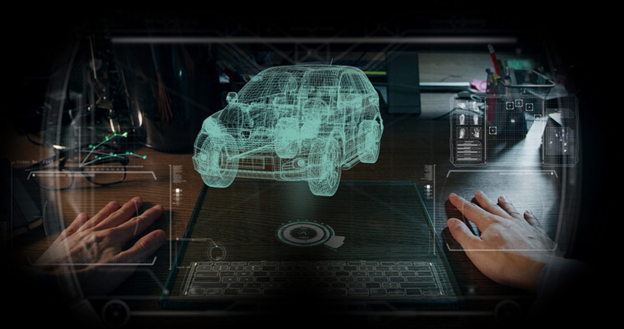
From Diagnostics to AI: The New Age of Car Repair Technology

Date:

Trending

- Advertisement -

The automotive industry is undergoing a significant transformation, driven by technological advancements that are revolutionizing car repairs. Modern technologies, including artificial intelligence (AI) and machine learning, are making it possible to diagnose and fix vehicles more efficiently than ever before. This article explores how these technologies are shaping the future of car repair.

The Shift from Traditional to Advanced Diagnostics

Traditional car repair relied heavily on the mechanic’s skills and intuition. However, with the introduction of advanced diagnostics, the process has become more precise and less time-consuming. Mechanics now use sophisticated diagnostic tools that can pinpoint issues with great accuracy.

These contemporary tools leverage data and connectivity to analyze a vehicle’s performance in real-time. For instance, the tremendous growth of connected tech in vehicles allows for comprehensive diagnostics that were once deemed impossible. This evolution in diagnostics leads to reduced downtime for repairs and enhances the overall service experience for vehicle owners.

A notable advancement in this realm is the increasing role of AI in diagnostics. Artificial intelligence systems are proficient in learning patterns and identifying anomalies that could indicate potential vehicle problems. This proactive approach to car maintenance helps in preventing unforeseen breakdowns, contributing to greater reliability and customer satisfaction.

The Rise of AI and Machine Learning in Repairs

AI and machine learning are at the forefront of modern car repairs, offering innovative solutions that traditional techniques cannot match. With AI, vehicle repair becomes a data-driven science rather than an art. Machine learning algorithms can analyze vast amounts of data to predict vehicle failures or recommend optimal repair strategies.

- Advertisement -

These AI-driven systems are capable of streamlining the repair process, thus enhancing the efficiency of auto workshops. Such advancements mean that complex repairs, which would have taken hours, can now be executed in minutes. As a result, the automotive repair sector is witnessing a significant shift in paradigms, focusing more on tech-driven solutions.

Moreover, AI-powered tools support mechanics by providing data analytics and interpretation assistance. This symbiotic relationship between human expertise and machine precision yields better repair outcomes. Consequently, mechanics can focus on delivering higher quality service while leaving the intricacies of data analysis to intelligent systems.

The Impact on Commercial Vehicle Maintenance

Like personal vehicles, commercial vehicle maintenance is also benefiting from advances in repair tech. In the United States, more than 15 million commercial vehicles are registered, with a significant portion operating on diesel engines. By integrating modern diagnostics and AI technologies, fleet managers can maintain these vehicles more effectively.

The efficiency gains from adopting such technologies translate into cost savings and reduced vehicle downtime. For diesel engine commercial vehicles, this means not only improved performance but also compliance with stricter emission standards. Integrated diagnostic systems provide in-depth analysis, optimizing fuel efficiency and minimizing pollution.

- Advertisement -

As the cost of tech components like batteries has decreased by 80% over the past six years, the adoption barriers for electric-powered commercial vehicles have also lowered. This trend paves the way for more sustainable vehicular options and sets a favorable condition for the growth of eco-friendly transportation solutions.

The Shift in Auto Repair Service Offerings

The evolution of car repair technology also reshapes the landscape of services offered by auto repair businesses. According to industry insights, collision and crash parts services constitute about 31% of the offerings within the auto repair sector. These services heavily benefit from advancements in repair tech, which expedite parts alignment and reassembly processes.

With the integration of AI and machine learning, auto repair shops can enhance the precision and speed of these services. AI systems can accurately predict which crash part replacements are necessary, reducing the time needed for inspection and component ordering. This increase in efficiency helps maintain high customer satisfaction levels, as vehicles are returned in optimal condition more quickly.

The inclusion of such tech-driven services allows for a more diversified service portfolio, catering to varying customer needs, from routine maintenance to sophisticated repairs. Moreover, as technology continues to advance, the potential for further innovation in the types of services offered by automotive repair shops remains vast, promising an exciting future for the industry.

Embracing the Future of Car Repair

The advent of diagnostics and AI technologies is ushering in a new age in the automotive repair sector. These tech advancements promise improved precision, reduced repair times, and greater reliability, which are essential in both personal and commercial vehicle maintenance. The continued development and adoption of such technologies are crucial for addressing the evolving demands of the automotive world.

As more companies and mechanics embrace digital solutions, the automotive repair industry is poised for substantial growth and transformation. The integration of intelligent systems spurs enhancements in service offerings, contributing to better customer satisfaction and aligning with global sustainability efforts.

Ultimately, the new age of car repair is about leveraging advanced technology to redefine the norm. By choosing to adapt and innovate, the automotive industry will not only improve vehicle longevity but also shape a more efficient and environmentally friendly future for transportation.

THE SNAPSHOTS

Sign up to get quick snaps of everyday happening, directly in your inbox.

We don’t spam! Read our privacy policy for more info.

- Advertisement -
Krishna Mali
Krishna Mali
Founder & Group Editor of TechGraph.

More Latest Stories

More Articles

From IP to Global Leadership: Aum Ventures’ Chetan Mehta on India’s Next Deeptech Breakout Companies

Speaking with TechGraph, Chetan Mehta, Founding Partner at Aum Ventures, outlined why deeptech remains one of the most underpriced opportunities in India’s startup ecosystem...

How Machine Learning Is Redefining Short-Term Borrowing for Tech-Savvy Consumers

Short-term lending has long relied on limited snapshots of a borrower’s history. That approach often left gaps, especially for people with thin credit files or recent financial shifts. Machine learning changes the equation by pulling in wider signals such as payment patterns from utility...

Why Players Buy LoL Boost and How the Process Works

If you’re researching why players buy lol boost, you’re usually trying to understand two...

CasinoBonusesFinder UK: how filters, Telegram alerts and real bonus matching work in practice

Anyone who has spent serious time on casino bonus hunting knows the drill. You...

The Importance of Keeping Up to Date With Auto Maintenance

Auto maintenance is one of the most important responsibilities that comes with owning a...

PatexOne: Could This Platform Be Smarter Than Your Impulses?

Australian investors are used to platforms that shout about leverage and “opportunity”. PatexOne takes...

India’s Air Crisis Needs a Deeptech Answer, Not a Consumer Gadget

Twenty years ago, an air conditioner in an Indian home was a luxury. Today...

India’s Cloud Cost Crisis: Why Startups Are Rethinking Their Tech Stack

Over the last ten years, startups in India have experienced an incredible boom driven...

The Detroit Region’s Role in Modern Global Supply Chains

As global commerce continues to expand its reach, the Detroit region has emerged as a pivotal player in modern supply chains. Strategically positioned along...

Top No-KYC Crypto Casino Sites in 2026

Most online casinos demand a lot of personal information from you before you can...

Redrob AI Launches Professional AI Platform for India’s Workforce

In a bid to help students and professionals navigate an increasingly fragmented digital work...

The Business of Recycling: Profit, Waste, and Sustainability

The business of recycling stands at the intersection of environmental responsibility and economic opportunity....

Why Resume-Based Hiring Is Failing India’s Workforce

India needs a shift from credential-first hiring to skill-first validation

Why BFSI Is Moving from AI Experiments to AI Systems

For the past few years, Artificial Intelligence in banking, financial services, and insurance has been all about trying new things. Organizations started projects to...

Capabilities Over Credentials: Scrabble’s Naveen Tiwari on the Changing Nature of Leadership Hiring

Speaking with TechGraph, Naveen Tiwari, Co-Founder of Scrabble, discussed how leadership hiring is shifting from a credentials-led approach to one focused on demonstrated capabilities, and how organisations are increasingly seeking executives who can create measurable impact from the outset. Tiwari also highlighted how Scrabble uses...

From Intuition to Analysis: How AI Is Becoming Every CEO’s Second Brain

Most CEOs are making important decisions with partial information. The challenge is not just...

Rethinking Executive Search: Venator Search Partners’ Deepraditya Datta on Leadership Hiring in a Changing Talent Market

In an interview with TechGraph, Deepraditya Datta, Founder and Managing Director of Venator Search...

AI and Fake Content: Can Technology Win the Battle Against Misinformation?

Artificial Intelligence has transformed how content is created, manipulated, and distributed at scale. News,...

Why Micro Learning at 3 Minutes Works Better Than Lectures at 3 Hours

In the fast-moving world of digital education, there is one myth that continues to...

More Than Just a Scratch: The Importance of Windshield Care

Maintaining your vehicle’s windshield often appears as a seemingly minor task that can easily...

The world’s largest crypto market is building in the dark

India remains one of the few significant economies without a comprehensive crypto and stablecoin...

Beyond Nvidia: The Hidden Winners of the AI Stock Rally

Nvidia stock (NASDAQ:NVDA) has returned roughly 1,200% since ChatGPT launched in late 2022. Most...

What PM Modi’s Appeal to Avoid Gold Buying Could Mean for India’s Jewellery Economy

When Prime Minister Narendra Modi recently urged citizens to avoid purchasing gold for a...

Serhii Tokarev Spoke About The Third Season Of The Generation H Accelerator

Serhii Tokarev spoke about the Generation H 3.0 HealthTech accelerator, which is opening applications...

The Business of Recycling: Profit, Waste, and Sustainability

The business of recycling stands at the intersection of environmental responsibility and economic opportunity....

“Budget should focus on reducing taxes on capital gains,” Says Abhishek Gupta of Hex N Bit

Speaking in the upcoming Union Budget 2021, Abhishek Gupta, Founder, and CEO, Hex N...

“China is a Global thief” Rep. Tom Rice on Uyghur Forced Labor Prevention Act

Speaking at the House on Uyghur Forced Labor Prevention Act, Rep. Tom Rice (R-SC)...

How AI is Rewriting the Economics of India’s $300 Bn IT Services Sector

When Microsoft CEO Satya Nadella recently disclosed that artificial intelligence now generates nearly 30...

Why India Must Own Its Education Intelligence Stack

India has rapidly digitised large parts of its education ecosystem over the last decade....

Why Resume-Based Hiring Is Failing India’s Workforce

India needs a shift from credential-first hiring to skill-first validation

Alphabet Discloses $2.14 Billion in Public Equity Holdings as of June 30

Alphabet Inc. disclosed $2.14 billion in equity securities held across 39 positions as of...

The Role of Edtech in Addressing Equity Gaps in Higher Education

In the fast-paced world of EdTech today, the opportunity to bridge educational gaps and...

India to generate $100 bn from telephonic investments

India expects to attract $100 billion in investments in the telecom sector, a union...