

Datacenter trends in 2024

Date:

Before Article Content · 728×90
Advertise Here

Trending

- Advertisement -

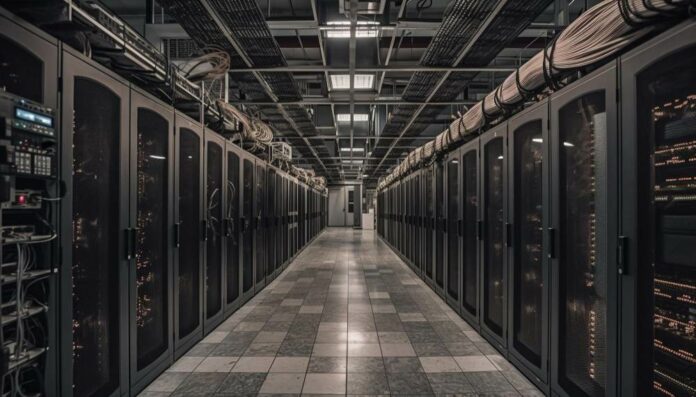
Data centers are undergoing a significant transformation, driven by emerging technologies and evolving customer needs. Key developments revolutionizing the way data centers operate and deliver services are a product of the technology boom and changing corporate objectives. We are currently in an exciting era where innovation and agility are shaping the future of data centers.

The DC market has experienced impressive growth, expanding from 100MW to 1GW in the past 7 years. It is projected to reach 10GW in less than the next 10 years. This growth indicates that today’s data, measured in terabytes, has moved from small on-site server rooms to massive data centers.

Globally, the data center market is expected to grow rapidly, driven by the booming cloud business, efforts to digitize companies, and the increased use of data-intensive technologies such as IoT, AI, and edge computing.

Before we explore the new trends, it’s essential to grasp the fundamental role of data centers. These centralized hubs, equipped with cutting-edge networking, storage, and computing systems, play a vital role in processing, storing, and managing vast amounts of digital data. This understanding forms the bedrock for comprehending the new trends in data centers.

Liquid Cooling

While air cooling remains the norm, the potential of liquid cooling technologies, particularly for high-density installations, is on the rise. In high-density settings, liquid cooling offers a more cost-effective solution than air cooling, and we’re at the cusp of a trial period for user-friendly solutions, changing deployment methods, and improved manufacturer support that is expected to be widely adopted in the future.

- Advertisement -
  • Persistence Market Research anticipates that the global market for liquid cooling systems in data centers will surge to $31.07 billion by 2032. This projection underscores the industry’s acknowledgment of the necessity for inventive cooling methods capable of managing the intense heat generated by densely packed server racks and high-density GPU clusters.

New Application Architecture

The need for sophisticated infrastructure solutions is rising due to the widespread use of microservices and cloud-native applications. New application architectures that adapt to the ever-changing requirements of contemporary application development are expected to become the main focus in 2024. Serverless computing is one of these architectural innovations that is getting a lot of attention because of its scalability and operational efficiency.

  • This paradigm change is further aided by containers, improving app deployment consistency across various environments. With the inclusion of Kubernetes, a platform for container orchestration, the deployment and maintenance of containerized infrastructure are becoming easier. This minimizes disputes while simultaneously enhancing portability.

Artificial Intelligence

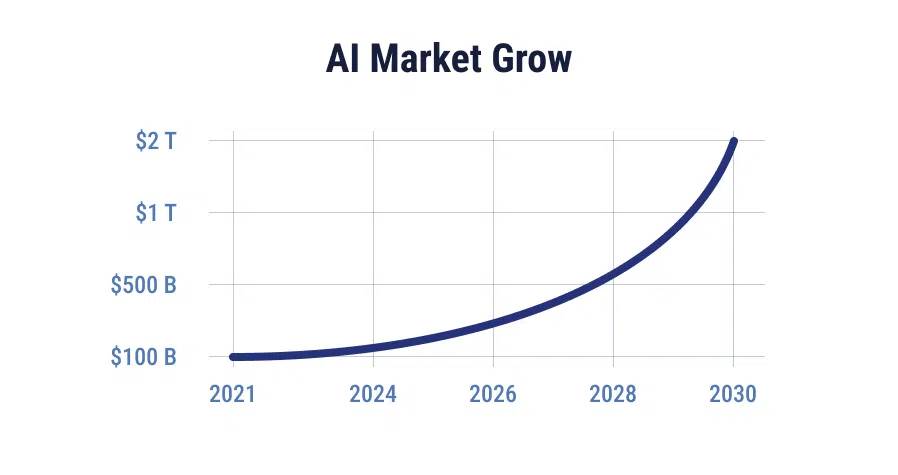
By 2024, AI will be a major topic of discussion as it becomes more integrated into data centers, enabling enhanced security, proactive issue prediction, and optimized operations. Imagine cooling systems driven by AI that dynamically adjust to server loads in real time, guaranteeing peak performance and minimal energy use. Software with intelligence will constantly monitor network traffic, identify and isolate cyber threats in advance, and provide countermeasures before they become more serious.

  • Every business has been impacted by AI in some manner, and the rising need for data centers is partly due to the growing popularity of generative AI and massive language models. Graphics processing units (GPUs), which need more resources than central processing units (CPUs), are used in high-performance computing. High-density colocation can be quite advantageous for GPUs and other AI-related components. Businesses should look for high-density colocation providers that provide more than typical data centers as they integrate AI.
Sustainability

The emphasis will be on sustainability approaches that minimize the environmental effects of data centers. Anticipate a rise in the use of renewable energy sources like wind and solar energy, along with cutting-edge cooling solutions that use as little water as possible. Data center operators will integrate their operations with environmentally sustainable practices by prioritizing energy savings through better server design and AI-powered optimization.

  • Data processing and storage reliability are maintained while the environmental effect of a sustainable data center is minimized. Prioritizing energy efficiency, utilizing renewable energy sources, saving water, and cutting back on waste may all help achieve this.

Hybrid Cloud Deployment

In 2024, more businesses are expected to use multi-cloud and hybrid strategies. This hybrid method uses the public cloud’s agility and scalability while retaining the on-premises infrastructure’s security and control, enabling the best possible workload allocation according to particular requirements. Meeting contemporary enterprises’ changing needs results in better performance and cost-effectiveness.

- Advertisement -

It appears that 2024 will be a significant year for data centers. The data center environment is about to undergo revolutionary changes, from the rising tide of liquid cooling to the adoption of clever AI technologies, sustainability initiatives, and the strategic embrace of hybrid cloud deployments.

THE SNAPSHOTS

Sign up to get quick snaps of everyday happening, directly in your inbox.

We don’t spam! Read our privacy policy for more info.

- Advertisement -
Piyush Somani
Piyush Somani
Piyush Somani, Founder, CMD & CEO of ESDS Software Solution Ltd.

More Latest Stories

More Articles

How AI Is Building India’s Next-Generation Emergency Mobility Infrastructure

Imagine this. A customer is stranded on the roadside due to a vehicle breakdown and raises a request for assistance. In a traditional roadside...

Human-in-the-Loop: Why AI in Education Still Needs the Professor

Generative AI is rapidly entering classrooms, boardrooms, and training programs. Yet a critical question remains unresolved: does AI enhance learning, or quietly replace it? In my recent research published in the International Journal of Management Education, I examine a faculty-led model of integrating generative AI...

Why Indian Men Are Quietly Moving Away From Fast Fashion

When a man opens his wardrobe, stares at a rail of clothes, and realises...

How changing lifestyles are driving demand in home improvement products

The parking lot outside a home interiors store in Bengaluru's Marathahalli is full by...

The New Age of Digital Assets: How Blockchain Is Redefining Financial Inclusion

Innovation is changing the nature of economic participation and making it more inclusive, especially...

The Efficiency Gap That Will Reshape Finance by 2030

Here is the number that should be keeping every CFO awake right now: 97%...

Nexchain AI Maps Its Final Path to Launch as $0.06 Token Presale Window Nears Its Close

Like a building project that moves from design to final inspections, the Nexchain AI...

Nexchain AI Sets Mainnet and Presale Token Launch in Motion With Final $0.06 Access

Nexchain AI has entered a decisive 2026 build phase as its launch roadmap moves...

Why Indian Business Still Runs on Spreadsheets and WhatsApp for Treasury

India is home to one of the world's fastest-growing fintech ecosystems, projected to reach $421 billion by 2029. As the third-largest fintech hub globally,...

The Role of Predictive Technology in Creating Sustainable Infrastructure Ecosystems

Infrastructure development today is no longer just about building faster or expanding bigger. The...

The Reliability Equation: Trev Mobility CEO Naveen Gupta on Building Trust in Premium Electric Ride-Hailing

During an interview with TechGraph, Naveen Gupta, Founder & CEO of Trev Mobility, highlighted...

How AI is Rewriting the Economics of India’s $300 Bn IT Services Sector

When Microsoft CEO Satya Nadella recently disclosed that artificial intelligence now generates nearly 30...

Why Startups Are Turning to Virtual CFOs for Smarter Growth

​For a long time, finance leadership in startups followed a predictable path. Founders managed...

Nexchain Rebuild Story Puts AI Layer 1 Development Back on the Crypto Presale Radar

Nexchain AI has brought its rebuild story back into focus as its AI Layer 1 development nears the next phase. The current $0.05 limited...

From IP to Global Leadership: Aum Ventures’ Chetan Mehta on India’s Next Deeptech Breakout Companies

Speaking with TechGraph, Chetan Mehta, Founding Partner at Aum Ventures, outlined why deeptech remains one of the most underpriced opportunities in India’s startup ecosystem despite growing interest in sectors such as semiconductors, space technology, defence systems and advanced materials, and explained how the firm's...

How Machine Learning Is Redefining Short-Term Borrowing for Tech-Savvy Consumers

Short-term lending has long relied on limited snapshots of a borrower’s history. That approach...

Why Players Buy LoL Boost and How the Process Works

If you’re researching why players buy lol boost, you’re usually trying to understand two...

India’s Air Crisis Needs a Deeptech Answer, Not a Consumer Gadget

Twenty years ago, an air conditioner in an Indian home was a luxury. Today...

India’s Cloud Cost Crisis: Why Startups Are Rethinking Their Tech Stack

Over the last ten years, startups in India have experienced an incredible boom driven...

Top No-KYC Crypto Casino Sites in 2026

Most online casinos demand a lot of personal information from you before you can...

Redrob AI Launches Professional AI Platform for India’s Workforce

In a bid to help students and professionals navigate an increasingly fragmented digital work...

Rethinking Executive Search: Venator Search Partners’ Deepraditya Datta on Leadership Hiring in a Changing Talent Market

In an interview with TechGraph, Deepraditya Datta, Founder and Managing Director of Venator Search...

Beyond the MVP: Gacsym Ventures CTO Nandagopal P on Helping Startups Through Venture Studios

In a conversation with TechGraph, Nandagopal P, Chief Technology Officer at Gacsym Ventures, shared...

The Human Algorithm: Why the Future of Digital Marketing Belongs to Empathetic Strategists

The modern marketing department is quieter than it used to be. The frantic tapping...

How AI is Rewriting the Economics of India’s $300 Bn IT Services Sector

When Microsoft CEO Satya Nadella recently disclosed that artificial intelligence now generates nearly 30...

“Budget should focus on reducing taxes on capital gains,” Says Abhishek Gupta of Hex N Bit

Speaking in the upcoming Union Budget 2021, Abhishek Gupta, Founder, and CEO, Hex N...

“China is a Global thief” Rep. Tom Rice on Uyghur Forced Labor Prevention Act

Speaking at the House on Uyghur Forced Labor Prevention Act, Rep. Tom Rice (R-SC)...

PatexOne: Could This Platform Be Smarter Than Your Impulses?

Australian investors are used to platforms that shout about leverage and “opportunity”. PatexOne takes...

The HiPCO Advantage: NoPo Nanotechnologies’ Gadhadar Reddy on Scaling SWCNT Manufacturing for Emerging Industries

Speaking with TechGraph, Gadhadar Reddy, Co-Founder and CEO of NoPo Nanotechnologies, discussed how manufacturing...

Why Startups Are Turning to Virtual CFOs for Smarter Growth

​For a long time, finance leadership in startups followed a predictable path. Founders managed...

The Role of Edtech in Addressing Equity Gaps in Higher Education

In the fast-paced world of EdTech today, the opportunity to bridge educational gaps and...

Alphabet Discloses $2.14 Billion in Public Equity Holdings as of June 30

Alphabet Inc. disclosed $2.14 billion in equity securities held across 39 positions as of...

India to generate $100 bn from telephonic investments

India expects to attract $100 billion in investments in the telecom sector, a union...