


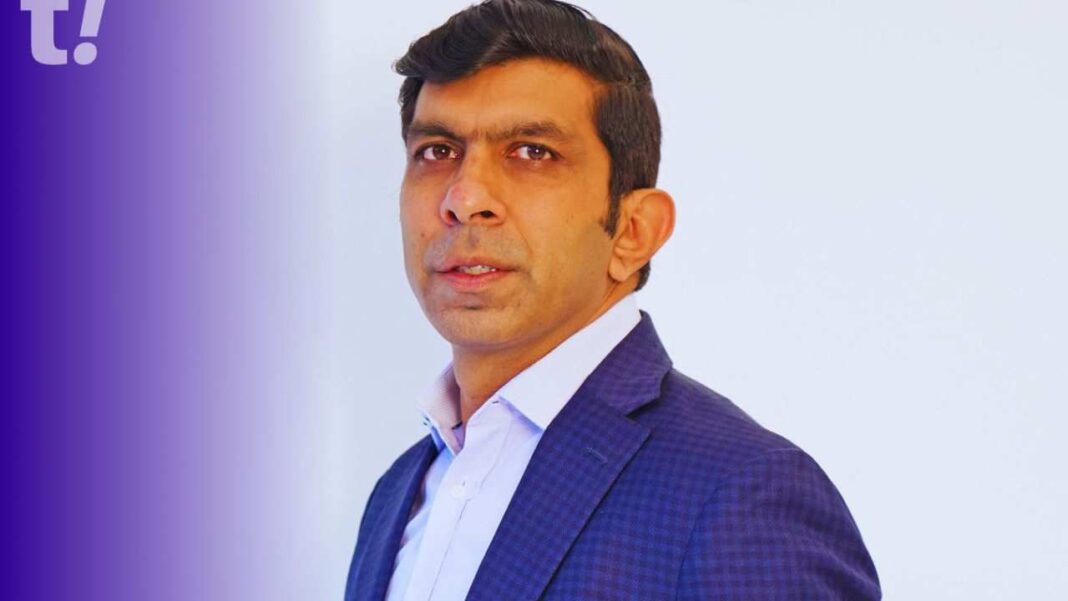
During the interview with TechGraph, Anil Pinapala, Founder & CEO of Flexpay by Vivifi Finance revealed Vivifi’s plans to adapt its instant personal loan offerings to meet changing needs of customers, and financial market conditions.
Read the complete interview:

TechGraph: What led Vivifi Finance to focus on instant personal loans for salaried individuals? How does the company differentiate itself from other market players?
Anil Pinapala: Only 4 in 100 Indians have access to credit cards and only about 10% have access to credit from banks or other institutions. Vivifi credit solutions give credit access to the 300 million under-served and unserved individuals who have never had or currently do not enjoy credit cards or other credit products by understanding their ability to repay credit and more importantly their intent to do so.
The initiative is to bring credit to the most remote users such that they can experience credit card-like facilities and avail of EMI-free solutions for their offline & online purchases. Vivifi employs Digital Onboarding of customers using a Video KYC process while employing Machine Learning Algorithms that ensure instant loan approvals and quicker disbursals.
TechGraph: How does Vivifi Finance assess the creditworthiness of salaried individuals seeking instant personal loans, and what measures does it take to ensure responsible lending practices?
Anil Pinapala: It is powered by a sophisticated AI-ML-based underwriting and credit assessment system that enables real-time credit decisions and leverages a sophisticated payment infrastructure to make real-time payments. Python, .NET, etc. Are among the plethora of technologies we utilize.
TechGraph: The instant loan market has seen a surge in recent years, with several new players entering the market. How does Vivifi Finance plan to stand out and gain a competitive advantage?
Anil Pinapala: We can underwrite unserved and underserved customers with incomes as low as Rs. 4000 per month, regardless of whether they are in formal or informal employment. That includes catering via mobile phones to customers who may be semi-literate or lack digital knowledge and belong to non-metro cities. We help them build a positive credit history while maintaining profitability.
Vivifi’s Flexpay is India’s First and Only Personal Emergency Line of Credit that offers sachet-sized credit in a credit card-like structure. The most remote users can experience a credit card-like facility and avail of EMI-free solutions for their offline & online purchases or needs. Our state-of-the-art technology enables us to identify the customer, offer credit and manage transactions. We were the first in the industry to incorporate a video KYC process and are working to extend this to customer registration & onboarding processes.
TechGraph: What are some of the biggest challenges facing the instant loan market, and how is Vivifi Finance addressing them?
Anil Pinapala: One of the biggest challenges the digital lending eco-system in India had to face was/is the scourge of illegal (mostly Chinese) lending apps that didn’t follow any law of the land and indulged in coercive collection practices while charging customers over 200%-300% interest rate.
When this occurred we were at the forefront of the fight explaining the difference between legal, licensed lenders like Vivifi and the illegal apps to our customers, the Media, Regulators, Law Enforcement, and Indians.
Our activism was rewarded with the Digital Lending Rules by RBI. This has made it easier for customers to identify legally licensed lending apps while giving them control of their data and bringing in full disclosure of credit costs with transparency in agreement terms.
TechGraph: How does Vivifi Finance balance the need for speedy loan disbursement with the need for thorough due diligence and risk management?
Anil Pinapala: At the core of Vivifi’s operations is their state-of-the-art, proprietary AI-driven loan management system known as LENDEZ. This advanced platform, in conjunction with Vivifi’s data-rich Decision Engine, guarantees a smooth and efficient underwriting and customer onboarding process.
With over six years of operational experience, Vivifi has been able to leverage comprehensive customer data collected throughout this period to continuously upgrade the Decision Engine. The decision engine is based on a non-conventional multi-dimensional underwriting model and considers a broad range of factors, including credit metrics and repayment behavior drivers.
Moreover, recognizing the need to cater to the unserved and underserved markets across India, Vivifi has been at the forefront of developing an in-house video-based KYC infrastructure. This pioneering infrastructure enables Vivifi to reach even the country’s most remote corners.
TechGraph: Instant personal loans can be convenient for borrowers, but high-interest rates and debt trap risk are concerns. How does Vivifi ensure responsible lending practices and protect borrowers from debt traps?
Anil Pinapala: At Vivifi, we promote Truth-in-Lending by offering credit products that have transparent disclosures and ensure that all loan terms, including interest rates and repayment schedules, are communicated to borrowers upfront. We conduct a comprehensive assessment of each borrower’s financial profile to determine their repayment capacity and offer loan amounts that align with their financial situation.
Additionally, we believe in empowering our borrowers through education and financial literacy initiatives. We provide resources and guidance on financial management, budgeting, and responsible borrowing to help borrowers make informed decisions and avoid falling into debt traps. Our commitment to flexibility and support means that we work closely with borrowers, providing assistance and options if they encounter financial difficulties during the repayment period.
TechGraph: How does Vivifi plan to evolve its instant personal loan offerings in response to changing customer needs and market conditions?
Anil Pinapala: At Vivifi, we are committed to continuously evolving our credit offerings to adapt to changing customer needs and market conditions. This includes introducing flexible repayment options, competitive interest rates, and streamlined application processes to enhance the overall borrowing experience. We closely monitor market trends and conduct thorough customer research to understand their evolving requirements.
Considering that EMI products are ill-suited for cash-stressed middle & lower-middle-class Indians borrowing for emergencies, FlexPay’s digital personal line of credit will come to assistance at times of need. FlexPay has been able to offer credit to individuals without any other credit options due to their employment, income, credit score, social profile, location, and literacy among many others.
Our objective is to make credit available to all households thereby wiping out unregistered lenders in the physical world and illegal lenders in the digital. Having served 85% of the pin codes in the country, we expect to bring 2 Mn households into the ambit of formal credit by 2024 and 20 Mn by 2029.