


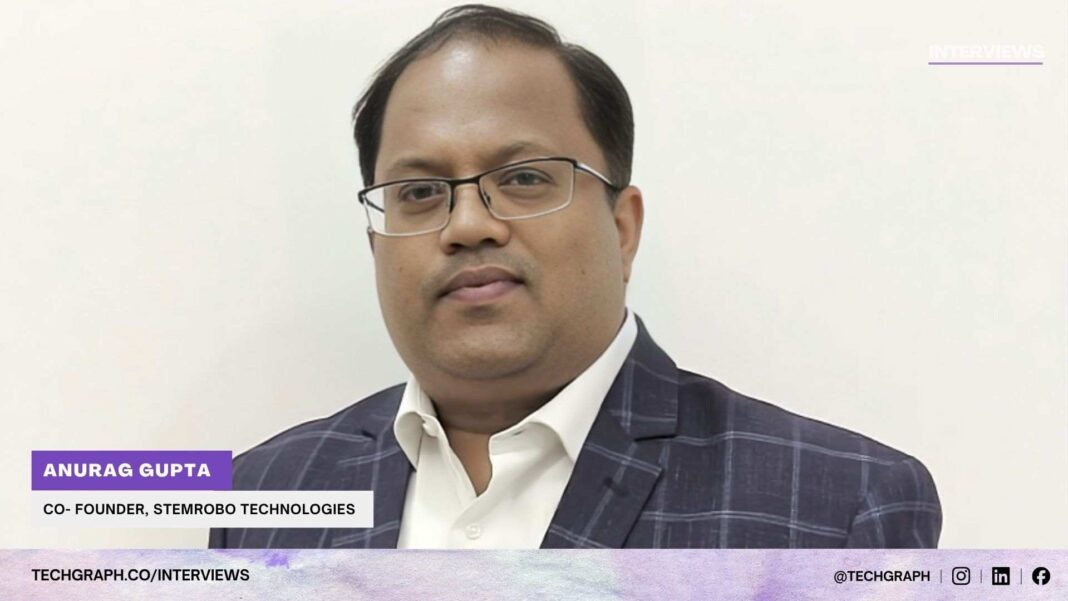
In an interaction with TechGraph, Anurag Gupta, CEO and Co-Founder of STEMROBO Technologies, outlined how robotics and AI are helping schools move beyond theory-heavy instruction toward hands-on learning that builds problem-solving, creativity, and logical reasoning from an early age, and how the company’s structured STEM programs bring real-world application into classrooms to prepare students for a technology-driven future.
He also spoke about STEMROBO’s focus on sustained adoption in schools, where ongoing support for teachers and engagement initiatives, as well as challenges and innovation showcases, ensure that students remain curious, motivated, and connected to learning well after their first exposure to new technologies.

Read the interview in detail:
TechGraph: How do you see the role of robotics and AI-based learning evolving in K-12 education, and what specific gaps do you think STEMROBO is addressing that traditional schooling systems often miss?
Anurag Gupta: From my perspective, Robotics and AI are no longer just an option; they are essential for transforming K-12 education from rote memorization to experiential, hands-on learning. These technologies help students build critical thinking, problem-solving, creativity, and logical reasoning right from an early age. Traditional schooling often emphasizes theory and standardized testing, leaving little room for applied learning or real-world skills.
At STEMROBO, we address this gap by providing structured yet practical STEM programs, including coding, robotics, and AI projects, where students can experiment, learn from mistakes safely, and innovate. Our goal is to combine theory with practical application so children don’t just understand concepts, they can actually apply them creatively, preparing them for a fast-changing technological world.
TechGraph: Many schools are still hesitant to fully integrate edtech due to infrastructure and teacher training challenges. How do you approach this resistance and ensure real adoption rather than surface-level implementation?
Anurag Gupta: In my experience, resistance in schools usually comes from infrastructure limitations and insufficient teacher training. At STEMROBO, we tackle this by offering complete, turn-key solutions: pre-configured STEM labs, online learning platforms, and thorough teacher training programs.
We focus on hands-on, outcome-driven implementation rather than simply installing technology. Continuous support, monitoring, and feedback ensure that adoption is measurable and sustainable. By showcasing real student achievements and classroom impact, we help school leadership understand the tangible value, encouraging long-term integration instead of superficial adoption.
TechGraph: With global conversations shifting towards future-ready skills, how do you balance the push for coding, AI, and robotics with the concern that not every student will pursue a STEM career?
Anurag Gupta: Not every student will pursue a STEM career, and that’s perfectly fine. However, coding, robotics, and AI cultivate transferable skills like problem-solving, logical reasoning, and creativity that benefit all learners.
At STEMROBO, we emphasize skill-building over career tracking, ensuring that even students outside STEM gain critical thinking, collaboration, and innovation skills. Our programs are interdisciplinary and inclusive, integrating with arts, humanities, and social sciences, making computational thinking and AI learning relevant and accessible for every student.
TechGraph: Edtech has experienced significant growth post-pandemic, but sustaining engagement remains a challenge. What strategies or innovations have helped STEMROBO maintain impact beyond the initial excitement?
Anurag Gupta: Sustaining engagement goes beyond novelty; it requires challenge, creativity, and relevance. At STEMROBO, we maintain long-term impact by combining hands-on robotics, coding challenges, AI projects, and gamified learning experiences. Regular competitions, hackathons, and innovation showcases encourage students to apply their skills beyond the classroom. Personalized learning paths and progress tracking allow students to see growth, while teacher mentoring keeps learning meaningful. By turning students into active creators rather than passive learners, we keep curiosity alive and engagement consistent.
TechGraph: Partnerships with schools often face the challenge of aligning with national curricula and boards. How do you ensure your solutions remain flexible yet structured enough to fit diverse educational ecosystems?
Anurag Gupta: Our approach at STEMROBO is to complement, not replace, existing curricula. Programs are flexible yet structured, mapped to STEM learning outcomes and competency frameworks, and modular enough to fit any school timetable or board requirement. We work closely with educators to ensure content aligns with local goals, and adaptive learning paths allow teachers to adjust pacing and difficulty. This ensures students gain practical, future-ready skills while schools remain fully compliant with curriculum standards.
TechGraph: As data-driven learning is gaining traction in education. How do you leverage technology to personalize learning while keeping the human side of teaching and mentoring intact?
Anurag Gupta: Technology helps us track student performance, identify gaps, and create personalized learning paths. But human guidance is equally crucial. Teachers and mentors interpret data, encourage students, and foster creativity, ensuring emotional and social growth alongside academic progress. At STEMROBO, we combine data insights with hands-on mentorship, giving students the guidance they need while keeping them motivated, confident, and inspired.
TechGraph: Looking ahead, where do you see the next major shift in K-12 edtech, and how is STEMROBO positioning itself to lead rather than follow that change?
Anurag Gupta: The next big shift in education will be AI-driven adaptive learning, immersive AR/VR experiences, and interdisciplinary skill integration. Schools will focus on creativity, problem-solving, and experiential learning over rote knowledge. At STEMROBO, we are preparing for this future by investing in AI-powered learning platforms, robotics innovation labs, and teacher training programs. Our mission is to help schools not just adopt technology but create future-ready learners capable of innovating, adapting, and thriving in a rapidly evolving world.