

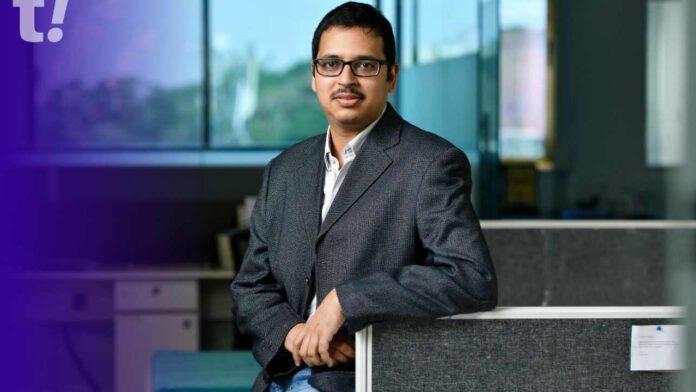
Inclusive Credit Access: Snapmint’s Abhineet Sawa On Expanding Access to Credit Beyond Defaults

Date:

Trending

- Advertisement -

In an interview with TechGraph, Snapmint Co-founder Abhineet Sawa discussed the company’s approach to offering credit to individuals with thin credit histories while managing risk effectively, and more.

Read the complete interview:

- Advertisement -

TechGraph: What sets Snapmint apart from other EMI-based consumer financing solutions in the market?

Abhineet Sawa: Of the 550 Mn PAN card holders in India, only 45-50 Mn have access to credit. We are trying to change who can borrow. Hence, we offer credit to people with thin credit, new to credit, Gen Z (where credit penetration is even bleaker), and even housewives. Our approval process is set up to give you a 2-minute hassle-free approval process. Our documentation process is minimal.

- Advertisement -

Since RBI has licensed us, we have access to data archives where we can pull a user’s credit history without heavy paperwork. The key differences are (a) everyone with PAN/Aadhaar is welcome as long as they are not defaulters (b) we approve everyone on the fly in a 2-minute process (c) Most products on the Snapmint network have a no-cost EMI with absolutely no hidden charges.

TechGraph: How does Snapmint ensure that its customers can make timely EMI payments and avoid defaulting on their loans?

Abhineet Sawa: Firstly, we do not accept customers who have (a) a history of defaults or (b) are overburdened by non-Snapmint EMIs. We have timely EMI set-up reminders for our customers. We also allow customers to set up automated EMI payments. This can help customers stay on top of their payments without reminders. Beyond this, we have advanced data science-based in-house fraud prevention methods to prevent malicious intent.

- Advertisement -

TechGraph: How does Snapmint work with retailers and e-commerce platforms to offer financing options to customers?

Abhineet Sawa: We are present on 500+ brands as of now. Many of them are also available on our EMI store. Retailers/ Merchants know that credit drives commerce. Most brands focus on (a) penetrating beyond metros and GenZ (b) increasing order values and (c) cutting down COD/RTO costs. Snapmint is a strong lever in its marketing/growth toolkit for the above objectives.

We integrate with e-commerce and payment infrastructure solutions. This enables brands to live fast. In some cases within a 15-minute call. Brands then promote Snapmint on their ads and product pages along with other offers they can leverage to boost customer affordability and purchase intent.

TechGraph: How does Snapmint decide whether to approve or reject a customer’s EMI-based financing application?

Abhineet Sawa: Snapmint is on a mission to give credit to people ignored by financial incumbents. This means that people with thin credit or no credit histories are also given credit on Snapmint.

However, we reject sub-prime customers or people with high ongoing EMIs relative to their incomes. Essentially, subprime borrowers are people who default on their payments. This is in the most beneficial interest of the customers as it shields them from excess EMIs.

TechGraph: How does Snapmint manage the risks associated with offering financing options to customers, and what measures are in place to protect both the company and its customers?

Abhineet Sawa: As stated earlier, we do not give loans to people we identify as subprime or people who already have high ongoing EMIs relative to their incomes. Credit cards give you a minimum amount you can pay to avoid paying it entirely for the month. That is called revolving credit. We do not incentivize customers to revolve. They have to make the full amount. We believe in incentivizing early payments. Our customers get extra benefits for paying early.

We protect the company’s objective interests by caring for our customers with our transparent policies. We also believe in diversifying our merchant and customer portfolio. Our merchants are from different categories and price points so our customers can get EMI on as many brands as they want. We also focus on repeat EMI purchases from paying customers. Since we are an RBI-licensed NBFC, we report customers that default on us to the credit bureau and the majority of customers do not want to spoil their credit scores for obvious reasons.

TechGraph: How does Snapmint balance the need to provide affordable financing options to customers with the need to generate revenue and maintain profitability as a business?

Abhineet Sawa: Snapmint charges its merchants who subsidize the customer’s needs. 80% of our customers take no-cost EMIs which means we do not earn revenue from them. We also do not charge late fees or hidden payments to them. Some customers choose to pay interest if they choose a longer loan term on certain higher-value purchases. However, we are transparent about all charges to our customers

TechGraph: With the rise of digital payments and alternative financing options, how does Snapmint see the market for EMI-based financing evolving in the future?

Abhineet Sawa: In the past few years, internet usage and online purchasing have increased in India. This means that customer adoption of EMI financing and such has improved overall. However, reaching new customers, especially beyond metro cities was always a challenge. Gen Zs are just entering the workforce which means credit penetration is less prevalent in this segment. A new generation of D2C and startup services are trying to solve that problem to increase customer adoption. They aim to make these purchases easy and smooth for the Indian audience.

Additionally, the RBI has invested in digital payments and lending, such as KYC setup and account aggregators post-COVID. We hope that with governmental institutions’ backing, the digital lending platform will be more advanced in the upcoming years.

TechGraph: What steps is Snapmint taking to ensure its financing options are transparent and easy to understand?

Abhineet Sawa: Snapmint believes transparency is a critical pillar of business. RBI also mandates clear communication of the Most Important Terms and Conditions, which we follow. Our terms and conditions and privacy policy are shared with customers so they understand our working terms. As mentioned above, we do not believe in hidden charges. We also do not charge late payment fees to our customers. This is all so that our customers can trust us and we can build a brand they can trust.

TechGraph: Finally, what are the company’s plans for expansion and growth in the near future? How does it see itself evolving to meet changing customer needs and market demands?

Abhineet Sawa: We aim to reach a broader audience by making us available across all categories. We are currently partnered with 400+ merchants and our team is working to bring more on board every day so we can have better visibility. Snapmint always works to shorten and smooth our processes. We offer no-cost EMI on products of all price ranges. We are also extending our options to multiple ways to buy from us- NACH, UPI, Net Banking, etc.

THE SNAPSHOTS

Sign up to get quick snaps of everyday happening, directly in your inbox.

We don’t spam! Read our privacy policy for more info.

- Advertisement -
Krishna Mali
Krishna Mali
Founder & Group Editor of TechGraph.

More Latest Stories

More Articles

From vineyard to bottle: How blockchain improves trust and sensing in the wine value chain

The wine sector faces increasing consumer demand for transparency, authenticity, and reliable information about production methods, grape origin, sustainability, and ethical practices. Many of...

Why India’s Next Cloud Boom Is Coming from Tier-2 Cities

Historically, the story of India's cloud adoption has been focused on the metro cities such as Bengaluru, Mumbai, Delhi NCR, and Hyderabad. These cities have been the leaders in early cloud migrations due to a high concentration of global IT companies, large enterprises, and...

Is India Ready for a Smart Treasury? A Look at Adoption Barriers and Opportunities

Across India, businesses hold thousands of crores in current accounts that earn no interest....

Fraud or Finance? How to Identify Trustworthy Digital Lending Platforms

Digital lending has changed how credit flows in India. According to the IBEF, fintech-led...

Choosing glass for perfume bottles? Watch for breakage and leaks

You want your perfume bottle to look great and arrive safely. That’s easiest when...

How To Use Tech To Aid Your Financial Management

Financial management and tech actually go hand in hand really well, and it’s important...

Creator Commerce Platform Wishlink Secures $17.5 Mn in Series B round

India-based creator commerce platform Wishlink has raised $17.5 million in a Series B funding...

Brazil and South Korea Sign Stragetic Deals Across Trade, Health & Tech

In a move aimed at strengthening economic and strategic ties, Brazilian President Luiz Inácio...

What Modern Enterprises Can Expect from CPaaS Platforms in 2026

Over the past two decades, enterprise communication technology has advanced rapidly. Yet the gap between what platforms are capable of delivering and what enterprises...

Amazon India Opens 1.1 Million Sq Ft Campus in Bengaluru

Amazon announced the opening of its second-largest office in Asia with the launch of...

B2B Logistics platform Mojro Draws $3Mn for IAN Alpha Fund & Others

Bengaluru-based B2B logistics platform Mojro has raised $3 million in a Series A funding...

Scaling Industrial Automation: Delta Electronics’ Dr. Sanjeev Srivastava on Making Industry 4.0 Accessible for India’s MSMEs

Speaking with TechGraph, Dr. Sanjeev Srivastava, Head of Industrial Automation at Delta Electronics India,...

Inflection Point Ventures leads INR 4 Cr seed round in Fintech Startup Roopya

West Bengal based no-code ‘lending-as-a-service’ platform Roopya has raised INR 4 Crore in a...

LTM partners with the Indian Institute of Creative Technologies to strengthen creative technology skilling

LTM, a Larsen & Toubro Group company, and the Indian Institute of Creative Technologies (IICT) announced a five-year strategic partnership to build industry-aligned capabilities...

Business Structure for Modern Entrepreneurs: What No One Explains Clearly

Modern entrepreneurs often obsess over product-market fit while neglecting the structural bones of their business. A brilliant idea is only as resilient as the legal and organizational framework supporting it. Without a clear architecture, rapid growth leads to administrative chaos rather than sustainable prosperity....

How Drone and LiDAR Surveys are Redefining Railway and Highway Project Execution

India’s railway and highway networks rank among the largest and most transformative infrastructure systems...

How Union Budget 2026–27 Supports Small Logistics Players through TReDS and the SME Growth Fund

Union Budget 2026–27 marks a decisive shift in how India supports its small logistics...

What Buyers Are Looking For in the Real Estate Market

Buying a home is about more than just square footage and location—it’s about feeling...

Budget 2026: Strategy, Stability, and the Shift to Execution

The Union Budget of 2026 is not a document that hunts headlines. It is...

Union Budget 2026 Reactions: Tech Sector Welcomes AI Focus, Sees Cloud Tax Incentives as Boost To India’s Digital Growth

India’s Union Budget for 2026, presented on Feb 1 by Nirmala Sitharaman, further integrated...

Budget 2026: FM Nirmala Sitharaman Cuts Customs Duty on Personal Imports, Cancer Drugs Among 17 Medicines Exempted

India Union Budget 2026: The Indian government has reduced the customs duty rate on...

BTC to USDT: How to Convert Bitcoin to Tether Safely and Accurately

Looking to exchange BTC to USDT? With market volatility continuing to shape the crypto...

Simple Home Upgrades That Boost Property Value and Curb Appeal

Homeowners often seek affordable ways to increase property value and appeal to buyers. While...

Platform-Led Homebuilding: WeHouse CEO Sripad Nandiraj on How On-Demand Construction Is Reshaping India’s Housing Market

Speaking with TechGraph, Sripad Nandiraj, Founder and CEO of WeHouse, discussed how home construction...

Scaling Industrial Automation: Delta Electronics’ Dr. Sanjeev Srivastava on Making Industry 4.0 Accessible for India’s MSMEs

Speaking with TechGraph, Dr. Sanjeev Srivastava, Head of Industrial Automation at Delta Electronics India,...

Union Budget Focus on MSMEs: Why Efficient Warehousing Is the Missing Link

The Union Budget 2026–27 places Micro, Small, and Medium Enterprises (MSMEs) firmly at the...

Union Budget 2026: Solar & Clean Energy Industry Draws Mixed Reactions on Manufacturing, KUSUM Funding & Import Duty Exemptions

The solar and clean energy sector has welcomed Union Budget 2026–27 for its focus...

Union Budget 2026 Reactions: Healthcare Sector Welcomes Biopharma and Infra Push, Calls Public Health Investment Modest

The healthcare and healthtech sector welcomed the Union Budget 2026 for its focus on...

Boost Your Home’s Value and Comfort

Enhancing your home isn’t just about making it look beautiful—it’s about increasing comfort, functionality,...

Inflection Point Ventures leads INR 4 Cr seed round in Fintech Startup Roopya

West Bengal based no-code ‘lending-as-a-service’ platform Roopya has raised INR 4 Crore in a...

Simple Home Upgrades That Boost Property Value and Curb Appeal

Homeowners often seek affordable ways to increase property value and appeal to buyers. While...

3 Things to Consider When Looking to Buy a Car

Buying a car is a big decision, whether it is your first vehicle or...

Platform-Led Homebuilding: WeHouse CEO Sripad Nandiraj on How On-Demand Construction Is Reshaping India’s Housing Market

Speaking with TechGraph, Sripad Nandiraj, Founder and CEO of WeHouse, discussed how home construction...