

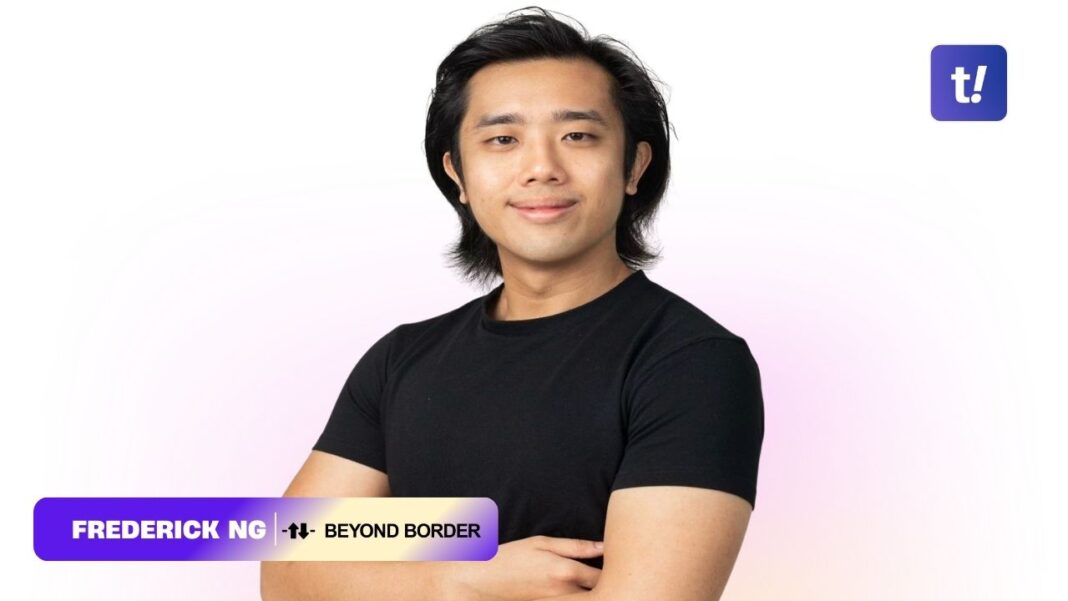
Speaking with TechGraph, Frederick Ng, Co-founder of Beyond Border, discussed how many venture-backed founders often find themselves constrained by restrictive and poorly understood U.S. immigration pathways, and how the company is helping entrepreneurs reassess their traditional H-1B dependence in favor of more suitable options, such as the O-1 visa.
He also discussed how Beyond Border works across immigration strategy, company incorporation, and financial setup to help Indian founders establish a compliant and structured business in the US market.

Read the interview in detail:
TechGraph: The global immigration ecosystem has been slow to evolve despite the rise of remote work and borderless entrepreneurship. What fundamental inefficiencies or policy blind spots convinced you there was room for a technology-led disruptor like Beyond Border?
Frederick Ng: The U.S. remains the world’s main hub for innovation and entrepreneurship, but the immigration infrastructure that powers innovators’ pathway to the U.S. remains archaic and not well understood.
In my past role as a VC, I have time and again seen entrepreneurs who aim to bring their innovation to the U.S. stuck with difficult immigration situations because of a lack of understanding of poor lawyers, and badly defined immigration pathways – worst yet, wrong visa choices that limit their stay and the extent of work they can do in the US.
As an example, we found that most entrepreneurs, especially venture-backed founders, are eligible for the Einstein visa (O-1 visa), which grants unlimited extensions. Founders today are still very much stuck with the increasingly unfriendly H1-B visas.
TechGraph: You describe Beyond Border Global as an alternative route for Indian technologists and founders seeking international opportunities. How are you positioning the platform to move beyond visa facilitation and into enabling long-term global career and business mobility?
Frederick Ng: There are still lots of problems to be solved in making high-skilled immigration visas easier to access and better understood.
That said, in our experience in consulting and working with hundreds of entrepreneurs every month, we found that there are important adjacencies like company formation and bank account setup that are hand in hand with visa success and provide a “soft landing” for Founders as they launch their US endeavors.
In the medium to long term, we need to provide an integrated experience that combines these puzzle pieces with visa success to create an all-in-one U.S. launch infrastructure to truly achieve a seamless, streamlined experience for U.S. mobility for entrepreneurs and their teams.
TechGraph: Immigration remains deeply fragmented and politically sensitive. What role does data play in anticipating shifts, and how are you using intelligence or predictive modeling to keep users ahead of regulatory changes?
Frederick Ng: Immigration data and different pathways’ success rates are closely tracked and intimately linked to the visa outcomes we drive for our entrepreneurs.
We keep a clean data infrastructure to track different immigration cases, their backgrounds, and immigration outcomes of these by persona.
Through these data-driven works and our methodologies, we can clearly identify personas such as venture-backed founders, highly skilled artists, and skilled professionals with 5+ years of relevant, progressive experience in their technical field of expertise (e.g., STEM, mechanical engineering professionals) to have better odds at success.
Armed with this knowledge, our job-to-be-done is now to ensure that people who fit our user archetypes are better educated by us to understand the optimal visa pathways for them, and hopefully, we earn the trust and right to be their partner on the journey.
TechGraph: Beyond Border operates between Bengaluru and the United States. How do you maintain agility in product design and policy alignment across such different ecosystems?
Frederick Ng: Operating between Bengaluru and the U.S. is actually an advantage if you design for it properly.
India is where we see a strong talent pool with clients sharing lots of ambition and velocity to make their move in the U.S. The U.S. is where we stay in sync with regulatory interpretation and execute on our clients’ institutional expectations of us. Our job is to translate between the two—culturally, legally, and strategically.
We stay agile by keeping our product modular- our legal capacities are regulatory understanding stemming from our U.S. presence, where we bring best-in-class and in-country legal expertise to our clientele in India. Our GTM and educational content are completely geared to our India-centric clientele to help them make the move.
TechGraph: The recent changes to the H-1B framework have unsettled many Indian professionals. How are you guiding clients to adapt, and what alternative routes are you recommending?
Frederick Ng: The H-1B changes create uncertainty and the need to explore alternative high-skilled immigration pathways in the U.S., which we focus on Day 1.
For many high-impact professionals, the H-1B was never the best option; it was just the most familiar one. Today, the Trump administration’s new roles are pushing our clients to take a step back and ask a different question: Do I actually need to be dependent on a lottery or an employer?
For founders and senior technologists, routes like O-1, EB-1A, EB-2 NIW, and L-1 often offer more control, better timelines, and clearer paths to permanence—if approached correctly. Our role is to give people an honest assessment and help them transition away from fragile, short-term solutions toward more durable strategies.
TechGraph: Are you seeing Indian professionals diversify toward other innovation hubs like Canada, the UK, or the UAE, and how is Beyond Border supporting that shift?
Frederick Ng: Interestingly, despite all the noise around the U.S. immigration system, entrepreneurs and high-skilled talent continue to express a keen interest in moving to the U.S.
In our view, this ties to the fundamental strength of the U.S. as an innovation hub where relevant talent’s density remains the highest. Ultimately, it is the entrenched innovation ecosystem in the U.S. with best-in-class entrepreneurial talent and capital availability that deeply attracts Founders to build their ventures in the U.S.
For now, we are seeing more demand than we can serve from our core markets in India, and we have lots of work ahead of us to serve the deep pockets of entrepreneurial talent and interest to move to the U.S.
TechGraph: Do you see a future where startup teams or innovation clusters relocate together rather than individuals? How is Beyond Border preparing for that shift?
Frederick Ng: Yes, and it’s already happening quietly. Most of our clients move their Founders first to the U.S. to be the first ‘launcher’, then work with us to move their teams of launchers to the U.S. Case in point is a cross border startup hailing from India called SuperOps, where we earned the initial right to work with their Founder ane secured his O-1 visa, which promptly led us to work on the remaining visas for his other launchers to join him in setting up operation in the U.S.
This is a common pattern amongst venture-backed startups that need to move to the U.S. from customer pull or board expectations, which remain true and high U.S. intent even today.
TechGraph: Looking ahead, what is your long-term vision for Beyond Border Global as a business and as a catalyst for Indian global mobility?
Frederick Ng: Our goal is to build the most reliable immigration platform for high-skilled talent to move from the Global South to the Global North.
That means fewer people feeling trapped by visa categories, fewer founders delaying expansion because of paperwork, and fewer technologists gambling their future on systems that don’t reflect their contribution.
If we do our job well, Beyond Border won’t just help people move countries—it will help redefine how Indian entrepreneurs and technologists participate in the global innovation economy, with confidence, leverage, and long-term stability.