


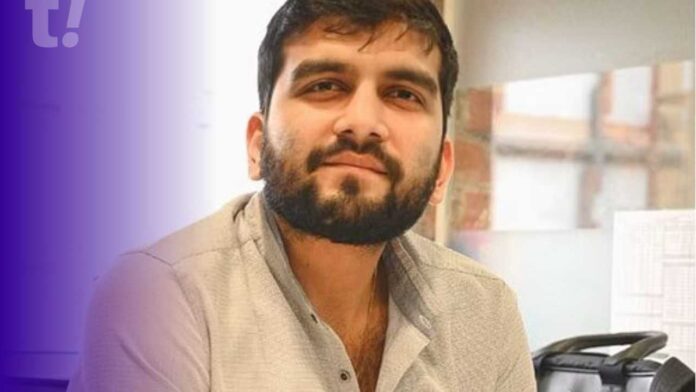

In our ongoing interview series, our editorial team today sat down with Last Journey’s CEO Rishabh Jalan, to understand how the company has adopted innovative strategies to address religious diversity and establish trust in funeral services, and how it is leveraging technology and media platforms for awareness and accessibility.
Read the complete interview below:
TechGraph: What inspired you to start Last Journey, and how do you aim to make a difference in the funeral services industry in India?
Rishabh Jalan: The genesis of Last Journey came as a response to a personal experience; I was attending the funeral of a close relative and I observed that in the middle of all the chaos to make appropriate arrangements for the last rites and other chores, grief got suppressed. Grief is a form of love, an overwhelming emotion; so, when it is obscured it takes a toll on people, often bursting out via negative manifestations.
Following this episode, I did extensive research on India’s funeral management industry; a common observation highlighted the severe lack of standardization, accountability, and local monopolies that exploited mourning families looking for something as simple as a freezer box or a mortuary ambulance.
Coming from a background in the wedding industry I knew how people responded to extreme emotions be they happy or sad; the experience of dealing with vendors also helped me to establish Last Journey; with the sole purpose of helping families grieve in peace and spend time with their close ones during a loss. For us to make a difference means to bring about a behavioral shift within the masses in terms of how they respond to death; the goal is to give them a direct point of contact so they do not feel lost when coping with a loss, and this will come with spreading awareness.
TechGraph: What are the unique challenges Last Journey faces in providing end-to-end funeral services, and how do you overcome them?
Rishabh Jalan: The fact that India has a massive population that comprises multiple religions and those religions further have their denominations and sub-denominations was intimidating for us at the beginning. The rest of the challenges were more or less a by-product of this fact. To address this we opted ahead with a city-wise demographic segmentation approach and tried to keep many things open-ended for the customer to take control of. This not only increased trust and transparency but also simplified last-mile operations.
Another set of challenges came in the form of informing people about the existence of such a facility so they can benefit from it. Technology caters to this big time; we leverage social and digital media space while also reaching people via traditional media platforms. Our focus is to build high levels of trust with people. This is because funerals are very sensitive and personal experiences for any family. Therefore, trust is of the utmost importance.
TechGraph: What steps does Last Journey take to ensure funeral services are conducted with dignity and respect for the deceased and their families?
Rishabh Jalan: We have a simple approach to ensuring every aspect of our service, right from the first call to the post-purchase experience is transparent, professional, and compassionate.
We understand the simple reality that during funerals no one wants to deal with complex procedures to get what is needed at the right time; since the last rites and following rituals are very time-bound. Therefore, our focus from the beginning has been to make our entire process direct. Furthermore, we have a very stringent SOP for our operations and panel vendors.
With an MoU with the Municipal Corporation of Delhi, we renovated two cremation grounds in Delhi. These crematoriums are equipped with heavy-duty chimneys, electronic and CNG incinerators and have provisions for using cow-dung logs instead of wooden logs. We ensure the hygiene and overall experience of the people visiting is more divine and peaceful.
TechGraph: How does Last Journey work with families to accommodate different cultural or religious practices during funeral services?
Rishabh Jalan: To accommodate different cultural and religious practices along with personalizations as per the traditional values and emotions that are unique to almost every family in India. A keen focus is kept on the overall smoothness of the process; keeping an open-ended front end wherein the family can select everything from the ‘pooja samagri’ to the ‘pandit’, even the type and color of flowers to be used in the decor has helped us be more flexible. Meanwhile, our back-end inventory and smart logistics enable customize demands.
TechGraph: How has the COVID-19 pandemic impacted the funeral services industry, and how has Last Journey adapted to changing customer needs?
Rishabh Jalan: The pandemic served as a wake-up call to not only the health and medical industry but also the death care industry; it became evident that a majority of cremations and burial grounds are in urgent need of infrastructural upgradations and stringent regulations must be put in place to avoid exploitation of mourning families in the hands of local vendors or priests.
Having a go at a reliable institution that takes prompt action with accountability and has standardized rates became the obvious choice for many. Owing to the large volume of queries we received, and the evident issue of crematoriums being overwhelmed with bodies, we deployed a data-driven slot allocation system via which our funeral care agents could give the most suitable crematorium details concerning its proximity and wait time.
TechGraph: What plans does Last Journey have for expanding its services to other parts of India?
Rishabh Jalan: We are already in six major cities across India. We are steadily growing our operations in more non-Metro cities.
We also provide international repatriation services to the US, UK, Canada, Australia, and many other countries. Last Journey has been accredited by The World Organization of Funeral Operatives.
TechGraph: What are the key factors you consider when selecting new locations for your services?
Rishabh Jalan: When selecting new locations for further expansion, we prioritize conducting a thorough market analysis to identify the potential demand for funeral services. We consider factors such as population size, demographics, cultural practices, and religious affiliations in the target location. By understanding the market, we tailor our services to meet the specific needs and preferences of the community, ensuring higher output quality.
We also assess the availability of infrastructure and facilities necessary to provide funeral services; factors such as crematoriums, burial grounds, transportation logistics, storage facilities, and preparation rooms are crucial to efficiently and effectively carry out services. In addition, we place great importance on adhering to legal and regulatory requirements.