


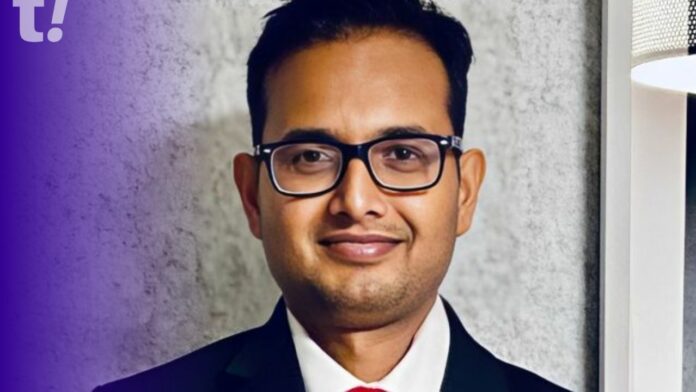

During the interview, Praveen Tiwari, Co-founder of Netsol Water discussed how the company is using advanced technologies like artificial intelligence (AI) and the Internet of Things (IoT) to enhance the efficiency and sustainability of wastewater (waste water) treatment systems in India.
Read the complete interview:
TechGraph: Can you provide an overview of the current landscape of wastewater treatment in India?
Praveen Tiwari: The current landscape of wastewater treatment in India reflects both challenges and evolving solutions. India is grappling with increasing urbanization and industrialization, which have led to a substantial rise in wastewater generation.
One of the major challenges is the inadequate treatment of this wastewater, with many treatment plants operating below capacity or not functioning optimally. India produces an astonishing 1.7 million tonnes of fecal waste daily.
Official statistics reveal that a significant 78% of this sewage is left untreated, being discharged into rivers, groundwater, or lakes. This has resulted in significant pollution of water bodies, impacting both human health and the environment.
The government has recognized the urgency of addressing this issue and has initiated various programs and policies to improve wastewater treatment infrastructure across the country. These efforts include the ambitious Namami Gange program, aimed at cleaning the Ganges River, and the Atal Mission for Rejuvenation and Urban Transformation (AMRUT) program, focusing on improving urban water supply and sewage infrastructure.
Private companies, like us (Netsol Water), also play a critical role in bridging the gap by offering innovative and efficient wastewater treatment solutions. The adoption of advanced technologies and sustainable practices is becoming increasingly important to address the pressing challenges of wastewater treatment in India and ensure the responsible management of this valuable resource.
TechGraph: How is NetSol Water contributing to addressing the wastewater treatment challenges in India?
Praveen Tiwari: At Netsol Water, our commitment to addressing wastewater treatment challenges in India is deeply ingrained in our mission and actions. We recognize the pressing need for effective and sustainable wastewater treatment solutions, given the growing urbanization and industrialization in the country. We actively contribute by designing and manufacturing state-of-the-art wastewater treatment plants that adhere to the highest quality standards and regulatory requirements.
Our specialized systems, such as sewage treatment plants, effluent treatment plants, and zero liquid discharge plants, are tailored to remove contaminants and impurities, ensuring that wastewater is treated to stringent standards. What sets us apart is our focus on not just treating wastewater but also enabling its safe reuse for purposes like gardening and horticulture, which conserves freshwater resources.
We have a customer-centric approach, providing comprehensive support, training, and maintenance services to ensure the long-term performance of our systems. Our dedication to innovation and sustainability aligns with the broader goals of addressing India’s wastewater treatment challenges and promoting responsible water resource management. Through our efforts, we aim to contribute positively to environmental preservation and public health in India.
TechGraph: Wastewater treatment often intersects with environmental and public health concerns. How does NetSol Water ensure that its solutions not only treat wastewater effectively but also meet Indian regulatory standards?
Praveen Tiwari: Netsol Water is deeply committed to addressing the intersection of wastewater treatment with environmental and public health concerns. We understand that effective wastewater treatment is not only essential for environmental sustainability but also critical for safeguarding public health. To ensure that our solutions align with Indian regulatory standards, we maintain a proactive approach to compliance.
Our team stays well-informed about the evolving regulatory landscape in India, allowing us to design and manufacture wastewater treatment systems that meet or exceed these standards. Rigorous quality control procedures are integrated into every phase of our operations, from initial design to installation and beyond.
We emphasize transparent communication with regulatory authorities, seeking their guidance and approvals as needed to ensure full compliance. Our post-installation support includes comprehensive training and maintenance services, ensuring that our systems continue to operate within regulatory parameters.
TechGraph: India’s industrial growth has significantly contributed to water pollution. What role does industrial wastewater treatment play in NetSol Water’s approach?
Praveen Tiwari: We recognize that industrial growth has been a major contributor to water pollution, and it’s imperative to manage and treat industrial wastewater responsibly. Our specialized solutions encompass a wide range of treatment plants designed specifically for industrial clients.
These include effluent treatment plants (ETPs), which efficiently treat and purify industrial effluents, ensuring compliance with environmental regulations.
Additionally, our zero-liquid discharge (ZLD) systems are particularly instrumental in reducing the environmental impact of industrial wastewater. These systems effectively eliminate liquid waste by recovering almost all water from wastewater, minimizing the discharge of pollutants into water bodies. This approach not only helps industries meet their sustainability goals but also reduces their environmental footprint.
Netsol Water’s emphasis on innovation and advanced technologies further enhances the effectiveness of industrial wastewater treatment. Our systems incorporate cutting-edge filtration, purification, and disinfection methods to remove contaminants and impurities from industrial wastewater, ensuring that it meets the required quality standards.
TechGraph: The urban-rural divide in India is quite pronounced. How do your wastewater treatment solutions cater to both urban centers and rural areas with varying infrastructural capacities?
Praveen Tiwari: Netsol Water recognizes the stark urban-rural divide in India and the varying infrastructural capacities in these regions. Our wastewater treatment solutions are designed to cater to both urban centers and rural areas, taking into account these differences.
In urban centers with more developed infrastructure, our systems are tailored to integrate seamlessly with existing facilities and can handle larger volumes of wastewater efficiently. We often work closely with municipal authorities to ensure our solutions align with their urban development plans and regulations. On the other hand, in rural areas with limited infrastructure, our approach shifts towards simplicity and sustainability.
We offer decentralized and modular wastewater treatment solutions that are easy to install and operate, making them suitable for rural communities with varying infrastructural capacities. These systems can be adapted to smaller-scale requirements and are often used in rural schools, healthcare facilities, or smaller industries where centralized treatment may not be feasible.
TechGraph: Water scarcity is a pressing issue in India. How does NetSol Water’s approach to wastewater treatment align with water conservation efforts?
Praveen Tiwari: Netsol Water’s approach to wastewater treatment aligns closely with water conservation efforts, particularly in the context of addressing water scarcity in India. We recognize that water is a finite and precious resource, and our commitment to sustainability is at the core of our mission.
Our wastewater treatment solutions go beyond mere purification; they are designed to maximize water recovery and reuse. A prime example is our focus on Zero Liquid Discharge (ZLD) systems, which effectively eliminate liquid waste by recovering nearly all water from wastewater.
This not only minimizes the environmental impact of waste disposal but also conserves water resources. By treating wastewater to a quality suitable for reuse, especially for purposes like gardening and horticulture, we help reduce the demand for freshwater sources. Notably, our advanced technologies, such as reverse osmosis and ultrafiltration, are employed to ensure that treated water meets stringent quality standards. This enhances the potential for safe reuse in various applications, further contributing to water conservation.
TechGraph: The adoption of advanced technologies like artificial intelligence and IoT is transforming the wastewater treatment industry globally. How is Netsol Water incorporating these technologies into its solutions for the Indian market?
Praveen Tiwari: Netsol Water is fully aware of the transformative potential of advanced technologies like artificial intelligence (AI) and the Internet of Things (IoT) in the wastewater treatment industry, and we are actively incorporating these innovations into our solutions for the Indian market.
In our commitment to staying at the forefront of the industry, we have integrated AI and IoT into several aspects of our wastewater treatment systems. AI-driven monitoring and control systems are employed to enhance the efficiency and effectiveness of our treatment processes.
These systems enable real-time data analysis, allowing us to optimize treatment parameters, reduce energy consumption, and minimize operational costs.
IoT sensors are deployed to collect critical data from our treatment plants, providing insights into system performance, water quality, and maintenance needs. This data is then analyzed to make informed decisions and proactively address any issues, ensuring the seamless operation of our systems.
Moreover, the use of AI and IoT facilitates remote monitoring and control, enabling our clients to manage their wastewater treatment plants from anywhere, improving operational flexibility, and reducing the need for on-site personnel.
TechGraph: Quality control is crucial in wastewater treatment. How does Netsol Water ensure the quality of treated water and meet regulatory standards in India?
Praveen Tiwari: As aforementioned, Netsol Water ensures the quality of treated water and compliance with Indian regulatory standards through a multi-faceted approach. Our systems undergo rigorous quality control protocols at every stage of design and manufacturing. We remain updated with evolving regulations, collaborate with regulatory bodies, and maintain transparent communication.
Additionally, our post-installation support includes training and maintenance services to ensure ongoing compliance. Cutting-edge technologies such as reverse osmosis and ultrafiltration are integrated to meet stringent water quality standards. This comprehensive approach ensures that our wastewater treatment solutions consistently deliver safe and environmentally compliant treated water.
TechGraph: Lastly, what is the future of wastewater treatment in India, and how does Netsol Water plan to contribute to this evolving landscape?
Praveen Tiwari: The future of wastewater treatment in India holds promise. The estimated size of India’s water and wastewater treatment market in 2022 stood at approximately USD 1.56 billion. Looking ahead, during the forecast period spanning from 2023 to 2029, this market is anticipated to experience significant growth, with a projected Compound Annual Growth Rate (CAGR) of approximately 10.05%.
By 2029, it is expected to reach a market value of around USD 3.03 billion. As the nation grapples with growing urbanization, industrialization, and environmental concerns, the need for efficient and sustainable wastewater management is more crucial than ever.
Netsol Water aims to be at the forefront of this evolving landscape by continuing to innovate and expand our portfolio of wastewater treatment solutions.
Our commitment to water conservation will remain central to our mission, with a focus on maximizing water recovery and reuse. Through partnerships, education, and outreach, we will contribute to fostering a culture of responsible wastewater management, working towards a cleaner and more sustainable water future for India.