


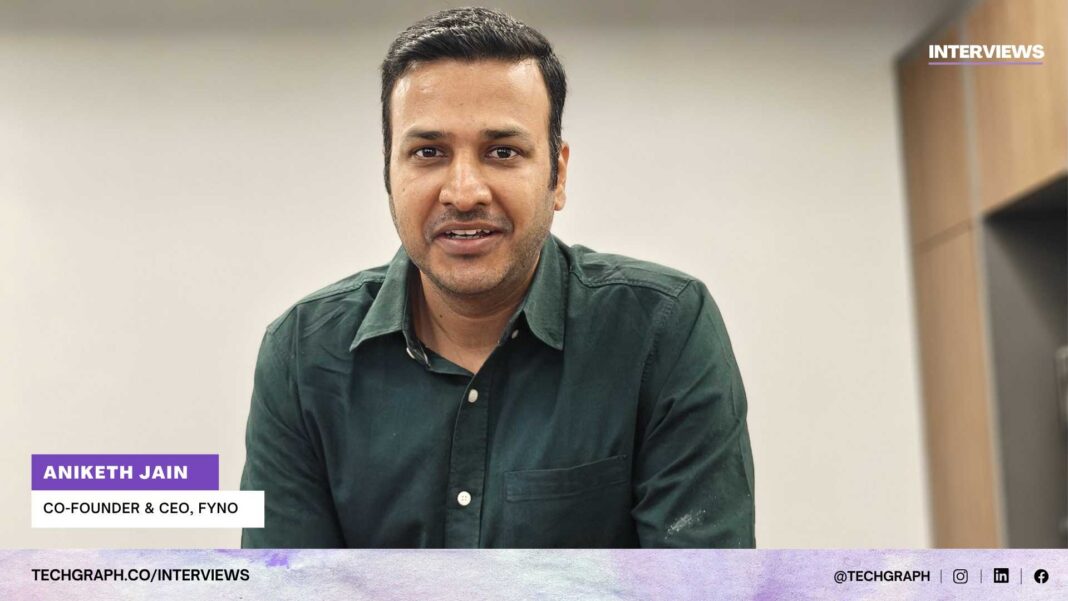
In an interview with TechGraph, Aniketh Jain, Co-founder and CEO of Fyno, discussed how critical messages like OTPs and fraud alerts demand near-perfect reliability and how Fyno’s intelligent communication hub ensures performance at scale through smart routing, automatic failover, and real-time monitoring across channels.
Jain further explained how the platform’s no-code workflows and adaptive channel logic ensure consistent message delivery, even during peak loads, allowing banks to maintain business continuity while optimizing costs and fostering trust in customer interactions.

Read the interview in detail:
TechGraph: Fyno positions itself as a purpose-built platform for financial institutions rather than a generic communication layer. What gaps in the existing ecosystem did you see that made you believe banks and NBFCs needed a specialized solution?
Aniketh Jain: Most banks and financial institutions rely on basic communication middleware, typically provided by their CPaaS vendors. These are often outdated, rigid, and offer limited control to internal teams. These middlewares are usually provided by vendors whose incentives are tied to messaging volumes, and their priorities rarely align with the institution’s need for compliance, security, or operational control.
There is little room for optimisation or innovation, making it difficult to respond to regulatory changes, fine-tune delivery strategies, or personalise communication. This leads to fragmented, error-prone, and non-compliant messaging, creating risk for the bank, friction for the customer, and growing overhead for internal teams.
Fyno changes this completely. It is purpose-built for regulated BFSIs to own their entire communication stack. From orchestration and compliance to observability and auditability, Fyno puts institutions in the driver’s seat, helping them stay compliant, respond to change faster, deliver consistent customer experiences, and build long-term trust.
We are already helping leading institutions, such as Karnataka Gramin Bank, LendingKart, TrueCredits, FlexiLoans, Protium, and 50 more, stay on top of the ever-evolving communication landscape. Beyond BFSI, we also support global brands like Freight Tiger and Vinculum. To help enterprises gain independence and own their communication stack, Fyno has raised $3.89 million in funding from 3one4 Capital and Arkam Ventures.
TechGraph: Compliance in customer communication is often treated as a backend checkbox rather than a real-time enabler. How does Fyno’s built-in regulatory enforcement change that narrative for both banks and their customers?
Aniketh Jain: Banks have always placed importance on staying compliant and empowering meaningful customer engagement. They want to ensure that every message respects privacy and user preferences. What often limits them is the infrastructure, which was not designed to enforce compliance in real time. This challenge has only grown as regulatory requirements evolve rapidly.
In such times, banks need a technology partner who understands both the regulatory nuances and the expectations of today’s customers. That is the role Fyno plays. Our platform embeds regulatory enforcement into every stage of the communication process, from template approvals and maker-checker reviews to delivery tracking and audit trails. Compliance is not an afterthought; it is deeply embedded in the communications infrastructure.
For banks, this means every message they send is compliant by design, reducing risk while giving them operational agility. For customers, it means greater confidence that the communications they receive are relevant, timely, and respectful of their choices. This is how compliance moves from being a back-end requirement to becoming an active enabler of better customer engagement.
TechGraph: Many financial institutions struggle with vendor lock-ins or fragmented CPaaS integrations. How does Fyno’s orchestration and smart routing approach give them real freedom and control?
Aniketh Jain: Vendor lock-in and multiple CPaaS integrations can slow down banks, fragment their communications, and increase dependence on select vendors. Fyno takes a vendor-agnostic approach with 100+ provider integrations accessible right out of the box via a single unified API. This means banks can switch vendors or add new ones without reworking code or disrupting systems, giving them both flexibility and stronger leverage in vendor negotiations.
Fyno’s intelligent communications hub provides full observability through comprehensive dashboards that report vendor performance, delivery metrics, usage analytics, and costs in real-time. Because reconciliation with providers and triggering systems is built in, billing becomes accurate, transparent, and auditable.
Our orchestration platform includes a no-code workflow builder, conditional routing logic, automatic failover, template and preference management, and maker-checker approval flows. These together streamline operations, improve deliverability, reduce engineering overhead, and help deliver consistent, compliant communication to customers. In effect, Fyno transforms what used to be fragmented CPaaS integrations into an agile, future-proof communication stack under the bank’s control.
TechGraph: Deliverability is often taken for granted until critical messages like OTPs or fraud alerts fail. How does Fyno’s design ensure near 100 percent reliability at scale without compromising speed or cost efficiency?
Aniketh Jain: Deliverability is critical, especially for messages like OTPs or fraud alerts. Fyno ensures near-100% reliability at scale without compromising speed or cost. Our platform ensures reliability through smart channel and vendor routing, retries, and automatic failover, maintaining steady performance even during peak loads. All of this is available out of the box in a single intelligent communications hub, so banks do not need to build or maintain complex systems.
With no-code omnichannel workflows & conditional logics, a message can automatically move from SMS to WhatsApp, email, or another channel if delivery fails. Everything is managed in a no-code environment, allowing teams to design, adapt, and manage communication strategies quickly without relying on engineering.
Every message is fully traceable from trigger to delivery, giving banks real-time visibility into vendor performance and communications health. For banks, this means reliable and efficient operations. For customers, it means critical messages always reach them on time, without disruption.
TechGraph: Consent management is becoming a defining issue with the rise of data privacy regulations. How does Fyno balance regulatory obligations with customer experience so that communication doesn’t feel intrusive?
Aniketh Jain: Fyno is purpose-built to help enterprises, particularly banks and financial institutions, navigate India’s rapidly evolving regulatory landscape with clarity and control. Fyno captures, stores, and enforces consent and preferences in real time, at a user level, and these are stored in user profiles. Every message is automatically validated for compliance, ensuring communications are opt-in, policy-aligned, and audit-ready by design.
At the same time, this makes interactions more customer-friendly by filtering out irrelevant or unsolicited messages, so customers only receive communication they prefer. User preferences can be managed centrally through a unified dashboard.
Fyno also keeps enterprises aligned with global privacy frameworks such as GDPR and SOC II. With zero data storage, encrypted logs, and end-to-end observability, banks get full transparency and control. Compliance teams can adapt faster to regulatory changes, reducing risk while building customer trust. In this way, Fyno turns compliance into a positive, respectful experience for customers and a strategic lever for BFSI enterprises.
TechGraph: Beyond compliance and efficiency, what role do you see Fyno playing in helping financial institutions use communication as a competitive differentiator in customer trust and engagement?
Aniketh Jain: Beyond compliance and efficiency, customer experience is becoming a competitive differentiator for banks and financial institutions, and customer communication is one of the most important parts of it. With Fyno, enterprises can transform their communication infrastructure into a driver of customer experience.
Apart from consent and preference management, our platform helps banks get more value from the channels they already use while also making under-utilised investments, such as their own app, more effective. With smart orchestration and routing, channels like push notifications or in-app messages can work alongside SMS, WhatsApp, or email to create a unified experience for customers across touchpoints. This not only improves engagement but also opens avenues for cross-sell and up-sell. And all of this can be achieved through a single platform.
Fyno also helps banks tap into modern and high-engagement channels such as WhatsApp and RCS. By orchestrating these channels alongside traditional ones, banks can connect with customers where they are most active, ensure higher response rates, and make their communication strategies future-ready without adding complexity.
In today’s environment, where gaining and retaining customers is increasingly difficult, excellent customer communication becomes a moat. When banks deliver messages that are timely, relevant, and seamless, they build trust, deepen engagement, and strengthen loyalty. Fyno enables this without the need to replace existing systems or make major investments, giving banks full control to turn customer communication into a strategic advantage.
TechGraph: Looking ahead, how do you envision the communication landscape for financial institutions evolving in the next three to five years, and where does Fyno fit into that future?
Aniketh Jain: I think in the next three to five years, communication for financial institutions will become far more customer-centric, compliant, and data-driven. Consent and preference management will sit at the heart of every interaction, with customers expecting banks to respect their choices across all channels in real time. At the same time, high-engagement channels like WhatsApp, RCS, and in-app messaging will become mainstream alongside SMS and email, and banks will need to deliver a consistent and comprehensive customer experience across them.
Institutions will have to move away from fragmented systems and build a single source of truth for communications. Customer communication will no longer be limited to transactions but will become a way to build trust, strengthen engagement, and deepen customer relationships.
Fyno is built for this future. We provide a vendor-agnostic, compliance-first platform that unifies every channel into one intelligent communications hub, giving banks real-time observability, orchestration, and no-code workflows. More importantly, Fyno is a technology partner that walks hand in hand with banks, equipping them to stay prepared for the future and helping them turn communication into a long-term strategic advantage.