

Beyond eSignatures: SignDesk’s Krupesh Bhat On Document Automation & Diverse Market Penetration

Date:

Before Article Content · 728×90
Advertise Here

Trending

- Advertisement -

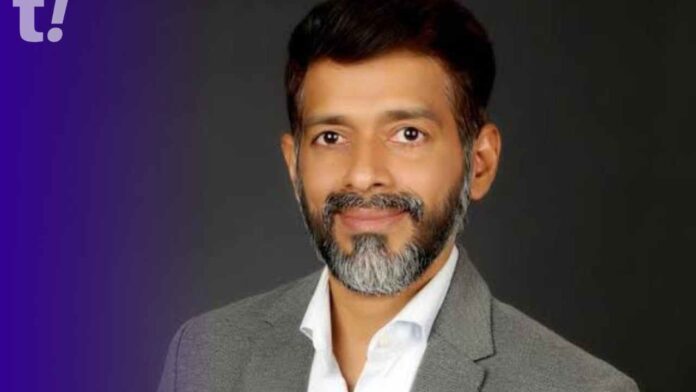
In an interview with TechGraph, Krupesh Bhat, Founder of SignDesk, discusses how their document automation platform is disrupting the e-signature market by offering comprehensive document generation, collaboration, and verification capabilities, attracting clients beyond e-signatures alone.

Read the complete interview:

TechGraph: How does SignDesk differentiate itself from other e-signature solution providers in the market, and what unique features or capabilities does your platform offer to meet your customers’ diverse needs?

Krupesh Bhat: While we’re known for our E-Signature and digital stamping solutions, it’s the capabilities of our document automation platform that sets us apart from anyone else in the game. Clients come on board for the e-signatures and stay for the end-to-end digital documentation. Once on our platform, clients can create templates & use content libraries to scale up document generation, collaborate on documents online, negotiate contracts, store documents, track process status, verify various types of photo IDs, and of course electronically sign and stamp documents.

Consolidating different functionalities into one neat package has allowed us to widen the scope of our product, build more use cases, and upsell to onboarded clients.

However, our E-Signatures themselves can hold their own in the market – our signature workflows are scalable to accommodate growth in operations, we offer group signatures & video signatures for low-tech environments, and we’ve fully embraced the low-code mantra with custom building blocks for users to create their workflows. Our customers need robust & scalable workflows to experience the full benefits of digital transformation, and with SignDesk this is exactly what they’re getting.

- Advertisement -

TechGraph: Can you elaborate on the industries or sectors where SignDesk’s e-signature solutions have been particularly successful, and what strategies have you employed to penetrate and cater to those specific markets?

Krupesh Bhat: Our initial target segment was the BFSI sector, as it’s heavily regulated and non-compliance is a serious business risk. We’ve seen a lot of success with banks, NBFCs, AMCs, and insurers; but this was expected as we were among the first on the scene & could build trust rapidly.

The best strategy to beat the competition when catering to BFSI is to showcase the reliability of your product and focus on the results you can generate for your clients, this came through for us. Apart from this segment, we’ve also seen a lot of success with FMCG & retail.

We attribute this to the efficiency factor – we’ve built our solutions to not only enhance compliance but also boost productivity for processes like documentation, ID verification, contract management, negotiations, etc. This comes in handy for retailers who need to manage complex supply chains & keep track of lots of vendors and contractors.

TechGraph: In an increasingly competitive e-signature market, how does SignDesk ensure the security and reliability of its platform, and what steps do you take to maintain customer trust and data privacy?

Krupesh Bhat: Data security has indeed emerged as a key differentiating factor in SaaS, especially fintech & RegTech. Both consumers & companies now expect strong privacy safeguards when doing business. SignDesk has always prioritized the notion of digital trust by adhering to the most comprehensive data privacy protocols.

- Advertisement -

We’re among the only companies in the compliance space to achieve enhanced GDPR compliance. Recently, we’ve complied with over 10 international certifications for information & cyber security. These include ISO, CCPA, FERPA, Graham-Leach-Billey, and NIST.

We have the protocols and posture in place to safeguard financial data, health information, personally identifiable information, educational information & all types of sensitive data.

TechGraph: Could you share any insights into the challenges or obstacles SignDesk has faced during its journey, and how you have overcome them to achieve your current market position?

Krupesh Bhat: The technology we build is pretty reliant on the word of the law. Our E-Signature & KYC solutions need to function as prescribed by regulation, but the latter is frequently subject to change. These sorts of shifts in the legal landscape have often left us at sea, an example would be when Aadhaar was declared invalid for use by private sector banks about half a decade ago.

However, SignDesk could fall back on the revenue generated by our other solutions to tide things over. It’s also important to look for opportunities while facing such challenges, for us this took the form of figuring out what else in documentation we could automate. We eventually landed on Nach-based payments, and now our eNach solution is among our biggest earners.

TechGraph: As technology and customer expectations evolve, what are the upcoming trends or developments in the e-signature industry that SignDesk is closely monitoring or actively working on to stay ahead of the curve?

Krupesh Bhat: A good rule of thumb to stay ahead of the curve when it comes to digitization is to focus on what’s convenient. The industry is always trying to build features & use cases that make getting things done easier. Presently it’s all about creating an intuitive and seamless experience for users (i.e. signers). E-Signatures for mobile devices are big right now and we’re building features to make things more user-friendly like drag-and-drop functions, no-code and low-code orchestration, ecosystem integrations, and more.

Users are looking for new forms of authentication, biometrics are especially popular. We’re also building new forms of authentication to anticipate user needs.

Additionally, we’re focused on low-tech use cases, with an eye on rural and semi-urban environments. For this, we’ve built video signatures, where Text-to-Speech capabilities are used to read out contract clauses to signers in vernacular languages, and a video of the signer providing verbal consent is recorded as the signature.

TechGraph: Could you discuss any plans for expansion or partnerships that SignDesk has in the pipeline, both domestically and internationally, to further strengthen its presence and reach a wider customer base?

Krupesh Bhat: We’ve won a few big partnerships in the USA and UAE, and we’ll be looking to strengthen these and expand our presence in those markets. Recently we’ve also partnered with Microsoft to provide cloud-based E-Signatures, contract management & ID verification; we expect this to bring in a lot of prospects, too.

THE SNAPSHOTS

Sign up to get quick snaps of everyday happening, directly in your inbox.

We don’t spam! Read our privacy policy for more info.

- Advertisement -
Krishna Mali
Krishna Mali
Founder & Group Editor of TechGraph.

More Latest Stories

More Articles

The Responsiveness Economy: DashLoc’s Sumit Singh on Redefining Customer Conversations with AI

Speaking with TechGraph, Sumit Singh, Co-Founder & CEO of DashLoc, discussed how businesses are increasingly shifting their focus beyond digital discoverability toward real-time customer...

How Generative AI Could Reshape Airline Distribution and Travel Retailing

Airline distribution is entering a new phase. For decades, the industry has relied on a framework built around fares, schedules, and availability. That model still matters, but it is no longer enough on its own. Airlines are now expected to retail more intelligently, present...

How AI Is Quietly Turning Interior Design into a Predictive Science

Predictive science uses historical data, behavioral trends, simulations, and machine learning models to predict...

AI That Serves: ImpactAI Foundry’s Arjun Balaji on Making Artificial Intelligence Accessible for Nonprofits

Speaking with TechGraph, Arjun Balaji, Co-Founder and Programme Director of ImpactAI Foundry, discussed how...

Human-in-the-Loop: Why AI in Education Still Needs the Professor

Generative AI is rapidly entering classrooms, boardrooms, and training programs. Yet a critical question...

Why Indian Men Are Quietly Moving Away From Fast Fashion

When a man opens his wardrobe, stares at a rail of clothes, and realises...

Why Indian Business Still Runs on Spreadsheets and WhatsApp for Treasury

India is home to one of the world's fastest-growing fintech ecosystems, projected to reach...

The New Age of Digital Assets: How Blockchain Is Redefining Financial Inclusion

Innovation is changing the nature of economic participation and making it more inclusive, especially...

How AI Is Building India’s Next-Generation Emergency Mobility Infrastructure

Imagine this. A customer is stranded on the roadside due to a vehicle breakdown and raises a request for assistance. In a traditional roadside...

The Efficiency Gap That Will Reshape Finance by 2030

Here is the number that should be keeping every CFO awake right now: 97%...

The rise of tier-2 GCCs: How digital infrastructure is redefining India’s technology talent map

For the better part of two decades, India's Global Capability Centre (GCC) story was...

Rethinking Executive Search: Venator Search Partners’ Deepraditya Datta on Leadership Hiring in a Changing Talent Market

In an interview with TechGraph, Deepraditya Datta, Founder and Managing Director of Venator Search...

Nexchain AI Sets Mainnet and Presale Token Launch in Motion With Final $0.06 Access

Nexchain AI has entered a decisive 2026 build phase as its launch roadmap moves...

The Role of Predictive Technology in Creating Sustainable Infrastructure Ecosystems

Infrastructure development today is no longer just about building faster or expanding bigger. The conversation is gradually shifting towards building infrastructure that is sustainable,...

The Reliability Equation: Trev Mobility CEO Naveen Gupta on Building Trust in Premium Electric Ride-Hailing

During an interview with TechGraph, Naveen Gupta, Founder & CEO of Trev Mobility, highlighted why customer expectations in premium mobility are increasingly shifting beyond vehicle availability and pricing toward service consistency and travel experience, and how this shift is creating opportunities for operators that...

Nexchain Publishes New Roadmap as $0.06 Token Stage Continues

Nexchain has unveiled its updated development roadmap, providing the community with a clearer view...

Why Startups Are Turning to Virtual CFOs for Smarter Growth

​For a long time, finance leadership in startups followed a predictable path. Founders managed...

The Detroit Region’s Role in Modern Global Supply Chains

As global commerce continues to expand its reach, the Detroit region has emerged as...

The Importance of Keeping Up to Date With Auto Maintenance

Auto maintenance is one of the most important responsibilities that comes with owning a...

PatexOne: Could This Platform Be Smarter Than Your Impulses?

Australian investors are used to platforms that shout about leverage and “opportunity”. PatexOne takes...

The HiPCO Advantage: NoPo Nanotechnologies’ Gadhadar Reddy on Scaling SWCNT Manufacturing for Emerging Industries

Speaking with TechGraph, Gadhadar Reddy, Co-Founder and CEO of NoPo Nanotechnologies, discussed how manufacturing...

Why Resume-Based Hiring Is Failing India’s Workforce

India needs a shift from credential-first hiring to skill-first validation

Why BFSI Is Moving from AI Experiments to AI Systems

For the past few years, Artificial Intelligence in banking, financial services, and insurance has...

From Intuition to Analysis: How AI Is Becoming Every CEO’s Second Brain

Most CEOs are making important decisions with partial information. The challenge is not just...

Rethinking Executive Search: Venator Search Partners’ Deepraditya Datta on Leadership Hiring in a Changing Talent Market

In an interview with TechGraph, Deepraditya Datta, Founder and Managing Director of Venator Search...

“Budget should focus on reducing taxes on capital gains,” Says Abhishek Gupta of Hex N Bit

Speaking in the upcoming Union Budget 2021, Abhishek Gupta, Founder, and CEO, Hex N...

“China is a Global thief” Rep. Tom Rice on Uyghur Forced Labor Prevention Act

Speaking at the House on Uyghur Forced Labor Prevention Act, Rep. Tom Rice (R-SC)...

Why Players Buy LoL Boost and How the Process Works

If you’re researching why players buy lol boost, you’re usually trying to understand two...

CasinoBonusesFinder UK: how filters, Telegram alerts and real bonus matching work in practice

Anyone who has spent serious time on casino bonus hunting knows the drill. You...

Nexchain AI Sets Mainnet and Presale Token Launch in Motion With Final $0.06 Access

Nexchain AI has entered a decisive 2026 build phase as its launch roadmap moves...

Key differences between a burner phone & prepaid phone

You may have heard both terms mentioned when it comes to protecting your identity....

Alphabet Discloses $2.14 Billion in Public Equity Holdings as of June 30

Alphabet Inc. disclosed $2.14 billion in equity securities held across 39 positions as of...

India to generate $100 bn from telephonic investments

India expects to attract $100 billion in investments in the telecom sector, a union...