


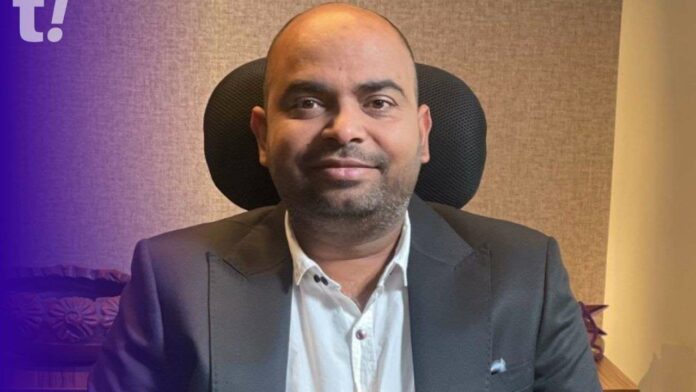

In this interview, Arvind Balan, Co-Founder & CEO of, Maxperience on the company’s data-driven approach to experiential marketing, and the secrets behind Maxperience’s most iconic marketing campaigns and their impact on brand recognition.
Read the complete interview:
TechGraph: Can you tell us about how Maxperience implements experiential marketing in its strategies and how it differentiates from other forms of marketing?
Arvind Balan: At Maxperience, we believe in creating engaging experiences for consumers that not only showcase our client’s products or services but also create memorable moments that consumers will associate with the brand.
We implement experiential marketing by creating events, activations, and immersive brand experiences that allow consumers to interact with the brand in a meaningful way, all the while keeping auto and motorsports at the core. With large-scale motoring events, we can create opportunities for customers to experience the thrill and excitement of a performance vehicle firsthand.
Another key aspect of our approach is personalization. We understand that each customer is unique and has different preferences and interests. Therefore, our experiential marketing efforts are tailored to resonate with specific target segments. By understanding their needs and desires, we can design events that speak directly to them and create a sense of personal connection.
Moreover, experiential marketing, by its very nature, places a greater emphasis on this personal or emotional connection that consumers have with the brand, which is one of the key factors that differentiates it from other forms of marketing.
Further, at Maxperience, we are committed to staying up-to-date with the latest trends and technologies in experiential marketing, and we work closely with our clients to develop customized strategies that meet their unique needs and goals. By constantly innovating and evolving our approach, we strive to create experiences that not only differentiate our clients from their competitors but also resonate with consumers and drive business results.
TechGraph: What are some of the most successful marketing campaigns that Maxperience has executed in the past and what was the impact of these campaigns on the brand?
Arvind Balan: One of the experiential marketing campaigns that we loved doing was for Hero MotoCorps The Hero Dirt Biking Challenge (HDBC). It was a first-of-its-kind event and the scale was humongous where we got more than 100,000 participants from all across India. While conducting the various stages of the competition over 40 cities in 25 states.
The highlight was that we created an entire sports village, also known as a Bivouac, for the final stage of the event. Challenged with no electricity, water & road connectivity, and a large team of organizers & participants that needed temporary residence, we managed to pull it off rather successfully!
Another campaign that was quite interesting because of the different ways we adopted to execute it was the one for ‘Suzuki Hayabusa Day’. We celebrated the day with around 300 Hayabusa owners and enthusiasts, wherein we organized simultaneous rides covering 7 major Indian cities like Bengaluru, Delhi, Jaipur, Mumbai, Pune, Surat & Kolkata.
The experiential campaign allowed us to connect with the direct consumers of the brand in an impactful way, inviting them into a sort of community, hence retaining them as loyal customers.
TechGraph: How does Maxperience measure marketing effectiveness? How does it use this data to inform future marketing strategies?
Arvind Balan: At Maxperience, we understand the importance of measuring marketing effectiveness to ensure that our efforts are delivering the desired results and to inform our future marketing strategies. We employ a comprehensive approach to measure the effectiveness of our marketing initiatives, utilizing both quantitative and qualitative metrics.
One of the key quantitative metrics we use is data analytics. We track and analyze various data points such as website traffic, social media engagement, conversion rates, and sales numbers. By closely monitoring these metrics, we gain insights into the performance of our marketing campaigns and initiatives. We can identify which channels and strategies are driving the most significant results and allocate our resources accordingly.
But being an experiential marketing agency, our larger focus is on key performance indicators (KPIs) that are specific to each marketing campaign or physical initiative.
In addition to quantitative metrics, we also value qualitative feedback from our customers. We collect feedback through surveys, focus groups, and customer interviews to understand their perceptions, experiences, and satisfaction levels. This qualitative data provides valuable insights into the emotional impact of our marketing efforts and helps us gauge the effectiveness of our brand experiences.
Our approach is iterative and adaptive. We continuously monitor the performance of our marketing initiatives and make adjustments based on the data and insights we gather. We believe that by leveraging data and feedback, we can continually enhance our marketing strategies, deliver better experiences to our customers, and achieve our business goals.
TechGraph: How does Maxperience balance the need for a memorable experience for consumers with the need to achieve measurable marketing goals such as increased brand awareness or sales?
Arvind Balan: For us, the two are intrinsically linked.
When the consumer intends to buy a high-performance vehicle, the comprehensive experience around the said performance becomes the core of it all. That is how the consumers practically understand the key aspects of the product, that is how happy, adrenaline-filled memories are made, and in turn, favorable opinions for the brand are created.
Moreover, we have witnessed that having first-hand experienced the performance of the product in a safe yet adventurous environment, people are more likely to become avid advocates of the brand and become long-term loyalists of it.
All of these positive associations end up driving measurable business goals in one way or another. So, our focus is on delivering the best possible experience to the customers with the product or the brand at the center.
TechGraph: In a digital world where many marketing campaigns are executed online, how does Maxperience incorporate offline experiences into its marketing strategies? How does it create a seamless omnichannel experience for consumers?
Arvind Balan: Over the last decade or so, digital has become a hotspot for marketing and advertising activities, and rightly so. Reaching out to a large audience with a targeted message has never been easier. And each new digital technology offers something new to experiment with. However, the end goal of most digital marketing efforts is still to drive results in the offline world.
We live in the real world, we consume most of the products and services we buy in the real world, and we experience them in the real world, so the purchase experience can’t be solely in the digital one. This is why e-commerce websites have a considerable return window, to allow the consumers a preliminary experience of the product before committing to it. This is why we scan through the customer reviews, to base our purchase decision on other people’s experience.
The significance of the offline experience is heightened in the case of certain products. While buying a performance vehicle, for instance, one can’t be expected to buy it without experiencing its performance. This is where we come in. With a strategic mix of online and offline marketing activities, we aim to create a seamless experience for the consumers, where digital enhances their purchase journeys, but the star is the performance-driven physical activations.