


spot_img

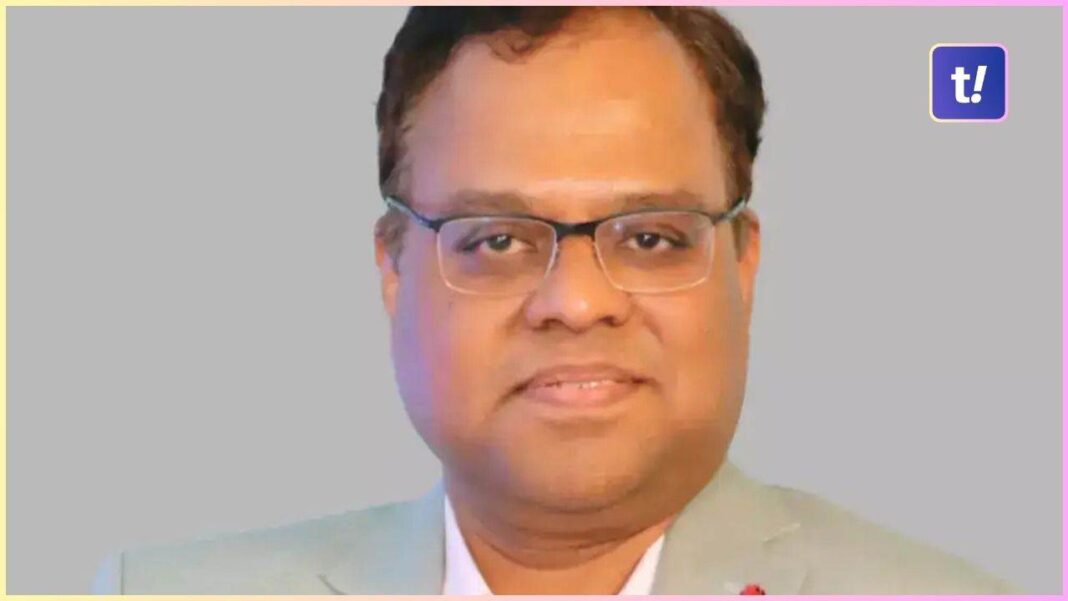
Decimal Point Analytics CEO Shailesh Dhuri On Improving India’s Healthcare Ecosystem With AI

Date:

Trending

In a conversation with TechGraph, Shailesh Dhuri, Co-founder and CEO of Decimal Point Analytics, spoke about the company’s focus on backend healthcare transformation through data-driven intelligence, where AI models are being applied to optimize medical stock planning, hospital operations, and emergency response workflows.

- Advertisement -

Dhuri also explained how Decimal Point is addressing patient data fragmentation using semantic layers and NLP-driven structuring, while enabling frontline workers through AI-generated nudges delivered in local languages to improve care delivery in underserved regions.

Read the complete interview:

- Advertisement -

TechGraph: In the context of healthcare, where stakes are incredibly high, how is AI and machine learning changing the way data is not just analyzed but trusted by clinicians and decision-makers?

Shailesh Dhuri: In healthcare, trust is everything. When a doctor is making life-or-death decisions, they cannot just rely on some black-box algorithm. What we should aim for is to make AI models that can explain their reasoning. Like when an AI system predicts 30-day readmission risk, it doesn’t just say “high risk”, it shows which factors are contributing. Maybe the patient’s haemoglobin is dropping, maybe they missed the last two follow-ups, maybe their age and comorbidities are creating risk. This transparency is what builds confidence. Also, we should always validate our models with local data; what works in the best hospital in Mumbai may not work the same way in a rural PHC.

TechGraph: There’s often a gap between raw health data and actionable insight. How is Decimal Point Analytics using AI and machine learning to bridge that gap in a way that goes beyond dashboards and reporting tools?

Shailesh Dhuri: You know, having dashboards is like having a speedometer in a car, it tells you speed but not where to go. What AI does differently is what I call “nudge systems.” For example, in maternal mortality prediction work, one doesn’t just show risk scores. The system automatically sends SMS to ASHA workers saying, “Please visit Sunita tai tomorrow, her BP reading needs checking.” As this is actionable. We can also use natural language generation to convert complex analytics into simple Marathi or Hindi messages that frontline workers can understand and act upon.

- Advertisement -

TechGraph: We often hear about AI improving diagnostics or treatment personalization, but how exactly is AI and machine learning reshaping back-end healthcare operations in ways that directly impact patient outcomes?

Shailesh Dhuri: Backend operations are where real impact happens, but nobody sees it. Take drug inventory management, using AI to predict demand patterns means essential medicines don’t go out of stock, potentially reducing stockouts by 60% just by analyzing prescription patterns and seasonal trends. Another example is bed allocation optimization. The ML model considers patient acuity, expected discharge times, cleaning schedules, everything. This reduces wait time in the emergency department, which directly saves lives.

TechGraph: One challenge in healthcare data is its fragmentation across silos and formats. What’s your take on how AI can work through that complexity without compromising on accuracy or compliance?

Shailesh Dhuri: This fragmentation is the biggest headache! Patient data is scattered everywhere – paper files, different EMR systems, lab reports in PDF, X-rays in DICOM format. What we can do is create what we call a “semantic layer”, think of it like a universal translator. We can use NLP to extract information from unstructured sources, standardize using FHIR protocols, but always keeping PHI compliance intact. The key is to never compromise on data quality, garbage in, garbage out, as they say.

TechGraph: We hear a lot about predictive analytics, but in healthcare, there’s also a big need for explainability. Can AI make data analytics more transparent and, if so, how are you seeing that play out in real-world use cases?

Shailesh Dhuri: In healthcare, explainability is not a luxury; it’s a necessity. We can use techniques like SHAP values and attention mechanisms to show exactly why a model made certain predictions. But more important is presenting this in a clinician-friendly way. Instead of showing feature importance graphs, we can create clinical narratives, “Patient risk increased because of a combination of rising creatinine (kidney function) and irregular medication adherence pattern detected in pharmacy refill data.” This can connect with how doctors think.

TechGraph: From your experience working across industries, what’s unique about applying AI in healthcare compared to, say, financial services, and what lessons transfer well between the two?

Shailesh Dhuri: Having worked in both sectors, the main difference is in finance; if the model makes a mistake, you lose money. In healthcare, you might lose your life. So validation requirements are much stricter. Also, healthcare has more heterogeneous data – you cannot standardize the human body like you standardize financial transactions. But what transfers well is anomaly detection approaches. Fraud detection techniques we used in banking, we now apply for identifying unusual clinical patterns or potential medical errors.

TechGraph: Given the sensitivity and volume of healthcare data, what does transparency in AI-driven analytics truly look like in this space, and how does Decimal Point Analytics balance explainability with performance?

Shailesh Dhuri: This is always a tough balance. More explainable models, like decision trees, are easier to understand but may not capture complex patterns. Deep learning models are powerful but opaque. Our approach is ensemble; we use complex models for initial screening, then simpler models for final decision support. Also, we create “explanation interfaces” that provide different stakeholders with different levels of detail. CMO needs high-level insights, doctors need clinical reasoning, and data scientists need technical metrics. Same model, different views.

What I learned in my journey is that in healthcare AI, perfect is the enemy of good. Better to have an 85% accurate model that doctors trust and use than a 95% accurate model that sits unused because nobody understands it. Technology should enable our healthcare workers, not replace their judgment. That’s the philosophy we follow at Decimal Point Analytics.
THE SNAPSHOTS

Sign up to get quick snaps of everyday happening, directly in your inbox.

We don’t spam! Read our privacy policy for more info.

- Advertisement -

Support our independent journalism PayPal (Outside India) For PayU (For Indian Readers).

Krishna Mali
Krishna Mali
Founder & Group Editor of TechGraph.

More Latest Stories

More Articles

Meta Declares Quarterly Cash Dividend Of $0.525 Per Share

Facebook parent company, Meta Platforms Inc. (NASDAQ:META) said its board of directors has declared a quarterly cash dividend of $0.525 per share on its...

Lok Sabha: Government releases ₹68K crore under MGNREGS; wage payments routed via DBT

New Delhi, India: Union Agriculture Minister Shivraj Singh Chouhan said the government has released 68,393.67 crore rupees to states and Union Territories under the Mahatma Gandhi National Rural Employment Guarantee Scheme (MGNREGS) in the current financial year 2025-26. In a written reply in the Lok...

The Evolving Classroom: Venkateshwar International School’s Pooja Sharma on Changing Role of Schools in Delhi’s CBSE Ecosystem

Speaking with TechGraph, Pooja Sharma, Vice Principal of Venkateshwar International School (VIS), discussed how...

Digital Generics: How AI is Redefining the Future of Affordable Medicine

It was with pride that global headlines described India as the world's pharmacy, supplying...

Why NoSQL Databases Are the Future for Tech Startups

In today’s digital-first economy, tech startups continue to dominate the startup landscape. A startup...

Delhi IGI Airport Revamped Terminal 2 with Advanced Baggage screening systems

Delhi’s Indira Gandhi International Airport (IGI) has reopened its reconstructed Terminal 2, inaugurated by...

The Rise of the AI Agent Economy: How Voice AI Agents Are Becoming the New Frontline Workforce For Call Centers

The work inside a call center has always depended on two things: speed and...

The Road to Equality in Tech: Women In Cloud’s Chaitra Vedullapalli on Reshaping Opportunity for Women Entrepreneurs Globally

In an interview with TechGraph, Chaitra Vedullapalli, Co-Founder of Women In Cloud, discussed how...

Understanding What Makes Sunscreen Truly Effective

Many people pick a sunscreen merely based on its SPF, thus they think that a higher number means better protection. However, SPF is only...

How AI is Improving Risk Management Among Crypto Traders

Over the past few years, the role of Artificial Intelligence in almost every sector...

The AI Advantage: How Intelligent Learning Solutions Are Rewriting Workforce Productivity in 2025 and Beyond

In 2025, artificial intelligence is no longer a futuristic concept — it’s the invisible...

Bajaj Financial Securities Acquires Stake in Lemnisk from Early Investors

Bajaj Financial Securities has acquired stakes in Bengaluru-based customer data platform Lemnisk through a...

The Rise of Cyber Cartels: How the Dark Web Fuels Digital Extortion?

In 2025, cybercrime has evolved beyond individual hackers or little ransomware criminal gangs into...

AI Research Startup Redrob Draws $10 Mn In Series A Funding Led By Korea Investment Partners

AI research startup Redrob has secured $10 million in its Series A round led by Korea Investment Partners with KB Investment, Kiwoom Investment, Korea...

The Future Employability Equation: PrepInsta’s Manish Agarwal on How AI Is Reshaping Student Readiness for Hiring in India

Speaking with TechGraph, Manish Agarwal, Co-Founder of PrepInsta, discussed how the increasing adoption of AI-led assessments and automated hiring platforms is shifting campus recruitment away from reliance on pedigree and location toward a more merit-driven model that values consistency, analytical reasoning, and practical application...

Norovex Review: Inside the Trading Platform Gaining Momentum

The online trading industry has entered one of its most dynamic periods in years....

Why Zero Code Exposure Is the Future of Trust in AI

AI coding assistants have quickly become indispensable for developers, promising faster deployment, cleaner code,...

Trump Says He Will Sue BBC Over Edited Broadcast of Jan 6 Speech

US President Donald Trump has said he plans to take legal action against the...

Starbucks Baristas Rally in New York as Strike Over Pay and Staffing Extends Nationwide

Starbucks baristas rallied in New York City as part of an open-ended strike that...

Demystifying Private Equity Market: WWIPL MD Krishna Patwari on Expanding Retail Access to India’s Unlisted Ecosystem

Speaking with TechGraph, Krishna Patwari, Founder and Managing Director of Wealth Wisdom India Pvt....

The Aesthetic of Longevity: Aesthetica’s Tanisha Bansal Gokharu on Redefining Luxury Home Interiors

Speaking with TechGraph, Tanisha Bansal Gokharu, Founder and Principal Designer at Aesthetica, discussed how...

Empowering Creators: Studiobackdrops’ Archisman Misra on Making Professional Production Accessible Across India

Speaking with TechGraph, Archisman Misra, CEO and Founder of Studiobackdrops, discussed how India’s fast-growing...

Trade Gaia Emerges as a Key Player in Global Altcoin Trading

While Bitcoin continues to dominate headlines, the real growth in 2025 is coming from...

The Conversation Shift: Doceree CRO Thomas Shea on Making Healthcare Marketing More Relevant for Physicians

Speaking with TechGraph, Thomas Shea, Chief Revenue Officer (CRO) at Doceree, discussed how artificial...

Bajaj Financial Securities Acquires Stake in Lemnisk from Early Investors

Bajaj Financial Securities has acquired stakes in Bengaluru-based customer data platform Lemnisk through a...

Digit Life Insurance posts 31% rise in H1 FY26 revenue to ₹858 crore

India-based, Go Digit Life Insurance said its revenue for the first half of FY...

Debt Recovery Reinvented: Collectedge’s Ranjan Agarwal on Reshaping India’s Collections Ecosystem for Lenders

Speaking with TechGraph, Ranjan Agarwal, CEO and Co-Founder of Collectedge, discussed how India’s debt...

AI as a Growth Multiplier: How Smart Companies Accelerate Without Breaking

In today’s business environment, smart growth is just as important as any other form...

Beyond Price Points: Unix India’s Imran Kagalwala on Redefining Consumer Expectations in the Mobile Accessories Market

Speaking with TechGraph, Imran Kagalwala, Co-founder of Unix India, discussed how a crowded accessories...

The Rise of Cyber Cartels: How the Dark Web Fuels Digital Extortion?

In 2025, cybercrime has evolved beyond individual hackers or little ransomware criminal gangs into...

Trade Gaia Emerges as a Key Player in Global Altcoin Trading

While Bitcoin continues to dominate headlines, the real growth in 2025 is coming from...

How Fleet Maintenance Scheduling Supports Business Vehicle Performance

Managing a fleet of vehicles can be challenging for any business. From delivery vans...

The Conversation Shift: Doceree CRO Thomas Shea on Making Healthcare Marketing More Relevant for Physicians

Speaking with TechGraph, Thomas Shea, Chief Revenue Officer (CRO) at Doceree, discussed how artificial...