



The education and skilling sector has broadly welcomed the Union Budget 2026 for its sharpened focus on artificial intelligence, workforce readiness, and education-to-employment linkages. Industry leaders said the emphasis on AI-driven learning systems, modular skilling programmes, and continuous reskilling reflects a realistic assessment of how India’s future workforce must adapt to changing job requirements.
However, education experts also pointed out that implementation at the school level remains a key concern. With enrolment rates already above 90 percent, they stressed that improving learning quality, teacher readiness, and implementation at the classroom level will remain central to achieving long-term national goals, especially as India looks to build a sustainable K-12 public education and skill ecosystem by 2047.

Read the union budget reactions from experts and leaders in the education and skilling sectors in detail:
Anuj Vishwakarma, CEO – Higher Education Programs, upGrad
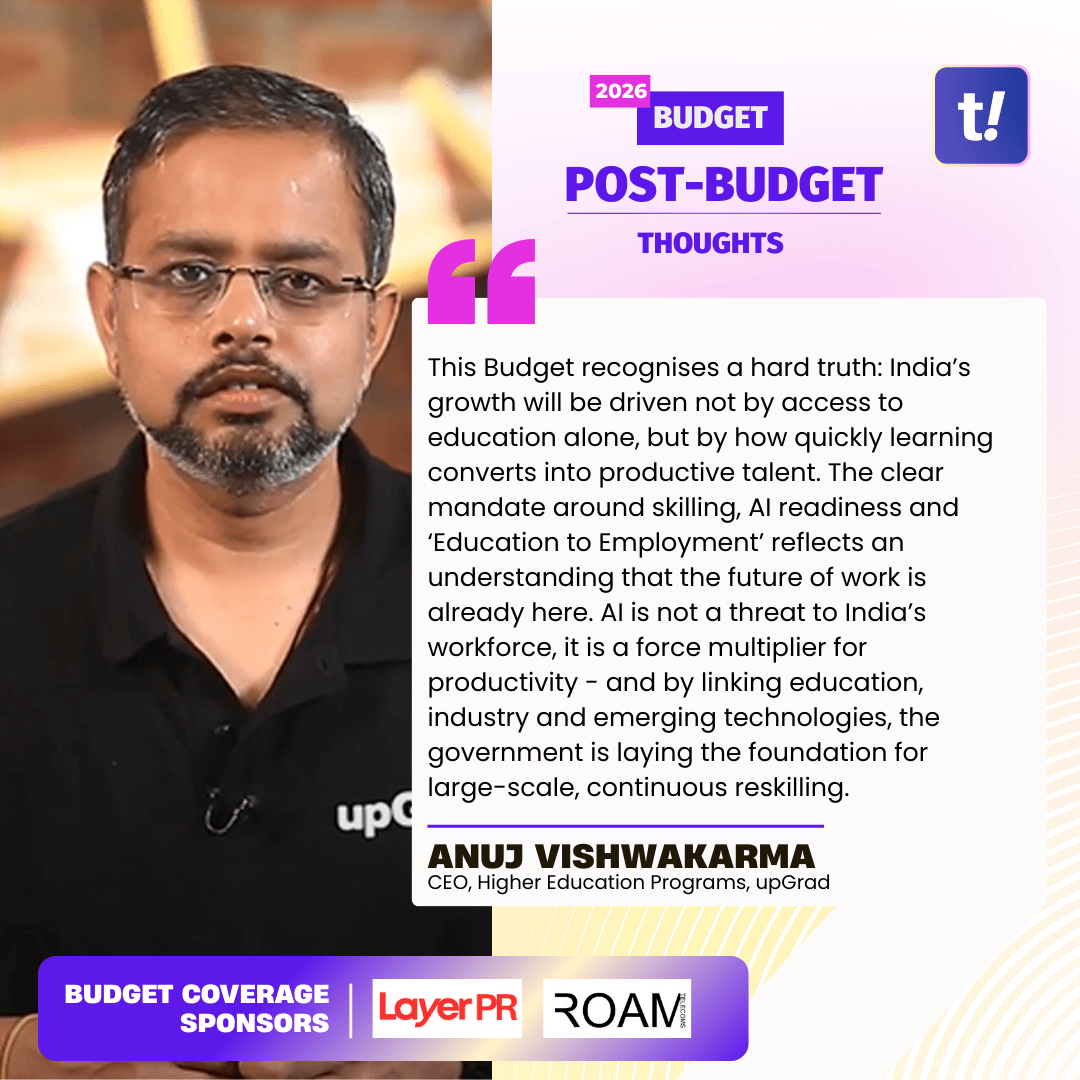
This Budget recognises a hard truth: India’s growth will be driven not by access to education alone, but by how quickly learning converts into productive talent. The clear mandate around skilling, AI readiness, and ‘Education to Employment’ reflects an understanding that the future of work is already here. AI is not a threat to India’s workforce; it is a force multiplier for productivity – and by linking education, industry, and emerging technologies, the government is laying the foundation for large-scale, continuous reskilling.
Interventions spanning farmers in the field, women in STEM, or even supporting professional bodies like ICAI and ICSI to design modular, short-term courses signal a decisive shift towards applied, outcome-led learning; it’s time we leap into the next phase of implementation to build talent pipelines.
Prof. Supriya Pattanayak, Vice Chancellor, Centurion University, Odisha

The 2026 Education Budget reflects a long-term, systems-level approach to building India’s future-ready education ecosystem. The focus on expanding higher education infrastructure through university townships, strengthening medical and pharmaceutical education, and creating a national network of accredited clinical trial centres will significantly enhance India’s research and healthcare capabilities.
Equally important is the emphasis on inclusion initiatives, such as girls’ hostels in every district, and the promotion of Indian-language digital learning will help bridge access gaps and improve participation from underserved regions. Investments in AI for schools and the expansion of Atal Tinkering Labs demonstrate a clear intent to embed technology, innovation, and problem-solving skills early in the education pipeline.
Together, these measures move Indian education beyond enrolment numbers towards outcomes -skilled talent, regional innovation hubs, and globally competitive institutions- positioning education as a central driver of India’s economic growth, healthcare leadership, and technological self-reliance in the years ahead.
Ashish Munjal, Co-founder & CEO, SUNSTONE

Union Budget 2026 takes a positive step towards making education more relevant to future careers and real-world opportunities. The focus on linking education with employment, supported by higher investment in the sector, reflects a clear intent to prepare students for evolving industry needs. Initiatives such as university townships near industrial hubs, new institutes in areas like pharma, design, and Ayurveda, and the expansion of creative and content labs will help students gain practical exposure early on.
Measures like a girls’ hostel in every district can significantly improve access and participation in higher education. The emphasis on AI, innovation labs, and Indian-language digital learning has the potential to make quality education more inclusive and future-ready. If implemented well, these steps can create stronger career pathways, encourage innovation, and build a skilled workforce aligned with India’s long-term growth ambitions.
Praneet Mungali, Educationist and Trustee at the Sanskriti Group of Schools, Pune

The Union Budget for 2026-27 represents a significant move towards the development of a future-ready education and skill ecosystem, in line with the vision of Viksit Bharat. The key highlights include the announcement of the Centre of Excellence in Artificial Intelligence for Education, which will require an outlay of ₹500 crore, with the objective of enhancing AI-based learning, infrastructure, and preparedness.
The budget also makes a proposal for content labs in 15,000 secondary schools and 500 institutions under the Indian Institute of Creative Technologies, Mumbai, to improve digital creativity and exposure. The continued focus on flagship programs such as Samagra Shiksha, PM-POSHAN, and PM-SHRI Schools, as well as other initiatives such as girls’ hostels in each district and BharatNet connectivity to government secondary schools, further reinforces access, inclusion, and digital equity. With enrollment rates above 90 percent, the emphasis now is on enhancing learning outcomes, teacher readiness, and successful classroom-level implementation.
Dr. Anand Achari, Principal, Vivekanand Education Society’s College of Architecture
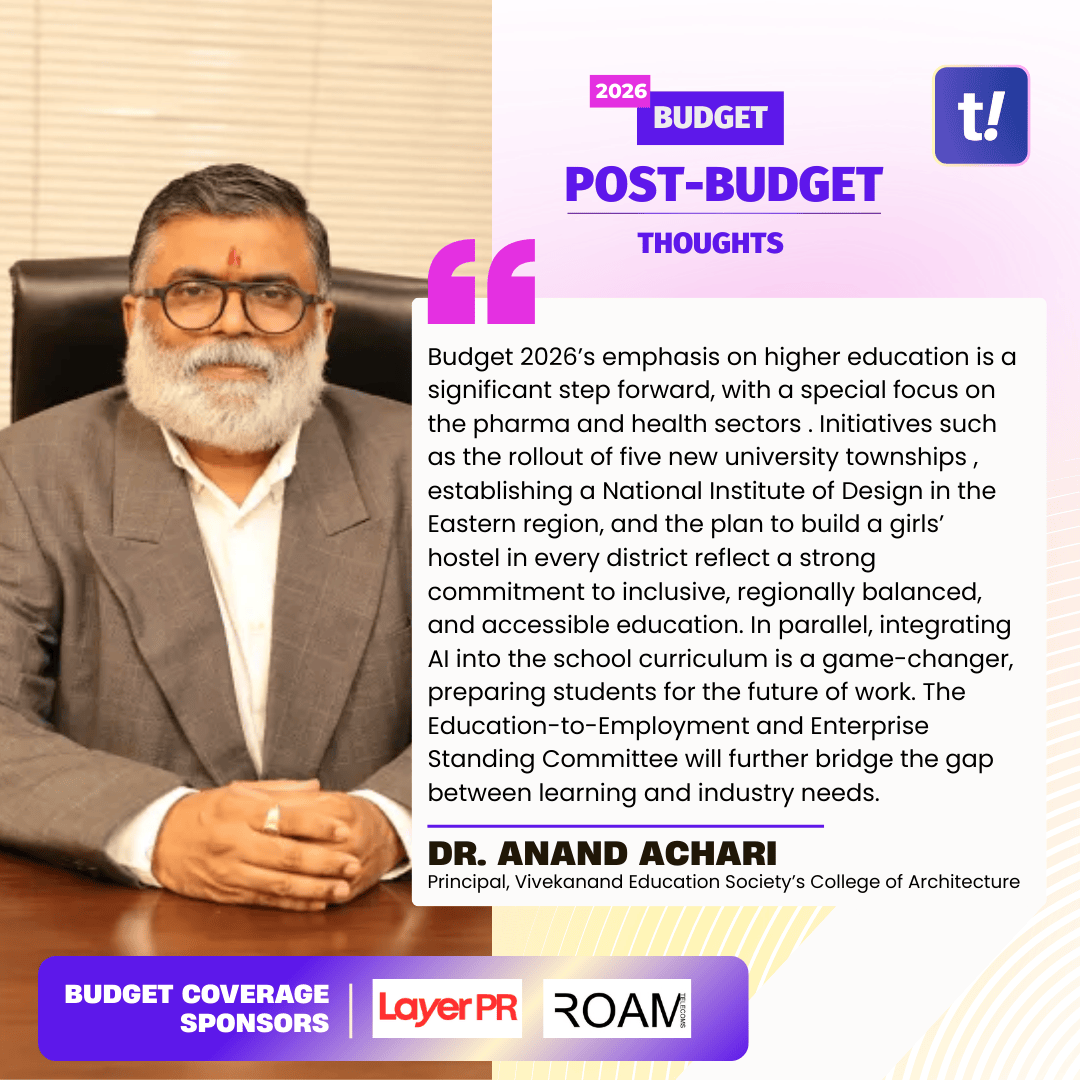
Budget 2026’s emphasis on higher education is a significant step forward, with a special focus on the pharma and health sectors. Initiatives such as the rollout of five new university townships, establishing a National Institute of Design in the Eastern region, and the plan to build a girls’ hostel in every district reflect a strong commitment to inclusive, regionally balanced, and accessible education.
In parallel, integrating AI into the school curriculum is a game-changer, preparing students for the future of work. The Education-to-Employment and Enterprise Standing Committee will further bridge the gap between learning and industry needs.
Sandeep Rai, Founder, The Circle
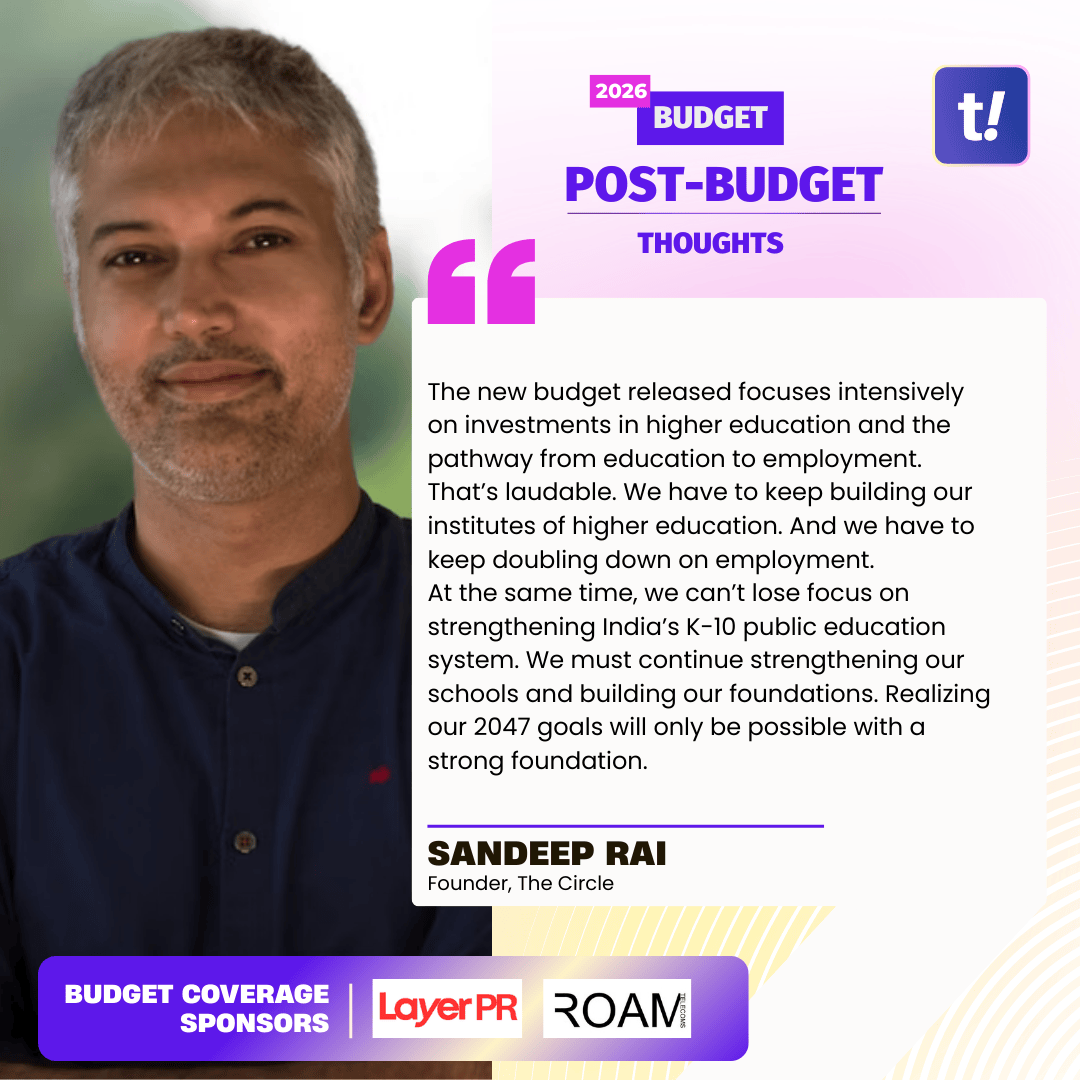
The new budget released focuses intensively on investments in higher education and the pathway from education to employment. That’s laudable. We have to keep building our institutions of higher education. And we have to keep doubling down on employment.
At the same time, we can’t lose focus on strengthening India’s K-10 public education system. We must continue strengthening our schools and building our foundations. Realizing our 2047 goals will only be possible with a strong foundation.
Vishnu Manchu, Pro Chancellor, Mohan Babu University
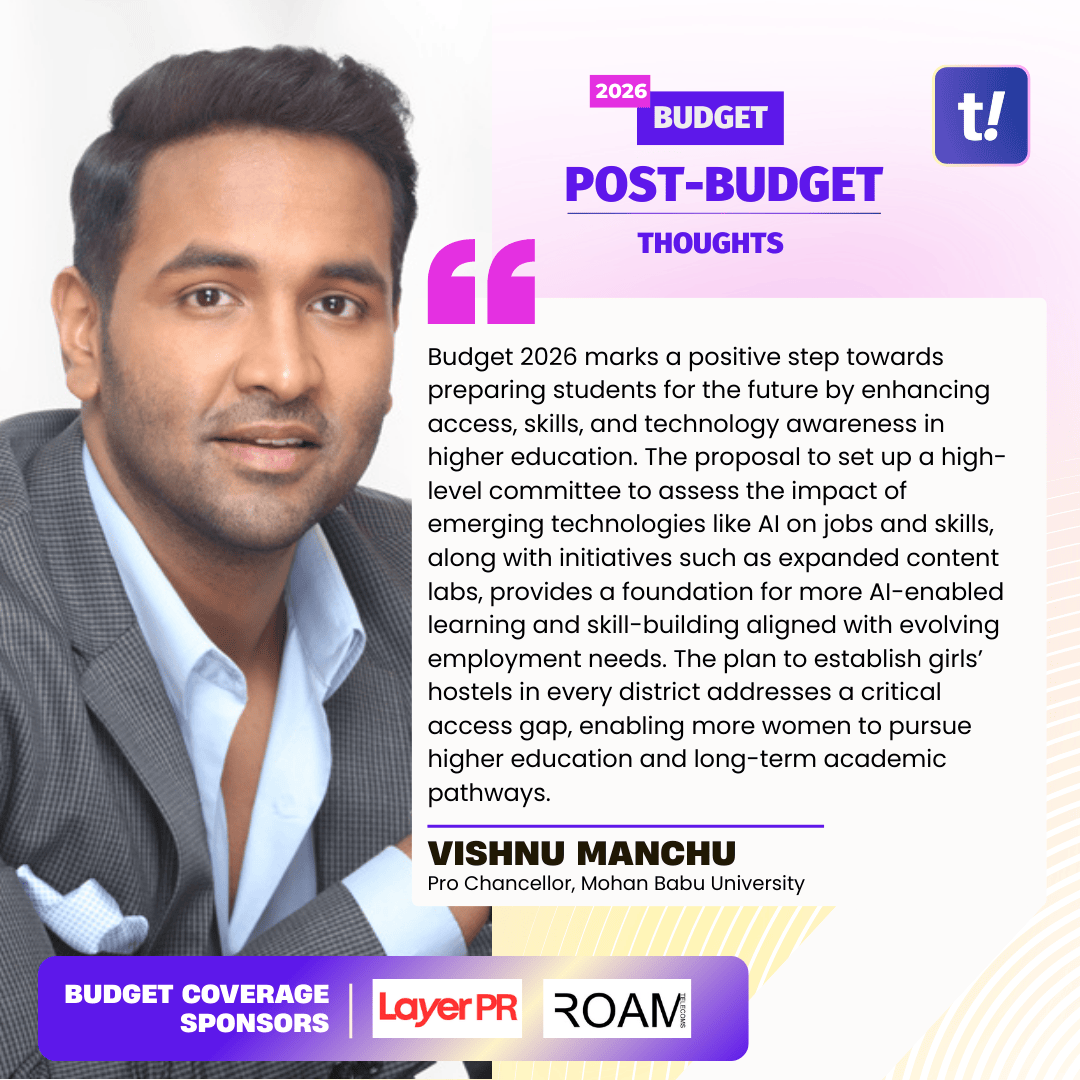
Budget 2026 marks a positive step towards preparing students for the future by enhancing access, skills, and technology awareness in higher education. The proposal to set up a high-level committee to assess the impact of emerging technologies like AI on jobs and skills, along with initiatives such as expanded content labs, provides a foundation for more AI-enabled learning and skill-building aligned with evolving employment needs.
The plan to establish girls’ hostels in every district addresses a critical access gap, enabling more women to pursue higher education and long-term academic pathways. Together, these measures create an environment where students are better equipped with practical skills and adaptability as they contribute to India’s future workforce.
Sandeep Kumar Jain, Managing Director, CDK Global
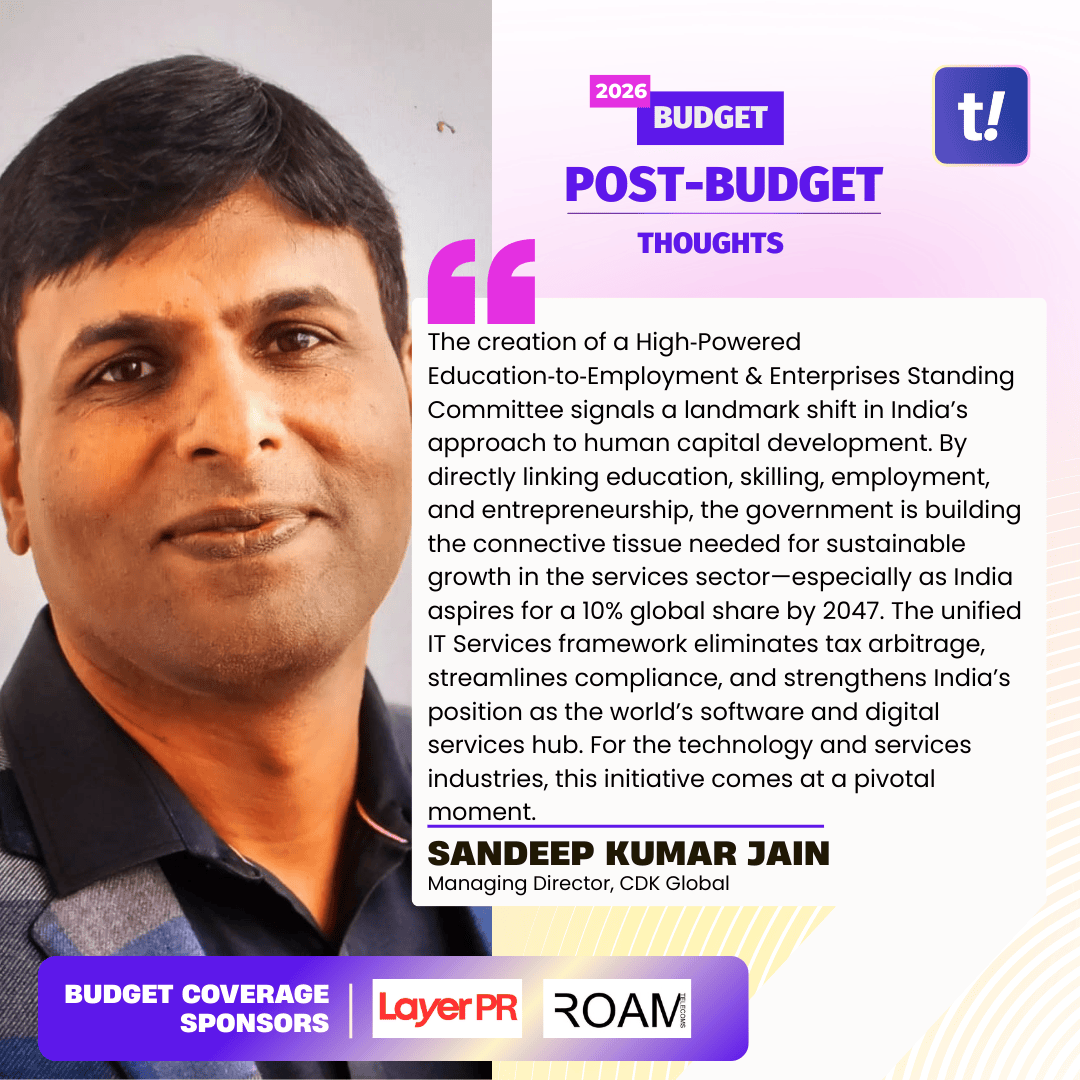
The creation of a High‑Powered Education‑to‑Employment and Enterprises Standing Committee signals a landmark shift in India’s approach to human capital development. By directly linking education, skilling, employment, and entrepreneurship, the government is building the connective tissue needed for sustainable growth in the services sector—especially as India aspires for a 10% global share by 2047.
The unified IT Services framework eliminates tax arbitrage, streamlines compliance, and strengthens India’s position as the world’s software and digital services hub. For the technology and services industries, this initiative comes at a pivotal moment. As artificial intelligence and emerging digital platforms redefine work, the focus on adaptive skill pathways will be crucial to ensuring that opportunity keeps pace with innovation. At CDK Global, we see this as an inflection point to deepen industry‑academia collaboration, integrate AI‑driven skill development, and create future‑ready career paths in technology, analytics, and customer experience.
Also, the vision for technology as a societal equalizer—from empowering farmers and women in STEM to enhancing accessibility for divyangjan—echoes our own belief that digital progress must be inclusive by design. This alignment between policy intent and industry capability sets the stage for India’s next chapter as a global leader in technology‑enabled services.
Sripal Jain, CA/US CPA, Co-founder, Simandhar Education
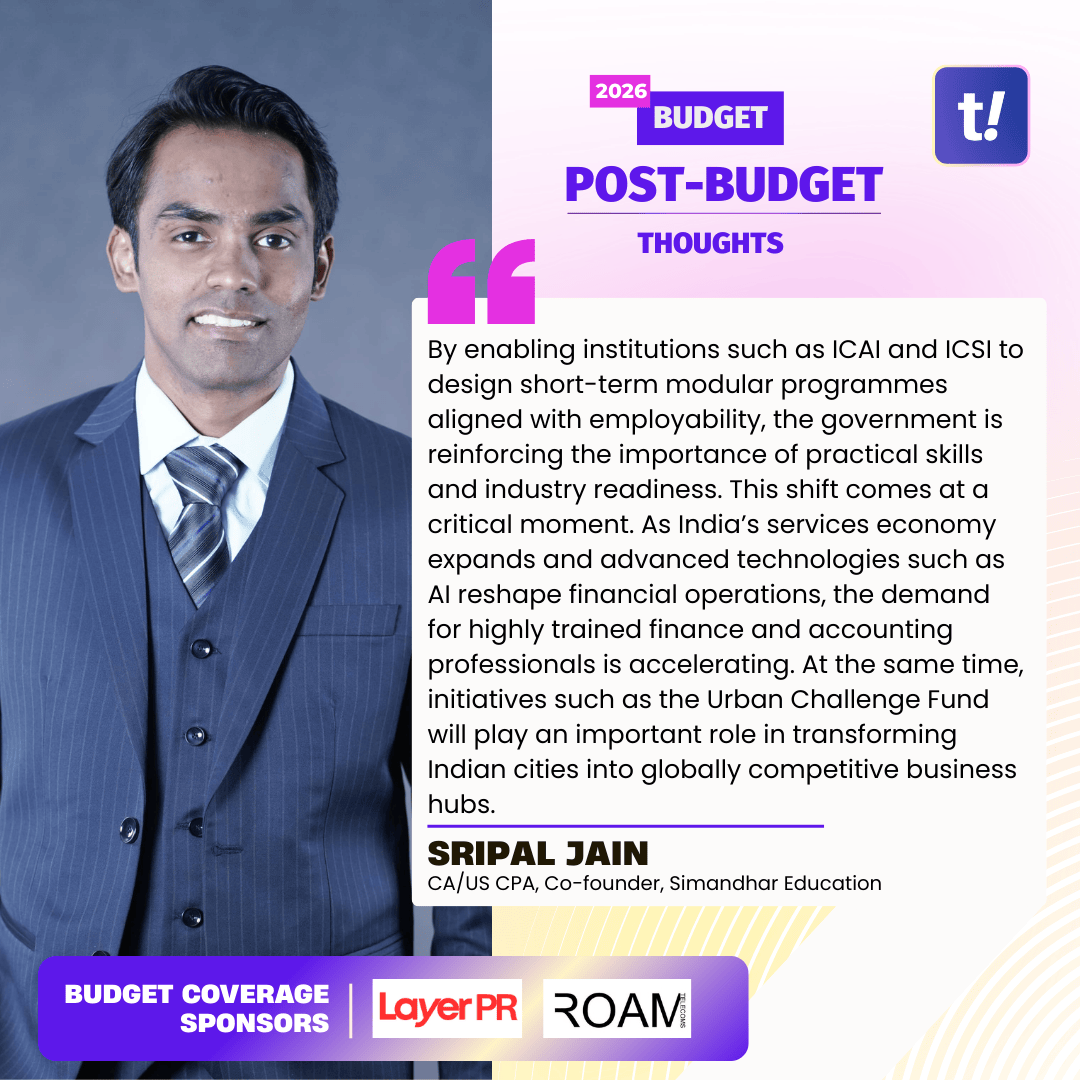
The Union Budget 2026 sends a strong signal that professional, career-focused education is central to India’s workforce strategy. By enabling institutions such as ICAI and ICSI to design short-term modular programmes aligned with employability, the government is reinforcing the importance of practical skills and industry readiness. This shift comes at a critical moment.
As India’s services economy expands and advanced technologies such as AI reshape financial operations, the demand for highly trained finance and accounting professionals is accelerating. Businesses increasingly require talent that understands global standards, compliance frameworks, and technology-enabled financial systems from day one. At the same time, initiatives such as the Urban Challenge Fund will play an important role in transforming Indian cities into globally competitive business hubs.
As infrastructure and governance strengthen, we can expect a sharp rise in Global Capability Centers across finance, accounting, and compliance functions. This will further accelerate the need for globally trained professionals who can operate confidently in international environments. Structured professional pathways that combine technical depth with real-world application will be essential to meeting this demand. The Budget’s direction highlights the importance of focused credentials and continuous upskilling, creating a strong foundation for building a globally competitive finance workforce.
Mohar V, Co-founder & CEO, TECHVED
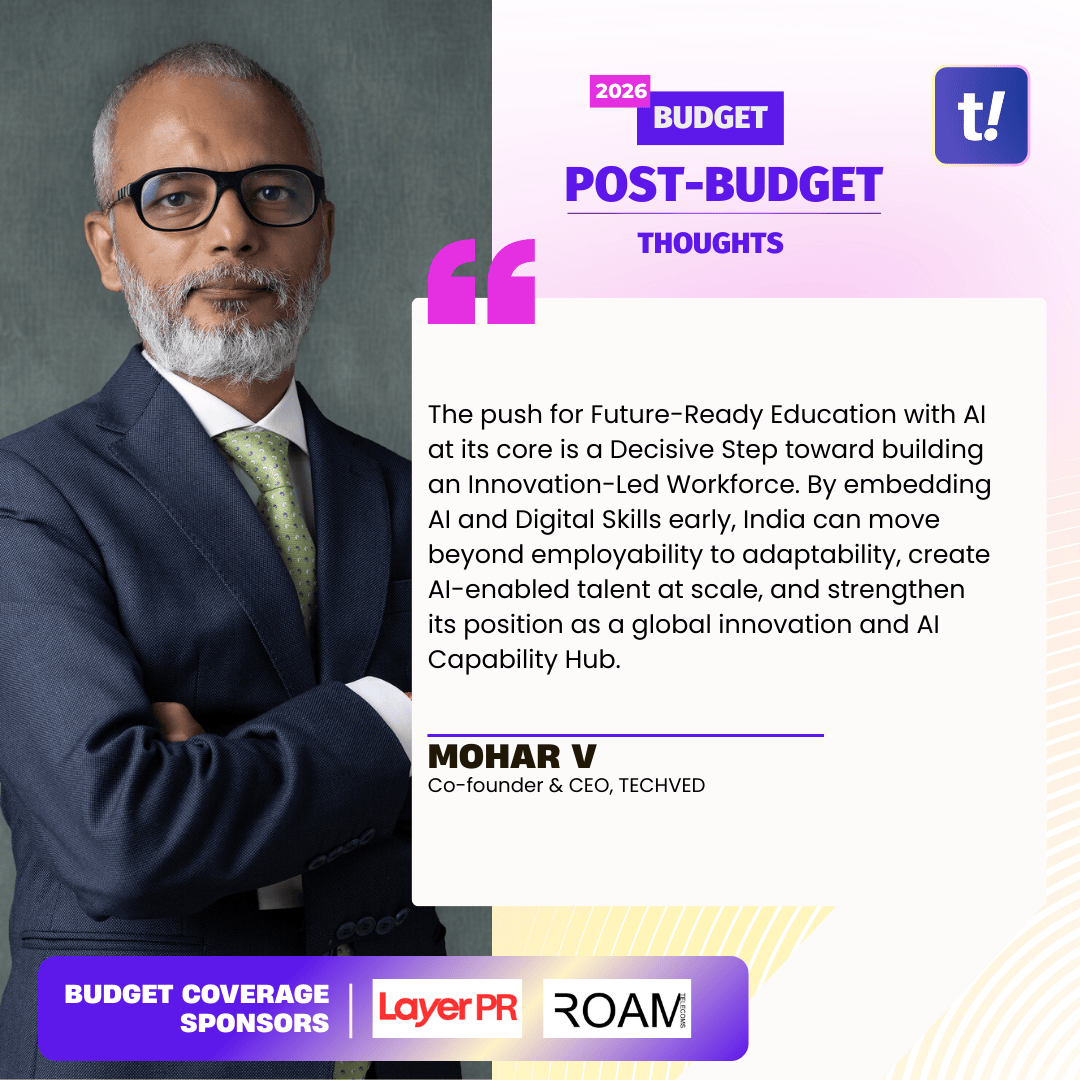
The push for Future-Ready Education with AI at its core is a Decisive Step toward building an Innovation-Led Workforce. By embedding AI and Digital Skills early, India can move beyond employability to adaptability, create AI-enabled talent at scale, and strengthen its position as a global innovation and AI Capability Hub.
Neha Modgil, Co-founder & COO, TECHVED
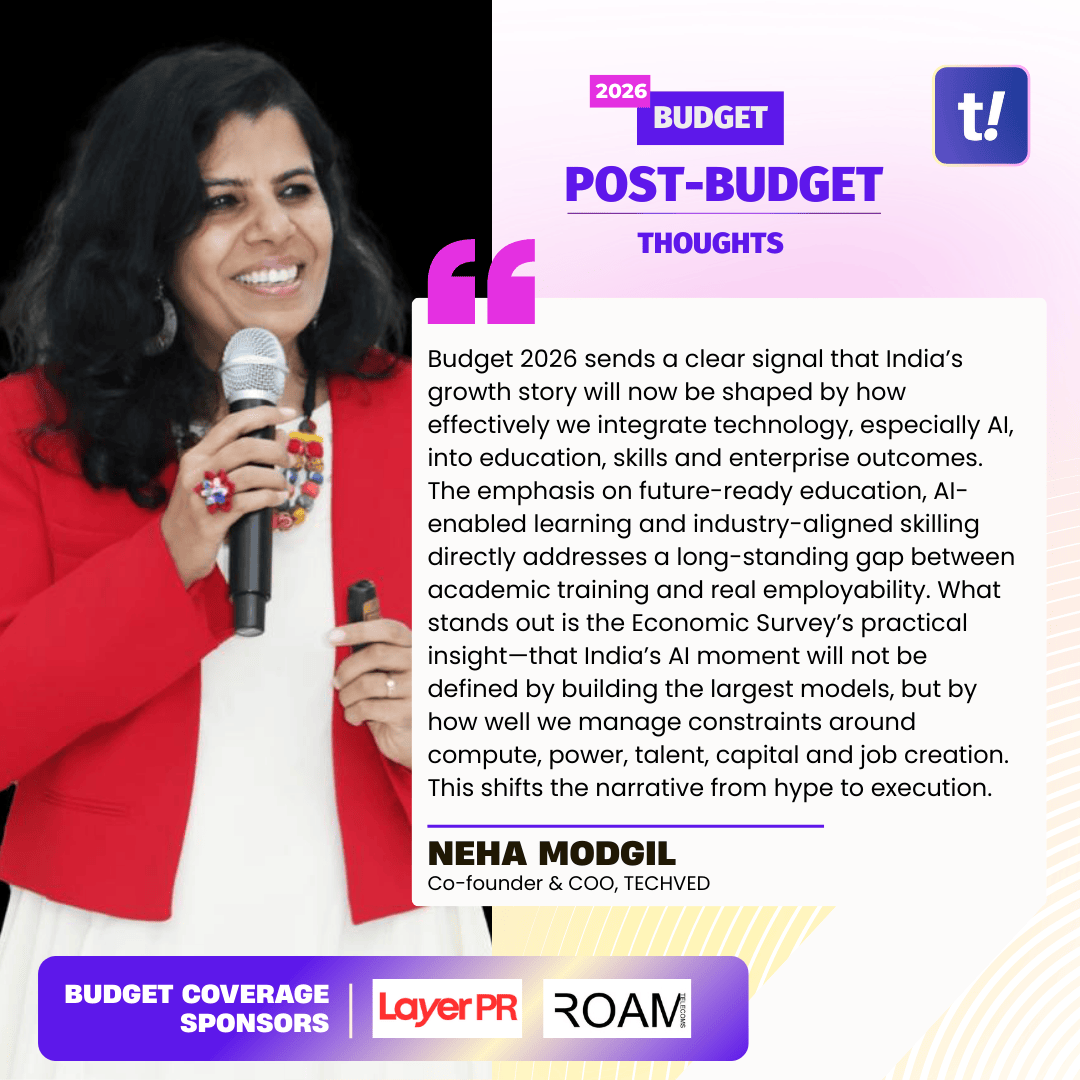
Budget 2026 sends a clear signal that India’s growth story will now be shaped by how effectively we integrate technology, especially AI, into education, skills, and enterprise outcomes. The emphasis on future-ready education, AI-enabled learning, and industry-aligned skilling directly addresses a long-standing gap between academic training and real employability.
What stands out is the Economic Survey’s practical insight—that India’s AI moment will not be defined by building the largest models, but by how well we manage constraints around compute, power, talent, capital, and job creation.
This shifts the narrative from hype to execution. For organisations and policymakers alike, the real opportunity lies in creating resilient digital infrastructure, accessible AI platforms, and strong innovation ecosystems that can scale responsibly. Budget 2026 aligns well with the Viksit Bharat 2047 vision by placing youth, technology, and inclusion at the centre of India’s long-term competitiveness.
Gitesh Gupta, CEO, Aimlay

Taking into account the Union Budget 2026-27 for India, the research and doctoral community is on the verge of a groundbreaking era. Building on the years of investments in university research infrastructure, stronger academia-industry partnerships, and positioning of education as a core driver of the country’s growth, the Budget revolutionises the concept of learning as an economic force in addition to a social expense.
The vision proposed in the Budget takes on the spirit of the recent academic reforms by dismantling entry barriers to the PhD programs, which for years were restricted by precepts requiring no less than 55% in post-graduation or 75% or more. The policy shake-up of 2023 that made NET-qualified candidates or even students leaving the 12th grade able to pursue a PhD transformed the foundation of the concept of academia to be fairer.
For aspirant researchers, the Budget’s concentration on return-driven financing, cutting-edge facilities, and artificial intelligence-powered learning environments holds out the allure of top-tier global competitiveness. Summarily, it sets the scene for a new age of genius-level thought, pioneering ideas, and equal intellectual opportunity all over the nation.
Pinnaparaju Krishna Mohan, Founder and CEO, UDS Foundation

The Union Budget’s strong focus on vocational training and deeper linkages with industry is a highly encouraging and much-needed step toward addressing the employability challenges faced by India’s youth. By prioritizing skills that are aligned with real market demand, the government has demonstrated a clear understanding of how sustainable employment is created. Equally welcome is the announcement of tax relief for CSR funds deployed toward vocational training, along with additional tax incentives.
This move not only motivates greater private sector participation but also reinforces the importance of long-term investment in human capital. These measures together send a powerful signal that youth employment is being approached strategically, not in isolation, but as part of an integrated economic and social development agenda.
We appreciate the government’s forward-looking and strategic thinking in using fiscal policy to strengthen skill ecosystems, encourage industry collaboration, and create measurable employment outcomes. Such initiatives will play a critical role in bridging the gap between education and employment and empowering young people with skills that lead to meaningful, sustainable livelihoods.
Dinakar Menon, Managing Partner and Business Head, BigTrunk Communications

When we look at this Budget through the lens of the marketing industry, the message is clear that artificial intelligence is no longer a future tool but a present-day growth engine. The decision to increase funding for AI-powered, industry-linked labs in Tier 2 and Tier 3 institutions is especially important because it expands the talent and innovation base beyond metros and brings applied intelligence closer to real business problems.
For marketing, where content, consumer insight, and automation now depend heavily on data and machine learning, this creates a stronger pipeline of skills and solutions. The formation of a standing committee to study the impact of emerging technologies on jobs also reflects a balanced approach that recognises both opportunity and responsibility.
With sustained support through national AI and research missions, India has a chance to build a marketing ecosystem that is smarter, more export-ready, and globally competitive while remaining inclusive and future-facing.
Rakhi Pal, Co-Founder & COO, EventBeep
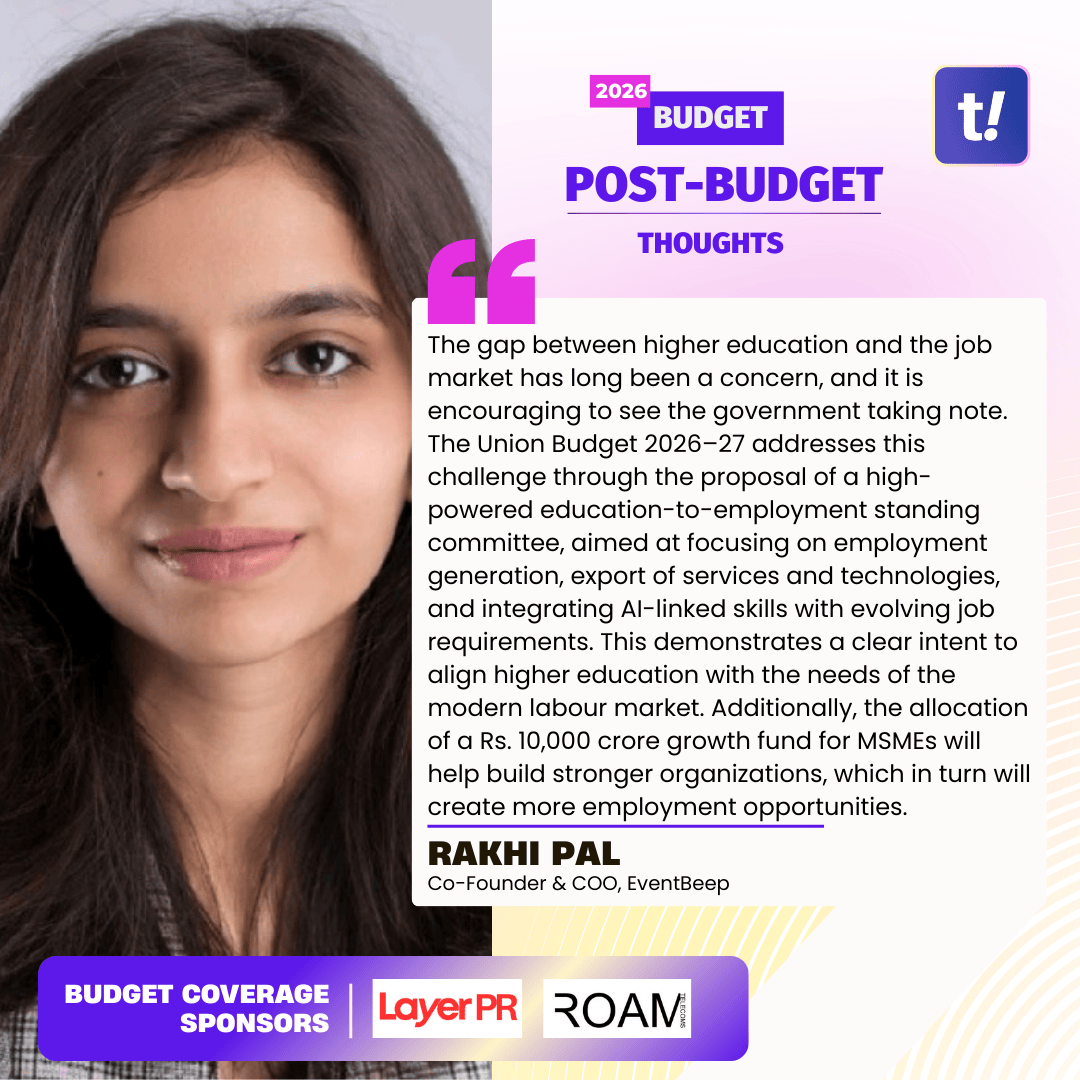
The gap between higher education and the job market has long been a concern, and it is encouraging to see the government taking note. The Union Budget 2026–27 addresses this challenge through the proposal of a high-powered education-to-employment standing committee, aimed at focusing on employment generation, export of services and technologies, and integrating AI-linked skills with evolving job requirements.
This demonstrates a clear intent to align higher education with the needs of the modern labour market. Additionally, the allocation of a Rs. 10,000 crore growth fund for MSMEs will help build stronger organizations, which in turn will create more employment opportunities. These measures address both the supply and demand sides of the system, providing a meaningful boost to the career prospects of India’s young workforce and strengthening the broader economic ecosystem.