


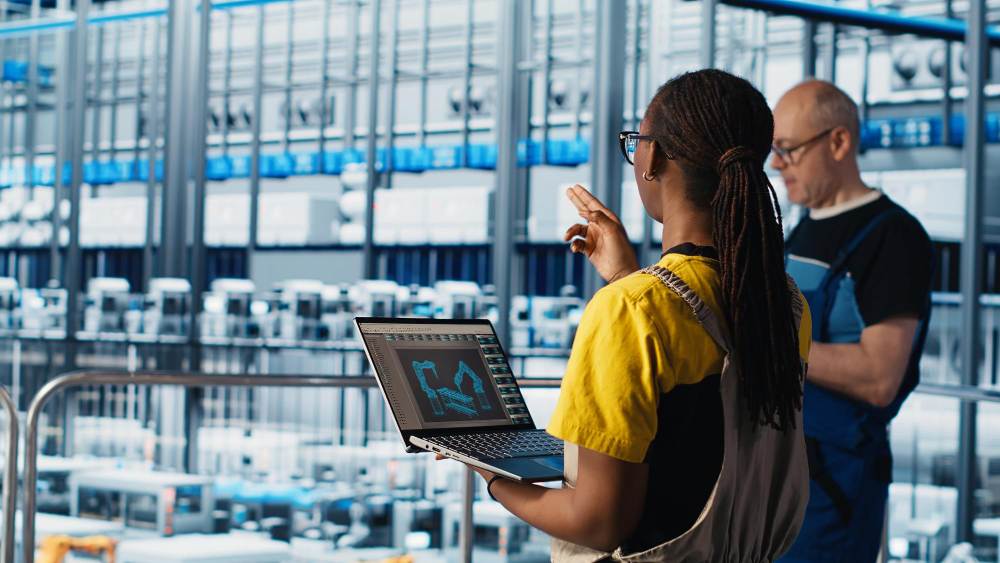
The manufacturing industry has consistently evolved with the advancement of technology. Innovations have simplified processes, boosted productivity, and significantly increased output. As we delve into the specific technologies that have revolutionized manufacturing, it’s evident that these transformations are steering the sector towards unprecedented productivity levels.
Laser Technology: Precision and Efficiency
According to JPS International, laser technology continues to dominate in 2025, with manufacturers leveraging its precision and efficiency to improve production processes. Laser tech, known for its ability to perform complex tasks with sharp accuracy, has replaced traditional methods that were labor-intensive and prone to errors. This technological leap allows manufacturers to maintain a high-quality standard while significantly cutting down the time and cost involved in production.

The integration of laser technology in manufacturing is more than just a trend; it’s a necessity. This innovative solution enables manufacturers to perform intricate cuts and welding tasks swiftly, enhancing both the speed and quality of output. As companies strive to meet increasing demand, the tech around lasers proves indispensable, endorsing a future where precision-engineered products become the norm.
Laser technology’s influence is profound, allowing greater flexibility in manufacturing operations. Companies can now design and execute tasks that were once deemed impossible, opening new avenues in product customization and functionality. With enhanced capabilities, this tech doesn’t just increase output; it diversifies the possibilities available to manufacturers, ultimately catering to a broader customer base.
Metal Fabrication: A Pillar in U.S. Manufacturing
According to the U.S. Department of Commerce, metal fabrication is the third-largest industry in the U.S. manufacturing landscape. This expansive sector underpins various critical industries by providing essential components required in everything from automotive to aerospace technologies. As manufacturing continues to scale, metal fabrication stands as a testament to the resilience and adaptability fueled by tech advancements.
Incorporating advanced technologies like robotics and automation, metal fabrication has undergone a significant transformation. These tech solutions streamline complex fabrication processes, reducing manual labor and increasing efficiency. Consequently, manufacturers can produce larger quantities of metal products at a higher rate, satisfying market demands effectively.
The growth of the metal fabrication industry showcases the symbiosis between tech and manufacturing. New materials and innovative processes developed through continuous research propel the evolution of this sector. As tech continues to infiltrate every aspect of manufacturing, the metal fabrication industry is poised for further expansion and integration across industries.
Welding: The Backbone of Production
According to US News, about 70% of all manufactured products involve some degree of welding. Welding is a crucial part of manufacturing, serving as the backbone for creating strong, durable products. With tech infusion, advanced welding techniques now enhance productivity, reduce defects, and ensure the longevity of products.
Technological advancements in welding have revolutionized how manufacturers approach complex repairs and fabrications. Automation in welding not only accelerates production but also helps mitigate human error, ensuring that each piece meets stringent quality standards. As demand for precision and quality increases, automated welding systems play a pivotal role in fulfilling those market needs efficiently.
Aside from improving accuracy, tech-enhanced welding processes facilitate innovative approaches to design and structure. Manufacturers can leverage these advancements to experiment with novel materials and sophisticated joint designs, driving innovation. As such, welding remains a cornerstone of manufacturing, continually evolving with tech to meet contemporary demands.
In conclusion, the exponential increase in manufacturing output can be attributed to the seamless integration of technologies such as laser technology, metal fabrication, and welding. These advancements have reshaped traditional manufacturing processes, making them faster, more efficient, and adaptable to the changing consumer landscape. As tech continues to advance, the manufacturing industry stands on the brink of even more groundbreaking developments, promising a future of possibilities and growth.