


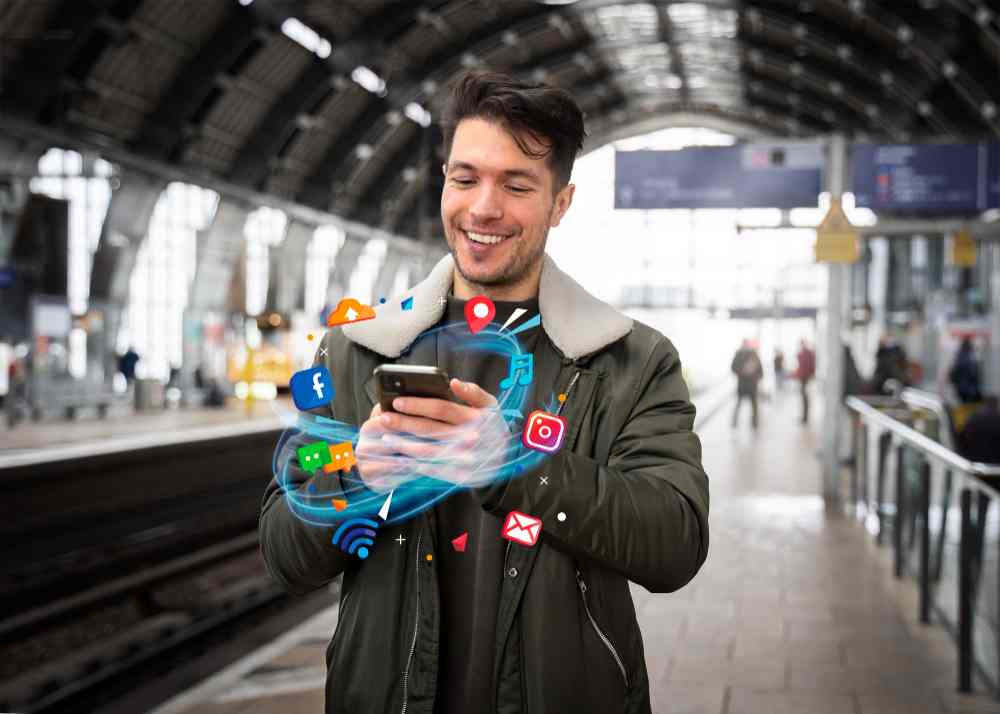
Born into connected world, Millennials seamlessly blend their social, professional, and financial lives online. The digital world is an intrinsic part of their lives with a barrier between the physical and the virtual worlds barely existing. As a generation that came of age during the Internet’s most transformative years, Millennials use digital tools from work and entertainment to shopping, banking, and relationships. The digital world is not a supplement to life but the stage on which their life unfolds. Yet, within this immense web of connectivity hides an unsettling truth. The same digital systems that empower Millennials also expose these them to unprecedented risks.
From seeking health advice on Instagram to managing investments through fintech apps, Millennials are so comfortable with digital platforms that it creates a sense of familiarity. A familiarity that often translates into default trust. But this ease comes at a cost as the illusion that the digital world is inherently transparent and secure has made Millennials uniquely vulnerable to exploitation in ways that are psychological, financial, and even political.

The infamous 2023 “Blue Whale” phishing scam is a worthy example of how social media’s built-in trust works as a network to lure thousands into fraudulent schemes. Or the proliferation of counterfeit e-commerce sites that mimic reputed brands that command trust. Many of them have siphoned off millions from unsuspecting online shoppers. A more insidious form of manipulation has emerged in the form of misinformation campaigns. From spurious medical advice to distorted political propaganda, a lot of time and effort is spent on creating a design that becomes viral across the same platforms Millennials use most.
These instances of trust violation extend well beyond financial loss. In 2024, a data breach at a popular fitness app exposed the personal health information of millions. While this shook user confidence in data privacy at one level, Millennials continued to overshare online at another level. Their desire for personalisation and validation often overrides caution as the need for instant connection and social affirmation frequently eclipses the long-term consequences of handing over personal data to opaque algorithms and unverified entities.
The risks of online trust are particularly acute in India. We are a country of 800 million people now using the internet. Most of this usage happens on smartphones with people documented to spending nearly seven hours a day online. A large proportion of this digital population is made up of Millennials, who are among the most socially active. On an average they maintain multiple social accounts, as a 2025 report by digital marketing and social media analytics platform, CropInk on millennials and social media statistics shows.
The report reported that 56% of respondents that influencer recommendations shape their purchases and 65% acknowledging that friends’ social media posts influence buying decisions. This heavy reliance on peer validation over institutional authority has created fertile ground for online scams, misinformation, and identity theft.
The problem is only compounded by financial insecurity. A 2025 Deloitte Global Gen Z and Millennial Survey says that nearly one-third of Indian Millennials report anxiety about their financial future, making them susceptible to online schemes promising quick wealth or guaranteed returns. Combined with limited privacy literacy, it becomes a potent mix of risk exposure in an increasingly mobile-first economy.
When responsibly applied, technology can also serve as part of the solution. Hyperlocal discovery and engagement platforms, for example, are ensuring AI-driven fraud prevention, consent-based marketing, and data privacy frameworks such as GDPR and SOC2 to foster safer, more reliable online-to-offline interactions. By prioritising ethical design and secure personalisation, these tools can help rebuild trust through integrity.
At a societal level, three interventions are key. First, digital literacy should be treated like a core life skill, where teaching is not just imparted using technology but there is critical evaluation, source verification, and data awareness. The UK’s Digital Schoolhouse initiative is a great example. Next, technology companies must take responsibility through transparent algorithms, content moderation, and clear data practices as finally, policy and regulation need to keep pace with innovation.
Eventually, the General Data Protection Regulation (GDPR) will remain a global benchmark for user rights and corporate accountability, but its principles should be localised, expanded, and enforced consistently across jurisdictions. India’s evolving data protection framework is well set to bring in new standards for digital ethics in emerging economies.
To conclude, the relationship that Millennials share with digital trust reveal the contradictions of our time and are deeply connected, yet increasingly uncertain. The internet promises empowerment and equality. While it has delivered both, there is also an exposure to risk. Bridging this divide will require a collective effort from individuals willing to think critically, to companies willing to act ethically, and policymakers willing to regulate wisely. It is only with a combination of this that we can replace the illusion of trust with a more resilient, transparent, and genuinely human digital reality.